

Best High-Interest Savings Accounts in Australia (2026)
Not all high-interest savings accounts are created equal. This guide cuts through the headline rates to help you find the right account for your actual savings goal.
 By Timothy Hirou GaschereauPublished
 9 min read
Try it yourself
We won't be naming a single "winner" account here, rates move too often for that to stay true for long. Instead, this is part of a wider guide to saving and budgeting on Snowball Invest, and it's built to help you compare any account properly and pick the one that actually fits your goal.
Quick answer
The best high-interest savings account in Australia depends on your goal, not just the headline rate. An emergency fund needs instant access with no withdrawal penalties. Short-term goals suit bonus-rate accounts with monthly deposit conditions. Long-term savers should look at neobanks, challenger banks, or a term deposit. Always check the base rate, the bonus conditions, and the balance cap before you open anything.
In this guide
- →Why the advertised headline rate is only half the story
- →How bonus and introductory rates actually work, with a worked example
- →The main types of providers, from the Big Four to neobanks
- →A full framework for comparing accounts beyond the rate
- →How to match an account to your actual savings goal
- →Red flags to check before you open one, and how to switch without losing interest
📊 Why the Headline Rate Is Only Half the Story
🎯 The essential: Most savings accounts split their rate into a base rate you always earn and a bonus rate you have to earn every month. The number on the homepage is both added together.
The number splashed across a bank's homepage is almost never what you actually earn. Most Australian savings accounts split their rate into a base rate (what you get no matter what) and a bonus rate (what you get only if you meet monthly conditions). Add them together and you get the total rate, the figure banks advertise. Miss a condition in a given month and you drop to the base rate, often 0.5% to 1.5%, a painful gap versus the headline.
The RBA cash rate has been sitting at 4.35% as of August 2026, which keeps deposit rates reasonably competitive, but also makes it easier for banks to dress up a mediocre account with an eye-catching number. Reading past the headline is the single most useful skill a saver can develop.
🔍 How Bonus and Introductory Rates Actually Work
The introductory rate trap: some accounts offer a honeymoon or introductory rate for three to four months, genuinely high during that window, then reverting to the standard variable rate, which is often much lower (the "go to sleep" cliff). Fix: set a calendar reminder before the intro period ends and compare or switch if needed.
Bonus rate conditions are ongoing, they don't expire, but must be earned every month:
- Minimum monthly deposit: $200 to $1,000 typically, usually salary or a regular transfer.
- No-withdrawal rule: one ATM trip can forfeit the bonus for the whole month.
- Grow-your-balance rule: your balance must be higher at month end than month start, sometimes excluding interest.
- Card transaction requirement: some accounts require several card transactions on a linked account each month before the bonus applies.
- Linked account requirement: may need a transaction account with the same bank, which can carry its own fees.
None of these are unreasonable alone, the problem is stacking several and forgetting one.
A savings account advertising 5.50% total (0.75% base + 4.75% bonus)
5.50%
Conditions met
Base + bonus rate applies
0.75%
Conditions missed
Bonus lost for that month
Missing a deposit or making one withdrawal doesn't close the account, it just drops that single month back down to the base rate alone.
Worked example: an account advertises 5.50% total (0.75% base + 4.75% bonus), $10,000 saved, conditions met every month, that's around $550 a year. Miss the bonus in two of twelve months, dropping to the base rate those two months, knocks off about $67, landing near $483. Be honest with yourself about whether you'll consistently meet the conditions, irregular income or occasional dips into savings might make a simpler unconditional-rate account the better choice.
🏦 The Main Types of Australian Savings Account Providers
| Provider type | Examples | Typical trade-off |
|---|---|---|
| The Big Four | CBA, ANZ, NAB, Westpac | Lower rates typically, but full branch networks and product integration |
| Challenger banks | Macquarie, ING, HSBC Australia, Suncorp, Bank of Queensland | Noticeably better rates, strong apps, competitive bonus structures |
| Neobanks | Up Bank, Rabobank, ubank, among others | Typically the highest rates, minimal or no branch presence |
The Big Four offer convenience, reasonable if that matters more to you than squeezing extra yield. Challenger banks are established, APRA-regulated institutions worth spending real time comparing. Neobanks are app-first, Up Bank's "Savers" sub-accounts let you organise money by goal, and Rabobank's PremiumSaver requires $200 of monthly balance growth for the bonus rate, a relatively simple condition compared to some. The trade-off with neobanks is limited support if you need cash deposits, in-person help, or broad ATM access.
✅ A Framework for Comparing Accounts (Beyond the Rate)
Run through this checklist before you open anything:
- Base rate vs bonus rate, know your floor if conditions aren't met
- Bonus conditions, realistically achievable every month?
- Balance cap, some accounts only pay the high rate up to $50,000 or $250,000, above that the rate drops
- Rate cap on introductory offers, often new money only, not existing balances
- APRA and ADI status, check the public register
- Financial Claims Scheme coverage, verified below
- App and UX quality, and whether it offers sub-accounts or savings buckets
- Linked transaction account fees, if one is required
The Financial Claims Scheme protects deposits up to $250,000 per person, per ADI, if the institution fails, and that cap applies to the total of all your deposits with a single ADI, not per account. If you have more than $250,000 to save, spread it across multiple institutions, and you can verify coverage using APRA's public register of authorised deposit-taking institutions.
🎯 Match Your Account to Your Savings Goal
Emergency fund: not an investment, it's insurance. Priority is instant access, not maximum return. Look for no withdrawal penalties or conditions, no complex monthly requirements, and a decent unconditional base rate. A slightly lower rate is a reasonable price for genuine liquidity. Our emergency fund guide covers sizing yours properly and where else the money can sit.
🛟 Safety Net Calculator
Work out your emergency fund target based on your real expenses.
Short-term goal (1 to 3 years): a holiday, a car, a house deposit. Bonus-rate accounts work well since the monthly deposit condition aligns naturally with regular saving. If a weekly deposit target feels more motivating than a lump-sum plan, our 52-week savings challenge pairs neatly with an account like this. Watch for balance caps if your deposit will exceed $50,000 to $100,000, withdrawal restrictions if your timeline is flexible, and rate resets if using an introductory-rate account, build in a review date.
Long-term high-yield saving (3+ years untouched): a term deposit is worth comparing here, a fixed rate for a fixed term with no monthly conditions, good for a lump sum you won't touch. For ongoing savings accounts, neobanks and challenger banks tend to offer the most competitive rates, look for auto-rate-matching features. Review annually, since the best account today may not be the best one in twelve months.
🧾 Budget Calculator
Work out exactly how much you can realistically direct toward each savings goal each month.
🚩 Red Flags to Watch Before You Open an Account
- Short introductory periods: three to four month honeymoon rates are a marketing tool betting you'll forget to switch.
- Linked account fees: subtract any monthly fees on a required linked transaction account from your effective return.
- Balance caps that cut your rate: plan ahead if your savings will exceed the cap.
- Loyalty bonuses that punish switching: run the numbers, a new account with a better rate often wins even accounting for any loyalty premium.
- Conditions that require spending, not just saving: a debit-card-transaction requirement nudges you to spend more, fine if you were going to anyway, but worth noticing.
🔁 How to Switch Without Losing a Cent of Interest
- Open the new account before closing the old one, never close first, keep both active during the transition.
- Check the timing of your bonus rate, wait until it's credited before moving money if you're close to earning it mid-month.
- Update any direct debits or automatic transfers, salary or regular transfers, with your employer or bank.
- Transfer the balance and confirm it arrived before closing the old account.
- Set a review reminder for six to twelve months out regardless of rate type, since rates and your situation both change.
The whole process typically takes a week or less.
Wondering whether to lock it away for a higher rate instead? See term deposit vs savings account.
SnowLetter
Australia's money news and our best reads, once a week.
❓ Frequently asked questions
What is the difference between a bonus rate and an introductory rate?
+
A bonus rate is ongoing but conditional, earned every month you meet the required conditions, like a minimum deposit or no withdrawals. An introductory rate is time-limited, typically three to four months, after which the account reverts to the standard variable rate regardless of what you do.
Is my money safe in a high-interest savings account?
+
Yes, provided the account is held with an APRA-regulated ADI. Under the Financial Claims Scheme, deposits up to $250,000 per person per institution are protected if the bank fails. You can check an institution's status on APRA's public register.
What happens if I miss the bonus rate conditions one month?
+
You earn the base rate for that month instead of the total rate. The bonus isn't lost permanently, you can earn it again the following month. The financial impact depends on the gap between base and total rate, and your balance.
Should I use a term deposit instead of a savings account?
+
It depends on your goal. A term deposit suits a lump sum you won't need to access for a fixed period, offering a guaranteed rate with no monthly conditions. A savings account is better if you're adding money regularly or need accessibility. Compare both when you're ready to commit.
How often should I review my savings account?
+
At minimum once a year, more often if you're on an introductory rate, review before it expires, or after the RBA changes the cash rate, since banks don't always pass changes on equally. Compare your account to the market annually and switch if something suits better.
Do I need a linked transaction account to get the best savings rate?
+
Sometimes. Many bonus-rate accounts require a linked everyday account with the same bank. Check whether that linked account has monthly fees and factor those into your comparison. A savings account with a slightly lower rate but no linked-account requirement may work out better in practice.
Where to next
📚 Recommended reading
The Barefoot Investor
Scott Pape

The Barefoot Investor
Australia's best-selling money book ever. A simple system for accounts, budgeting, debt and a real emergency fund in one.
The Richest Man in Babylon
George S. Clason

The Richest Man in Babylon
The original pay-yourself-first playbook, dressed up as ancient Babylonian parables. Almost a century old and the advice still lands.
She's on the Money
Victoria Devine
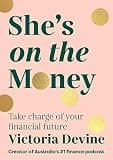
She's on the Money
Written for millennials, walks through budgeting, clearing debt, saving, investing and buying property with real stories.
Some links above are affiliate links. If you buy through them, Snowball Invest may earn a small commission at no extra cost to you. We only recommend books we'd suggest anyway.
Sources
Was this article useful?
Put it to your own numbers
Every calculator runs entirely in your browser, with nothing stored. See what these numbers look like for your own situation.
Try the Inflation calculator →General information only. This article is educational and does not constitute personal financial advice. It does not account for your circumstances. Consider your own situation and seek advice from a licensed adviser before acting. Read our full disclaimer.

Timothy Hirou Gaschereau
Founder of Snowball Invest, not a financial adviser.
I write about what I'm learning myself, because nobody ever taught us how to take control of our own money. It's a skill, not a mystery, and it's never too late to learn it. The best day to start was yesterday, the second best is today.
LinkedIn →Related articles

Term Deposit vs Savings Account in Australia: Which Wins?
Term deposit vs savings account in Australia: compare rates, access, safety and tax, and work out which one suits your savings goals.

How Much Should You Have Saved by Age?
Anxious you are behind on savings? Rough Australian benchmarks by age, plus what actually matters more than a number. Not financial advice.

Living Paycheck to Paycheck in Australia: Break the Cycle
Half of Australian workers live paycheck to paycheck. Here is why it happens, the honest signs you are stuck, and five practical steps to build a real buffer.