

Term Deposit Australia: How It Works, What It Pays, and When It's Worth It
What a term deposit is, how the rate lock works, how it compares to a high-interest savings account, and when it genuinely makes sense.
 By Timothy Hirou GaschereauPublished
 9 min read
Try it yourself
We've already covered bonds and passive investing on Snowball Invest. A term deposit sits at the other, simpler end of that same defensive-asset spectrum, and for a lot of short-term savings goals, it's the right tool for the job.
Quick answer
A term deposit locks your money with a bank for a fixed period, from one month to five years, at a guaranteed interest rate. The trade-off: certainty and simplicity, but zero flexibility. It's not a wealth-building tool, it's a cash management tool, best suited to short-term savings goals, capital preservation, or anyone who wants to remove the temptation to spend.
In this guide
- →What a term deposit is and how the interest actually gets calculated
- →How term deposit rates compare across the big four vs smaller banks
- →Term deposit vs a high-interest savings account, honestly compared
- →Term deposit vs government bonds, and when each makes more sense
- →When a term deposit is genuinely the right call, and when it isn't
💰 What is a term deposit?
🎯 The essential: You hand a bank a lump sum, agree not to touch it for a set period, and they pay you a fixed rate in return. No market exposure, no complexity.
A term deposit is a savings product offered by Australian banks, credit unions, and building societies. The defining feature is the lock-in: unlike a regular savings account, you can't dip in and out. Your money is committed for the full term, and breaking it early usually costs you.
Term deposits are offered by authorised deposit-taking institutions (ADIs) regulated by APRA. That matters, because deposits are protected under the Australian Government's Financial Claims Scheme (FCS), up to $250,000 per depositor per ADI, not per account. If the bank fails, which is rare, the government covers you up to that limit.
- Minimum deposit: typically $1,000 to $5,000, depending on the provider.
- Terms available: 1 month through to 5 years. Most people use 3, 6, or 12 months.
- Interest payment: at maturity, monthly, quarterly, or annually, depending on the provider and term.
⚙️ How a term deposit actually works
The mechanics are straightforward:
- You choose a provider, deposit amount, term, and interest frequency.
- The bank locks in your rate. It's fixed for the entire term, it won't move if the RBA changes the cash rate while your money is sitting there.
- Interest accrues, and is paid out at maturity, monthly, quarterly, or annually.
- At maturity, you decide: withdraw everything, roll over into a new term deposit, or change the term length.
Worked example: you deposit $10,000 at 5.00% p.a. for 12 months, interest paid at maturity. Interest earned: $10,000 × 5.00% = $500. Total at maturity: $10,500. (5.00% is illustrative, current rates move with the RBA cash rate and vary between providers, check comparison sites for what's on offer today.)
Watch the maturity trap. When your term deposit matures, most banks automatically roll it over into a new one at whatever rate they're offering that day, which may be lower than what you had. You typically get a short window, often 7 to 14 days, to act. Miss it, and you're locked in again. Set a calendar reminder.
📊 Term deposit rates in Australia
Term deposit rates are anchored to the RBA cash rate: when the RBA raises rates, term deposit rates generally follow, when it cuts, they fall.
The big four banks (CBA, Westpac, NAB, ANZ) tend to offer lower rates than smaller banks, credit unions, and online-only lenders, a pattern comparison sites like Canstar track consistently, and one the ACCC has flagged as limited price competition among the majors. On a $50,000 deposit over 12 months, a gap of a few tenths of a percent can mean an extra $150 to $350 in interest, worth five minutes on a comparison site before you commit.
Beyond the headline rate, a few things are worth comparing:
- Interest payment frequency (at maturity vs monthly affects your cash flow)
- Minimum deposit (some challenger banks require $5,000 to $25,000)
- Early withdrawal conditions (some require 31 days' notice, others reduce your rate)
- Rollover defaults (opt-out vs opt-in auto-rollover)
🏦 Term Deposit Calculator
See exactly what a given rate and term pays at maturity, before you lock your money away.
⚖️ Term deposit vs high-interest savings account
This is the real decision most people are weighing. Both are low-risk, both are APRA-regulated, both pay interest on cash. The differences come down to flexibility and rate certainty.
| Feature | Term Deposit | High-Interest Savings Account |
|---|---|---|
| Rate certainty | Fixed for full term | Variable, can change anytime |
| Liquidity | Locked, penalties to exit early | Fully accessible |
| Bonus rate conditions | None | Often requires monthly deposit + no withdrawals |
| Discipline factor | Forces you to leave it alone | Easy to dip into |
| Best for | Known future goal | Emergency fund, flexible savings |
The key thing to know: HISAs often advertise attractive introductory or bonus rates that drop after three or four months if you don't meet the monthly conditions. A term deposit locks in your rate for the full term regardless of what the RBA does next, that certainty has real value if you know exactly when you'll need the money. If a HISA still sounds like the better fit, our guide to choosing a high-interest savings account covers how to actually compare them.
Bottom line: use a HISA for your emergency fund and money you might need. Use a term deposit for money you know you won't touch for a specific period.
🏛️ Term deposit vs government bonds
Both are defensive, low-risk options, but they work differently. Term deposits are simpler and fully guaranteed up to $250,000 per ADI, you open one at your bank and that's it. Government bonds can offer similar or better yields over longer terms and are backed by the Commonwealth, but they're more complex to access and carry price risk if you sell before maturity, bond prices move inversely to interest rates. Our what is a bond guide covers that relationship in detail.
For most people building a defensive cash allocation, a term deposit is the simpler, safer choice. Bonds make more sense once you're comfortable with how interest rate movements affect prices, or if you want exposure without picking individual bonds via a bond ETF.
🎯 When a term deposit actually makes sense
🎯 The essential: A term deposit is not a wealth-building tool. After inflation and tax, the real return is often close to zero. What it does well is preserve capital with a guaranteed, predictable outcome.
Good use cases:
- Short-term savings goal (6 to 24 months away): a house deposit, a car, a wedding. You know the timeline and can't afford to lose the money.
- Capital preservation for retirees or near-retirees drawing down savings and needing certainty.
- The "sleep at night" allocation: even aggressive investors benefit from some cash in a guaranteed, boring product.
- Removing the temptation to spend, the lock-in is a feature for anyone who knows they'll raid a flexible savings account given the chance.
Bad use cases: your emergency fund (it needs to be accessible immediately), and long-term wealth building, where a passive investing strategy has historically delivered far better real returns over 5 to 10+ years.
Laddering: if you want the rate certainty of a term deposit without being fully locked out, split your money across terms instead of one. $30,000 could become $10,000 in a 3-month term, $10,000 in a 6-month term, and $10,000 in a 12-month term. Every few months a portion matures and you can access it, reinvest, or redirect it, partial liquidity without giving up the rate lock entirely.
$30,000 split across three terms instead of one
🧮 Compound Interest Calculator
See what your money could grow to under a passive investing strategy over the same timeframe.
⚠️ What to watch out for
- Early withdrawal penalties: breaking a term deposit early almost always costs you, often a reduced rate for the portion of the term already served, sometimes 31 days' notice before you can exit at all.
- The auto-rollover trap: if you don't act at maturity, your money rolls into a new term at the bank's current rate, which may be lower.
- The $250,000 FCS cap applies per depositor, per ADI. If you're holding more than that in cash, spread it across separate ADIs.
- Tax treatment: interest is taxed as ordinary income at your marginal tax rate, no CGT discount, no franking credits. If you're on the 37% or 45% bracket, factor that into the real return before you commit.
SnowLetter
Australia's money news and our best reads, once a week.
❓ Frequently asked questions
Can you add money to a term deposit?
+
No. Once a term deposit is open, the balance is fixed for the term. You can't top it up. If you want to deposit more, you'd need to open a separate term deposit.
What happens when a term deposit matures?
+
You'll get a maturity notice with your options: withdraw the funds, roll over into a new term deposit at the current rate, or change the term. Most banks give you a short window, often 7 to 14 days, to decide. If you don't respond, most will auto-roll into a new term at whatever rate is on offer that day.
Is a term deposit safe?
+
Yes, within limits. Term deposits held with APRA-regulated ADIs are protected under the Australian Government's Financial Claims Scheme, up to $250,000 per depositor per ADI, not per account. Beyond that cap, your funds are unsecured, so if you're holding more than $250,000 in cash, it's worth spreading it across separate ADIs.
Are term deposit returns taxed?
+
Yes. Interest earned is assessable income and taxed at your marginal rate in the financial year it's received or credited. There's no preferential tax treatment, no franking credits, no CGT discount. Keep records for your tax return.
What's the minimum amount for a term deposit in Australia?
+
It varies by provider. Some credit unions and online banks start from $1,000. Most major banks require $5,000. A few providers have higher minimums, sometimes $25,000. Check the provider's product disclosure statement before applying.
Is a term deposit better than a savings account?
+
Depends on your situation. A term deposit wins on rate certainty and discipline, a high-interest savings account wins on flexibility and liquidity. For money you know you won't need for a fixed period, a term deposit is often the better choice. For your emergency fund or money you might need at short notice, keep it in a HISA.
Where to next
📚 Recommended reading
Smashed Avocado
Nicole Haddow
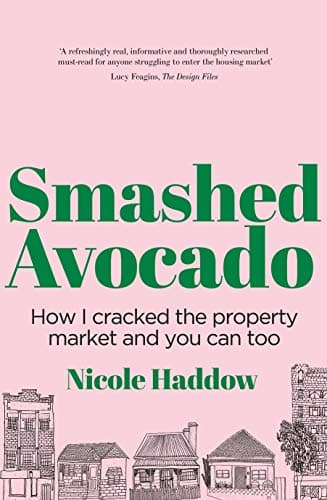
Smashed Avocado
A millennial who ditched the rent trap and cracked the property market by 30, told with honesty and humour. If you have ever been told your brunch is why you cannot buy a home, this Aussie story is your comeback.
Girls That Invest
Simran Kaur

Girls That Invest
A no-jargon crash course from the podcaster behind Girls That Invest that makes the sharemarket feel doable, written especially for women starting out. The perfect first step before you buy your first ETF.
Sort Your Money Out and Get Invested
Glen James

Sort Your Money Out and Get Invested
From the host of the my millennial money podcast, a step-by-step Aussie plan to fix your spending, clear debt and actually start investing. Practical and refreshingly free of finance-bro nonsense.
Some links above are affiliate links. If you buy through them, Snowball Invest may earn a small commission at no extra cost to you. We only recommend books we'd suggest anyway.
Sources
Was this article useful?
Put it to your own numbers
Every calculator runs entirely in your browser, with nothing stored. See what these numbers look like for your own situation.
Try the Compound Interest calculator →General information only. This article is educational and does not constitute personal financial advice. It does not account for your circumstances. Consider your own situation and seek advice from a licensed adviser before acting. Read our full disclaimer.

Timothy Hirou Gaschereau
Founder of Snowball Invest, not a financial adviser.
I write about what I'm learning myself, because nobody ever taught us how to take control of our own money. It's a skill, not a mystery, and it's never too late to learn it. The best day to start was yesterday, the second best is today.
LinkedIn →Related articles

Money Market Funds in Australia: What They Are and What to Look For
Wondering what a money market fund is and whether one exists in Australia? Find out what to look for, how it works, and if it suits you.

Do You Pay Tax on Savings Account Interest in Australia?
Yes, savings account interest is taxable in Australia at your marginal rate. Here is how it works, how to declare it, the TFN trap, and how an offset can beat it.

How to Invest in Bonds in Australia: The Practical Guide
Exactly how to invest in bonds in Australia, from bond ETFs to government bonds, with real tickers, costs, tax treatment, and how much to hold at every life stage.