

Money Market Funds in Australia: What They Are and What to Look For
Wondering what a money market fund is and whether one exists in Australia? Find out what to look for, how it works, and if it suits you.
 By Timothy Hirou GaschereauPublished
 9 min read
If you have ever Googled “where to park my cash without losing sleep,” you have probably run into the term money market fund. It sounds reassuringly boring, which is exactly the point. But if you are searching for one in Australia, the landscape looks a little different here than it does in the US.
This guide breaks down what a money market fund actually is, how the Australian equivalents work, and how they stack up against a plain savings account or term deposit. It is part of our getting started series, and it is general information only, not financial advice.
🎯 The essential: A money market fund holds short-term, high-quality debt to preserve capital and earn a modest yield. In Australia the closest equivalents are cash ETFs on the ASX and cash management trusts. The big catch: unlike a bank savings account, these funds are NOT covered by the government's deposit guarantee.
What is a money market fund?
A money market fund is a managed fund (a pooled investment run by a professional manager) that invests in short-term, high-quality debt. Think Treasury notes (short-term government IOUs), bank bills, certificates of deposit, and other cash-like instruments that usually mature in 90 days or less.
The goal is not to grow your money dramatically. It is to preserve your capital, earn a modest yield roughly in line with short-term interest rates, and keep your money highly liquid. Think of it as the investment world's very tidy holding bay for cash.
How money market funds work
Your money is pooled with other investors and used to buy a basket of those short-term instruments. Each one pays interest over its short life, and that interest flows back to you as the fund's yield. Because the holdings mature within days or weeks, the fund can usually return your money quickly, often within one to two business days.
The value is relatively stable, but it is NOT guaranteed. Unlike a bank deposit, there is no government backstop if the manager makes poor decisions or market stress hits the underlying assets. It is rare for a money market fund to fall below its target price, but it has happened overseas during severe crises.
Money market funds in Australia: what they actually look like
Here is the part that trips up Australian readers. The money market fund label is a US staple, but here the products that do the same job look a bit different, and go by different names.
- Cash management trusts (CMTs) are the older, traditional version: managed schemes that invest in short-term money market instruments. They are often used by SMSFs and wholesale investors, and less commonly marketed to everyday Australians than they once were.
- Cash ETFs and cash-plus ETFs are the modern, popular option: exchange-traded funds on the ASX that hold bank deposits and short-term debt. You buy and sell them like shares. Cash-plus versions add some short-term bonds and a little more interest-rate risk.
They differ from the US model in the detail: Australian cash ETFs trade on the ASX during market hours with T+2 settlement (your money lands two business days after you sell), often hold actual bank deposits across multiple institutions, and are regulated as managed investment schemes rather than under US-style stable-price rules. Bottom line: if you are hunting for a money market fund in Australia, search for cash ETF or cash management trust.
Money market fund vs savings account vs term deposit
| Cash ETF / money fund | Savings account | Term deposit | |
|---|---|---|---|
| Access | Good (sell on ASX, T+2) | Excellent (instant) | Poor (locked for the term) |
| Typical return | Tracks short-term rates | Variable, often with conditions | Fixed for the term |
| Government guarantee | No | Yes, to $250k per ADI | Yes, to $250k per ADI |
| Who it suits | Cash between investments | Emergency fund, everyday cash | A lump sum you can lock away |
A savings account and term deposit at an authorised deposit-taking institution (a bank, credit union or building society) are covered by the government's Financial Claims Scheme, up to 250,000 dollars per person per institution. Cash ETFs and money market funds are investments, not deposits, so that protection does not apply.
The pros and cons
Pros: good liquidity (access within a couple of business days), low risk from short-term high-quality holdings, sometimes a slightly better yield than a basic savings account, and diversification across multiple banks inside one fund.
Cons: no government deposit guarantee (the big one), low and variable returns that fall when the RBA cuts rates, management fees that bite on a low-yield product, no long-term growth, and a unit price that can (rarely) dip in market stress.
Who it suits and who it doesn't
It may suit you if you are holding cash between investments, you have a short time horizon (under 12 months), you are comfortable without the government guarantee, or you are managing a larger cash allocation (for example inside an SMSF).
It probably does not suit you if you are building an emergency fund and want the guarantee, you need money instantly with no settlement delay, or you are investing for long-term growth (shares and diversified ETFs are the tools for that). If you just want a safe, guaranteed home for cash, compare a high-interest savings account or a term deposit first.
SnowLetter
Australia's money news and our best reads, once a week.
❓ Frequently asked questions
Are money market funds safe?
+
They are considered low-risk, but safe needs a qualifier. The underlying short-term, high-quality debt is unlikely to lose much value, but it is not risk-free and it is not covered by the Australian Government's Financial Claims Scheme. For most beginners, a high-interest savings account at an authorised deposit-taking institution offers more protection for everyday cash.
Are money market funds guaranteed in Australia?
+
No. The Financial Claims Scheme (the deposit guarantee) covers deposits at banks, credit unions and building societies up to 250,000 dollars per person per institution. Money market funds and cash ETFs are investments, not deposits, so they fall outside that guarantee. This is one of the most important things to understand before choosing one over a savings account.
What is the Australian equivalent of a money market fund?
+
The closest equivalents are cash ETFs listed on the ASX (funds that hold bank deposits and short-term debt) and cash management trusts. The money market fund label itself is not widely used here, so searching for cash ETF or cash management trust will get you further.
Money market fund vs savings account: which is better?
+
It depends. A high-interest savings account at an ADI comes with the government guarantee, instant access, and no management fee. A cash ETF may offer a similar or slightly higher yield in some conditions, but it is not guaranteed, has a T+2 settlement delay, and charges a fee. For an emergency fund, the savings account wins on safety. For a larger cash allocation between investments, a cash ETF can make sense.
Can you lose money in a money market fund?
+
Yes, in theory, though it is rare. If the underlying short-term debt falls in value (for example during a severe credit crisis), the fund's unit price can drop below what you paid. It has happened overseas during extreme stress. The risk is low, but not zero, which is why a cash ETF is not the same as a bank deposit.
What fees should I expect on a cash ETF?
+
Cash ETFs charge a management expense ratio (an annual fee as a percentage of your investment), often under 0.20 percent a year. On a low-yield product even a small fee matters, so always check the product disclosure statement for the current fee before investing.
📚 Recommended reading
The Barefoot Investor
Scott Pape

The Barefoot Investor
Australia's best-selling money book ever. A simple system for accounts, budgeting, debt and a real emergency fund in one.
The Simple Path to Wealth
JL Collins
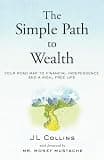
The Simple Path to Wealth
The friendliest on-ramp to index investing there is, born from letters a dad wrote his daughter. It makes 'buy the whole market and chill' feel obvious, just map his US fund picks onto Aussie equivalents and super.
Making Money Made Simple
Noel Whittaker

Making Money Made Simple
Australia's classic, comprehensive money guide covering tax, super and investing, updated for today.
Some links above are affiliate links. If you buy through them, Snowball Invest may earn a small commission at no extra cost to you. We only recommend books we'd suggest anyway.
Sources
This article is general information only, not financial advice. Product features, fees and the deposit guarantee rules can change, and your circumstances are unique. Check the product disclosure statement and ASIC Moneysmart, and consider a licensed adviser before investing.
Was this article useful?
Put it to your own numbers
Every calculator runs entirely in your browser, with nothing stored. See what these numbers look like for your own situation.
Explore the calculators →General information only. This article is educational and does not constitute personal financial advice. It does not account for your circumstances. Consider your own situation and seek advice from a licensed adviser before acting. Read our full disclaimer.

Timothy Hirou Gaschereau
Founder of Snowball Invest, not a financial adviser.
I write about what I'm learning myself, because nobody ever taught us how to take control of our own money. It's a skill, not a mystery, and it's never too late to learn it. The best day to start was yesterday, the second best is today.
LinkedIn →Related articles

Term Deposit Australia: How It Works, What It Pays, and When It's Worth It
What a term deposit is, how the rate lock works, how it compares to a high-interest savings account, and when it genuinely makes sense.

Do You Pay Tax on Savings Account Interest in Australia?
Yes, savings account interest is taxable in Australia at your marginal rate. Here is how it works, how to declare it, the TFN trap, and how an offset can beat it.

Where to Invest Money in Australia
Not sure where to invest money in Australia? A plain-English map of the main options, the risk and return of each, and how to match them to your goals.