

Term Deposit Calculator
Work out the interest, then what survives tax and inflation. The advertised rate is the least interesting number on this page.
Built and checked byTimothy Hirou GaschereauFigures verified at the source on
Your details
Interest after tax
$1,564
Gross interest
$2,300
Tax on that interest
$736
Balance at maturity
$51,564
The rate, then what is left of it
Advertised rate
What the ad says
4.60%
After tax
At a 32% marginal rate
3.13%
After tax and inflation
With inflation at 3.5%
-0.36%
In real terms, this loses money
Your balance grows to $51,564, but at 3.5% inflation that buys what $49,820 buys today. The number on the statement went up and your purchasing power went down, which is the trap term deposits set for people who only look at the headline rate.
Interest is assessable income in the year you earn it, so it is taxed at your marginal rate whether you spend it or leave it in. The real return uses the Fisher relation rather than subtracting inflation from the rate, which overstates the answer.
How to use this calculator
- 1. Use the rate you have actually been offered rather than a headline special, since the best rates usually attach to one specific term length.
- 2. At maturity is the default for terms under a year. If it is paid monthly or quarterly, tell the calculator whether you leave it in, because that is what decides if it compounds.
- 3. Open the panel below and set it. 32% covers most people, the 30% bracket plus the 2% Medicare levy. This single field changes the answer more than the interest rate does.
- 4. Advertised, after tax, then after tax and inflation. If the third one is negative, the deposit is losing purchasing power no matter what the balance says.
How term deposit interest is actually calculated
Most Australian term deposits pay simple interest, calculated on your original principal for each day of the term. Principal times rate times days over 365. So $50,000 at 5% for a year earns exactly $2,500, with no compounding happening inside the product.
Payment frequency changes when you receive the interest, not how it is worked out. Monthly payments only beat at-maturity payments if you actually do something with them, either leaving them in where the product allows it, or moving them somewhere that earns. If monthly interest lands in a transaction account paying nothing, you have gained precisely nothing over taking it all at the end. The toggle in the calculator models both, so you can see the size of the difference before you pick.
Why the tax matters more than the rate
Interest is ordinary income. It gets added to your salary and everything else, then taxed at your marginal rate in the year you earn it, whether you spend it or leave it sitting there. Your bank reports it to the ATO automatically, so this is not optional.
Work it through on $50,000 at 5% for a year. Gross interest $2,500. At a 32% marginal rate, which is the 30% bracket plus the 2% Medicare levy and covers most working Australians, tax takes $800 and you keep $1,700. Your 5% rate just became 3.4%. In the 45% bracket it becomes 2.65%. The advertised rate is a gross number aimed at someone who pays no tax, and almost nobody reading this is that person.
The real return, and when a term deposit goes backwards
Now put inflation on top. CPI ran at 3.5% in the twelve months to July 2026. Your 3.4% after-tax return against 3.5% inflation is a real return of roughly negative 0.1%, so at the end of the year your balance is bigger and buys very slightly less. That is the whole trap in one sentence.
This calculator uses the Fisher relation rather than simply subtracting inflation from the rate, because subtraction flatters the answer, particularly at higher rates. None of which means term deposits are bad. Money you need in eighteen months belongs somewhere it cannot fall, and accepting a slightly negative real return is a perfectly rational price for certainty. It only becomes a mistake when it is money you will not touch for a decade. Our inflation calculator models that erosion over longer periods.
Breaking one early
You can usually get out, and it will cost you. Most banks require 31 days notice, so the money is not available the day you ring. Then they apply a prepayment adjustment that cuts the interest rate you earn, on a sliding scale that can wipe out most of it if you break early in the term. Some add a flat administration fee on top.
The exact penalty is in the product disclosure statement, and it varies enough between banks that it is worth reading before you lock anything in. The practical rule: if there is a realistic chance you will need this money during the term, the certainty you are buying is not certainty at all. Keep it in something accessible and take the lower rate.
Term deposit or high interest savings account
A term deposit fixes your rate and locks your money. A savings account keeps both variable and both accessible. If rates are falling, locking in looks clever. If they are rising, it looks less so. Nobody reliably knows which is coming, so the better question is whether you need the money.
The catch with bonus-rate savings accounts is the conditions. Most require a minimum monthly deposit and a set number of transactions to unlock the headline rate, and missing them in a single month drops you to a base rate that is often worse than any term deposit. If you know you will not keep up with the hoops, the term deposit's boring fixed rate quietly wins. Our guide to term deposits versus savings accounts works through both cases.
How the deposit guarantee actually works
The Financial Claims Scheme protects up to $250,000 per account holder per authorised deposit-taking institution, if the government activates it after an institution fails. That cap is per institution, not per account, so a savings account and a term deposit at the same bank share the one $250,000.
Two details catch people out. First, it is per banking licence, so brands owned by the same institution do not give you a second cap, and splitting money across two names belonging to one licence protects nothing. Second, on a joint account each holder is generally entitled to their own cover based on their share, which effectively doubles the protected amount for a couple at one institution. Hold $300,000 alone at one bank and $50,000 of it is uncovered. Check who holds the licence at apra.gov.au before assuming two brands mean two guarantees.
FAQ
How much interest will I earn on a term deposit?
Gross interest is principal times rate times the fraction of a year, so $50,000 at 5% for twelve months is $2,500. What you keep is smaller. At a 32% marginal rate you net $1,700, and once 3.5% inflation is counted the real return is slightly negative. The calculator shows all three numbers rather than only the first.
Do term deposits compound?
Usually not within the term. Most Australian term deposits pay simple interest on the original principal. If interest is paid monthly or quarterly and the product lets you leave it in, then it does compound, which is what the reinvest toggle models. Paid out to a transaction account earning nothing, it does not.
Is term deposit interest taxable?
Yes, as ordinary income at your marginal rate, in the year it is credited to you. Your bank reports it to the ATO, so it is pre-filled in your return whether you remember it or not. For a couple, having the deposit in the name of the lower earner can genuinely reduce the tax on it.
What is a good term deposit rate?
Better framing: is it beating inflation after tax? A rate that looks strong against other banks can still deliver a negative real return once your marginal rate and CPI are applied. Run your own numbers above rather than comparing headline rates against each other in isolation.
What is the minimum to open a term deposit?
Typically somewhere between $1,000 and $5,000 depending on the institution, and some require more for the advertised special rates. Maximum terms usually run to five years, though the sharpest rates tend to sit on terms between six and twelve months.
Can I add money to a term deposit later?
No. The principal is fixed when you open it, which is part of the deal. If you want to put more away you open a second deposit, which is why some people ladder several smaller deposits maturing at different times rather than locking everything in one.
What happens when my term deposit matures?
If you do nothing, most banks roll it into a new term at whatever rate applies that day, which may be well below what you had. They must notify you beforehand, and there is usually a short grace period to change your mind. Diarise the maturity date rather than trusting yourself to notice the email.
Can I break a term deposit early?
Generally yes, with 31 days notice and a penalty that reduces the interest you earn, sometimes drastically if you break early in the term. Some banks add a flat fee too. The specifics are in the product disclosure statement, and they vary enough that it is worth checking before you commit.
How much of my deposit is government guaranteed?
Up to $250,000 per account holder per authorised deposit-taking institution under the Financial Claims Scheme. It is per institution rather than per account, so everything you hold with one bank is pooled against that cap. On a joint account each holder generally gets their own cover based on their share.
Do two brands owned by the same bank give me two guarantees?
No, and this is the most expensive misunderstanding in the scheme. The cap applies per banking licence, so if two brands sit under the same licence they share one $250,000 limit. Check the licence holder at apra.gov.au before splitting a large sum on the assumption that two names means two caps.
Are term deposits good for retirees?
For capital you need to stay intact, yes. They are predictable and cannot fall in nominal terms, which matters when you are drawing on the money. The risk is the slow one: if the after-tax return sits below inflation for years, purchasing power erodes quietly while the balance looks fine. Model the real return before locking in a long term.
Can an SMSF or a non-resident hold a term deposit?
SMSFs commonly do, since term deposits are simple to administer and suit a fund's cash allocation. Non-residents can generally open one too, but interest is subject to withholding tax, commonly 10% under Australia's tax treaties though it varies by country. Check your position with a registered tax agent.
Where these numbers come from
Every rate and threshold in this calculator was read off the official page, not copied from another calculator. Check them yourself, they change.
📚 Recommended reading
The Barefoot Investor
Scott Pape

The Barefoot Investor
Australia's best-selling money book ever. A simple system for accounts, budgeting, debt and a real emergency fund in one.
The Psychology of Money
Morgan Housel
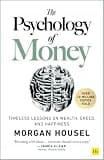
The Psychology of Money
19 short stories on how people actually think and feel about money, not just the maths of it.
Some links above are affiliate links. If you buy through them, Snowball Invest may earn a small commission at no extra cost to you. We only recommend books we'd suggest anyway.
SnowLetter
Australia's money news and our best reads, once a week.
Disclaimer
This calculator estimates term deposit returns using simple interest on the principal, or compounding where you select a payment frequency and choose to leave the interest in. Tax is applied at the marginal rate you enter, and the real return uses the Fisher relation rather than subtracting inflation from the nominal rate. It does not model account fees, early withdrawal penalties, the 31 day notice period, bonus or introductory rates, or the specific terms of any bank's product, all of which are in that product's disclosure statement. The Financial Claims Scheme cap of $250,000 applies per account holder per authorised deposit-taking institution and is subject to government activation and eligibility conditions. Rates, tax brackets and inflation all change. This tool provides estimates only and is not financial or tax advice. Snowball Invest does not compare or recommend banks. Confirm figures at ato.gov.au, abs.gov.au and apra.gov.au.