

Property Depreciation Schedule: How It Works for Investors
Learn how a property depreciation schedule works in Australia, Division 43, Division 40, the 2017 rule change, and how much tax you could save.
 By Timothy Hirou GaschereauPublished
 9 min read
Try it yourself
Property investors spend a lot of time watching their asset grow in value. But here's what a lot of first-time investors miss: the ATO doesn't care that your property went up in value. It still lets you claim a deduction for the wear and tear of the building and its contents, year after year, regardless of what the market is doing. This article is a deep dive into depreciation specifically, for the full list of everything else you can claim on an investment property, see our investment property tax deductions guide.
Quick answer
The ATO lets you claim a deduction for the wear and tear of your investment property's building and fittings, even while the property's market value rises. There are two types of depreciation, Division 43 for the building structure and Division 40 for removable assets like carpet and appliances. A 2017 rule change means investors who buy established, second-hand properties can generally no longer claim Division 40 on existing plant and equipment. A depreciation schedule is a report prepared by a registered quantity surveyor that itemises every claimable deduction, used every year at tax time, not just once. For new or near-new properties, the first year's claim often far exceeds the $400-$700 cost of the report.
In this guide
- →What property depreciation actually is, and why it's a non-cash deduction
- →The difference between Division 43 (the building) and Division 40 (plant and equipment)
- →The 2017 rule change that limits what you can claim on second-hand properties
- →What a depreciation schedule is, and why it's used every year, not once
- →A worked example, plus who genuinely benefits from getting one prepared
🏗️ What is property depreciation?
🎯 The essential: It's a non-cash deduction, you don't spend extra money to claim it, the property just ages, and the ATO recognises that.
Depreciation, in the ATO's language, is a deduction for the decline in value of a depreciating asset over its effective life. For property investors, this applies to two things, the building structure itself, and the removable assets inside it.
The key word is non-cash. Unlike interest repayments or council rates, you don't write a cheque to claim depreciation. The deduction simply reflects that buildings and their contents wear out over time, even as the property's market value does the opposite.
📊 The two types: Division 43 and Division 40
Division 43, capital works
Covers the building's structure, brickwork, concrete, roofing, walls, floors, windows and other fixed structural elements. The deduction rate is 2.5% per year over 40 years for eligible residential properties, construction commencing after 16 September 1987. The deduction is based on the construction cost, not the purchase price. A construction cost of $300,000 at 2.5% works out to $7,500 a year, and it applies to both new and established properties, as long as the build date is after the eligibility threshold.
Division 40, plant and equipment
Covers removable or mechanical assets, carpet, blinds, air conditioning units, hot water systems, dishwashers, ovens, ceiling fans and smoke alarms. Each asset has its own effective life set by the ATO and is depreciated individually.
📅 The 2017 rule change you need to know
🎯 The essential: If you buy an established, second-hand residential property, you can generally no longer claim Division 40 depreciation on plant and equipment that was already in the property when you bought it.
From 9 May 2017, the rules around Division 40 depreciation changed significantly. This was a deliberate policy decision to limit deductions on second-hand assets, and it's still current law today.
What's still claimable after the 2017 change:
- Division 43 capital works deductions are fully unaffected by this change.
- Brand-new assets you install yourself after purchase are claimable under Division 40 from the date you install them.
- New properties, never previously used as a residential rental, are completely unaffected, both divisions remain fully claimable.
More detail on exactly what counts as second-hand is available on the ATO's second-hand depreciating assets page.
📋 What is a depreciation schedule?
A depreciation schedule, sometimes called a tax depreciation report, is a report prepared by a registered quantity surveyor that itemises the depreciable value of your investment property's building structure and all eligible plant and equipment assets. It's the document you hand to your accountant at tax time to substantiate your depreciation claims.
- Valid for the life of the property, up to 40 years for Division 43, you pay once and use it every year.
- Covers both the diminishing value and prime cost calculation methods.
- The ATO requires a "qualified person", a registered quantity surveyor, to estimate construction costs for rental properties.
The Australian Institute of Quantity Surveyors maintains a searchable directory if you need to find one.
⚖️ Diminishing value vs prime cost
Diminishing value front-loads deductions, claiming more in early years, declining over time. Prime cost spreads deductions evenly over the asset's effective life, the same annual deduction every year. You choose a method per asset and generally must stick with it.
For most investors, diminishing value tends to win, because the front-loaded benefit improves cash flow in the early years, when the loan balance and interest costs are typically at their highest too.
💡 A simple worked example
Scenario: a newly built investment property, total purchase price $600,000. These figures are illustrative only.
| Depreciation type | Illustrative first-year claim |
|---|---|
| Division 43, capital works (construction cost ~$280,000 x 2.5%) | $7,000 |
| Division 40, plant and equipment (diminishing value, total assets ~$25,000) | ~$4,500 |
| Total first-year depreciation claim | ~$11,500 |
At a 37% marginal tax rate, that $11,500 deduction translates to roughly $4,255 back at tax time. The depreciation schedule itself costs $400-$700, so in this scenario the first year's tax saving alone is more than six times the cost of the report.
💰 How much it costs, and is it worth it
A depreciation schedule typically costs $400-$700, depending on property type, location and complexity. The report fee is generally tax-deductible in full in the year you obtain it, and it's a one-off cost supporting claims for the life of the property.
For new or near-new properties, the first-year claim often exceeds the report cost many times over, as the worked example above shows. For older properties, it's still worth investigating, even if 2017 rules limit Division 40 claims on existing plant and equipment, Division 43 capital works may still be significant if the property was built after September 1987.
Depreciation is a non-cash deduction, so it's one of the biggest levers behind a negatively geared investment property's after-tax numbers. If you want to see how your own depreciation claim feeds into the wider picture, our negative gearing calculator estimates the after-tax cost of a rental property once tax savings are factored in.
🏘️ Negative Gearing Calculator
Estimate the after-tax cost of your investment property, including the tax saving from depreciation and other deductions.
🧭 Who should get a depreciation schedule
| Property type | Worth getting a schedule? |
|---|---|
| New or near-new | Almost always, maximum benefit, both divisions fully available. |
| Established, built after Sept 1987 (post-2017 purchase) | Usually, Division 40 on existing assets generally isn't claimable, but Division 43 may still be significant. |
| Built before Sept 1987 | Generally no Division 43 available, but new assets you install yourself may still qualify under Division 40. |
🚫 Common mistakes to avoid
Assuming you can claim depreciation on an established property's existing appliances post-2017. You generally can't claim Division 40 on plant and equipment already in the property when you bought it second-hand.
Thinking a depreciation schedule is a one-time claim. It's valid for the life of the property and used every year, not a once-off deduction you claim and forget about.
Not realising the report itself is deductible. The quantity surveyor's fee is generally fully deductible in the year you obtain it, on top of everything the report goes on to unlock.
SnowLetter
Australia's money news and our best reads, once a week.
❓ Frequently asked questions
Do I need a depreciation schedule if my property is old?
+
It depends on the build date. Division 43 capital works deductions may still apply if the property was built after 16 September 1987. New assets you install yourself are always claimable regardless of the property's age, so it's usually still worth a conversation with a quantity surveyor.
Can I backdate a depreciation schedule for previous tax years?
+
Generally yes, you can amend prior-year returns to claim depreciation you missed, subject to the ATO's amendment time limits, usually two years for individuals and four years for businesses.
Who is qualified to prepare a depreciation schedule in Australia?
+
A registered quantity surveyor. The ATO requires a "qualified person" to estimate construction costs for rental properties, and the Australian Institute of Quantity Surveyors maintains a searchable member directory if you need to find one.
Is depreciation claimable on a property I also live in part of the year?
+
Yes, but only for the portion of the year it's rented out or genuinely available for rent. You apportion the claim accordingly, the same principle that applies to most other rental deductions.
Does claiming depreciation affect my capital gains tax when I sell?
+
Yes. Division 43 capital works deductions you've claimed reduce your cost base for CGT purposes, which can mean a higher capital gain when you sell. It's still almost always worth claiming, since the annual tax savings along the way outweigh the later CGT impact.
Can I switch between diminishing value and prime cost methods?
+
Generally no. Once you've chosen a method for a specific asset, you're locked into it for that asset's remaining effective life.
What happens to my depreciation schedule if I renovate?
+
A renovation can increase your depreciation claims. New structural work adds to your Division 43 capital works, and any new assets you install are claimable under Division 40. Your quantity surveyor will generally need to update the schedule to reflect the changes.
📚 Recommended reading
The Armchair Guide to Property Investing
Ben Kingsley & Bryce Holdaway

The Armchair Guide to Property Investing
Two of Australia's most trusted property voices lay out a plain-English roadmap to building a portfolio on an average income. Practical, local, and refreshingly free of get-rich-quick hype.
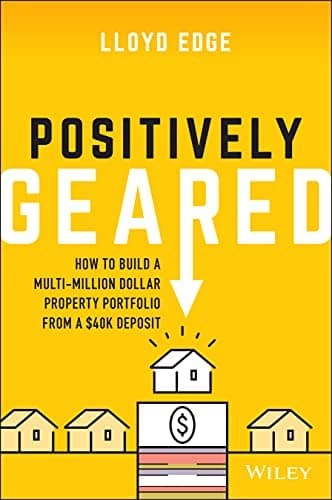
Positively Geared
Lloyd Edge
Positively Geared
How to build a positive cashflow property portfolio that funds the life you want, not just a mountain of debt. Lloyd Edge went from music teacher to property strategist, so the advice is grounded in the real Aussie market.
How to Grow a Multi-Million Dollar Property Portfolio
Michael Yardney

How to Grow a Multi-Million Dollar Property Portfolio
Michael Yardney, Australia's most quoted property commentator, shares the strategy and mindset behind serious portfolio growth. Big-picture thinking for investors who want to play the long game.
Some links above are affiliate links. If you buy through them, Snowball Invest may earn a small commission at no extra cost to you. We only recommend books we'd suggest anyway.
Sources
- 1. Depreciating assets in rental properties, Australian Taxation Office
- 2. Second-hand depreciating assets, Australian Taxation Office
- 3. Work out your capital works deductions, Australian Taxation Office
- 4. CGT when selling your rental property, Australian Taxation Office
- 5. Property investment, Moneysmart, Australian Securities and Investments Commission
- 6. Find a registered quantity surveyor, Australian Institute of Quantity Surveyors
This article is general information only, not tax or financial advice. Depreciation entitlements depend on your property's build date, construction cost and your own circumstances, so treat the figures here as illustrative. Get a depreciation schedule from a registered quantity surveyor and confirm your claim with a registered tax agent before you lodge.
Was this article useful?
Put it to your own numbers
Every calculator runs entirely in your browser, with nothing stored. See what these numbers look like for your own situation.
Try the Negative Gearing calculator →General information only. This article is educational and does not constitute personal financial advice. It does not account for your circumstances. Consider your own situation and seek advice from a licensed adviser before acting. Read our full disclaimer.

Timothy Hirou Gaschereau
Founder of Snowball Invest, not a financial adviser.
I write about what I'm learning myself, because nobody ever taught us how to take control of our own money. It's a skill, not a mystery, and it's never too late to learn it. The best day to start was yesterday, the second best is today.
LinkedIn →Related articles

Pay Off Mortgage or Invest? The Honest Australian Guide
Should you pay off your mortgage or invest your spare cash? We break down the real maths, the tax angle, offset accounts, super, and a worked example for Australian homeowners.

Novated Lease vs Car Loan vs Paying Cash: Which One Actually Wins?
Novated lease, car loan or paying cash? A plain-English guide to the tax savings, the catches, and exactly who each option suits when financing a car in Australia.
How to Transfer Property After Someone Dies in Australia
Transferring a house after someone dies in Australia? A step by step guide to probate, transmission applications, CGT, stamp duty and realistic timelines.