
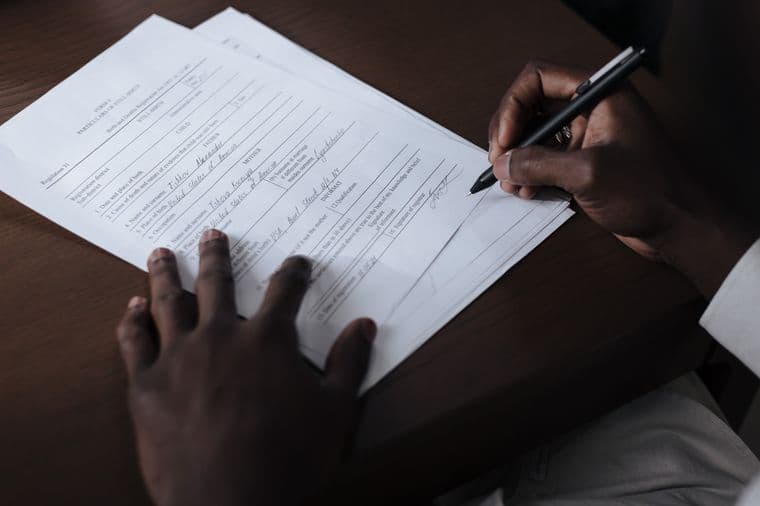
How to Transfer Property After Someone Dies in Australia
Transferring a house after someone dies in Australia? A step by step guide to probate, transmission applications, CGT, stamp duty and realistic timelines.
 By Timothy Hirou GaschereauPublished
 9 min read
Transferring a house after someone dies comes down to two paths, and which one you take depends on one fact: how the property was owned. This is a calm, step-by-step walkthrough covering joint tenancy, probate, transmission applications, CGT and stamp duty, part of our property and debt section on Snowball Invest. General information only, not legal or tax advice. For your situation, speak to a solicitor or conveyancer and a registered tax agent.
Quick answer
If the deceased owned the property as a joint tenant, the surviving owner usually inherits automatically and lodges a simple survivorship application with the state land titles office. No probate needed. If the property was in the deceased's sole name (or owned as tenants in common), it forms part of the estate: get probate (or letters of administration), lodge a transmission application, then transfer the title or sell. A straightforward estate can take 3 to 12 months. Complex or contested estates take longer.
In this guide
- →The first fork: joint tenancy versus sole ownership
- →The five-step estate path, in order
- →Realistic timeframes for each scenario
- →CGT on an inherited home and the two-year window
- →Stamp duty exemptions and when you need a professional
🔀 How the property was owned: the first fork
🎯 The essential: Before anything else, check how the deceased held the property. This single fact determines which path you take.
Joint tenancy means two or more people own the property together, each with an equal, undivided share. When one owner dies, their share passes automatically to the surviving owner by right of survivorship. No will, no probate, no estate process required for the property itself. The surviving owner typically lodges a survivorship application (sometimes called a transmission by survivorship) with the relevant state land titles office, along with a certified copy of the death certificate. The exact form and fee vary by state.
Sole ownership or tenants in common is a different story. If the deceased owned the property alone, or held a defined share as a tenant in common, that interest forms part of their estate and must go through the estate process below.
State variation note: the exact forms, fees and requirements differ across the states and territories. Always check with your state land titles office, for example NSW Land Registry Services, Land Use Victoria or Titles Queensland.
🪜 The estate path, step by step
If the property was solely owned or held as tenants in common, here is the process. It is sequential. You cannot skip steps.
- Check whether probate is required. Most states require the executor to obtain a grant of probate from the Supreme Court before the land titles office will register a transmission application. If there is no will, the administrator applies for letters of administration instead. Property is rarely exempt from the process, so check with your state Supreme Court or a solicitor before assuming you can skip it.
- Apply for probate (or letters of administration). The executor files the application with the Supreme Court, with the original will, the death certificate and an inventory of assets and liabilities. Allow several weeks to a few months depending on court backlogs and complexity. Fees vary by state and estate value, so check the current fee schedule rather than relying on a figure online. This is not the time to DIY.
- Lodge a transmission application. Once probate is granted, the executor lodges a transmission application with the land titles office. Important: this does not transfer the property to the beneficiary. It records the executor's authority over the property on the title, the step before the transfer.
- Transfer title to the beneficiary, or sell. The executor either lodges a transfer of land form to move the title into the beneficiary's name, or sells the property and distributes the proceeds. Both options involve further lodgement and a conveyancer or solicitor.
- Updated certificate of title issued. The land titles office issues an updated certificate of title in the beneficiary's name (or the buyer's name if the property was sold). The transfer is now complete.
⏱️ Typical timeframes
Timelines vary significantly. State, court backlogs, estate complexity and whether the will is contested all play a role.
| Scenario | Rough timeframe |
|---|---|
| Joint tenancy (survivorship application) | A few weeks to 2 months |
| Straightforward estate with probate | 3 to 12 months from date of death |
| Complex or contested estate | Can exceed 12 months, sometimes years |
These are general guides only. Do not plan a property sale around a fixed date until probate has actually been granted.
🧾 CGT on inherited property: the short version
This is the question most beneficiaries ask first. The key point: you do not pay CGT when you inherit a property. CGT is triggered when you sell.
If the deceased used the property as their main residence and it was not producing income just before death, and you sell within 2 years of the date of death, you may be fully exempt from CGT. The 2 years is measured to the date of settlement, not the date you sign the contract. The ATO can extend this period in exceptional circumstances outside your control, such as a disputed will.
If you sell after the 2-year window, or the property was not the deceased's main residence, CGT is likely to apply. The cost base depends on when the deceased originally acquired the property. For post-CGT assets (acquired on or after 20 September 1985), the cost base is generally the market value at the date of death. For pre-CGT assets (acquired before that date), special rules apply and you may use the original cost base. CGT on inherited property is genuinely complex, so a registered tax agent is worth the cost, and the ATO's page on inherited property and CGT is the authoritative starting point.
🏷️ Stamp duty on deceased estate transfers
Good news here, mostly. In most Australian states and territories, transfers of property to a beneficiary under a will (or intestacy) are exempt from stamp duty or attract a concessional rate. The exemption generally applies when the transfer is made strictly in accordance with the will or intestacy rules, is not for valuable consideration (the beneficiary is not paying for the property), and is to the extent of the beneficiary's entitlement under the estate.
If the transfer exceeds the beneficiary's entitlement, or is structured differently, duty may apply on the excess. Transfers to a third-party buyer (a sale on the open market) attract normal stamp duty for the buyer, and the deceased estate exemption does not apply to them. The rules differ by state, so check with your state revenue office or a conveyancer before assuming you are exempt.
🧮 Stamp Duty Calculator
If the estate property is being sold and a buyer pays duty, or the exemption doesn't apply, estimate the stamp duty by state.
🧑⚖️ Do you need a conveyancer or solicitor?
Yes. For almost every step of a deceased estate property transfer, you need professional help. A solicitor is typically required for the probate application, preparing the court documents and handling correspondence with the Supreme Court. A conveyancer (or solicitor) handles the property-specific steps: preparing and lodging the transmission application, preparing the transfer of land form, liaising with the land titles office and managing settlement if the property is sold.
Our guides on what conveyancers do and what they cost, on writing a will and on estate planning are worth reading. Engaging a professional early keeps the process moving and reduces the risk of costly errors.
SnowLetter
Australia's money news and our best reads, once a week.
❓ Frequently asked questions
Do you need probate to sell an inherited house in Australia?
+
Usually yes, if the property was in the deceased's sole name. The executor needs probate (or letters of administration) before the land titles office will register the transmission application, which is a required step before any sale or transfer. Joint tenancy properties pass automatically by survivorship and do not require probate. Rules vary by state, so confirm with your state land titles office or a solicitor.
What is a transmission application?
+
A transmission application is the form lodged with the state land titles office to record the executor's (or administrator's) authority over the property. It does not transfer the property to the beneficiary. It is the step before the transfer, confirming that the executor has legal authority to deal with the title. Once registered, the executor can then lodge a transfer of land form to move the title to the beneficiary, or proceed with a sale.
Do beneficiaries pay stamp duty when inheriting a property?
+
In most states, transfers to a beneficiary under a will are exempt from stamp duty or attract a reduced rate. But the rules differ by state, the exemption applies only to the extent of the beneficiary's entitlement, and the evidence requirements vary. Check with your state revenue office or a conveyancer before assuming you are exempt.
Is there CGT on an inherited home in Australia?
+
You do not pay CGT when you inherit a property. CGT applies when you sell. If the property was the deceased's main residence and you sell within 2 years of the date of death, you may be fully exempt. Sell after 2 years, or if the property was not the main residence, and CGT is likely to apply. See the ATO's guidance on inherited property and CGT and speak to a registered tax agent for advice specific to your situation.
How long does it take to transfer a deceased estate property in Australia?
+
It depends on the state, the complexity of the estate and court backlogs. A straightforward estate with probate can take 3 to 12 months from the date of death to the title being transferred. Contested or complex estates take longer, sometimes well beyond 12 months. Engaging a solicitor or conveyancer early, and gathering documents promptly, helps keep things moving.
📚 Recommended reading
The Barefoot Investor
Scott Pape

The Barefoot Investor
Australia's best-selling money book ever. A simple system for accounts, budgeting, debt and a real emergency fund in one.
Die With Zero
Bill Perkins
Die With Zero
Stop hoarding cash for a someday that never comes. Perkins makes the case for spending on experiences while you are still young enough to enjoy them.
The Psychology of Money
Morgan Housel
The Psychology of Money
19 short stories on how people actually think and feel about money, not just the maths of it.
Some links above are affiliate links. If you buy through them, Snowball Invest may earn a small commission at no extra cost to you. We only recommend books we'd suggest anyway.
Sources
Was this article useful?
Put it to your own numbers
Every calculator runs entirely in your browser, with nothing stored. See what these numbers look like for your own situation.
Explore the calculators →General information only. This article is educational and does not constitute personal financial advice. It does not account for your circumstances. Consider your own situation and seek advice from a licensed adviser before acting. Read our full disclaimer.

Timothy Hirou Gaschereau
Founder of Snowball Invest, not a financial adviser.
I write about what I'm learning myself, because nobody ever taught us how to take control of our own money. It's a skill, not a mystery, and it's never too late to learn it. The best day to start was yesterday, the second best is today.
LinkedIn →Related articles

Capital Gains Tax on Inherited Property in Australia
Inheriting property does not trigger CGT, but selling it might. The 2-year rule, cost base, pre-CGT property and the main residence exemption, explained.
How Long Does Probate Take in Australia?
Probate usually takes 4 to 8 weeks for the grant, then 6 to 12 months to administer the estate. Here is what to expect, and what tends to slow it down.

What Does an Executor of an Estate Do in Australia?
Named executor of a will in Australia? Here is exactly what you have to do, step by step, from locating the will to paying tax and distributing assets.