

When Should You Refinance Your Home Loan in 2026?
A practical, numbers-first guide to refinancing your home loan in Australia in 2026, covering real costs, the break-even calculation, step-by-step process, and when not to bother.
 By Timothy Hirou GaschereauPublished
 10 min read
Try it yourself
More than 640,000 Australian mortgages were refinanced in 2025, so if you're weighing it up, you're in good company, not doing something unusual. This is part of a wider guide to property and debt on Snowball Invest. If you're really after cash rather than a better rate, our home loan top-up vs refinance guide is the better starting point.
Quick answer
The RBA cash rate is 4.35% as of August 2026, after three cuts in 2025 took it down to 3.60%, followed by three hikes that brought it back up. Variable rates currently sit between 6.24% and 6.92% p.a., with the sharpest deals advertised around 5.69% p.a. Refinancing a standard variable loan typically costs $500 to $2,000, averaging around $831, so you need to calculate your break-even point before you commit. The most common reason to refinance is a lower interest rate, on a $600,000 loan even a 0.5% rate cut saves roughly $3,000 a year. Refinancing is probably not worth it if the rate difference is under 0.25%, you're mid-way through a fixed term, or you plan to sell within 12 to 18 months.
In this guide
- →Why so many Australians are refinancing right now, and what the RBA's rate rollercoaster has to do with it
- →The real reasons people refinance, beyond just chasing a lower rate
- →Every cost involved, itemised, so nothing surprises you at settlement
- →How to calculate your own break-even point before you commit
- →The step-by-step process, and the mistakes that quietly erase the savings
- →When refinancing genuinely isn't worth the paperwork
🔄 What Refinancing Actually Means
Refinancing means replacing your existing home loan with a new one, either with your current lender or a different one. The new loan pays out the old one, and you start fresh with new terms, a new rate, and potentially new features.
There are two flavours worth knowing. An internal refinance, or "loan variation," keeps you with the same lender but moves you to a different product. An external refinance means switching to a new lender entirely, usually more paperwork, but it tends to deliver bigger savings since you're forcing lenders to actually compete for your business.
📈 Why Australians Are Refinancing Right Now
Over 640,000 Australian mortgages were refinanced in 2025, up roughly 20% on 2024, according to the Australian Banking Association. Forecasts project that figure climbing to 762,000+ in 2026, a further 19% increase.
The context matters here. The RBA cut the cash rate three times through 2025, taking it from 4.35% down to 3.60% by August 2025, then through early 2026 it reversed course, three consecutive hikes in February, March and May 2026 pushed the cash rate back up to 4.35%, where it has been held since. That rollercoaster has left many borrowers on rates that no longer reflect the best available deals.
🎯 The essential: Average variable rates currently sit between 6.24% and 6.92% p.a., depending on the lender and loan type. The lowest advertised rates are around 5.69% p.a. for owner-occupiers. The gap between what most people are paying and what's available is real, and that gap is what's driving the refinancing wave.
The average refinanced loan for owner-occupiers is $603,000. At that size, even a modest rate improvement translates to meaningful dollar savings every month. Add cost-of-living pressure and fierce competition between lenders, and you have a market where staying put is increasingly expensive.
💡 The Main Reasons to Refinance
Chasing a lower interest rate. The most common reason, and the maths is straightforward. On a $600,000 loan, a 0.5% rate reduction saves roughly $3,000 a year in interest, or $250 a month. Even a 0.3% difference on that loan size adds up to around $1,800 annually. The key is comparing the comparison rate, not just the headline rate.
Accessing home equity. If your property has grown in value, you may have built up equity you can access by refinancing to a larger loan. Common uses include funding renovations, buying an investment property, or covering other major expenses, just be clear-eyed that borrowing against your home shifts risk onto your biggest asset.
Switching loan type. Some borrowers refinance to move from variable to fixed, or the other way around, depending on where they think rates are heading. Our guide to fixed vs variable vs split home loans walks through that trade-off in full. Others drop features they're not using, like an offset account with a higher rate attached, to get a leaner, cheaper loan.
Debt consolidation. Bundling personal loans or credit card debt into your home loan can cut the interest rate on that debt significantly, credit cards often charge 18 to 22% p.a., rolling that into a home loan at around 6% looks attractive on paper. The risk is extending short-term debt over a 25 to 30 year term, which can cost more in total interest even at a lower rate. Run the numbers carefully before doing this.
Escaping a high-fee package. Many lenders sell "professional packages," bundling a discounted rate with an annual fee, often $300 to $400 a year. If you're not using the bundled features (credit card, offset account, transaction account), that fee may outweigh the rate discount. Refinancing to a no-frills loan can save money even if the rate is similar.
💰 The Real Costs of Refinancing (Don't Underestimate These)
Refinancing isn't free, and the fees are easy to underestimate until they show up as line items at settlement.
| Cost item | Typical range |
|---|---|
| Discharge fee, charged by your current lender to close the loan | $150 to $500 |
| Application or establishment fee, many lenders waive this for refinancers | $0 to $750 |
| Valuation fee, some lenders offer free desktop valuations | $100 to $600 |
| Government registration fees | $100 to $250, state-dependent |
| Settlement or legal fees, often bundled with the application fee | $100 to $500 |
| LMI, only if your LVR is over 80% after refinancing | Thousands to tens of thousands |
| Break costs for fixed loans, balance × remaining term × rate differential | Hundreds to tens of thousands |
Government registration fees vary by state: roughly $175.70 in NSW, $238.14 in QLD, $125.70 in VIC, $216.60 in WA, $198 in SA, $178 in ACT, $163.30 in TAS and $176 in the NT. Confirm the current figure with your state's land titles office before budgeting.
For a standard variable-rate refinance with no LMI and no fixed-rate break costs, total typically lands between $500 and $2,000, averaging around $831. The upper end, around $2,756, tends to apply when multiple fees stack up or a valuation is required on a complex property. Fixed-rate break costs are the wildcard, they can run into the tens of thousands if rates have moved significantly since you locked in, so always get a written payout figure from your current lender before doing anything else.
🧮 Loan True Cost Calculator
Plug your own numbers in to see the total cost over the life of the loan, not just the upfront fees.
⚖️ The Break-Even Calculation
This is the most important number in any refinancing decision. The formula: total refinancing costs divided by monthly interest savings equals the number of months to break even.
Worked example: a $600,000 loan at 6.50% p.a., refinanced to a new loan at 5.90% p.a., a 0.60% difference. Monthly saving is $600,000 × 0.006 ÷ 12 = $300 a month. Total refinancing costs, at a mid-range estimate, come to $1,500. Break-even point is $1,500 ÷ $300 = 5 months.
Five months is a very short break-even, refinancing makes clear sense here if you're planning to hold the loan for at least a year. Flip the scenario: if costs are $2,000 and the monthly saving is only $80 (a 0.15% rate difference on the same loan), the break-even is 25 months. If you're planning to sell or refinance again before then, you're likely to lose money on the switch.
Use the comparison rate for this calculation, not the headline rate. The comparison rate folds in most fees and gives a more accurate picture of the true cost, a loan advertised at 5.69% with a comparison rate of 6.10% is not the bargain it appears.
📝 How to Actually Refinance (Step by Step)
- Check your current loan's exit costs. Call your lender for a payout figure and written discharge fee, do this before applying anywhere else.
- Compare rates properly using the comparison rate. The headline rate is a marketing number, the comparison rate is required by law to be displayed alongside it and includes most fees, a much better basis for comparison.
- Check your LVR. Get a rough property valuation before applying. If your loan-to-value ratio has crept above 80%, you may face Lenders Mortgage Insurance with the new lender, which can wipe out your savings entirely.
- Get your paperwork ready. Recent payslips, the last two years of tax returns, three to six months of bank statements, and your current loan statements. Having these ready speeds up the process significantly.
- Decide: mortgage broker or go direct. A broker can access dozens of lenders and compare products, usually at no cost to you, since they're paid by the lender. Going direct can be faster if you already know who you want and have a straightforward application.
- Apply and settle. Most lenders take two to six weeks to process. Your new lender handles the settlement with your old lender, so you don't need to manage the payout yourself.
⚠️ Common Mistakes to Avoid
Refinancing too often. Every refinance resets the break-even clock. Switching every 12 to 18 months chasing cashback offers or marginally lower rates means fees eat your savings faster than the rate difference builds them. Run the break-even calculation every single time.
Ignoring LMI risk. Property values don't always go up. If your home has fallen in value, or you've borrowed more against it since buying, your LVR may have risen above 80%. Triggering LMI on a refinance can cost thousands and make the whole exercise pointless.
Chasing rate without checking features. A lower rate with no offset account isn't always better than a slightly higher rate with a functioning one. If you hold $50,000 in savings, an offset account on a $600,000 loan at 6.50% saves roughly $3,250 a year in interest. Dropping the offset to save 0.20% on the rate, worth $1,200 a year, would leave you $2,050 worse off.
Not reading the comparison rate. The headline rate is what lenders advertise, the comparison rate is what the loan actually costs once fees are included. A loan with a 5.69% headline rate and a 6.10% comparison rate has significant fees baked in, always compare comparison rates when shopping around.
🛑 When Refinancing Probably Is Not Worth It
Refinancing is probably worth it when
- ✓The rate gap is 0.5% or more above the best available rate
- ✓Your loan balance is large enough that the dollar saving covers costs quickly
- ✓You're clear of any fixed-rate term, or the break cost is small
- ✓Your LVR stays under 80% after refinancing, so LMI doesn't apply
- ✓You plan to hold the loan well past your break-even point
Probably not worth it when
- ✕The rate difference is under 0.25 to 0.30%, and your balance is under $400,000
- ✕You're early in a fixed-rate term with high break costs
- ✕Your LVR has risen above 80% and you'd trigger LMI with the new lender
- ✕You're planning to sell within 12 to 18 months
- ✕You've recently refinanced and haven't yet hit your last break-even point
SnowLetter
Australia's money news and our best reads, once a week.
❓ Frequently asked questions
How much does it cost to refinance a home loan in Australia?
+
For a standard variable-rate loan, expect to pay between $500 and $2,000 in total, with the average around $831. The main costs are the discharge fee ($150 to $500), any application fee at the new lender ($0 to $750), a valuation fee ($100 to $600), and state government registration fees (around $125 to $238 depending on your state). Fixed-rate loans can cost significantly more if break costs apply.
How do I know if refinancing will save me money?
+
Use the break-even calculation: divide your total refinancing costs by your monthly interest saving. If the break-even period is shorter than how long you plan to hold the loan, refinancing is likely worth it. Always use the comparison rate, not the headline rate, when calculating your saving.
Can I refinance if I am on a fixed-rate loan?
+
Yes, but it will almost certainly cost you. Fixed-rate loans carry break costs if you exit before the fixed term ends, calculated based on your loan balance, the time remaining on the fixed term, and the difference between your fixed rate and current wholesale rates. Get a written break cost estimate from your lender before you do anything.
Should I use a mortgage broker or go directly to a lender?
+
A mortgage broker can compare products across dozens of lenders and is typically paid by the lender, not you, making them a low-cost way to shop the market. Going direct can be faster if you have a specific lender in mind and a straightforward financial situation. Neither approach is universally better, it depends on how much time you have and how complex your situation is.
How long does refinancing take?
+
Most refinances settle within two to six weeks of submitting a complete application. Having your documents ready (payslips, tax returns, bank statements, existing loan statements) at the start is the single biggest factor in speeding up the process.
What is a comparison rate and why does it matter?
+
A comparison rate is a standardised interest rate that includes most fees and charges associated with a loan, expressed as a single annual percentage. It is required by law to be displayed alongside the headline rate in Australia. It matters because headline rates can be misleadingly low if a loan carries high fees. The comparison rate gives you a more accurate basis for comparing loans from different lenders.
This article is general information only, not personal financial or tax advice. Rates, fees and timelines vary by lender and change over time, always confirm current figures with your lender or broker before committing, and speak with a registered tax professional about the deductibility of interest on your own loan.
📚 Recommended reading
The Armchair Guide to Property Investing
Ben Kingsley & Bryce Holdaway
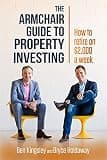
The Armchair Guide to Property Investing
Two of Australia's most trusted property voices lay out a plain-English roadmap to building a portfolio on an average income. Practical, local, and refreshingly free of get-rich-quick hype.
Money School
Lacey Filipich
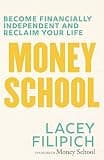
Money School
Lacey Filipich shows how to buy back your time, not just budget your dollars, with a clear path from saving to financial independence. It is refreshingly Australian and genuinely doable, even if maths was never your thing.
Make Money Simple Again
Bryce Holdaway & Ben Kingsley

Make Money Simple Again
The Property Couch guys turn cash-flow chaos into one simple money management system you can actually stick to. Perfect if budgeting apps have never quite worked for you.
Some links above are affiliate links. If you buy through them, Snowball Invest may earn a small commission at no extra cost to you. We only recommend books we'd suggest anyway.
Sources
- 1. New data shows record number of Australians refinancing their home loan, Australian Banking Association
- 2. Cash rate target, Reserve Bank of Australia
- 3. Switching home loans, Moneysmart, Australian Securities and Investments Commission
- 4. Cost to refinance a home loan, Money.com.au
- 5. Home loan comparison, Canstar
- 6. Current home loan interest rates in Australia, Finder
Was this article useful?
Put it to your own numbers
Every calculator runs entirely in your browser, with nothing stored. See what these numbers look like for your own situation.
Try the LVR & Equity calculator →General information only. This article is educational and does not constitute personal financial advice. It does not account for your circumstances. Consider your own situation and seek advice from a licensed adviser before acting. Read our full disclaimer.

Timothy Hirou Gaschereau
Founder of Snowball Invest, not a financial adviser.
I write about what I'm learning myself, because nobody ever taught us how to take control of our own money. It's a skill, not a mystery, and it's never too late to learn it. The best day to start was yesterday, the second best is today.
LinkedIn →Related articles

Home Loan Top-Up vs Refinancing: Which Gets You Cash Cheaper?
Top-up or refinance? We break down the real costs, timelines, and worked examples so Australian homeowners can make the smarter call.

Pay Off Mortgage or Invest? The Honest Australian Guide
Should you pay off your mortgage or invest your spare cash? We break down the real maths, the tax angle, offset accounts, super, and a worked example for Australian homeowners.
How Much Can I Borrow for a Home Loan in Australia?
Wondering how much you can borrow for a home loan in Australia? Learn what drives borrowing power, what quietly cuts it, and how to improve it before you apply.