

Cross-Collateralisation: Why Banks Love It and Why It Can Trap You
Cross-collateralisation bundles your properties as security for multiple loans. Learn the real risks, a worked example, and the standalone alternative.
 By Timothy Hirou GaschereauPublished
 10 min read
Try it yourself
This pairs with our guide on using equity to buy an investment property, which touches on cross-collateralisation briefly. This one goes deeper: what it actually means, why lenders push it, and how to structure your loans differently.
Quick answer
Cross-collateralisation means a lender uses more than one of your properties as security for one or more of your loans, instead of each loan being tied to its own property. Banks like it because it gives them more control and makes it harder for you to leave. The risks are real: selling one property, refinancing, or even a value drop can trigger lender involvement across your whole portfolio. Most experienced investors and brokers recommend the alternative, standalone security, where each loan is secured only by its own property.
In this guide
- →What cross-collateralisation actually means, in plain English
- →Why banks default to this structure
- →The four real risks it creates for you
- →The standalone alternative, and how to set it up
- →A worked example comparing both structures side by side
🔗 What is cross-collateralisation?
🎯 The essential: The bank uses more than one of your properties as security for one or more of your loans, so its claim reaches wider than any single loan.
Here's a plain-English way to think about it. Imagine you've got two cars. You borrow money to buy the second car, and the dealer says: “We'll take both cars as security, not just the new one.” If you miss a payment on the new car loan, they can come after both vehicles. That's cross-collateralisation, the lender's security net is wider than it needs to be.
In property terms: you own a home, you want to buy an investment property, and the bank says it will lend you the money, but it wants both properties listed as security across both loans. The loans are “crossed.”
Cross-collateralised
Every property secures every loan, so the bank touches both
Standalone
Each loan holds only its own property, clean to sell or refinance
🏦 Why banks default to this structure
When you already own a home and want to use your equity to buy an investment property, the path of least resistance for most lenders is to bundle everything together. The bank's incentive is straightforward: more security, more control, harder for you to leave.
If both properties secure both loans, the bank has a much stronger grip on your financial position. You can't sell one property without their sign-off. You can't refinance one loan without them being involved. Switching lenders becomes a major restructure, not a simple application.
Many borrowers don't even realise it's happened. The loan documents get signed, settlement goes through, and it's only later, when they try to sell or refinance, that the structure becomes a problem.
⚠️ The real risks of cross-collateralisation
Cross-collateralisation isn't just an inconvenience, it can genuinely limit your options and cost you money.
1. Default on one loan, and the bank can pursue any crossed property. If you fall behind on your investment loan, the bank isn't limited to selling the investment property to recover the debt. Because both properties are listed as security, cross-collateral lending is generally structured so a default on one loan can give the bank recourse to the other crossed property too. The exact legal mechanism varies by lender and loan contract, confirm the specifics with a solicitor familiar with Australian mortgage law.
2. Selling one property requires the bank's involvement. Want to sell your investment property? With crossed loans, the bank needs to revalue both properties, reassess the remaining security position, and formally approve the release of security on the sold property. This adds time, cost, and uncertainty to what should be a straightforward transaction. If the remaining property's loan-to-value ratio (LVR) looks tight after the sale, the bank may require you to pay down part of the remaining debt before releasing the security.
3. A drop in value on one property affects your whole portfolio LVR. Under a cross-collateralised structure, the bank looks at your combined security value versus your combined debt. If one property drops in value, it drags the LVR across the whole portfolio upward. That can push you above 80% LVR, triggering lenders mortgage insurance (LMI) costs, restricting your ability to access equity, or limiting your capacity to borrow more.
🧮 Borrowing Power Calculator
Check how a combined LVR, or a standalone one, changes what you can actually borrow.
4. You're locked to one lender. This is the one that stings most over time. If both properties are secured with the same bank, moving even one loan to a competitor means restructuring the entire security arrangement, a significant administrative and legal exercise. The result: you're less likely to shop around, and the bank knows it. You may end up paying a higher interest rate on one or both loans simply because switching is too hard.
🧩 The alternative: standalone (separate) securitisation
The cleaner structure is simple: each loan is secured only by its own property. Under standalone securitisation, your home loan is secured by your home, and your investment loan is secured by the investment property. The two are completely separate.
To buy an investment property using equity in your home without crossing the loans, the typical approach is:
- Take out a separate equity loan (or line of credit) against your home only, bringing your home's LVR up to 80% and releasing usable equity as cash.
- Use those funds as the deposit and purchase costs on the investment property.
- The investment property loan is then secured only by the investment property, completely separate from your home.
This is exactly what we walk through in the worked example below. For a deeper look at how equity release works in practice, including a full worked example of usable equity, see our guide on using equity to buy an investment property. It's also worth knowing where your extra cash sits day to day, our offset account vs redraw guide covers a related structural decision that also affects flexibility and tax outcomes down the line.
Some lenders will offer standalone security within their own product range, but many will push back, preferring the crossed structure. Using separate lenders for each property is the most reliable way to guarantee standalone security.
📊 Worked example: cross-collateralised vs standalone
Let's make this real. Same borrower, same properties, two completely different outcomes. The starting position: an owner-occupier home worth $900,000 with $600,000 owing, giving usable equity (to 80% LVR) of $900,000 x 80% minus $600,000, which is $120,000. The investment property purchase price is $500,000.
Structure A: cross-collateralisation
The bank takes security over both properties for both loans. Looks fine on paper:
| Amount | |
|---|---|
| Home value | $900,000 |
| Investment property value | $500,000 |
| Combined security value | $1,400,000 |
| Home loan | $600,000 |
| Investment loan | $500,000 |
| Combined debt | $1,100,000 |
| Combined LVR | 78.6% |
Three years later, they want to sell the investment property for $550,000. The bank needs to revalue both properties (at the borrower's expense), reassess the security position across the whole portfolio, and formally approve the release of security on the investment property. After the sale, only the home remains as security for the $600,000 home loan. If the home has dropped in value, or the bank's valuation comes in conservative, the remaining LVR could look tight, and the bank may require a partial debt repayment before releasing the security cleanly. What should be a clean settlement becomes a negotiation.
Structure B: standalone securitisation
Each loan is secured only by its own property:
| Amount | |
|---|---|
| Equity loan against home | $120,000 (home LVR now at 80%) |
| Investment property loan | ~$380,000 (secured by investment property only) |
| Home loan (unchanged) | $600,000 |
Three years later, sell the investment property for $550,000. Pay out the $380,000 investment loan from the proceeds, keep the remaining ~$170,000. The home loan is completely unaffected, the bank doesn't need to be involved at all. Clean, simple, no surprises.
Side-by-side comparison
| Cross-collateralised | Standalone | |
|---|---|---|
| Security structure | Both properties secure both loans | Each loan secured by its own property |
| Selling one property | Requires bank revaluation and approval | Straightforward, pay out that loan and go |
| Refinancing one loan | Triggers restructure of whole arrangement | Refinance each loan independently |
| LVR impact of value drop | Affects combined portfolio LVR | Affects only that property's loan |
| Lender flexibility | Locked to one lender | Can use different lenders for each property |
| Bank's level of control | High | Low |
| Investor's flexibility | Low | High |
🤔 Is cross-collateralisation ever okay?
Honestly, there are narrow situations where it's less of a problem, typically when you're buying and holding long-term with no plans to sell or refinance, and you're comfortable staying with the same lender indefinitely.
But for most investors who want to build a portfolio, retain flexibility, or eventually sell individual properties, the standalone structure is almost always the better choice. The extra admin involved in setting it up from the start is worth it, a good mortgage broker can structure this from the outset, and it's much easier than trying to uncross loans later.
This is general information, not legal or financial advice, your situation will depend on your lender, your loan contracts and your long-term plans. Talk to a mortgage broker or solicitor before deciding how to structure your security.
SnowLetter
Australia's money news and our best reads, once a week.
❓ Frequently asked questions
Is cross-collateralisation always bad?
+
Not always, but it's rarely in the borrower's best interest. The main scenario where it's relatively harmless is if you're buying one investment property, holding it long-term, and have no intention of selling or switching lenders. Even then, the lack of flexibility is a real cost. For anyone building a property portfolio, the standalone structure is almost universally preferred.
Can I ask my bank to uncross my loans?
+
Yes, you can request it, but it's not always simple. The bank will need to revalue both properties and confirm the remaining security is adequate for each loan on a standalone basis. If your LVR on either property is above 80%, they may require you to pay down debt or take out LMI before they'll agree. Some lenders are more cooperative than others, confirm the specifics with a broker or solicitor before relying on any particular process.
Does cross-collateralisation affect my borrowing power?
+
It can. If a drop in value on one property pushes your combined LVR above the lender's threshold, it can restrict your ability to access equity or borrow more, even if the other property has performed well. Under a standalone structure, each property's equity is assessed independently, which generally gives you more flexibility to grow your portfolio. Use our borrowing power calculator to model different scenarios.
Which lenders offer standalone security?
+
Most major Australian lenders can accommodate standalone security, but you often need to explicitly request it, and some will push back. Using separate lenders for each property is the most reliable way to guarantee the structure. Lender policies change and vary significantly, so confirm current options with a mortgage broker who has investment lending experience before you commit to a structure.
📚 Recommended reading
The Armchair Guide to Property Investing
Ben Kingsley & Bryce Holdaway

The Armchair Guide to Property Investing
Two of Australia's most trusted property voices lay out a plain-English roadmap to building a portfolio on an average income. Practical, local, and refreshingly free of get-rich-quick hype.
Investopoly
Stuart Wemyss
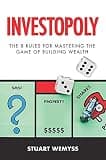
Investopoly
Melbourne financial adviser Stuart Wemyss boils wealth-building down to 8 clear rules across property, shares and super. A calm, evidence-based playbook for Aussies who want freedom without the guesswork.
She's on the Money
Victoria Devine
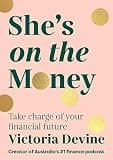
She's on the Money
Written for millennials, walks through budgeting, clearing debt, saving, investing and buying property with real stories.
Some links above are affiliate links. If you buy through them, Snowball Invest may earn a small commission at no extra cost to you. We only recommend books we'd suggest anyway.
Sources
- 1. Buying an investment property, Moneysmart, Australian Securities and Investments Commission
- 2. Home loans, Moneysmart
- 3. Switching home loans, Moneysmart
- 4. Debt consolidation and refinancing, Moneysmart
- 5. APG 223 Residential Mortgage Lending Practice Guide, Australian Prudential Regulation Authority
- 6. Financial assistance hub, home loans, Australian Banking Association
Was this article useful?
Put it to your own numbers
Every calculator runs entirely in your browser, with nothing stored. See what these numbers look like for your own situation.
Try the Borrowing Power calculator →General information only. This article is educational and does not constitute personal financial advice. It does not account for your circumstances. Consider your own situation and seek advice from a licensed adviser before acting. Read our full disclaimer.

Timothy Hirou Gaschereau
Founder of Snowball Invest, not a financial adviser.
I write about what I'm learning myself, because nobody ever taught us how to take control of our own money. It's a skill, not a mystery, and it's never too late to learn it. The best day to start was yesterday, the second best is today.
LinkedIn →Related articles

How to Use Equity to Buy an Investment Property in Australia
How to use equity in your home to buy an investment property: usable equity explained, a worked example, and the real risks involved.

Home Loan Top-Up vs Refinancing: Which Gets You Cash Cheaper?
Top-up or refinance? We break down the real costs, timelines, and worked examples so Australian homeowners can make the smarter call.

Pay Off Mortgage or Invest? The Honest Australian Guide
Should you pay off your mortgage or invest your spare cash? We break down the real maths, the tax angle, offset accounts, super, and a worked example for Australian homeowners.