

What Is the ASX 200? Australia's Benchmark Index Explained
What is the ASX 200? It's Australia's main share market index, 200 of the biggest companies on the ASX. Learn how it works, what's in it, and how to invest.
 By Timothy Hirou GaschereauPublished
 11 min read
Once you know what an ETF is, the next question is usually what it's actually tracking. For most Australian ETFs, the answer is this index. This is part of a wider guide to getting started with investing on Snowball Invest.
Quick answer
The ASX 200 is Australia's main share market index, it tracks the 200 largest companies listed on the ASX by market cap, and it's the number most people mean when they say "the market was up today." You can't buy it directly, but you can get exposure through low-cost ETFs like A200, STW or IOZ, each charging as little as 0.04% a year. It's heavily concentrated in banks and miners, Financials and Materials together make up almost 60% of it, very different from the S&P 500, where technology dominates.
In this guide
- →What the ASX 200 actually is, and how it's built and maintained
- →How it differs from the All Ordinaries and the ASX 300
- →What's actually inside it, top holdings and sector weightings
- →How it's performed over 10 and 20 years, including dividends and franking credits
- →How to actually get exposure to it, and how it compares to the S&P 500
📊 The ASX 200 in plain English
🎯 The essential: The ASX 200 tracks the 200 largest companies on the Australian Securities Exchange by float-adjusted market cap, weighted so the biggest companies move it the most.
The ASX 200, officially the S&P/ASX 200, is an index of the 200 largest companies listed on the Australian Securities Exchange (ASX), measured by float-adjusted market capitalisation. "Float-adjusted" just means it only counts shares that are actually available to trade, not ones locked up with founders or governments.
It's operated by S&P Dow Jones Indices, the same organisation behind the S&P 500, which is why the full name has "S&P" at the front. On the ASX, it trades under the ticker XJO. It's market-cap weighted, meaning bigger companies have more influence, Commonwealth Bank moving 1% matters a lot more to the index than a smaller company doing the same.
| Fact | Detail |
|---|---|
| Founded | 3 April 2000, starting value 3,133.3 |
| Current level | 9,115.20 (as at 14 August 2026) |
| Total market cap of constituents | ~A$2.45 trillion |
| Rebalanced | Quarterly, third Friday of March, June, September, December |
The index uses a buffer to reduce unnecessary churn: a company needs to rank 179th or higher to get in, and won't be removed until it falls to 221st or lower.
🔍 How it's different from the All Ords and ASX 300
When the news says "the market was up today," they almost always mean the ASX 200. But it's not the only Australian index out there.
| Index | Ticker | Constituents | Key use |
|---|---|---|---|
| ASX 200 | XJO | 200 | Main institutional benchmark, strict liquidity screens |
| ASX 300 | XKO | 300 | ASX 200 plus roughly 100 mid-caps |
| All Ordinaries | XAO | ~500 | Broadest market indicator, no liquidity screens |
Think of it as nesting dolls: the ASX 200 is a subset of the ASX 300, which is a subset of the All Ords. Every company in the ASX 200 is also in the ASX 300 and the All Ords, but not the other way around. For most beginners, the ASX 200 is the one that matters most, it's what ETFs track, what super funds benchmark against, and what the financial news refers to.
🏦 What's actually inside the ASX 200?
Top 10 holdings, as at 14 August 2026:
| Company | Sector | Approx. weight |
|---|---|---|
| BHP Group | Materials | 11.3% |
| Commonwealth Bank of Australia | Financials | 10.1% |
| National Australia Bank | Financials | 4.6% |
| Westpac Banking Corp | Financials | 4.4% |
| ANZ Group Holdings | Financials | 4.2% |
| Wesfarmers | Consumer Discretionary | 3.6% |
| Macquarie Group | Financials | 3.4% |
| CSL | Health Care | 2.4% |
| Rio Tinto | Materials | 2.3% |
| Woodside Energy Group | Energy | 2.2% |
Just those 10 companies account for roughly 53% of the entire index.
Sector breakdown, same date:
| Sector | Weight |
|---|---|
| Financials | 33.4% |
| Materials | 26.0% |
| Consumer Discretionary | 7.1% |
| Industrials | 6.7% |
| Health Care | 5.9% |
| Real Estate | 5.7% |
| Energy | 4.4% |
| Consumer Staples | 3.7% |
| Communication Services | 3.3% |
| Information Technology | 2.2% |
| Utilities | 1.4% |
Financials (~33%) and Materials (~26%) together make up nearly 59% of the index, the Big 4 banks plus BHP and Rio Tinto dominating the show. Compare that to the S&P 500, where Information Technology makes up over 30% of the index versus just 2.2% here. This concentration reflects the actual structure of the Australian economy, a resource-rich country with a large, mature banking sector. Many Australian investors hold both local and global ETFs for that reason.
📈 How does the ASX 200 actually perform?
| Timeframe | Price only | Incl. dividends | Incl. dividends + franking credits |
|---|---|---|---|
| 10-year p.a. | ~6.6% | ~9.3% | ~10.6% |
| 20-year p.a. | ~3.9% | ~8.0% | higher again |
The gap between price-only and total return is enormous. Over 20 years, the price-only return was about 3.9% a year, but once you add dividends back in, it jumps to 8.0%. Franking credits make the picture even better for Australian tax residents, potentially boosting effective return by a further 1-2% a year depending on your tax rate.
STW, the oldest ASX 200 ETF, has returned 8.17% p.a. since its inception in August 2001, and 8.92% p.a. over the 10 years to 31 July 2026, a real-world sense of what a patient investor has actually received. Past performance doesn't guarantee future results, but the long-run numbers are a useful anchor for setting realistic expectations.
💰 How to actually invest in the ASX 200
You can't buy the ASX 200 directly, it's an index, a measuring stick, not a product. The simplest way is through an ETF, which holds all 200 companies in the right proportions and trades on the ASX like a share. This is the core idea behind passive investing and index funds more broadly.
| ETF | Issuer | MER (p.a.) | AUM | Tracks |
|---|---|---|---|---|
| A200 | BetaShares | 0.04% | A$10.97B | Solactive Australia 200 Index |
| STW | State Street (SPDR) | 0.05% | A$6.79B | S&P/ASX 200 |
| IOZ | iShares (BlackRock) | 0.05% | A$9.51B | S&P/ASX 200 Accumulation |
A200 technically tracks the Solactive Australia 200 Index rather than the S&P/ASX 200, but holds the same 200 stocks, the difference in day-to-day performance is negligible. All three distribute income quarterly. STW is the oldest ETF listed in Australia, trading since August 2001.
Beyond ETFs, you can also get ASX 200 exposure through a managed fund or your superannuation. If you haven't placed a trade before, our how to buy shares in Australia guide walks through the exact steps.
🏛️ LICs vs ETFs: What's the Difference?
A different ASX-traded structure worth knowing before you choose how to get index exposure.
🌎 ASX 200 vs S&P 500, what's the difference?
| Feature | ASX 200 | S&P 500 |
|---|---|---|
| Country | Australia | USA |
| Constituents | 200 | 500 |
| Largest sector | Financials (~33%) | Information Technology (~30%+) |
| IT weighting | ~2.2% | ~30%+ |
| Financials weighting | ~33% | ~13% |
| Market cap | ~A$2.45 trillion | ~US$45 trillion+ |
The ASX 200 is a smaller, more sector-concentrated index dominated by the Big 4 banks and BHP, versus the S&P 500's dominance by global tech giants. That's not necessarily bad for Australian investors, our market offers strong dividend yields and franking credits, advantages US investors don't get, but it does mean less exposure to high-growth technology and less global diversification. Many Australians hold both a local ASX 200 ETF and a global or US ETF side by side.
🚫 3 common misconceptions
"The ASX 200 is the whole Australian share market." It's not, there are over 2,000 companies listed on the ASX, the ASX 200 is just the top 200 by market cap.
"If the ASX 200 goes up, all my shares went up." Not at all, the index is a weighted average, individual shares can move very differently from the index.
"The ASX 200 is a tech index like the Nasdaq." Far from it, IT makes up just 2.2% of the ASX 200 versus over 50% of the Nasdaq 100.
What I actually use
Pearler
This is the broker I personally use. Do your own research and form your own opinion, but I genuinely recommend it, it's built for long-term investors rather than day traders, and makes it easy to automate regular investing. Sign up through my link or with the code TIMOTHY269825 and you'll both get a $20 cash bonus once you make your first investment (Pearler's current offer, T&Cs apply).
Sign up to Pearler →This is a referral link. If you sign up through it, I get a bonus too, at no extra cost to you.
SnowLetter
Australia's money news and our best reads, once a week.
❓ Frequently asked questions
What does ASX 200 stand for?
+
ASX is the Australian Securities Exchange, and 200 refers to the 200 largest companies listed on it. Its full name is the S&P/ASX 200, jointly operated by S&P Dow Jones Indices and the ASX.
How often is the ASX 200 rebalanced?
+
Quarterly, on the third Friday of March, June, September and December. A buffer rule reduces unnecessary churn: a company needs to rank 179th or higher to get added, and won't be removed until it falls to 221st or lower.
What is the ASX 200 index level right now?
+
It closed at 9,115.20 as at 14 August 2026. Index levels move constantly during trading hours, check a live source like the ASX website for the current figure.
Can I buy the ASX 200 directly?
+
No, it's an index, a measuring stick, not a product you can purchase. You can buy an ETF that tracks it instead, A200, STW and IOZ are the three main options.
Is the ASX 200 a good investment for beginners?
+
For most, yes. It offers low-cost diversification across 200 large companies from as little as 0.04% p.a. in fees. The main caveat is sector concentration, it's heavily weighted toward banks and miners.
What's the difference between the ASX 200 and the All Ordinaries?
+
The All Ords covers around 500 companies with no liquidity screens, a much broader gauge. The ASX 200 is smaller and stricter, and it's the one the news usually means when they say "the market."
How does the ASX 200 compare to the S&P 500?
+
They're built very differently. The S&P 500 is dominated by US technology companies (over 30% Information Technology), while the ASX 200 is dominated by banks and miners (around 33% Financials). The S&P 500 is also many times larger by total market cap.
What happens to my ETF when a company is added or removed from the ASX 200?
+
The ETF manager automatically rebalances the fund to match, typically around the quarterly rebalance date. No action is needed from you.
📚 Recommended reading
The Little Book of Common Sense Investing
John C. Bogle
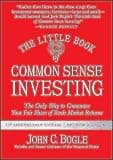
The Little Book of Common Sense Investing
From the man who invented the index fund, this is the short, sharp case for low-cost investing that has aged like fine wine. The maths on fees is universal, just think ETFs and super instead of his US funds.
The Simple Path to Wealth
JL Collins
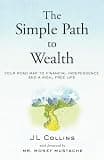
The Simple Path to Wealth
The friendliest on-ramp to index investing there is, born from letters a dad wrote his daughter. It makes 'buy the whole market and chill' feel obvious, just map his US fund picks onto Aussie equivalents and super.
The Bogleheads' Guide to Investing
Taylor Larimore, Mel Lindauer & Michael LeBoeuf
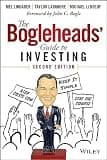
The Bogleheads' Guide to Investing
The friendly community bible of low-cost, buy-and-hold index investing, written by everyday investors rather than salespeople. The core philosophy is timeless for Aussies, just read the tax-advantaged account bits as super.
Some links above are affiliate links. If you buy through them, Snowball Invest may earn a small commission at no extra cost to you. We only recommend books we'd suggest anyway.
Sources
- 1. Capitalisation indices, Australian Securities Exchange
- 2. Shares, Moneysmart, Australian Securities and Investments Commission
- 3. Exchange traded funds (ETFs), Moneysmart, Australian Securities and Investments Commission
- 4. S&P/ASX 200 index, S&P Global
- 5. Australia 200 ETF (A200), BetaShares
- 6. iShares Core S&P/ASX 200 ETF (IOZ), BlackRock
- 7. SPDR S&P/ASX 200 Fund (STW), State Street
Was this article useful?
Put it to your own numbers
Every calculator runs entirely in your browser, with nothing stored. See what these numbers look like for your own situation.
Explore the calculators →General information only. This article is educational and does not constitute personal financial advice. It does not account for your circumstances. Consider your own situation and seek advice from a licensed adviser before acting. Read our full disclaimer.

Timothy Hirou Gaschereau
Founder of Snowball Invest, not a financial adviser.
I write about what I'm learning myself, because nobody ever taught us how to take control of our own money. It's a skill, not a mystery, and it's never too late to learn it. The best day to start was yesterday, the second best is today.
LinkedIn →Related articles

How to Invest in the ASX 200
Want exposure to Australia's 200 biggest companies? How to invest in the ASX 200 simply and cheaply, without picking a single stock.

STW ETF Australia: SPDR's ASX 200 Fund vs VAS and A200
STW is one of Australia's oldest ETFs, tracking the ASX 200. See what it holds, its 0.05% fee, franking, and how STW compares to VAS and A200.
Will the Share Market Crash in 2026?
Nobody can predict a share market crash. What history says about the ASX, what to actually do, and what to avoid if you are worried.