
LICs vs ETFs: What's the Difference?
LIC vs ETF explained for Australian beginners. Learn how listed investment companies differ from ETFs on the ASX, NTA, dividends, franking credits and fees.
 By Timothy Hirou GaschereauPublished
 11 min read
Try it yourself
Both LICs and ETFs let you invest in a diversified portfolio with a single trade on the ASX, which is exactly why they get confused with each other. If you haven't come across ETFs yet, start with what an ETF is first, this guide assumes you already know the basics and focuses on how LICs differ.
Quick answer
A LIC is a company listed on the ASX, an ETF is an open-ended trust. That one structural difference drives almost everything else. LIC share prices can trade above or below the value of their underlying portfolio, called the NTA, while ETF prices stay tightly anchored to their NAV. LICs can smooth dividends by retaining profits in good years and drawing on reserves in bad ones, a feature income investors love. Both can deliver franked income, but LICs generate their own franking credits as a company, ETFs only pass through franking from the shares they hold.
In this guide
- →What a LIC actually is, and well-known examples on the ASX
- →The closed-ended vs open-ended structure, and why it matters
- →NTA, premiums and discounts, the quirk unique to LICs
- →Dividend smoothing and how franking credits differ between the two
- →Fees, management style, and a side-by-side comparison to help you choose
🏛️ What is a LIC?
🎯 The essential: A LIC is a company, listed on the ASX, that invests in a portfolio of shares or other assets, and pays company tax on its earnings just like any other listed company.
A listed investment company (LIC) is a company, incorporated under the Corporations Act, with a board of directors, shareholder meetings and company tax obligations, that invests in a portfolio of shares or other assets. That company is itself listed on the ASX, so you buy and sell shares in it just like BHP or Commonwealth Bank. Because it's a company, it pays the 30% corporate tax rate on its earnings, issues its own shares, and has a board that decides how much dividend to pay each year.
Well-known examples on the ASX:
| LIC | Ticker | Notes |
|---|---|---|
| AFIC | AFI | Founded 1936, over $8 billion FUM, diversified ASX portfolio |
| Argo Investments | ARG | Long-established, diversified, ~$6.5 billion, popular with retirees |
| WAM Capital | WAM | More active and growth-oriented, one of nine LICs run by Wilson Asset Management, alongside WAM Leaders (WLE) and WAM Global (WGB) |
📦 What is an ETF? (Quick recap)
An ETF is a managed fund structured as a trust, not a company, that you buy and sell on the ASX like a share. Most ETFs are passively managed, tracking an index rather than picking stocks. The key mechanic: authorised participants can create or redeem ETF units in response to demand, keeping the market price tightly anchored to NAV. See our full ETF explainer for the details, this guide keeps it brief and focuses on the comparison.
🔄 The core difference: closed-ended vs open-ended
LICs are closed-ended, after IPO, the number of shares on issue is essentially fixed, and price is set by supply and demand on the ASX, not the underlying portfolio value. ETFs are open-ended, authorised participants can create new units or redeem existing ones, acting as a constant price anchor keeping market price close to NAV.
This one structural difference explains why LICs can trade at a discount or premium, why their dividends can be smoothed, and why their pricing carries extra uncertainty ETFs don't have.
💹 NTA, premiums and discounts, the LIC quirk
NTA (Net Tangible Assets) is the per-share value of everything the LIC owns minus liabilities, the "true" underlying portfolio value per share. LICs publish a formal NTA figure within 14 days of each month-end, via ASX announcements or their website, many now publish weekly estimates too.
Because LIC shares trade on supply and demand, price can diverge from NTA:
- Discount to NTA: price below NTA. Example: Argo Investments (ASX: ARG) had a pre-tax NTA of $10.38 a share as at 27 June 2025, trading at $9.04, roughly a 12.9% discount.
- Premium to NTA: price above NTA. AFIC (ASX: AFI) has historically traded close to or above its NTA, its pre-tax NTA was $6.82 as at early August 2026.
What this means for investors: buying at a discount can look attractive, getting $1 of assets for less, but discounts can persist for years or widen further, there's no guarantee the gap closes. Buying at a premium means paying more than the portfolio is worth, if sentiment shifts and the premium narrows, you lose money even if the underlying portfolio hasn't moved.
Angus Gluskie, Managing Director of Whitefield Industrials (ASX: WHF) and Chairman of the Listed Investment Companies and Trusts Association, put it this way in an ASX interview in June 2024: buying an LIC below its NTA can create an opportunity for a long-term investor if the share price later moves closer to NTA, while buying at a premium can create additional risk if that premium narrows.
💧 Dividend smoothing, why income investors love LICs
Because a LIC is a company, it can retain after-tax profits in good years rather than distributing everything, the board sets the dividend at its discretion. In a strong year it tucks profits into reserves, in a weaker year it can draw on those reserves to maintain a steady payout.
During COVID-19, the broader market cut dividends by around 25%, but AFIC maintained its dividend thanks to profit reserves and franking credit stores built up over prior years. ETFs don't work this way, as a trust, an ETF must distribute essentially all income each period, so a year of slashed company dividends means a slashed ETF distribution too.
The result: LIC dividends tend to be more stable and predictable, valuable for income-focused investors like retirees drawing down their portfolio.
🧾 Franking credits, the tax angle
Both LICs and ETFs can deliver franking credits, but the mechanism differs. LICs generate their own franking credits, as a company paying the 30% corporate tax rate, dividends can carry franking credits representing tax already paid, which shareholders can use to offset their tax bill or get a refund if their marginal rate is lower than 30%. ETFs are trusts, they don't generate their own franking credits, but pass through franking attached to dividends from the Australian companies they hold. Both can deliver franked income, a LIC may deliver more in some cases because it's itself a taxpaying company. The value of franking credits always depends on your personal tax situation.
💰 Fees and management style
Broad index ETFs are extraordinarily cheap, common broad Australian shares ETFs charge between roughly 0.04% and 0.10% p.a., on a $50,000 portfolio that's $20-$50 a year. LICs vary enormously, the older, large LICs (AFIC, Argo) are actually quite low-cost with MERs around 0.14%-0.18% p.a., not far off some ETFs, while many active LICs charge 0.3%-1.5%+ p.a. plus performance fees, typically 15-20% of returns above a benchmark, sometimes payable even in a negative-return year as long as it beats its benchmark.
On average, LIC costs are roughly 5 times those of a typical index ETF, per Stockspot analysis. Most LICs are actively managed, a portfolio manager picks stocks aiming to beat the market, most ETFs are passively managed, tracking an index. Active management doesn't guarantee better returns, over the year to 31 March 2026, around 60% of Australian share LICs underperformed the broad ASX market.
One caveat, some ETFs are now actively managed too, so-called "active ETFs", the line is blurring at the edges. If fees are the deciding factor for you, run your own numbers through our investment fees calculator rather than relying on averages.
🧮 Investment Fees Calculator
See exactly what a higher MER, active LIC or otherwise, costs you over time.
⚖️ LIC vs ETF, side by side
| Feature | LIC | ETF |
|---|---|---|
| Legal structure | Company | Trust (managed fund) |
| Listed on ASX | Yes | Yes |
| Open or closed-ended | Closed-ended (fixed shares) | Open-ended (units created/redeemed) |
| Pricing mechanism | Supply and demand, can trade at premium or discount to NTA | Tracks NAV closely via creation/redemption |
| Dividend smoothing | Yes, board can retain profits and smooth payouts | No, distributions pass through as received |
| Franking credits | Generates own franking credits, typically fully franked | Passes through franking from underlying holdings |
| Typical management style | Often actively managed | Mostly passively managed (index-tracking) |
| Typical fees (MER) | ~0.14%-1.5%+ (varies widely) | ~0.04%-0.10% (broad index) |
| Best suited to | Long-term, income-focused, franking-credit seekers | Passive investors, low-cost, any time horizon |
🚫 3 common misconceptions
"A LIC and an ETF are basically the same thing because both trade on the ASX." No, the closed-ended vs open-ended structure creates fundamentally different pricing dynamics, with an ETF you're always buying close to underlying value, with a LIC you might pay 10% more or 13% less.
"Buying a LIC at a discount is always a bargain." Not necessarily, a discount can persist for years or widen further, the underlying portfolio and manager still need to perform.
"LICs always have higher fees than ETFs." Not always, AFIC and Argo have very low MERs, around 0.14%-0.18%, it's the active LICs with performance fees that get expensive.
Both structures can also give you exposure to Australia's benchmark index, if you're still getting familiar with what that index actually is, see our guide to what the ASX 200 actually is.
What I actually use
Pearler
This is the broker I personally use. Do your own research and form your own opinion, but I genuinely recommend it, it's built for long-term investors rather than day traders, and makes it easy to automate regular investing. Sign up through my link or with the code TIMOTHY269825 and you'll both get a $20 cash bonus once you make your first investment (Pearler's current offer, T&Cs apply).
Sign up to Pearler →This is a referral link. If you sign up through it, I get a bonus too, at no extra cost to you.
SnowLetter
Australia's money news and our best reads, once a week.
❓ Frequently asked questions
Can I buy LICs and ETFs through the same broker?
+
Yes, both trade on the ASX like ordinary shares via any standard broker, CommSec, SelfWealth, Pearler, Stake and others all support both.
Which is better for a beginner, a LIC or an ETF?
+
For most beginners, a broad index ETF is simpler, low fees, no premium or discount to worry about. A well-established, low-cost LIC like AFIC or Argo isn't a bad choice either, especially for dividend smoothing and franked income. It depends on your goals.
How do I find out if a LIC is trading at a premium or discount?
+
LICs publish NTA within 14 days of month-end via ASX announcements or their website, many now publish weekly estimates too. Compare that figure to the current share price. Morningstar Australia and InvestSMART also track this.
Do LICs pay dividends more reliably than ETFs?
+
Generally yes for established large LICs, thanks to profit reserves built up in strong years. ETF distributions are more variable, passing through underlying income each period as received. No dividend is ever guaranteed.
Are LICs riskier than ETFs?
+
It depends on the LIC. A broad, diversified LIC like AFIC or Argo carries similar underlying investment risk to an Australian shares ETF, but carries additional premium or discount pricing risk that ETFs don't have. Some LICs use leverage or derivatives, adding further risk.
What's the difference between a LIC and a LIT (Listed Investment Trust)?
+
A LIC is a company, a LIT is a trust. Both are closed-ended and trade on the ASX. LITs distribute income like a trust, passing through tax attributes, rather than paying company tax and franked dividends, so LIT franking can be more variable.
Can I hold both LICs and ETFs in my portfolio?
+
Yes, many Australians hold both, a broad index ETF for low-cost exposure and a LIC like AFIC or Argo for income smoothing and its franking profile.
📚 Recommended reading
The Little Book of Common Sense Investing
John C. Bogle
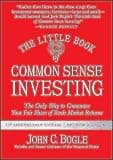
The Little Book of Common Sense Investing
From the man who invented the index fund, this is the short, sharp case for low-cost investing that has aged like fine wine. The maths on fees is universal, just think ETFs and super instead of his US funds.
Investopoly
Stuart Wemyss
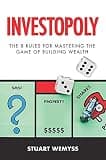
Investopoly
Melbourne financial adviser Stuart Wemyss boils wealth-building down to 8 clear rules across property, shares and super. A calm, evidence-based playbook for Aussies who want freedom without the guesswork.
She's on the Money
Victoria Devine
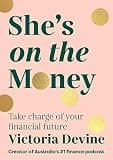
She's on the Money
Written for millennials, walks through budgeting, clearing debt, saving, investing and buying property with real stories.
Some links above are affiliate links. If you buy through them, Snowball Invest may earn a small commission at no extra cost to you. We only recommend books we'd suggest anyway.
Sources
- 1. Listed investment companies (LICs), Moneysmart, Australian Securities and Investments Commission
- 2. Exchange traded funds (ETFs), Moneysmart, Australian Securities and Investments Commission
- 3. Understanding LIC premiums and discounts, Investor Update, Australian Securities Exchange, June 2024
- 4. Australian Foundation Investment Company (AFIC) investor information
- 5. Argo Investments investor information
Was this article useful?
Put it to your own numbers
Every calculator runs entirely in your browser, with nothing stored. See what these numbers look like for your own situation.
Try the Net Fees calculator →General information only. This article is educational and does not constitute personal financial advice. It does not account for your circumstances. Consider your own situation and seek advice from a licensed adviser before acting. Read our full disclaimer.

Timothy Hirou Gaschereau
Founder of Snowball Invest, not a financial adviser.
I write about what I'm learning myself, because nobody ever taught us how to take control of our own money. It's a skill, not a mystery, and it's never too late to learn it. The best day to start was yesterday, the second best is today.
LinkedIn →Related articles

CommSec Pocket Fees: What It Costs and How It Compares
A$2 a trade up to A$1,000, then 0.20%, on buys and sells. Plus the separate HIN nobody mentions, and the order size where Pocket costs more than main CommSec.

BGBL vs VGS: Which Global ETF Belongs in Your Portfolio?
BGBL charges 0.08% and holds South Korea. VGS charges 0.18% and does not. What actually separates the two big ASX global ETFs, and how to pick one.

IVV vs VGS: All In on America, or the Whole Developed World?
This is not a fee decision, it is a concentration one. IVV is one country. VGS is 23, and the US is already most of it. How to think it through.