

Do I Need a Financial Advisor? An Honest Australian Guide
Wondering if you need a financial advisor in Australia? An honest breakdown of when advice is worth it, what it costs, and when you are better off DIYing.
 By Timothy Hirou GaschereauPublished
 12 min read
So you are wondering whether to hire a financial adviser. Good question, and the honest answer is: it depends on your situation, not on what the advice industry tells you. Here is a no-fluff breakdown of what advice actually does, what it costs, and when you are genuinely better off doing it yourself.
🎯 The essential: Most Australians with simple finances (PAYG income, a mortgage, super in a low-cost fund, broad index ETFs) can manage the fundamentals themselves with good education. A financial adviser earns their fee in complex situations: approaching retirement, a large inheritance, an SMSF, a business sale, blended-family estate planning, or high income needing tax structuring. One-off scaled advice at key moments is often the best value of all. An initial plan runs $2,500 to $5,000+, ongoing advice $3,000 to $5,000+ a year, so match the spend to the complexity.
What does a financial adviser actually do?
A good adviser does far more than pick investments. Their scope covers a financial plan tailored to your goals, investment strategy and asset allocation, superannuation and retirement planning, insurance needs (life, TPD, income protection), tax structuring (alongside your accountant, not instead of one), and estate planning. The underrated one is behavioural coaching: a good adviser stops you panic-selling your ETFs in a downturn or piling into a hot sector at the peak. Since investor behaviour (buying high, selling low) quietly destroys returns over time, that coaching alone can justify the fee for the right person.
The two main types of advice
Comprehensive / ongoing advice is a full financial plan, reviewed annually, with an ongoing relationship and a Statement of Advice (SOA). It is the most expensive model and suits genuinely complex situations. Scaled / single-issue advice answers one specific question ("should I salary sacrifice more into super?") for a lower, targeted fee, and is often the right starting point.
Worth knowing: general advice (a super fund website, a seminar) is not tailored to you and needs no SOA, while personal advice is tailored and requires one. Most large super funds also offer low-cost or free intra-fund advice on super-specific questions, which is worth using before you pay for full personal advice.
What does a financial adviser cost in Australia?
Let us be direct: advice is not cheap. Since the Hayne Royal Commission ended most commissions, advice is now fee-for-service, which is more transparent but has pushed prices up and priced many lower-balance Australians out (the "advice gap").
Typical 2025-26 figures: an initial Statement of Advice runs $2,500 to $5,000+ (more for complex cases), ongoing advice $3,000 to $5,000+ a year (or 0.5% to 1% of assets), and scaled single-issue advice $500 to $2,000. Super fund intra-fund advice is often free. On tax: ongoing advice fees relating to income-producing investments may be partly deductible (per ATO guidance), but initial advice fees generally are not, so confirm your situation with your accountant.
When a financial adviser IS worth it
Be honest with yourself. Advice is genuinely worth considering when:
- You are approaching retirement (within 5 to 10 years) and need to optimise super, plan the pension phase and set a sustainable drawdown.
- You have received a large inheritance or windfall and do not know how to structure it tax-effectively.
- You are running an SMSF, or selling a business with CGT and super-contribution timing to manage.
- You have a blended family or complex estate planning needs, where the wrong beneficiary nomination causes real damage.
- You are on a high income needing tax structuring, or you have been made redundant and must navigate the payout, super and Centrelink.
- You genuinely will not manage your finances without accountability, and the annual check-in keeps you on track.
The complexity test: if your financial situation keeps you up at night and you do not know where to start, that is a signal advice might be worth it.
When you probably don't need one yet
The empowering truth: if your situation is straightforward, you can do a lot yourself. With PAYG income, a mortgage, super in a low-cost fund and broad ETFs like VAS and VGS (or a diversified fund like VDHG), the fundamentals are knowable: spend less than you earn, invest in low-cost diversified index funds, keep your insurance adequate, use your super. That core does not require ongoing fees, just education and discipline.
ASIC's Moneysmart is a genuinely excellent free resource, and understanding the basics (like the difference between an ETF and a managed fund) takes you a long way before you pay for advice. When you do have a specific decision, one-off scaled advice at that moment usually beats a permanent arrangement.
DIY vs scaled advice vs ongoing adviser
| DIY | One-off / scaled | Ongoing adviser | |
|---|---|---|---|
| Cost | Low (time + education) | $500-$2,000 per engagement | $3,000-$5,000+ a year |
| Best for | Simple finances, index ETFs | A specific decision | Genuinely complex situations |
| What you get | Full control, no fee | An SOA on one issue | Full plan, reviews, coaching |
| Main downside | Blind spots, emotion | No ongoing relationship | Expensive, overkill if simple |
How to check an adviser is legit
Non-negotiable before engaging anyone. Search the ASIC Financial Advisers Register (on Moneysmart) by name or firm; since 1 February 2024, advisers giving personal advice to retail clients must be registered, so if they are not on it, walk away. Ask the right questions upfront: what are your fees (upfront and ongoing), are you independent or aligned to a product or bank, and how are you paid (any commissions)? True independence means no commissions and no product alignment. And read their Financial Services Guide before agreeing to anything. Our full guide to choosing a financial adviser walks through it.
The honest verdict
Most Australians with straightforward finances can manage the fundamentals themselves and do well: the core principles are learnable, not secret. But paying for scaled or one-off advice at key life moments, or ongoing advice if your situation is genuinely complex or you value the accountability, can be worth every dollar. The question is not "should I get advice?" in the abstract, but "does the value of this advice outweigh its cost, given my situation right now?" A 35-year-old with a stable income and a simple ETF portfolio probably does not need an ongoing adviser; a 55-year-old with a business, an SMSF, a blended family and retirement 10 years away almost certainly does. Work out which camp you are in, then act.
Frequently asked questions
Is a financial advisor worth it in Australia?
+
It depends on your situation. For complex circumstances (approaching retirement, SMSF, business sale, high income needing tax structuring, blended-family estate planning), an adviser is often genuinely worth the cost. For straightforward situations (PAYG income, standard super, index ETF investing), the fundamentals are manageable without ongoing fees. One-off scaled advice at key moments is often the best middle ground.
How much does a financial advisor cost in Australia?
+
An initial Statement of Advice (financial plan) typically costs $2,500 to $5,000 or more. Ongoing annual advice usually runs $3,000 to $5,000+ a year, sometimes charged as 0.5% to 1% of assets. Scaled or single-issue advice for one specific question can cost $500 to $2,000. Super fund intra-fund advice is often free or very low cost and covers super-related questions only.
When should I see a financial advisor?
+
Consider it when you are approaching retirement, receiving a large inheritance or windfall, setting up an SMSF, selling a business, navigating redundancy, dealing with complex estate planning, or when your situation has become genuinely complex and you do not know where to start. One-off advice at a major decision point (before a big super move or buying an investment property) is also worth considering.
Can I manage my money without a financial advisor?
+
Yes, for most Australians with straightforward finances. If you have PAYG income, a mortgage, super in a low-cost fund, and you invest in diversified index ETFs, the core principles are learnable and manageable. ASIC's Moneysmart and quality education make self-directed finance more accessible than ever. The main risks of going it alone are blind spots and emotional decisions in volatile markets.
What's the difference between a financial advisor and an accountant?
+
An accountant focuses mainly on tax: lodging returns, tax obligations and tax structuring. A financial adviser focuses on your broader plan: investments, super, insurance, retirement strategy and estate planning. They often work together for high earners or business owners, but they serve different purposes, so do not assume one is licensed to do the other's job.
What is a Statement of Advice?
+
A Statement of Advice (SOA) is a formal document a licensed adviser must provide when giving you personal financial advice. It sets out the advice, the basis for it, the fees, any conflicts of interest, and the information relied on. General advice (not tailored to you) does not require an SOA. Read it carefully before acting.
Keep reading
Books worth reading
📚 Recommended reading
The Barefoot Investor
Scott Pape

The Barefoot Investor
Australia's best-selling money book ever. A simple system for accounts, budgeting, debt and a real emergency fund in one.
Sort Your Money Out and Get Invested
Glen James
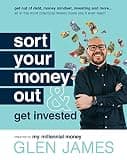
Sort Your Money Out and Get Invested
From the host of the my millennial money podcast, a step-by-step Aussie plan to fix your spending, clear debt and actually start investing. Practical and refreshingly free of finance-bro nonsense.
Girls That Invest
Simran Kaur
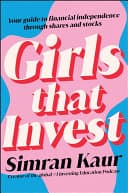
Girls That Invest
A no-jargon crash course from the podcaster behind Girls That Invest that makes the sharemarket feel doable, written especially for women starting out. The perfect first step before you buy your first ETF.
Some links above are affiliate links. If you buy through them, Snowball Invest may earn a small commission at no extra cost to you. We only recommend books we'd suggest anyway.
Sources
- ASIC Moneysmart, financial advice, moneysmart.gov.au
- ASIC Moneysmart, financial advice costs, moneysmart.gov.au
- ASIC Financial Advisers Register, moneysmart.gov.au
- Hayne Royal Commission final report (2019), Treasury, treasury.gov.au
- ATO, financial advice fees deductions, ato.gov.au
General information only, not personal financial advice, and it does not take your objectives or needs into account. Consider your own circumstances and consult a licensed financial adviser before making decisions. Snowball Invest is not a financial adviser and does not hold an AFS licence.
Was this article useful?
Put it to your own numbers
Every calculator runs entirely in your browser, with nothing stored. See what these numbers look like for your own situation.
Explore the calculators →General information only. This article is educational and does not constitute personal financial advice. It does not account for your circumstances. Consider your own situation and seek advice from a licensed adviser before acting. Read our full disclaimer.

Timothy Hirou Gaschereau
Founder of Snowball Invest, not a financial adviser.
I write about what I'm learning myself, because nobody ever taught us how to take control of our own money. It's a skill, not a mystery, and it's never too late to learn it. The best day to start was yesterday, the second best is today.
LinkedIn →Related articles

How to Choose a Financial Adviser in Australia
Not sure how to choose a financial adviser in Australia? A plain-English guide to licensing, fees, independence and the right questions to ask.

Robo Advisor Australia: What It Is, How It Works, and Whether It's Worth It
What a robo advisor actually is, how it differs from a financial adviser and DIY ETFs, the real fee-drag maths, and who it genuinely suits in Australia.

BGBL vs VGS: Which Global ETF Belongs in Your Portfolio?
BGBL charges 0.08% and holds South Korea. VGS charges 0.18% and does not. What actually separates the two big ASX global ETFs, and how to pick one.