

How Underinsured Are Australians, Really?
Most Australians have insurance, but millions have far less than they'd need. The real scale of underinsurance in Australia, and what to do about it.
 By Timothy Hirou GaschereauPublished
 11 min read
Try it yourself
This article is general information only, not financial or insurance advice. Snowball Invest doesn't sell insurance and we're not paid by any insurer, our job is to help you understand the problem and ask the right questions. Please consider speaking with a licensed financial adviser before buying or changing any insurance policy.
Quick answer
Underinsurance doesn't mean going without insurance, it means having cover that wouldn't actually stretch far enough if you needed to claim. FSC-commissioned 2022 research estimated around 1 million Australians are underinsured for death and TPD cover, and 3.4 million for income protection. On the home front, a 2024 industry analysis found residential properties are underinsured by an average of 18%, and a 2025 survey found close to a fifth of homeowners know their home is under or uninsured. Both problems come from the same habit: setting cover once and never revisiting it.
In this guide
- →What underinsurance actually means, and why it's different from having no insurance
- →The scale of life and income protection underinsurance in Australia, and why default super cover often falls short
- →The scale of home and contents underinsurance, and how the average clause can shrink your payout
- →Why underinsurance is so common, the psychology behind set-and-forget cover
- →A practical checklist to work out where your own cover might be falling short
🔍 What "underinsurance" actually means
Most Australians assume they're covered. They've got life insurance through super, or they took out a home policy years ago, and they've been paying the premiums ever since. Job done, right?
Not quite. Having insurance and having enough insurance are two very different things, and millions of Australians fall into the gap between them without realising it until something goes wrong.
You're underinsured when the cover you have wouldn't actually cover the real cost of a claim. Your policy still pays out, just not enough. The gap between what you receive and what you actually need lands on you.
There are two distinct versions of this problem in Australia:
- Life and income protection underinsurance is about what happens to your family's finances if you die, become permanently disabled, or can't work due to illness or injury. Most Australians have some life insurance, usually through super, but the dollar amount is often a fraction of what a family would genuinely need.
- Home and contents underinsurance is about whether your policy would actually cover the cost of rebuilding your home or replacing your belongings if they were destroyed. The sum insured on most policies was set years ago and hasn't kept pace with rising construction costs or lifestyle changes.
🎯 The essential: Both problems are widespread, both are largely invisible until claim time, and both are almost entirely preventable with an hour or two of checking. Snowball Invest is an educational site, not an insurer or broker, so nothing below is a sales pitch, it's a guide to the questions worth asking yourself.
❤️ The life insurance & income protection underinsurance problem
The numbers here are bigger than most people expect.
According to research commissioned by the Financial Services Council and published in its 2022 Australia's Life Underinsurance Gap report, approximately 1 million Australians are underinsured for death and TPD cover, and around 3.4 million are underinsured for income protection.
These aren't people with no insurance. They're people whose cover would leave a meaningful shortfall, a real gap between what they'd receive and what their family would actually need.
The super default trap. Here's where it gets uncomfortable. Most Australians do have life insurance, but it's the default cover sitting inside their super fund, and most people have never looked at the actual dollar amount.
Rice Warner's 2015 research (worth flagging clearly as dated, construction and living costs have moved a long way since) found that a typical 30-year-old with children might need around $680,000 in life cover, while the typical default super fund cover at the time was only around $200,000, roughly 30% of what was actually needed. The gap had narrowed somewhat by 2005 compared to earlier defaults, but Rice Warner's follow-up 2020 research found the underinsurance gap had actually widened again, partly driven by legislative changes that removed default insurance from inactive accounts and low-balance accounts under $6,000, a reform that helped some members but left others without any cover at all.
Default super cover vs what a 30-something family may need
Default cover is a starting point, not a plan. Rice Warner put a typical need near $680k against roughly $200k of default cover.
The mechanism behind all of this is simple. People accept the default cover when they join a super fund, or take out a standalone policy at some point, and then never revisit it. Meanwhile, life moves on: income grows, a mortgage gets taken out, kids arrive, the mortgage grows. The cover stays the same. The need doesn't.
We've written a full guide to life insurance in Australia if you want the basics, and a separate article on how much life insurance you actually need if you want to work through the numbers for your own situation. If you're specifically thinking about income replacement, our income protection insurance guide covers how that works in detail. And if you're weighing up whether to keep what's in your super or go standalone, insurance through super vs standalone walks through the real trade-offs. Our life insurance calculator gives you a quick check on whether your default super cover is anywhere near the mark.
🏠 The home & contents underinsurance problem
This one is arguably even more widespread, and the consequences can be just as serious.
The scale of the problem. A 2024 analysis of more than 2,000 reports by MCG Quantity Surveyors found Australian residential properties are underinsured by an average of 18%. That figure is best treated as a secondary citation here, it's the number reported in The Australia Institute's February 2025 polling brief, which in turn attributes it to earlier media coverage of MCG's analysis, rather than a primary MCG report we can link to directly.
The same Australia Institute polling brief found that 19% of Australians say their home is under or uninsured, and 29% say the same about their contents. With roughly 7.5 million owner-occupied dwellings in Australia, 19% would represent well over a million homes, though that's our own extrapolation from the survey percentage, not a figure the report states directly.
The same report also cites a 2024 Compare the Market survey finding that 32.8% of home and contents policyholders were at risk of underinsurance because they'd guessed the value of their insured items rather than calculating it, and a 2025 Compare the Market survey finding that 72.1% of households hadn't updated their contents insurance since buying a major household item. Both of those are cited via the Australia Institute report rather than sourced directly from Compare the Market's own publications, worth knowing if you want to chase the primary data yourself.
Why it happens. Two things drive home and contents underinsurance, and they often work together. First, people set a sum insured and never update it. Construction costs have risen significantly in Australia since COVID, supply chain disruptions, labour shortages, and materials price increases all pushed rebuild costs up sharply, so a sum insured that was adequate in 2019 may be materially short today. Second, people insure for market value instead of rebuild cost. Market value, what you'd sell the house for, includes the land. Rebuild cost is just the structure: labour, materials, demolition, site clearance, architect fees, council approvals. Your land doesn't burn down. Your house does.
The average clause, and why it matters. This is the part that catches people off guard most, and it's worth understanding clearly. Some home insurance policies include what is called an average clause (sometimes called a coinsurance clause). If your home is insured for significantly less than its true rebuild cost, the insurer may only pay out a proportional amount of any claim, not just cap it at the sum insured.
Example: your home would cost $800,000 to rebuild. You've insured it for $600,000, 75% of the true value. Under an average clause, even a partial loss claim of $100,000 might only pay out $75,000 (75% of the claim), because you've effectively self-insured the remaining 25%.
Under Australian consumer guidance, the average clause generally shouldn't apply once your sum insured is at least 80% of the property's replacement value, and it's a genuine, well-established principle in Australian home insurance. But not every policy includes this clause, and the exact threshold isn't universal across insurers, so check your own Product Disclosure Statement under "underinsurance," "average," or "coinsurance" to confirm whether it applies to your policy and at what threshold.
We've written a full guide to home and contents insurance in Australia if you want to go deeper on how these policies actually work. And if premiums themselves feel like the bigger problem lately, our guide to why home insurance is becoming unaffordable in Australia covers why costs have risen so sharply, and what you can actually do about it.
🧠 Why underinsurance is so common
The numbers are striking. The more interesting question is why this keeps happening.
- Set-and-forget mentality. Insurance feels done once you have it. Taking out a policy is an active decision. Reviewing it every year, actually checking the numbers, takes effort with no immediate reward. Most people don't do it.
- Optimism bias. "It won't happen to me," or "if it does, it probably won't be that bad." That's human nature, not stupidity, but it's a poor basis for financial planning.
- Cost pressure. Some people deliberately underinsure to lower their premiums. It's a rational short-term calculation with a potentially serious long-term downside. Saving $200 a year on premiums by insuring for $100,000 less than you need is a bad trade if you ever have to claim.
- Complexity. Calculating the correct rebuild cost for a home is genuinely hard. It requires knowing construction costs per square metre for your area, plus site-specific factors, demolition costs, architect fees, and council requirements. Most people don't have that knowledge, and online calculators from different insurers can produce quite different estimates for the same property.
- The super illusion. Default super insurance feels like "proper" cover. It's automatic, it's there, and nobody told you it might not be enough. The gap between what's in your super and what your family would actually need stays invisible until it isn't.
⚠️ What happens when you're underinsured at claim time
Let's make this concrete.
For life insurance, the shortfall falls directly on the people left behind. The mortgage doesn't get paid off. Income replacement runs out earlier than it should. Education costs for kids don't get covered. The gap between what the policy pays and what the family needed is real, immediate, and often arrives at the worst possible moment.
For home insurance, even without an average clause, if your sum insured is $600,000 but the rebuild costs $800,000, you're personally funding the $200,000 gap, potentially while displaced, dealing with a natural disaster, and navigating a claims process at the same time. If your policy does have an average clause and you're below the threshold, partial loss claims get proportionally reduced on top of that.
The point isn't to be alarmist. It's to make the consequence feel real enough to be worth a few hours of your time now, rather than finding out the hard way later.
✅ Your underinsurance checklist
Use this as a starting point. It's not financial advice, it's a set of questions worth asking yourself and, where relevant, a financial adviser.
Life & income protection: questions to ask
- Do I have life insurance? Is it through super, standalone, or both?
- What is my actual sum insured for death cover? Does it cover mortgage payoff, several years of income replacement, and education costs for the kids?
- Do I have income protection? What's the benefit period and waiting period?
- When did I last review my cover? Has my income, mortgage, or family situation changed since?
- If I have insurance through super, have I actually checked the dollar amount, not just assumed it's "enough"?
Home & contents: questions to ask
- Is my home insured for rebuild cost, not market value?
- When did I last update my sum insured? Have construction costs risen since?
- Does my policy have an average clause? Check the PDS under "underinsurance," "average," or "coinsurance."
- Have I done a proper contents inventory, or did I just guess?
- Have I made major purchases or renovations since I last updated my policy?
SnowLetter
Australia's money news and our best reads, once a week.
❓ Frequently asked questions
What is underinsurance in Australia?
+
Underinsurance means having an insurance policy that wouldn't actually cover the full cost of a claim if something went wrong. It's not the same as having no insurance, it's having insurance that falls short. In Australia this affects both life and income protection insurance, where the payout wouldn't be enough to replace lost income or pay off a mortgage, and home and contents insurance, where the sum insured is less than the actual rebuild or replacement cost.
How common is underinsurance in Australia?
+
Very common, across both types. For life insurance, FSC-commissioned 2022 research estimated around 1 million Australians are underinsured for death and TPD cover, and 3.4 million for income protection. For home insurance, a 2024 analysis by MCG Quantity Surveyors found Australian residential properties are underinsured by an average of 18%, and a 2025 Australia Institute poll found 19% of people say their home is under or uninsured, and 29% say the same about their contents.
What is the average clause in home insurance?
+
The average clause, also called a coinsurance clause, is a policy provision that reduces your claim payout proportionally if your sum insured is significantly below the true rebuild cost of your home. For example, if your home would cost $800,000 to rebuild but you've insured it for $600,000 (75% of the true value), an average clause could mean a $100,000 partial loss claim only pays out $75,000. Under Australian consumer guidance, the clause generally shouldn't apply once your sum insured is at least 80% of the replacement value, but not every policy includes this clause and the exact threshold can vary between insurers. Always check your own Product Disclosure Statement.
Does my super insurance cover me enough?
+
Possibly not, if you have dependants or a mortgage. Default super cover is designed as a baseline, it's automatic and convenient, but it's not tailored to your situation. Rice Warner's 2015 research found a typical 30-year-old with children might need around $680,000 in cover, while default super cover at the time was often around $200,000. That research is now a decade old, but the underlying pattern, default cover set as a flat amount rather than calculated against your actual needs, hasn't changed. Check the actual dollar figure in your super fund's app or member portal, then compare it to what your family would genuinely need.
How do I calculate the right rebuild cost for home insurance?
+
Don't use the market value of your home, that includes the land, which doesn't need to be rebuilt. Use a rebuild cost calculator (the Insurance Council of Australia and most major insurers provide these) to estimate demolition, site clearance, construction, architect fees, and council approvals for a home of your size and type in your area. If your home is unusual or high value, a professional assessment from a quantity surveyor is worth the cost. Review the figure every year at renewal, and update it after any renovations.
Where to next
📚 Recommended reading
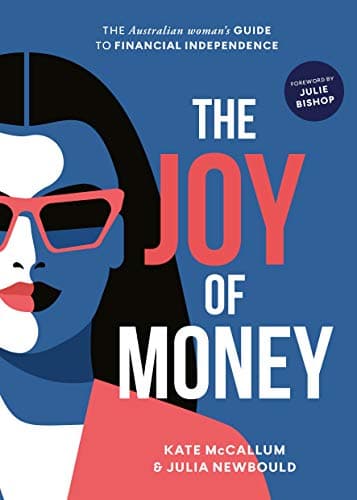
The Joy of Money
Kate McCallum & Julia Newbould
The Joy of Money
Kate McCallum and Julia Newbould map out financial independence for Australian women, from super and investing to insurance and estate planning. Practical, warm and refreshingly free of finance-bro energy.
The Barefoot Investor
Scott Pape

The Barefoot Investor
Australia's best-selling money book ever. A simple system for accounts, budgeting, debt and a real emergency fund in one.
Some links above are affiliate links. If you buy through them, Snowball Invest may earn a small commission at no extra cost to you. We only recommend books we'd suggest anyway.
Sources
- 1. Know your worth and avoid underinsurance, Insurance Council of Australia
- 2. Underinsurance: what it is and how to avoid it, Moneysmart, Australian Securities and Investments Commission
- 3. Home insurance, Moneysmart, Australian Securities and Investments Commission
- 4. Australia's Life Underinsurance Gap Research Report 2022, Financial Services Council
- 5. Climate change, home values and underinsurance (February 2025), The Australia Institute
- 6. Report 54, Getting home insurance right: ASIC's report on home building underinsurance (2005), Australian Securities and Investments Commission
- 7. Australia's persistent life underinsurance gap (2015), Rice Warner
- 8. New research shows a larger underinsurance gap (2020), Rice Warner
Was this article useful?
Put it to your own numbers
Every calculator runs entirely in your browser, with nothing stored. See what these numbers look like for your own situation.
Try the Life Insurance calculator →General information only. This article is educational and does not constitute personal financial advice. It does not account for your circumstances. Consider your own situation and seek advice from a licensed adviser before acting. Read our full disclaimer.

Timothy Hirou Gaschereau
Founder of Snowball Invest, not a financial adviser.
I write about what I'm learning myself, because nobody ever taught us how to take control of our own money. It's a skill, not a mystery, and it's never too late to learn it. The best day to start was yesterday, the second best is today.
LinkedIn →Related articles

Is Life Insurance Tax Deductible in Australia?
Is life insurance tax deductible in Australia? The clear answer, the super exception, how it compares to income protection, and the payout tax to know about.

Do I Need Life Insurance? An Honest Australian Guide
Not everyone needs life insurance. Here is the honest test of who actually needs it in Australia, who probably does not, and how to size a sum insured.

How Much Life Insurance Do You Actually Need in Australia?
Not sure how much life insurance you need? A worked example, the DIME framework, and why the '10x income' rule is a floor, not an answer.