

How Much Life Insurance Do You Actually Need in Australia?
Not sure how much life insurance you need? A worked example, the DIME framework, and why the '10x income' rule is a floor, not an answer.
 By Timothy Hirou GaschereauPublished
 7 min read
Try it yourself
This article is general information only, not personal financial advice. Run your own numbers, and consider a licensed adviser if your situation is complicated. If you're still working out what life insurance actually is before deciding how much you need, start with our beginner's guide to life insurance in Australia.
Quick answer
Most people with dependants, a mortgage, and a working income need somewhere in the range of 10 to 15 times their annual salary in life cover, but the real number depends on your debts, your kids' ages, your partner's earning capacity, and what you already hold in super. MoneySmart's free life insurance calculator is the most practical way to get a personalised figure. For most people, default cover through super alone isn't enough.
In this guide
- →Why the "10x income" rule is a starting point, not a real answer
- →A structured way to add up everything your cover actually needs to replace
- →A full worked example, mortgage, debts, education, funeral, minus what you already have
- →Why most Australians are running a real cover gap without realising it
- →The life events that mean it's time to review your number
🧮 The quick formula most people start with
The simplest rule of thumb going around is 10 times your annual income. Earning $90,000 a year? Start with $900,000 in cover. Earning $120,000? Think $1.2 million.
Worth being upfront about this one: it's a commonly cited shortcut used by financial commentators and comparison sites, not an official standard from ASIC or any licensed adviser body. Treat it as a sanity check, not a final number.
It falls short on its own because it ignores:
- The size of your mortgage
- How many dependants you have and how young they are
- Whether your partner earns an income or would need to re-enter the workforce
- What you already have in super, including any default cover
- Your existing savings and investments
Think of 10x as the floor, not the ceiling.
📐 A more structured way to think about it
One framework you'll sometimes see referenced is DIME, short for Debt, Income, Mortgage, Education. It started in the US and isn't a formal methodology used by Australian licensed adviser bodies, but the underlying logic maps closely to what MoneySmart's own calculator does: add up what your family would need to cover, then subtract what they'd already have access to.
Here's how that logic plays out for a realistic example. Meet Priya, 38, earning $95,000 a year, with a $450,000 mortgage and two kids aged 6 and 9.
| Component | What it includes | Amount |
|---|---|---|
| Debt | Credit cards, car loan, personal loans | $28,000 |
| Income | Annual income x 12 years until youngest turns 18 | $1,140,000 |
| Mortgage | Outstanding balance | $450,000 |
| Education | Estimated schooling costs per child to 18 | $60,000 |
| Subtotal | $1,678,000 | |
| Less: existing assets | Super balance + savings + existing cover | ($280,000) |
| Cover needed | ~$1,400,000 |
That's a big number, and it's exactly why picking a round $500,000 policy without doing the maths leaves a lot of families badly exposed.
MoneySmart's life insurance calculator uses a very similar approach: it adds up funeral costs, mortgage, other debts, children's education, and ongoing living costs, then subtracts your available assets, including super. It's the best free, government-backed tool available and takes about 10 minutes.
📋 What to actually include
Go through each of these carefully. Missing even one creates a real gap.
Outstanding debts: mortgage (the big one), car loan, credit cards, personal loans. HECS/HELP is wiped on death, so it doesn't belong here, more on that below.
Income replacement: how many years does your family need support for? A common benchmark is until your youngest child turns 18. If your partner isn't currently working, or would need retraining to re-enter the workforce, extend that window.
Funeral costs: Australian funerals typically cost somewhere between $4,000 and $15,000, according to MoneySmart, depending on the type of service and location. A basic direct cremation can come in well under $5,000, while a full burial service in a capital city can push past $15,000.
Children's education costs: if you're planning on private schooling, factor in fees, uniforms, and extras. Government schooling is cheaper but still carries ongoing costs.
What to subtract:
- Super balance, your family can access this on your death
- Existing life cover inside super, check your latest member statement
- Savings and investments
- Investment property equity, if your family would actually sell it
💡 A worked example: putting it all together
Meet Daniel, 40, earning $100,000 a year, with a $500,000 mortgage, two kids aged 8 and 11, $120,000 in super, and $200,000 in default life cover through super.
| Item | Amount |
|---|---|
| Mortgage payoff | $500,000 |
| Income replacement (10 years until youngest turns 18) | $1,000,000 |
| Other debts (car loan + credit card) | $35,000 |
| Children's education (est. $15,000 per child to 18) | $105,000 |
| Funeral costs | $12,000 |
| Total need | $1,652,000 |
| Less: super balance | ($120,000) |
| Less: existing cover through super | ($200,000) |
| Less: savings | ($30,000) |
| Cover gap to fill with a standalone policy | ~$1,302,000 |
Full need
Already covered
The gap
Illustrative proportions for a typical household with a mortgage and young kids. Default super cover usually closes only a small part of the total need.
Daniel's default super cover of $200,000 covers roughly 15% of his actual need. That's the underinsurance problem in a single row.
A standalone policy around $1.3 million is what Daniel actually needs. For a healthy 40-year-old non-smoker, cover at that level is often more affordable than people assume, which is exactly why it's worth getting an actual quote instead of guessing.
⚠️ Why most Australians get this wrong
Independent industry research has repeatedly found that most Australians hold nowhere near the cover they'd actually need, particularly for income replacement, which is usually the single biggest and most commonly underestimated component of the whole calculation.
There are three reasons this keeps happening.
Default super cover is a starting point, not a plan. Most super funds automatically provide some life insurance, but the amount is set by the fund, not by your actual financial obligations. A 35-year-old with a $600,000 mortgage and two kids might have $150,000 in default cover, a $450,000 gap before you even count income replacement.
Cover doesn't grow with your life. You take out a policy at 30 with a $400,000 mortgage. By 35, you've refinanced to $550,000, had a second child, and got a pay rise. Your cover hasn't changed. The gap has quietly grown.
People underestimate income replacement. The mortgage is the obvious number. Replacing years of income for a family is usually the largest single item in the whole calculation, and it's the one people most often leave out.
For the wider picture on how widespread this problem actually is, across both life cover and home insurance, see our guide to underinsurance in Australia.
🧮 Life Insurance calculator
Plug in your own debts, income and dependants to get a needs-based estimate of your cover gap, instead of guessing at a round number.
❌ Common mistakes
- Picking a round number without calculating. "$500k sounds like a lot" is not a methodology. Run the numbers.
- Forgetting to subtract existing super cover. You might already have $200,000 in default cover. That counts, check the actual figure on your member statement.
- Not reviewing after major life events. Marriage, a new baby, a bigger mortgage, a divorce, a salary jump. Any of these materially changes your cover needs.
- Over-insuring. No dependants, significant assets, no debt? You may not need life insurance at all. Paying for cover you don't need is just wasted money.
- Ignoring HECS/HELP entirely. It doesn't pass to your estate, but it does reduce your take-home pay while you're alive, which affects how much your family relies on your income.
📅 When to review your cover
Set a calendar reminder. Review your cover amount whenever any of these happen:
- You get married or enter a de facto relationship
- You have a child, or another one
- You take on a new or larger mortgage
- You get a significant pay rise
- You separate or divorce
- You start or buy a business
- Your youngest child turns 18, you may need less cover
- You pay down a large chunk of debt, or your super balance grows substantially
MoneySmart's calculator is free and takes about 10 minutes. There's no good reason not to run it every couple of years.
SnowLetter
Australia's money news and our best reads, once a week.
❓ Frequently asked questions
How much life insurance do I need in Australia as a rough guide?
+
A commonly cited starting point is 10 times your annual income, but it's just a floor, not a real answer. Add your outstanding mortgage, other debts, and estimated education costs for your kids. Subtract your super balance, existing cover, and savings. That gap is what a standalone policy needs to cover.
Does my super life insurance count towards my total cover?
+
Yes. Check your member statement for the exact default cover amount, it reduces the gap you need to fill with a separate policy. For most people with a mortgage and young kids, though, it only covers a small fraction of the actual need.
What's the best free life insurance calculator in Australia?
+
MoneySmart's life insurance calculator is the most widely used free tool. It walks through funeral costs, mortgage, debts, education, and living costs, then subtracts your assets to give you a personalised estimate in about 10 minutes.
How do I calculate my life insurance needs if I'm self-employed?
+
The same broad approach applies, but income replacement matters more since you don't have employer sick leave or default group cover to fall back on. Use your average income over the past two to three years as your base figure.
Does life insurance need to cover my HECS/HELP debt?
+
No. HECS/HELP debt is wiped on death and doesn't pass to your estate, so you don't need to include it as a debt to be paid off. It's still worth factoring into your income replacement thinking, since it reduces your effective take-home pay while you're alive.
📚 Recommended reading
The Joy of Money
Kate McCallum & Julia Newbould
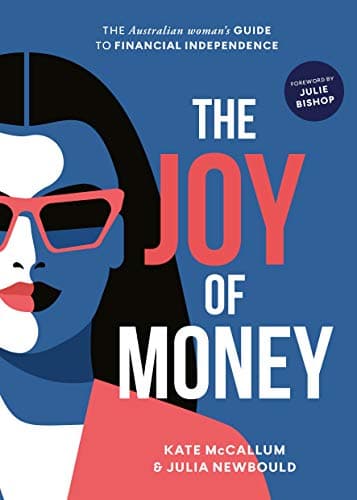
The Joy of Money
Kate McCallum and Julia Newbould map out financial independence for Australian women, from super and investing to insurance and estate planning. Practical, warm and refreshingly free of finance-bro energy.
The Barefoot Investor
Scott Pape

The Barefoot Investor
Australia's best-selling money book ever. A simple system for accounts, budgeting, debt and a real emergency fund in one.
Some links above are affiliate links. If you buy through them, Snowball Invest may earn a small commission at no extra cost to you. We only recommend books we'd suggest anyway.
Sources
- 1. Life insurance calculator, Moneysmart, Australian Securities and Investments Commission
- 2. How life insurance works, Moneysmart, Australian Securities and Investments Commission
- 3. Paying for your funeral, Moneysmart, Australian Securities and Investments Commission
- 4. Life Insurance and Friendly Societies register, Australian Prudential Regulation Authority
Was this article useful?
Put it to your own numbers
Every calculator runs entirely in your browser, with nothing stored. See what these numbers look like for your own situation.
Try the Life Insurance calculator →General information only. This article is educational and does not constitute personal financial advice. It does not account for your circumstances. Consider your own situation and seek advice from a licensed adviser before acting. Read our full disclaimer.

Timothy Hirou Gaschereau
Founder of Snowball Invest, not a financial adviser.
I write about what I'm learning myself, because nobody ever taught us how to take control of our own money. It's a skill, not a mystery, and it's never too late to learn it. The best day to start was yesterday, the second best is today.
LinkedIn →Related articles

How Underinsured Are Australians, Really?
Most Australians have insurance, but millions have far less than they'd need. The real scale of underinsurance in Australia, and what to do about it.

Is Life Insurance Tax Deductible in Australia?
Is life insurance tax deductible in Australia? The clear answer, the super exception, how it compares to income protection, and the payout tax to know about.

How Does Life Insurance Work in Australia?
How life insurance actually works in Australia: how premiums are set, stepped vs level, inside vs outside super, beneficiary nominations, and how a claim is paid.