
25 Money Saving Tips Australia: A Practical Guide
25 practical money saving tips for Australians: cut grocery bills, compare energy plans, ditch bank fees and audit subscriptions without a lifestyle change.
 By Timothy Hirou GaschereauPublished
 10 min read
The cost of living is genuinely tough right now, but a lot of the best ways to save money in Australia do not require a dramatic lifestyle overhaul. They need about 20 minutes and a bit of know-how. Here are the tips that actually move the needle, grouped so you can start with the ones that fit your life. This is part of our wider guide to saving and budgeting on Snowball Invest.
Quick answer
Compare your energy plan on Energy Made Easy and check your state rebate eligibility, it takes about 10 minutes. Switch to a fee-free bank account and a high-interest savings account so you stop paying to hold your own money. Use unit pricing at the supermarket, and audit your subscriptions once a quarter. Most households are paying for at least one service they have forgotten about.
In this guide
- →Grocery tactics: unit pricing, Aldi, home brands and the specials apps
- →The highest-impact energy and bill moves, including rebates
- →Transport, banking and subscription wins most people miss
- →Housing levers, from rent negotiation to refinancing
- →How to make the savings stick without living like a monk
🛒 Groceries and food
🎯 The essential: You are at the supermarket every week, so grocery wins are the ones you feel fastest.
- Use unit pricing. Large supermarkets must show the price per 100g or 100ml by law. A bigger pack is not always cheaper per unit, so check the small number.
- Shop Aldi for staples. For pantry basics, Aldi is consistently cheaper than the majors. A weekly Aldi run plus a top-up elsewhere is one of the most effective grocery moves.
- Use the Coles and Woolworths apps. Both show the week's specials and personalised offers before you leave home. Build your meals around what is on special.
- Meal plan to cut waste. A rough weekly plan means you buy what you will actually use, instead of binning money.
- Buy home brands. For most pantry staples the quality difference is negligible and the price difference is real.
For the full playbook, see how to save money on groceries and our comparison of the cheapest supermarket in Australia.
⚡ Energy and bills
Reducing your electricity bill is one of the highest-impact moves you can make, and most of it costs nothing.
- Compare on Energy Made Easy (or Victorian Energy Compare in VIC). Enter your usage and see every plan ranked by estimated annual cost. Many households find a cheaper plan in under 10 minutes.
- Check government rebates. Federal and state energy rebates and concessions can stack. Many people miss out simply by not asking their retailer or checking their state portal.
- Call your internet or phone provider and ask for a better deal, or switch to an MVNO on the same network for a fraction of the price.
- Use off-peak tariffs if your plan has them, running the dishwasher or washing machine late evening to early morning.
Loyalty is rarely rewarded. Providers routinely price existing customers higher than new ones, so an annual check, even without switching, is a low-effort habit worth keeping.
🚆 Transport
- Understand your fare caps. Opal, Myki and go card all have daily and weekly caps that make frequent travel much cheaper than paying per trip. Check your state's current caps.
- Shop around for car insurance annually. Premiums creep up at renewal, and insurers rarely reward loyalty with their best rate.
- Carpool or use Park and Ride to cut fuel and CBD parking costs.
- Consider an e-bike or scooter for short commutes if you are paying for daily CBD parking.
🏦 Banking and fees
Bank fees are one of the most avoidable costs in personal finance.
- Switch to a fee-free account. Many banks offer $0 monthly fee transaction accounts. If you are paying an account-keeping fee, you are paying for something you do not have to.
- Open a high-interest savings account with a bonus rate, but read the monthly conditions carefully before you open one.
- Salary sacrifice into super to reduce your taxable income, with contributions taxed at 15% inside super rather than your marginal rate. This is general information only, not personal financial advice.
- Use an offset account if you have a mortgage, since the balance reduces the interest you are charged.
📺 Subscriptions and shopping
This is where money quietly disappears. A subscription audit once a quarter is one of the most effective habits there is.
- Audit every subscription. Streaming, gym, apps, cloud storage, news, meal kits. Cancel anything you have not used in the past month.
- Use cashback apps like ShopBack on purchases you were making anyway. See our full guide to cashback apps in Australia.
- Shop op shops and Buy Nothing groups for furniture, clothing and kitchenware at a fraction of retail, or free.
- Use CHOICE to research big purchases before you buy. Independent testing can steer you away from an overpriced or underperforming product.
🏠 Housing
Housing is the biggest line item in most budgets, so even small wins matter.
- Negotiate rent at renewal. Research recent listings in your area and ask for a freeze or modest reduction, especially if you are a reliable long-term tenant.
- Refinance your mortgage if the rate has not been reviewed in 12 months. Even a 0.25% cut on a $500,000 loan saves around $1,250 a year. This is general information only, not personal financial advice.
🧮 Budget Calculator
Map your income against your real spending with the 50/30/20 rule and see where your money is actually going.
📌 How to make the savings stick
Reading a list of tips is easy. Doing them is the part that needs a system. Start with the two or three that apply most directly to you, and do those first. Once they are done, they are done, you do not have to think about them again. Automate your savings transfer on payday so the money moves before you can spend it, and track your progress month by month. The goal is not to live like a monk. It is to stop money leaking out through gaps you have not noticed yet.
If nothing is automated yet, an emergency fund is the usual first destination.
SnowLetter
Australia's money news and our best reads, once a week.
❓ Frequently asked questions
How much can I save by switching energy providers?
+
It varies by state, usage and current plan. The Australian Energy Regulator's Energy Made Easy site shows the exact estimated annual difference between your current plan and the alternatives. Households on a default market offer often save meaningfully by moving to a competitive market offer. The only way to know your number is to run your own comparison.
What is the easiest way to start saving money in Australia?
+
Open a high-interest savings account and set up an automatic transfer on payday. You do not have to change your spending at all, you just move a portion of your income somewhere it earns interest before you can spend it. A subscription audit and an energy comparison are both low-effort, high-return next steps.
Are MVNOs safe and reliable in Australia?
+
Yes. Mobile virtual network operators use the same physical towers as the major carriers. Boost and Woolworths Mobile run on the Telstra wholesale network, Moose Mobile on the Optus network. The main trade-off is lower priority during peak congestion and more limited customer service, but for most metro and suburban users the difference is minimal and the savings are real.
How do Buy Nothing groups work?
+
They are hyper-local Facebook communities where members give away items they no longer need, completely free. No selling or swapping. Search Buy Nothing plus your suburb on Facebook and request to join. People give away furniture, clothing, baby gear, appliances and more, and the giver chooses who receives each item.
What government concessions and rebates are available?
+
There are both federal and state-based concessions, with eligibility varying by state, household type and income. Energy Made Easy links to state rebate information, and your state government's website covers the full picture including water rebates and cost-of-living payments. Many people miss out simply by not checking.
📚 Recommended reading
The Barefoot Investor
Scott Pape
The Barefoot Investor
Australia's best-selling money book ever. A simple system for accounts, budgeting, debt and a real emergency fund in one.
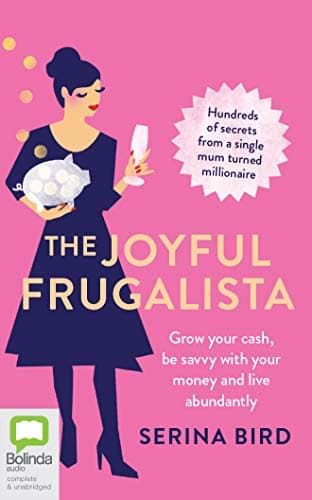
The Joyful Frugalista
Serina Bird
The Joyful Frugalista
Frugal living that feels fun instead of miserable, from an Aussie who saved a fortune without hating her life. Packed with everyday tips to spend less, save more and still enjoy the good stuff.
The Richest Man in Babylon
George S. Clason
The Richest Man in Babylon
The original pay-yourself-first playbook, dressed up as ancient Babylonian parables. Almost a century old and the advice still lands.
Some links above are affiliate links. If you buy through them, Snowball Invest may earn a small commission at no extra cost to you. We only recommend books we'd suggest anyway.
Sources
Was this article useful?
Put it to your own numbers
Every calculator runs entirely in your browser, with nothing stored. See what these numbers look like for your own situation.
Explore the calculators →General information only. This article is educational and does not constitute personal financial advice. It does not account for your circumstances. Consider your own situation and seek advice from a licensed adviser before acting. Read our full disclaimer.

Timothy Hirou Gaschereau
Founder of Snowball Invest, not a financial adviser.
I write about what I'm learning myself, because nobody ever taught us how to take control of our own money. It's a skill, not a mystery, and it's never too late to learn it. The best day to start was yesterday, the second best is today.
LinkedIn →Related articles

How Much Should You Spend on Food Per Week in Australia?
How much should you spend on food per week in Australia? See 2026 benchmarks for singles, couples and families, plus easy ways to cut your grocery bill.
Clever Ways to Save Money in Australia (That Actually Work)
Clever ways to save money in Australia right now: banking, groceries, fuel, subscriptions and mindset shifts that add up to thousands per year.

How to Save Money as a Student in Australia
A practical guide to saving money as a student in Australia: Youth Allowance, concession cards, cheap food, textbook hacks, fee-free banking and housing tips.