

Cheapest Supermarket in Australia: Aldi vs Coles vs Woolworths
Which is the cheapest supermarket in Australia? Aldi, Coles, Woolworths, IGA and Costco compared on CHOICE basket data, plus how to shave your grocery bill.
 By Timothy Hirou GaschereauPublished
 8 min read
Everyone has a hunch about which supermarket is cheapest. The data mostly agrees with the obvious answer, but the interesting part is where it does not. This is part of our wider guide to saving and budgeting on Snowball Invest. Prices vary by store and change often, so always check current prices before you shop.
Quick answer
Aldi is the cheapest supermarket in Australia, and it is not particularly close. CHOICE's quarterly basket surveys put Aldi roughly 20 to 27% cheaper than Coles and Woolworths on a comparable basket. In September 2024 a standard basket cost about $50.79 at Aldi, $68.70 at Woolworths and $69.91 at Coles. IGA is typically the most expensive of the major chains. That said, cheapest depends on what you buy and whether you have an Aldi nearby.
In this guide
- →Which chain is genuinely cheapest, and when that changes
- →A head-to-head basket comparison across Aldi, Coles, Woolworths, IGA and Costco
- →The category-by-category winners for produce, meat and pantry staples
- →Why Aldi runs so cheap, and the real trade-offs
- →How to shave your bill even when Aldi is not an option
🛒 Which is actually cheapest?
🎯 The essential: Aldi wins on price for staples and home-brand products. Coles and Woolworths sit close to each other and win on range, specials and delivery. IGA is usually the priciest.
If you are buying mostly pantry staples and home-brand products, Aldi wins by a clear margin. If you need branded items, a wide range of fresh produce, or online delivery, the picture gets more complicated.
Coles and Woolworths are remarkably close to each other. CHOICE's December 2024 survey found just a $1.79 difference between the two on a no-specials basket. That is noise, not a meaningful gap. IGA consistently lands as the most expensive option for a standard weekly shop, though it often fills an important role in regional or rural areas where the bigger chains simply are not available.
The variables that decide which is cheapest for you are your location, your household size, whether you buy branded or home-brand products, and how much time you are willing to spend shopping around.
⚖️ A head-to-head price comparison
Here is how the main supermarkets stack up on a typical weekly basket, based on CHOICE's 2024 to 2025 surveys. All figures are approximate and in AUD, and prices vary by location.
| Supermarket | Basket cost | Best for |
|---|---|---|
| Aldi | Cheapest (~$50 to $55) | Lowest prices, strong home brand, basic produce |
| Coles | Mid (~$68 to $70) | Wide range, specials cycle, delivery, Flybuys |
| Woolworths | Mid (~$68 to $70) | Wide range, delivery, Everyday Rewards |
| IGA | Priciest (~$74 to $79) | Local and regional convenience |
| Costco | Cheapest per unit in bulk | Bulk non-perishables (membership $65/yr) |
The ACCC's 2024 to 2025 supermarket inquiry recommended stronger pricing transparency, including clearer disclosure of promotions, and noted that the sector's high concentration can reduce competitive pressure on price. It stopped short of finding price gouging, but the recommendations were pointed.
🥦 Winner by category
Fresh produce: Aldi is often cheapest for everyday fruit and veg. Coles and Woolworths fight back with variety and frequent half-price specials on seasonal items, so check the catalogues.
Meat: Aldi's home-brand range is very competitive. The big two offer more variety, premium cuts and loyalty discounts that can close the gap.
Pantry staples: this is Aldi's strongest category. A 500g bag of pasta sits around 89c to 99c at Aldi, versus $1.50 to $2.00 for branded pasta at the big two on a non-sale week. For rice, canned tomatoes and oil, Aldi's home brand is among the cheapest in the country.
Household and personal care: Aldi's Special Buys can be exceptional value, though stock is limited. For bulk cleaning products, Costco wins on a per-unit basis.
🔍 Why Aldi is usually cheapest
Aldi's model is built around ruthless efficiency: around 1,800 products versus 30,000-plus at Coles and Woolworths, almost entirely own-label, a no-frills store layout, no loyalty program to fund, and a lean supply chain. Fewer products means simpler logistics and more buying power per line.
The trade-offs are real. No Vegemite, no Milo, no Tim Tams. Limited produce variety. Online delivery is unavailable in most areas. And coverage is uneven: Aldi has roughly 600 stores, concentrated in NSW, Victoria and Queensland, so regional WA, SA, Tasmania and the NT may not have one nearby.
💡 Save at Coles and Woolworths too
No Aldi nearby, or you just want the variety? These moves genuinely work:
- Use unit pricing. Every major supermarket must show the price per 100g or 100ml by law. A smaller ticket price is not always the cheaper option per unit.
- Shop the half-price cycle. Coles and Woolworths rotate branded items to 50% off roughly every 6 to 8 weeks. Stock up on your staples when they hit that price.
- Buy home brands. Coles brand and Woolworths Essentials are typically 20 to 40% cheaper than name brands for comparable quality on most pantry lines.
- Use loyalty programs smartly. Flybuys and Everyday Rewards offer genuine discounts, but do not let points-chasing push you to overspend.
- Run a hybrid shop. Buy staples at Aldi, then pick up specials and branded items at Coles or Woolworths. CHOICE's data shows this consistently delivers the lowest overall basket cost.
For a deeper dive on trimming the weekly food bill, see our guide on how to save money on groceries.
🧮 Budget Calculator
Set a realistic grocery number and see where the rest of your money is actually going.
🏁 The verdict
Aldi is the default for everyday staples if you have one nearby. Coles or Woolworths are best for variety, branded items, specials and delivery, so use them alongside Aldi rather than instead of it. Costco makes sense for bulk household goods if you have a membership. IGA is often the only option regionally, where convenience and access matter more than price. For most Australians with the choice, the hybrid approach is the smartest play.
SnowLetter
Australia's money news and our best reads, once a week.
❓ Frequently asked questions
Is Aldi really cheaper than Coles and Woolworths?
+
Yes, consistently. CHOICE's quarterly basket surveys through 2024 and into 2025 found Aldi's basket running roughly 20 to 27% cheaper than Coles and Woolworths on comparable items. In September 2024 the gap was about $18 per basket. That is a meaningful saving over a full year of weekly shops.
Is IGA more expensive than Coles and Woolworths?
+
Yes. IGA consistently comes in as the most expensive of the major chains in CHOICE's comparisons. In the June 2024 survey a standard basket cost $78.95 at IGA versus around $69 at Coles and Woolworths. The gap is roughly $8 to $12 per basket, partly because many IGA stores are independently owned with less buying power.
Is Costco worth it for groceries?
+
It depends on your household. Costco's Gold Star membership costs $65 a year in Australia. If you regularly buy bulk non-perishables like cleaning products, paper goods and pantry staples, the per-unit savings can easily cover the fee. For smaller households, or anyone who cannot get through bulk quantities before they expire, the value case is weaker. It is not a full weekly-shop replacement for most people.
Which supermarket has the cheapest fruit and vegetables?
+
Aldi is generally cheapest for everyday produce basics like carrots, bananas, apples and broccoli. Coles and Woolworths can match or beat it when seasonal items hit their half-price cycle, so it is worth checking the catalogues. Comparing Aldi's everyday prices against the current specials at the big two is the most reliable approach.
How do I find supermarket specials and half-price deals?
+
Two free apps make this easy. Half Price (halfprice.com.au) tracks specials and catalogue deals across Coles, Woolworths and others. Frugl (frugl.com.au) lets you compare prices on specific items across multiple supermarkets. Both Coles and Woolworths also publish their weekly catalogues in their own apps, which are worth a look before your regular shop.
📚 Recommended reading
The Barefoot Investor
Scott Pape

The Barefoot Investor
Australia's best-selling money book ever. A simple system for accounts, budgeting, debt and a real emergency fund in one.
The Joyful Frugalista
Serina Bird
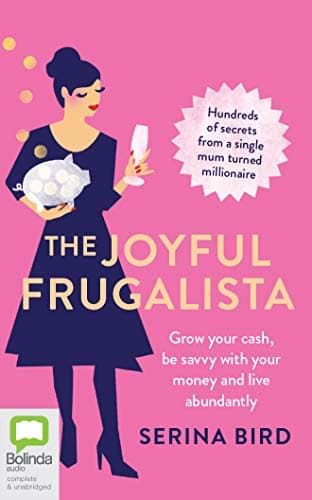
The Joyful Frugalista
Frugal living that feels fun instead of miserable, from an Aussie who saved a fortune without hating her life. Packed with everyday tips to spend less, save more and still enjoy the good stuff.
Smashed Avocado
Nicole Haddow
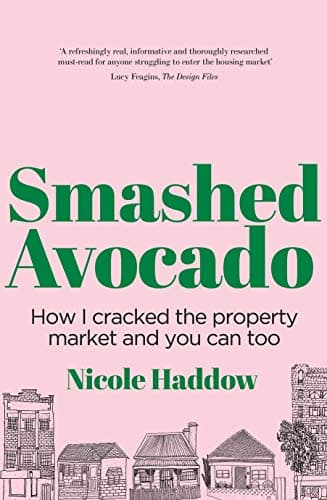
Smashed Avocado
A millennial who ditched the rent trap and cracked the property market by 30, told with honesty and humour. If you have ever been told your brunch is why you cannot buy a home, this Aussie story is your comeback.
Some links above are affiliate links. If you buy through them, Snowball Invest may earn a small commission at no extra cost to you. We only recommend books we'd suggest anyway.
Sources
Was this article useful?
Put it to your own numbers
Every calculator runs entirely in your browser, with nothing stored. See what these numbers look like for your own situation.
Explore the calculators →General information only. This article is educational and does not constitute personal financial advice. It does not account for your circumstances. Consider your own situation and seek advice from a licensed adviser before acting. Read our full disclaimer.

Timothy Hirou Gaschereau
Founder of Snowball Invest, not a financial adviser.
I write about what I'm learning myself, because nobody ever taught us how to take control of our own money. It's a skill, not a mystery, and it's never too late to learn it. The best day to start was yesterday, the second best is today.
LinkedIn →Related articles

How to Save Money on Groceries in Australia
The habits that actually cut a grocery bill: reading unit prices properly, home brand vs name brand, and the specific swaps that add up over a year.

25 Money Saving Tips Australia: A Practical Guide
25 practical money saving tips for Australians: cut grocery bills, compare energy plans, ditch bank fees and audit subscriptions without a lifestyle change.

How to Save Money as a Student in Australia
A practical guide to saving money as a student in Australia: Youth Allowance, concession cards, cheap food, textbook hacks, fee-free banking and housing tips.