
How Much Should You Spend on Food Per Week in Australia?
How much should you spend on food per week in Australia? See 2026 benchmarks for singles, couples and families, plus easy ways to cut your grocery bill.
 By Timothy Hirou GaschereauPublished
 8 min read
Wondering how your weekly food spend stacks up? Here are the 2026 benchmarks for Australian singles, couples and families, plus practical ways to spend less without eating sad food. This is part of our saving and budgeting section on Snowball Invest. General information only, for educational purposes, not financial advice. Treat every figure here as a rough guide.
Quick answer
Most Australians spend somewhere between $100 and $150 per week on groceries if they live alone, around $180 to $260 for a couple, and roughly $280 to $400 for a family of four. These are approximate community benchmarks, not official figures for those household types. Add eating out and takeaway on top and total food spend climbs higher. If your numbers are in that ballpark, you're pretty normal. If they're well above it, there are easy levers to pull.
In this guide
- →The real benchmark numbers, and why they're fuzzy
- →How groceries and eating out split your food budget
- →Two simple frameworks for setting your own number
- →Practical ways to spend less without misery
- →A worked family-of-four example you can copy
📊 What Australians actually spend
Getting a single, definitive figure for the average weekly grocery bill is harder than it sounds. The most comprehensive source is the ABS Household Expenditure Survey (HES), which showed average weekly household spending on food and non-alcoholic beverages at roughly $237 per week in 2015-16 (the most recent HES release as of mid-2026). That covers all household types combined, and it is now a decade old. With food inflation running hard since 2021, real-world spend is substantially higher today. More recent consumer surveys give a clearer picture:
- Canstar Blue (2024) put the average household grocery spend at roughly $168 per week, with single-person households around $107 and four-person households around $216.
- Finder found households reporting roughly $152 per week for a single person, $200 for a couple and $274 for a couple with children.
- Compare the Market tracked the national average at roughly $214 per week in January 2025, up from around $192 a year earlier.
These surveys use self-reported data and vary in methodology, so treat them as ballpark figures. The table below combines them into a practical range. These are groceries only (supermarket and fresh food), not total food spend.
| Household type | Approximate weekly grocery range |
|---|---|
| Single person | $100 to $150 |
| Couple | $180 to $260 |
| Family of 4 (2 adults, 2 kids) | $280 to $400 |
Location makes a big difference. A Sydney or Melbourne household generally pays more than a regional Queensland one, simply because of store competition, transport costs and local prices. Regional and remote households often pay more for less choice, and the NT and ACT consistently show higher overall household spending than Tasmania and South Australia.
Food budgets don't exist in a vacuum. The Foodbank Hunger Report 2025 found that one in three Australian households (roughly 3.5 million) experienced food insecurity in the past year, with 87% citing the rising cost of living as their number one concern. A lot of Australians are actively cutting back, not just optimising.
🍽️ Groceries vs eating out: the full picture
🎯 The essential: Your weekly food spend is not just what you spend at Woolies or Coles. For most households, groceries are roughly 60 to 70% of total food spend, and eating out and takeaway make up the other 30 to 40%.
That means if a family is spending $400 a week on food in total, around $260 to $280 is likely groceries, and $120 to $140 is restaurants, cafes and UberEats (these are approximate proportions from available survey data). Eating out is usually the biggest lever. One fewer takeaway meal per week at $40 to $60 saves $2,000 to $3,000 over a year. The grocery budget matters, but it tends to be tighter to compress. Discretionary dining is where most households find the most room.
🧮 How to set your own food budget
There is no single right answer. It depends on your income, household size, location, dietary needs and lifestyle. Anyone who gives you a precise universal figure is guessing. That said, a few frameworks help.
The share-of-income approach. The popular 50/30/20 rule allocates roughly 50% of take-home pay to needs, 30% to wants and 20% to savings and debt. Within the needs bucket, food typically sits at around 10 to 15% of take-home pay. For a household taking home $6,000 per month, that is $600 to $900 on food, or roughly $140 to $210 per week. For a household on $10,000 per month, it is $1,000 to $1,500 per month, or $230 to $350 per week. Higher-income households often spend more in absolute terms but a lower share; the ABS HES 2015-16 found food was about 19% of spending for low-income households versus around 14% for high-income households.
The envelope (category) method. Set a fixed weekly or fortnightly limit for groceries, and a separate limit for eating out. Track against it. That's it. Simple, and it works for most people. Our guide on building a family budget walks through it.
📝 Budget Calculator
Model your food budget alongside your other expenses, so you can see exactly where food fits into your overall picture.
💸 Practical ways to spend less without misery
Small changes add up fast. None of these require you to eat sad food.
- Meal plan before you shop. Decide what you're cooking, then write your list from that. Five minutes of planning saves real money and cuts waste.
- Shop with a list and stick to it. Supermarkets are designed to make you spend more. A list is your defence.
- Use unit pricing. Compare price per 100g or per litre, not the pack price. A bigger pack is not always cheaper.
- Try cheaper stores. Aldi consistently undercuts the major chains on staples, as our comparison of the cheapest supermarket in Australia shows. Local markets and ethnic grocers often beat supermarkets on fresh produce.
- Buy in season. Seasonal produce is cheaper, fresher and often tastier. Out-of-season produce travels further and costs more.
- Cut food waste. OzHarvest estimates households throw away up to roughly $2,500 of food per year. Use what you buy, freeze what you won't get to, and check the fridge before you shop.
- Reduce takeaway frequency. Cook a double batch on Sunday and you'll be less tempted to order on a tired Tuesday night.
For more, our save money on groceries guide covers specific tactics across meal planning, store choice and waste reduction.
🧾 Worked example: a family of four's weekly food budget
This is an illustrative example only. It is not financial advice, and your numbers will differ. Household: 2 adults, 2 kids, combined take-home pay roughly $8,000 per month (about $2,000 per week).
| Item | Weekly amount |
|---|---|
| Groceries | $320 |
| Eating out and takeaway | $80 |
| Total food spend | $400 |
| As % of weekly take-home | 20% |
At 20% of take-home, this family is spending above the typical 10 to 15% guide. That's not necessarily wrong. It might reflect dietary needs, a preference for quality ingredients or a high-cost area. But it's a useful flag. To bring food closer to 15% ($300 per week), the most obvious move is reducing eating out from $80 to around $30 to $40, and tightening the grocery shop by $20 to $30 through meal planning and less waste. Small shifts, real results.
SnowLetter
Australia's money news and our best reads, once a week.
❓ Frequently asked questions
What is the average grocery bill in Australia?
+
Based on recent consumer surveys (Canstar Blue, Finder, Compare the Market), the average Australian household spends roughly $168 to $214 per week on groceries, depending on the survey and year. The ABS Household Expenditure Survey 2015-16 recorded average weekly household food and non-alcoholic beverage spending at around $237 (covering all food, not just groceries), but that figure is now dated and real-world spend is higher due to inflation. All figures are approximate.
How much should a couple spend on food per week in Australia?
+
A reasonable approximate range for a couple's weekly grocery budget in Australia is $180 to $260, based on available consumer survey data. Add eating out and takeaway and total food spend could be $250 to $350 or more. The right number for you depends on your location, dietary preferences and how often you eat out.
How much should one person spend on groceries per week in Australia?
+
For a single person, a typical approximate weekly grocery spend in Australia is $100 to $150, based on recent survey benchmarks from Canstar Blue and Finder. Some people spend less with careful planning; others spend more. If you're consistently above $200 per week on groceries for one person, it's worth checking whether food waste or convenience purchases are driving the number up.
What percentage of income should go to food in Australia?
+
As a rough guide, food typically accounts for around 10 to 15% of take-home pay for most Australian households. The ABS HES 2015-16 found food made up about 17% of average household spending on goods and services overall. Lower-income households tend to spend a higher share on food. This is a general guide only, not financial advice.
How do I cut my grocery bill in Australia?
+
The most effective moves are: meal planning before you shop, using a shopping list, comparing unit prices (not pack prices), shopping at Aldi or local markets for staples, buying seasonal produce, and reducing food waste. OzHarvest estimates Australian households waste roughly $2,500 worth of food per year, so cutting waste alone can make a meaningful dent. Reducing takeaway frequency is usually the single biggest lever for total food spend.
Is $200 a week enough for groceries for a family?
+
For a family of four, $200 per week is on the lower end of the approximate benchmark range ($280 to $400). It is achievable with consistent meal planning, shopping at discount stores like Aldi, buying in bulk for non-perishables and minimising food waste. It may be tighter in high-cost areas like Sydney or Darwin. Many families manage it; it generally requires more planning than a larger budget does.
📚 Recommended reading
The Barefoot Investor
Scott Pape

The Barefoot Investor
Australia's best-selling money book ever. A simple system for accounts, budgeting, debt and a real emergency fund in one.
She's on the Money
Victoria Devine
She's on the Money
Written for millennials, walks through budgeting, clearing debt, saving, investing and buying property with real stories.
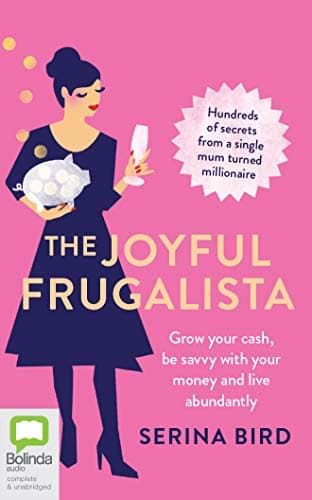
The Joyful Frugalista
Serina Bird
The Joyful Frugalista
Frugal living that feels fun instead of miserable, from an Aussie who saved a fortune without hating her life. Packed with everyday tips to spend less, save more and still enjoy the good stuff.
Some links above are affiliate links. If you buy through them, Snowball Invest may earn a small commission at no extra cost to you. We only recommend books we'd suggest anyway.
Sources
Was this article useful?
Put it to your own numbers
Every calculator runs entirely in your browser, with nothing stored. See what these numbers look like for your own situation.
Explore the calculators →General information only. This article is educational and does not constitute personal financial advice. It does not account for your circumstances. Consider your own situation and seek advice from a licensed adviser before acting. Read our full disclaimer.

Timothy Hirou Gaschereau
Founder of Snowball Invest, not a financial adviser.
I write about what I'm learning myself, because nobody ever taught us how to take control of our own money. It's a skill, not a mystery, and it's never too late to learn it. The best day to start was yesterday, the second best is today.
LinkedIn →Related articles

25 Money Saving Tips Australia: A Practical Guide
25 practical money saving tips for Australians: cut grocery bills, compare energy plans, ditch bank fees and audit subscriptions without a lifestyle change.

How to Save Money as a Student in Australia
A practical guide to saving money as a student in Australia: Youth Allowance, concession cards, cheap food, textbook hacks, fee-free banking and housing tips.
How to Track Your Spending in Australia (And Stick With It)
Learn how to track your spending in Australia with a simple four-step method, easy categories and habit tips that actually stick past the two-week mark.