

What Does Income Protection Not Cover? The Gaps Australians Miss
Income protection won't pay out for redundancy, normal pregnancy, or the full 100% of your income. Here are the exclusions Australians get caught out by.
 By Timothy Hirou GaschereauPublished
 12 min read
General information only, not financial advice. Policy wording genuinely varies between insurers, always check your own Product Disclosure Statement (PDS) before assuming what you are or aren't covered for. This is part of a wider guide to insurance on Snowball Invest.
Most people spend five minutes researching what income protection insurance covers, then sign up and forget about it. The problem is that the gaps, the exclusions buried in the PDS, are where claims actually get knocked back. This article is about those gaps, not the obvious ones, but the ones that catch people off guard at the worst possible time.
Quick answer
Income protection is for illness or injury only, redundancy and job loss don't count. You won't get 100% of your income either, most policies pay 70-75% of your pre-disability earnings. Pre-existing conditions you didn't disclose are almost always excluded, normal pregnancy and childbirth are typically excluded, and the "any occupation" definition is a much higher bar than most people realise. Mental health claims are increasingly covered, but some policies cap the benefit period at 2 years even if your overall cover runs longer. Every one of these varies by insurer, so your own PDS is the final word.
In this guide
- →The 11 most common exclusions and gaps, from pre-existing conditions to gig work
- →Why redundancy and job loss are never covered, no matter how the policy is worded
- →The benefit cap that means you'll never receive 100% of your income
- →How the waiting period leaves you with nothing for the first weeks or months
- →Why own occupation vs any occupation is the single biggest source of claim disputes
1. 📋 Pre-existing conditions you didn't disclose
This is the exclusion that catches the most people, and it's the one with the most nuance. When you apply for income protection, you have a duty of disclosure, you must tell the insurer about any medical conditions, symptoms or treatments you were aware of, honestly and completely, at the time of application. Not at claim time, at application time.
If you later make a claim for a condition that existed (or that you had symptoms of) before your policy started, and you didn't disclose it, the insurer can reject the claim outright, reduce the benefit, or cancel the policy entirely.
The tricky part is that "pre-existing condition" isn't defined the same way across all insurers. Some use a look-back period (any condition you had symptoms of in the past 5 years, for example), others define it as anything a reasonable person would have sought medical advice about. Some apply it broadly, others are narrower, the definition and the look-back period genuinely vary between insurers, so check your PDS carefully.
If in doubt, disclose it. An insurer may accept the condition, charge a higher premium, or add a specific exclusion, but at least you won't have a claim rejected years later for something you knew about.
2. 🚫 Self-inflicted injury
This one is standard across virtually all Australian income protection policies. If an injury or illness is self-inflicted, including attempted self-harm, the claim will be excluded. It's a blanket exclusion in most policies, with little variation across insurers on this particular point.
3. ⚔️ War, terrorism and criminal activity
Also standard. If you're injured or become ill as a result of active military service or war, terrorism or civil unrest (in some policies), or criminal activity, either your own or, in some cases, being incarcerated, your claim will typically be excluded. These aren't the exclusions people argue about, they're worth knowing, but they're not where the real surprises are.
4. ⛏️ Hazardous occupations and undisclosed risky hobbies
Some occupations are considered too high-risk for standard income protection, think commercial fishing, underground mining, or certain trades. Insurers either won't cover them at all, or they'll apply a loading (higher premium) or a specific exclusion.
The same logic applies to hazardous hobbies. If you're a recreational skydiver, a motorsport competitor, or a rock climber, and you didn't disclose that at application, a claim arising from that activity may be denied. The list of excluded or loaded occupations and hobbies varies significantly between insurers, check your insurer's occupation guide and PDS.
The key point across all of this: disclosure at application is everything. What you tell the insurer upfront determines what you're actually covered for.
5. 🤰 Normal pregnancy and childbirth
This one surprises a lot of people, especially those who assume income protection will bridge the gap during parental leave. Normal, uncomplicated pregnancy and childbirth are excluded from most income protection policies, the reasoning is that pregnancy isn't an illness or injury, it's a life event.
That means routine pregnancy leave, normal morning sickness, uncomplicated childbirth, and standard parental leave are all typically not covered. However, and this is important, serious pregnancy complications may be covered, depending on your policy wording. Conditions like severe hyperemesis gravidarum, pre-eclampsia, placenta praevia, or postpartum haemorrhage that genuinely prevent you from working could potentially trigger a claim.
🎯 The essential: Some policies exclude "normal and uncomplicated" pregnancy, which implicitly leaves the door open for complications, others are broader in their exclusion. Pregnancy-related coverage varies significantly between insurers, so read your PDS carefully and consider speaking to a financial adviser if you're planning a family.
6. 💼 Redundancy and job loss without a medical reason
This is the most common misconception about income protection, full stop. Income protection does not cover redundancy. It doesn't cover being made redundant, resigning, being fired, or choosing to take unpaid leave. It covers one thing: being unable to work due to illness or injury.
If you lose your job because your employer downsizes, your role is eliminated, or the company goes under, income protection pays nothing. You'd need to look at separate redundancy insurance (a different, less common product) or your own savings.
Can trigger a claim
- ✓Illness that stops you working
- ✓Injury that stops you working
Never pays out
- ✕Redundancy or being sacked
- ✕Resigning or quitting
- ✕Normal pregnancy & childbirth
- ✕Self-inflicted injury
- ✕Undisclosed pre-existing conditions
Income protection is not income replacement for job loss, it's income replacement for medical incapacity. If you're worried about redundancy, the answer isn't income protection, it's an emergency fund.
7. 💰 The benefit cap: you won't get 100% of your income
Here's a misconception that's less obvious but just as important. Income protection does not replace your full income. Most policies in Australia pay somewhere between 70% and 75% of your pre-disability income, though the exact percentage varies by insurer and policy, so check your PDS. That 25-30% gap matters, if you earn $100,000 a year, you might receive $70,000-$75,000 in benefits. Still meaningful, but not the same as your full salary.
Why the cap? Insurers argue, with some logic, that if you could receive 100% of your income while not working, you'd have no financial incentive to return to work. The cap is intentional. When you're calculating how much cover you need, don't assume 100% replacement. Budget for a gap, and consider whether your emergency savings or other assets can bridge it.
8. ⏳ The waiting period: you're not covered from day one
Income protection has a waiting period, a set number of days you must be unable to work before payments kick in. These are common options, not universal ones, they vary by insurer, so check your PDS.
| Waiting period | What it means |
|---|---|
| 14 days | Payments start after 2 weeks off work |
| 30 days | Payments start after 1 month off work |
| 60 days | Payments start after 2 months off work |
| 90 days | Payments start after 3 months off work |
| 2 years | Payments start after 2 years off work |
The longer the waiting period, the lower your premium, but the bigger the gap you need to cover yourself. If you choose a 90-day waiting period and you're off work for 3 months, you receive nothing during that time, it's simply not covered. You need sick leave, annual leave, or savings to bridge it. This is one of the most important decisions when setting up a policy, for a detailed breakdown of how waiting periods and benefit periods interact, see our guide to income protection waiting periods and benefit periods.
9. 🧭 Own occupation vs any occupation, the definition that decides your claim
This is arguably the most consequential gap in income protection, and the one most people don't understand until they're in the middle of a dispute. The disability definition in your policy determines whether you can actually claim.
| Definition | What it means | The bar |
|---|---|---|
| Own occupation | You can't perform the duties of your specific job | Lower, easier to claim |
| Any occupation | You can't perform any job you're reasonably suited to by education, training or experience | Higher, harder to claim |
Here's why it matters. A surgeon who develops a hand tremor and can no longer operate might qualify under an own occupation definition, because they can't do their specific job. Under an any occupation definition, the insurer might argue they could still work as a medical consultant, a GP, or in hospital administration. Same person, different outcome.
Some policies start on an own occupation basis for the first 24 months of a claim, then switch to any occupation after that, though this structure varies by insurer and policy, so check your PDS. The any occupation definition is a much higher bar, if your policy uses it, you need to be unable to work in any capacity that matches your skills and background, not just your current role.
🎯 The essential: This is one of the most common sources of income protection claim disputes in Australia. The same concept applies to TPD insurance, see our guide to TPD own occupation vs any occupation for a deeper dive on how it plays out there.
10. 🧠 Mental health claims, increasingly covered, but with conditions
Mental health is one of the fastest-changing areas in Australian income protection. Most policies now cover mental health conditions, depression, anxiety, PTSD and others, as a legitimate reason for being unable to work. But there are important caveats.
Some policies cap the benefit period for mental health claims at 2 years, even if your overall benefit period is 5 years or to age 65. This varies significantly by insurer and is a fast-changing area, some policies offer longer benefit periods for mental health, others don't, check your current PDS carefully.
Other things to look for in your policy:
- Separate waiting periods for mental health claims, some policies apply a longer waiting period for psychological conditions
- Qualifying conditions, some policies require a formal diagnosis from a psychiatrist, not just a GP
- Recurrence rules, whether a return of the same condition is treated as a new claim or a continuation of the original one
If mental health is a concern for you, this is one area where the specific policy wording really matters. Don't assume all policies treat it the same way.
11. 👷 Part-time, casual and gig workers
If you're not in a standard full-time role, income protection gets more complicated, and the options can be more limited. Common issues for non-standard workers include:
- Minimum hours thresholds, many policies require you to be working a minimum number of hours per week to be eligible, commonly around 20 hours, though some set it at 15 or 21, and the threshold varies by insurer
- Casual employees, some insurers don't cover casual employees at all, regardless of how many hours they work
- Gig workers and contractors, independent contractors are generally assessed differently from employees, some policies cover them, others don't, and proof-of-income documentation requirements are typically stricter
- Variable income, if your income fluctuates week to week, calculating your insurable income, and proving it at claim time, is more complex
Eligibility for part-time, casual and gig workers varies significantly between insurers. If you're not in a standard full-time role, read the eligibility section of your PDS carefully before assuming you're covered.
The exclusion that surprises people most is redundancy. For what actually happens if you lose your job, and how to protect yourself, see income protection and redundancy.
SnowLetter
Australia's money news and our best reads, once a week.
❓ Frequently asked questions
Does income protection cover redundancy?
+
No. Income protection only pays if you can't work due to illness or injury. Redundancy, being fired, or choosing to leave your job aren't covered. If you're worried about job loss, look at separate redundancy insurance or build up an emergency fund.
Does income protection cover mental health conditions?
+
Generally yes, most Australian income protection policies now cover mental health conditions like depression, anxiety and PTSD. But some policies cap the benefit period for mental health claims at 2 years, even if your overall benefit period is longer. Check your PDS for any mental health-specific limits.
Does income protection cover pregnancy?
+
Normal, uncomplicated pregnancy and childbirth are excluded from most policies. However, serious pregnancy complications, such as severe hyperemesis gravidarum, pre-eclampsia or postpartum haemorrhage, may be covered depending on your policy wording.
What percentage of my income does income protection actually cover?
+
Most policies pay 70-75% of your pre-disability income, not 100%. When working out how much cover you need, factor in this gap and consider whether your savings or other assets can bridge it.
What's the difference between own occupation and any occupation income protection?
+
Own occupation pays if you can't do your specific job. Any occupation pays only if you can't do any job you're reasonably suited to by your education, training and experience. Any occupation is a much higher bar, and a much more common reason for claim disputes. Some policies start on own occupation terms for the first 2 years, then switch to any occupation.
Can my claim be rejected for something I didn't disclose?
+
Yes. You have a duty of disclosure when you apply. If you didn't tell the insurer about a pre-existing condition, a hazardous hobby, or a high-risk occupation, and your claim is related to that, the insurer can reject the claim or void the policy. When in doubt, disclose it upfront.
Where to next
📚 Recommended reading
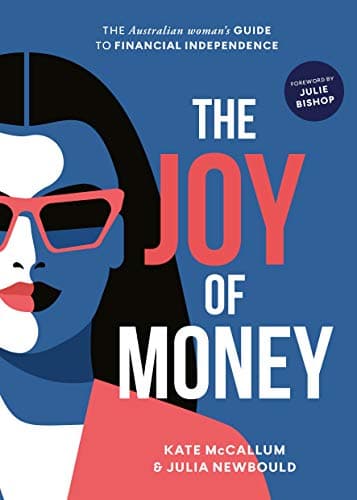
The Joy of Money
Kate McCallum & Julia Newbould
The Joy of Money
Kate McCallum and Julia Newbould map out financial independence for Australian women, from super and investing to insurance and estate planning. Practical, warm and refreshingly free of finance-bro energy.
The Barefoot Investor
Scott Pape

The Barefoot Investor
Australia's best-selling money book ever. A simple system for accounts, budgeting, debt and a real emergency fund in one.
Some links above are affiliate links. If you buy through them, Snowball Invest may earn a small commission at no extra cost to you. We only recommend books we'd suggest anyway.
Sources
- 1. Income protection insurance, Moneysmart, Australian Securities and Investments Commission
- 2. Income protection insurance deductions, Australian Taxation Office
- 3. Income protection insurance payments, taxable income, Australian Taxation Office
- 4. Insurance through super, Moneysmart
- 5. Life Insurance Code of Practice, Council of Australian Life Insurers
Was this article useful?
Put it to your own numbers
Every calculator runs entirely in your browser, with nothing stored. See what these numbers look like for your own situation.
Explore the calculators →General information only. This article is educational and does not constitute personal financial advice. It does not account for your circumstances. Consider your own situation and seek advice from a licensed adviser before acting. Read our full disclaimer.

Timothy Hirou Gaschereau
Founder of Snowball Invest, not a financial adviser.
I write about what I'm learning myself, because nobody ever taught us how to take control of our own money. It's a skill, not a mystery, and it's never too late to learn it. The best day to start was yesterday, the second best is today.
LinkedIn →Related articles

Income Protection and Redundancy: What's Actually Covered
Income protection does not cover redundancy. Here's what does, what your redundancy pay is actually worth, and how to genuinely protect yourself.

Is Life Insurance Tax Deductible in Australia?
Is life insurance tax deductible in Australia? The clear answer, the super exception, how it compares to income protection, and the payout tax to know about.

Do I Need Life Insurance? An Honest Australian Guide
Not everyone needs life insurance. Here is the honest test of who actually needs it in Australia, who probably does not, and how to size a sum insured.