

TPD "Own Occupation" vs "Any Occupation": Why the Difference Could Cost You Everything
If your TPD cover is inside super, you almost certainly have "any occupation" cover. Here's why that distinction matters more than most people realise.
 By Timothy Hirou GaschereauPublished
 10 min read
General information only, not financial advice. Insurance definitions and superannuation rules are genuinely complex and depend on your specific policy and circumstances, please speak with a licensed financial adviser before making any decisions. This is part of our wider guide to insurance on Snowball Invest.
Quick answer
Two very different definitions hide behind the same three letters. Own occupation TPD pays out if you can't return to your specific job. Any occupation TPD only pays if you can't work in any job you're reasonably suited to by education, training or experience, a much higher bar. If your TPD cover is inside super, you almost certainly have any occupation cover.
In this guide
- →The two TPD definitions, and why they lead to very different claim outcomes
- →Why own occupation TPD largely disappeared from super after 2014
- →Worked, hypothetical examples showing the practical stakes
- →Your options if you only have any occupation cover
- →How to check which definition actually applies to you
⚖️ Two definitions, two very different outcomes
Most Australians know they have TPD insurance. Fewer know what it actually covers. "Totally and permanently disabled" sounds clear enough, but the legal definition behind those words is what decides whether your claim actually gets paid, and there are two very different versions of it in circulation.
Own occupation and any occupation TPD can look identical on a super fund's website, same name, similar premium, but a completely different threshold for a successful claim. Getting this wrong isn't a minor inconvenience, it can be the difference between a six-figure payout when you need it most, and a rejected claim because you could, technically, still work in some other capacity.
🎯 What "own occupation" TPD means
Own occupation TPD asks one question: can you return to the specific occupation you worked in before you became disabled? If not, you can claim, full stop. It doesn't matter whether you could theoretically retrain for something else. The policy is tied to your job, the work you actually built a career around.
This is why own occupation cover tends to cost more, the insurer is taking on more risk with a narrower, more claimable definition. It's particularly valuable for people in specialised, high-skill professions, a surgeon, a dentist, a pilot, a specialist tradesperson, where income is tied to a very specific set of physical or cognitive abilities.
Own occupation TPD is generally only available outside super, through a standalone retail policy.
🧭 What "any occupation" TPD means
Any occupation TPD sets a significantly higher bar. To successfully claim, you generally need to show you're unable to ever work again in any job you're reasonably qualified for by education, training or experience, not just your current job, any job.
The insurer or trustee isn't just asking whether you can return to your old role, they're asking whether there's any form of gainful employment you could reasonably perform, anywhere within your field or education. A teacher who can no longer stand in a classroom might still be assessed as capable of tutoring online. A nurse who can't do physical patient care might still be considered capable of a health administration role.
Any occupation cover costs less than own occupation cover because it pays out less often, MoneySmart notes it has a higher threshold to claim, which makes it less likely to pay out.
🎯 The essential: Any occupation TPD is the standard definition inside super for any policy established from 1 July 2014 onwards.
Own occupation TPD
Pays out if you can't do your specific job, even if you could still do one of the others
Any occupation TPD
Only pays if you can't do any of these, the insurer just needs to find one you could still perform
Income protection insurance uses this exact same own occupation vs any occupation distinction, and it's just one of several exclusions worth understanding before you assume you're covered. See our guide to what income protection doesn't cover for the fuller list.
📜 Why own occupation was pushed out of super in 2014
This is the part most people don't know, and it matters a lot. Before 1 July 2014, some super funds offered own occupation TPD cover inside super. Then the rules changed.
Superannuation law sets out the conditions under which super benefits can be released early. One of those conditions is "permanent incapacity." Under the relevant regulation, a member is treated as permanently incapacitated when the trustee is reasonably satisfied that their ill health makes it unlikely they'll ever engage in gainful employment for which they're reasonably qualified by education, training or experience. Read that carefully, that's essentially the any occupation definition, built into the regulation itself.
From 1 July 2014, the regulations were amended so that a super fund trustee generally can't provide an insured benefit unless the insured event lines up with a condition of release. Because own occupation TPD doesn't line up with the permanent incapacity condition, new own occupation cover generally couldn't continue to be offered inside super from that date. APRA's guidance confirms that where TPD is provided inside super, a benefit is typically only accessible if the member meets both the TPD definition under the insurance contract and the permanent incapacity definition under superannuation law. If those two don't line up, you have a problem.
There's a narrow carve-out. If you had own occupation TPD inside super before 1 July 2014, some legacy policies were allowed to continue under transitional arrangements. Even then, you'd generally still need to satisfy the permanent incapacity test to actually access the money from your super account, so even grandfathered policies can create complications at claim time.
🧑⚕️ Real-world style examples
These are hypothetical illustrations, not real cases, but they show the stakes clearly.
The surgeon with a hand injury. A cardiothoracic surgeon in her 40s develops a nerve condition in her dominant hand that makes performing surgery unsafe. Under own occupation TPD, her claim is straightforward, she can no longer perform her occupation as a surgeon. Under any occupation TPD, it's far more complicated. She has decades of clinical training, and an insurer could argue she's capable of work as a medical educator, clinical consultant, or hospital administrator, none of which need surgical precision. If they can show she's reasonably qualified for any of those roles, her claim could be declined.
The tradie with a chronic back injury. A 38-year-old electrician suffers a serious fall and can no longer climb ladders or carry equipment. Under own occupation TPD, his claim is clear, he can't do the physical work of an electrician. Under any occupation TPD, an insurer might argue his trade knowledge qualifies him for a desk-based estimator, project manager, or compliance role. He might still win that argument, especially with well-documented physical limitations, but he could also face a lengthy dispute.
These aren't edge cases, they're the kind of dispute that ends up in front of AFCA every year. Our guide to why TPD claims get rejected covers the broader picture of how these disputes play out.
🛠️ What are your options now?
| Option | What it involves |
|---|---|
| Understand what you already have | Read your super fund's PDS to confirm the exact definition and cover amount |
| Consider a standalone retail policy | Own occupation cover is still available outside super, at a higher premium |
| Consider a split structure | Base any-occupation cover in super, topped up with own-occupation cover outside it |
| Check eligibility | Own occupation cover is typically restricted to professional or white-collar roles |
There are real trade-offs. Premiums for retail policies come from after-tax dollars rather than pre-tax super contributions, and own occupation cover costs more outright. But for many people, especially those in specialised roles, the broader definition is worth the extra cost. For the fuller comparison, see our insurance through super vs standalone guide.
🔍 How to check which definition you have
This takes about ten minutes and could save you a very unpleasant surprise later.
- Log into your super fund's member portal, or search the fund's website for the insurance PDS or guide
- Search for "TPD definition" or "total and permanent disability" and look for the words "own occupation" or "any occupation"
- Check how much cover you actually have, default amounts often don't reflect your real income or obligations
- Check whether your cover is still active, insurance can be cancelled if your account has been inactive for a period, unless you've opted to keep it
- If in doubt, call your fund and ask directly, "Is my TPD cover own occupation or any occupation?"
SnowLetter
Australia's money news and our best reads, once a week.
❓ Frequently asked questions
What's the difference between own occupation and any occupation TPD in Australia?
+
Own occupation TPD pays out if you can no longer work in the specific job you held before your disability. Any occupation TPD only pays out if you can't work in any job suited to your education, training or experience. Own occupation is the more generous definition, and it's generally only available outside super.
Why can't I get own occupation TPD inside super anymore?
+
Since 1 July 2014, super fund insurance has needed to align with a superannuation condition of release. The relevant condition, permanent incapacity, is defined in a way that's essentially the any occupation test, so new own occupation cover generally can't be provided inside super from that date.
I joined my super fund before 2014, do I have own occupation TPD?
+
Possibly, but not necessarily. Some legacy policies from before 1 July 2014 were allowed to continue under transitional rules. Even then, you'd generally still need to satisfy the superannuation permanent incapacity test to actually access the money from your super account. Check your PDS, and contact your fund if you're unsure.
Is own occupation TPD worth the extra cost?
+
For people in specialised, high-skill professions, surgeons, dentists, pilots, tradespeople, own occupation cover is generally considered more valuable, since it's more likely to result in a successful claim. Whether the extra premium is worth it depends on your occupation, income and financial situation. A licensed financial adviser can help you weigh it up.
What happens if my TPD claim is denied?
+
You can request an internal review with your insurer or fund. If that doesn't resolve things, you can lodge a free complaint with the Australian Financial Complaints Authority (AFCA), which can consider whether a claim meets the policy's TPD definition, including disputes over what counts as "any occupation."
Will I pay tax on a TPD payout from super?
+
Generally, yes, if you're under your preservation age. The taxable component of a super TPD lump sum is commonly taxed at up to around 22% including the Medicare levy for amounts above the low-rate cap, though the exact figure depends on your age and the components of your balance. A payout from a policy held outside super is generally received tax-free. Check the ATO's guidance or speak with a tax adviser for your specific situation.
Where to next
📚 Recommended reading
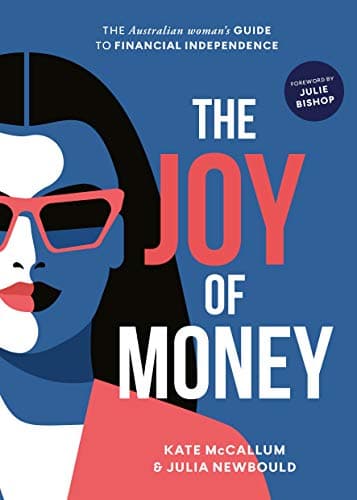
The Joy of Money
Kate McCallum & Julia Newbould
The Joy of Money
Kate McCallum and Julia Newbould map out financial independence for Australian women, from super and investing to insurance and estate planning. Practical, warm and refreshingly free of finance-bro energy.
The Barefoot Investor
Scott Pape

The Barefoot Investor
Australia's best-selling money book ever. A simple system for accounts, budgeting, debt and a real emergency fund in one.
Some links above are affiliate links. If you buy through them, Snowball Invest may earn a small commission at no extra cost to you. We only recommend books we'd suggest anyway.
Sources
- 1. TPD insurance, Moneysmart, Australian Securities and Investments Commission
- 2. Insurance in superannuation, Prudential Handbook FAQ, Australian Prudential Regulation Authority
- 3. Superannuation Industry (Supervision) Regulations 1994, Federal Register of Legislation
- 4. Tax on super benefits, Australian Taxation Office
- 5. Insurance through super, Moneysmart
- 6. Make a complaint about insurance, Australian Financial Complaints Authority
Was this article useful?
Put it to your own numbers
Every calculator runs entirely in your browser, with nothing stored. See what these numbers look like for your own situation.
Explore the calculators →General information only. This article is educational and does not constitute personal financial advice. It does not account for your circumstances. Consider your own situation and seek advice from a licensed adviser before acting. Read our full disclaimer.

Timothy Hirou Gaschereau
Founder of Snowball Invest, not a financial adviser.
I write about what I'm learning myself, because nobody ever taught us how to take control of our own money. It's a skill, not a mystery, and it's never too late to learn it. The best day to start was yesterday, the second best is today.
LinkedIn →Related articles

What Is Trauma Insurance in Australia? (And How Is It Different from TPD?)
Trauma insurance pays a lump sum when you're diagnosed with a serious illness, even if you can still work. Here's how it differs from TPD.
TPD and Income Protection at the Same Time: How Offset and Cessation Clauses Work
Many Australians assume TPD and income protection pay out together in full. Often they don't. How offset and cessation clauses actually work.

How Much Does TPD Insurance Actually Cost in Australia?
TPD and income protection premiums vary hugely by age, job and policy type. Illustrative ranges to give you a ballpark before you get a real quote.