

What Is Trauma Insurance in Australia? (And How Is It Different from TPD?)
Trauma insurance pays a lump sum when you're diagnosed with a serious illness, even if you can still work. Here's how it differs from TPD.
 By Timothy Hirou GaschereauPublished
 9 min read
This article is general information only, not financial advice. Everyone's situation is different, so treat this as a starting point, not a recommendation, and speak with a licensed financial adviser before making any insurance decisions. It's part of a wider guide to insurance on Snowball Invest.
Quick answer
Trauma insurance (also called critical illness insurance) pays a lump sum the moment you're diagnosed with a specified serious condition, cancer, heart attack, stroke, that kind of thing. You don't need to stop working to claim. That's the whole point, and it's the single biggest difference between trauma cover and TPD insurance, which only pays if you're permanently unable to work at all.
In this guide
- →What trauma insurance actually pays for, and when
- →The conditions most policies cover, and why the exact wording matters
- →How trauma insurance differs from TPD, with a worked example
- →Whether you can hold trauma and TPD cover together
- →Why trauma premiums aren't tax deductible, and why the payout is
🩺 So, what exactly is trauma insurance?
Trauma insurance pays a lump sum if you're diagnosed with a specific serious illness or suffer a major medical event. You might also see it called critical illness insurance or recovery insurance, different names for the same thing.
The key word is diagnosed. You don't have to be unable to work. You don't have to prove anything is permanent. You just need to meet the policy's definition of the condition. So if you're diagnosed with breast cancer at 38 and you're still showing up to work part-time during chemo, trauma insurance can still pay out. That's exactly the gap it's designed to fill.
The payout lands as a single sum, and there's no rule about how you spend it. Common uses: out-of-pocket medical costs private health and Medicare don't cover, living expenses while you work reduced hours, home modifications, or just paying down the mortgage so financial stress doesn't pile on top of everything else.
📋 What trauma insurance actually covers
The exact list varies by insurer, but most Australian trauma policies cover a fairly similar core set of conditions: cancer, heart attack, stroke, coronary artery bypass surgery, kidney failure, major organ transplant, blindness, deafness, severe burns, paraplegia or quadriplegia, and major head trauma. Some policies list 40-plus conditions, others cover far fewer, and a cheaper premium often means a narrower list or tighter definitions rather than a better deal.
🎯 The essential: The medical definition of each condition is everything. Not every heart attack meets a policy's definition of "heart attack." Insurers often specify clinical criteria around enzyme levels, ECG changes or severity. If your diagnosis doesn't match the exact wording in the Product Disclosure Statement (PDS), the claim can be declined.
MoneySmart's life insurance claims comparison tool lets you see how different insurers stack up on claim acceptance and payment speed, worth a look before you commit to anything. Trauma insurance also doesn't cover mental health conditions, which is a genuine gap. If that's your main concern, our guide to mental health and TPD claims covers how that side of things gets assessed instead.
⚖️ Trauma vs TPD, the key difference
Trauma insurance pays when you're diagnosed with a covered condition. TPD insurance pays when you're permanently unable to work. Those are genuinely different triggers, and a lot of people assume the two overlap more than they actually do.
Take a hypothetical: Sarah is 41, works as a project manager, and is diagnosed with breast cancer in March. After surgery and chemo she's back working part-time within six months, and her doctors expect a full recovery. Her trauma policy pays out, because the diagnosis meets the definition. Her TPD cover pays nothing, because she was never totally and permanently disabled, she could still work, and her condition wasn't permanent. That gap is exactly what trauma insurance exists to cover.
Trauma insurance
Diagnosed with a listed condition
e.g. cancer, heart attack, stroke
Lump sum pays out
Even if you keep working part-time
TPD insurance
Permanently unable to work
assessed after the fact, once recovery stalls
Lump sum pays out
Only once permanence is proven
| Trauma insurance | TPD insurance | |
|---|---|---|
| Trigger | Diagnosis of a listed condition | Permanent inability to work |
| Do you need to stop working? | No | Yes |
| Must the condition be permanent? | No | Yes |
| Payout type | Lump sum | Lump sum |
| Available inside super? | No, since 1 July 2014 | Yes |
| Claim threshold | Lower, diagnosis is enough | Higher, must prove permanent incapacity |
🤝 Can you hold both at the same time?
Yes, and for a lot of Australians it's the more sensible combination. They cover different scenarios: trauma covers "I got seriously sick but I'll likely recover," TPD covers "I can never work again." You can buy them as separate standalone policies, or bundle them with life cover.
If you bundle trauma with life cover, check for linked benefits, some policies reduce your life cover by whatever's paid out on a trauma claim. Read that part of the PDS closely.
One structural point worth knowing: trauma insurance can't be held inside superannuation. Super funds stopped offering new trauma policies from 1 July 2014, so if you want this cover you're buying it directly from an insurer or adviser, paid from your own after-tax income rather than your super balance. TPD, by contrast, is commonly bundled into super as default cover, which is one of several reasons the two products end up structured quite differently. Our guide to insurance through super vs standalone walks through those trade-offs in more depth.
🧾 Is trauma insurance tax deductible?
No. Trauma insurance premiums are not tax deductible in Australia. The ATO only allows deductions for insurance that protects your income, since trauma insurance pays a capital lump sum on diagnosis rather than replacing lost income, it falls outside that category. Income protection insurance is different, its premiums are generally deductible because the policy is designed to replace income, and the ATO draws a firm line between the two products.
One thing worth checking: if your trauma cover is bundled with income protection in a single policy, you may only be able to deduct the income protection portion of the premium. Ask your insurer for a written breakdown of the split so you claim the right amount at tax time.
The upside: the payout itself is not taxable income. Because it's a capital sum rather than an income replacement, you receive the full amount and don't need to declare it on your tax return.
🤔 When trauma cover makes sense
It isn't for everyone, but it's worth genuinely considering if any of these sound like you:
- You have a mortgage or significant debt that won't pause just because you're unwell
- You're self-employed or a contractor without paid sick leave to fall back on
- You have dependants who rely on your income
- Cancer, heart disease or stroke run in your family
- You don't have several months of expenses sitting in savings
One honest caveat, premiums climb steeply with age. As a rough illustration only, a policy that might cost you somewhere around $80 a month in your mid-30s could realistically cost two to three times that by your mid-50s. That's not a quote, every insurer prices differently, but it's worth factoring the long-term cost curve into any decision, not just the price today.
SnowLetter
Australia's money news and our best reads, once a week.
❓ Frequently asked questions
What's the difference between trauma insurance and critical illness insurance in Australia?
+
Nothing, they're the same product. "Critical illness insurance" and "recovery insurance" are just other names insurers use for trauma cover. Same mechanism: a lump sum paid on diagnosis of a specified serious condition.
Can I get trauma insurance through my super fund?
+
No, not new cover. Super funds haven't been able to offer new trauma policies since 1 July 2014. If you took out cover before that date it may have been grandfathered, but for anyone starting fresh, trauma insurance has to be bought directly from an insurer or through a licensed adviser, and paid for from after-tax income.
How much trauma cover do I actually need?
+
There's no universal number, but a reasonable starting point is 12 to 24 months of living expenses, plus any debt you'd want cleared, plus likely out-of-pocket medical costs. Add those up for a rough target, then check it against a real quote.
Does trauma insurance pay out for cancer?
+
Most policies cover cancer, but the definition matters a lot. Many exclude early-stage or non-invasive cancers, or set specific criteria around staging and pathology. Read that section of the PDS carefully before assuming any diagnosis would trigger a claim.
What happens if my trauma claim gets declined?
+
Lodge a formal complaint through your insurer's internal dispute resolution process first. If you're not happy with the outcome, you can escalate to the Australian Financial Complaints Authority (AFCA), which is free and independent.
Is a trauma insurance payout taxable?
+
No. It's a lump sum paid on diagnosis, treated as a capital payment rather than income, so you don't declare it as assessable income on your tax return.
📚 Recommended reading
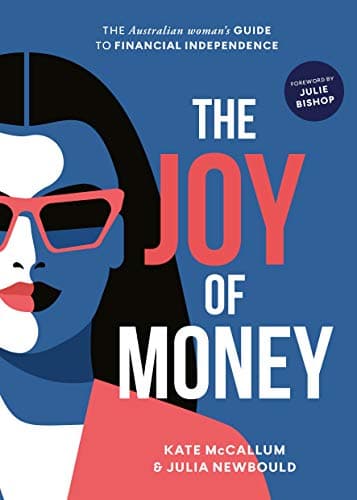
The Joy of Money
Kate McCallum & Julia Newbould
The Joy of Money
Kate McCallum and Julia Newbould map out financial independence for Australian women, from super and investing to insurance and estate planning. Practical, warm and refreshingly free of finance-bro energy.
The Barefoot Investor
Scott Pape

The Barefoot Investor
Australia's best-selling money book ever. A simple system for accounts, budgeting, debt and a real emergency fund in one.
Some links above are affiliate links. If you buy through them, Snowball Invest may earn a small commission at no extra cost to you. We only recommend books we'd suggest anyway.
Sources
- 1. Trauma insurance, Moneysmart, Australian Securities and Investments Commission
- 2. TPD insurance, Moneysmart, Australian Securities and Investments Commission
- 3. Life insurance claims comparison tool, Moneysmart
- 4. Income protection insurance (deductions), Australian Taxation Office
- 5. Life insurance claims and disputes statistics, Australian Prudential Regulation Authority
- 6. Make a complaint about insurance, Australian Financial Complaints Authority
Was this article useful?
Put it to your own numbers
Every calculator runs entirely in your browser, with nothing stored. See what these numbers look like for your own situation.
Explore the calculators →General information only. This article is educational and does not constitute personal financial advice. It does not account for your circumstances. Consider your own situation and seek advice from a licensed adviser before acting. Read our full disclaimer.

Timothy Hirou Gaschereau
Founder of Snowball Invest, not a financial adviser.
I write about what I'm learning myself, because nobody ever taught us how to take control of our own money. It's a skill, not a mystery, and it's never too late to learn it. The best day to start was yesterday, the second best is today.
LinkedIn →Related articles

TPD and Income Protection at the Same Time: How Offset and Cessation Clauses Work
Many Australians assume TPD and income protection pay out together in full. Often they don't. How offset and cessation clauses actually work.

TPD "Own Occupation" vs "Any Occupation": Why the Difference Could Cost You Everything
If your TPD cover is inside super, you almost certainly have "any occupation" cover. Here's why that distinction matters more than most people realise.

How Much Does TPD Insurance Actually Cost in Australia?
TPD and income protection premiums vary hugely by age, job and policy type. Illustrative ranges to give you a ballpark before you get a real quote.