

What is income protection insurance?
Quick answer
Income protection insurance pays you a monthly benefit, typically 70-75% of your pre-tax income, if illness or injury stops you from working. It's not a lump sum, it's an ongoing payment that keeps covering your mortgage, rent and bills while you recover.
How it works
Income protection replaces part of your lost income each month. Most policies pay 70-75% of your pre-tax income, though some retail policies go up to 85%, check the product disclosure statement for your exact cap. Two variables shape every policy:
Waiting period. The gap between when you stop working and when your first payment lands. Common options are 14, 30, 60 or 90 days, the longer you can wait, the cheaper the premium. If you've got a few months of expenses saved, a longer waiting period can cut your premium noticeably.
Benefit period. How long payments keep coming if you remain unable to work: 2 years, 5 years, or through to age 65 or 70. A 2-year benefit period sounds like plenty, but serious illness or injury can sideline someone far longer. A policy to age 65 costs more upfront but is the only version that genuinely covers long-term disability.
Inside super vs outside super
Plenty of Australians already have some income protection, they just don't know it. Most super funds bundle in default cover, so check your super fund's insurance statement before buying anything new.
Paying inside super doesn't touch your take-home pay, but it chips away at your retirement savings and the cover is often more restricted, with a lower benefit cap. Paying outside super costs you cash flow each month, but premiums are generally tax-deductible and you get more control over the policy design. Neither is automatically better, it depends on your cash flow, tax rate and how much flexibility you want.
Is it tax-deductible?
Usually, yes, if you hold the policy outside super. Premiums on a personal income protection policy are generally tax-deductible because the policy protects your income-earning capacity. You can't deduct premiums paid through your super fund, or the part of a bundled policy relating to life or TPD cover.
One thing that surprises people: any benefit payments you receive are taxable income. You need to declare them, they're treated as replacement income, not a windfall. This applies whether the policy sits inside or outside super. Confirm the current rules with a registered tax agent or at ato.gov.au before relying on this for your own tax return.
A worked example
Jake is a 34-year-old electrician earning $95,000 a year. He breaks his wrist on a job and can't work for four months. His policy has a 30-day waiting period and pays 75% of pre-tax income, about $5,938 a month. After the wait, he receives three months of payments, roughly $17,813 in total, enough to cover his mortgage, utilities and groceries while he recovers, without raiding his super or selling investments.
What it doesn't cover
Read the product disclosure statement carefully. Standard exclusions include:
- Pre-existing conditions, usually excluded outright or loaded after underwriting
- Redundancy or job loss, that's a separate, much harder to find, product
- Self-inflicted injury
- Mental health claims, some policies cover these, others apply stricter rules, check this closely
- Risky hobbies or occupations, which can attract exclusions or loadings
If a policy doesn't ask many health questions upfront, it almost certainly has broader exclusions built in. There's no free lunch.
How it relates to TPD insurance
Income protection is one piece of a broader personal insurance picture. TPD (Total and Permanent Disability) insurance is a related but different product: it pays a one-off lump sum if you're permanently unable to work, rather than an ongoing monthly benefit while you recover. The two can complement each other, income protection covers you during recovery, TPD covers the scenario where you never return to work.
📚 Recommended reading
The Joy of Money
Kate McCallum & Julia Newbould
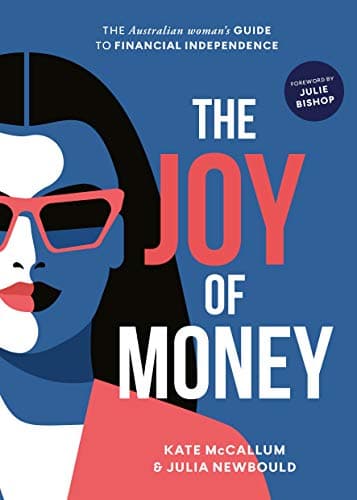
The Joy of Money
Kate McCallum and Julia Newbould map out financial independence for Australian women, from super and investing to insurance and estate planning. Practical, warm and refreshingly free of finance-bro energy.
The Barefoot Investor
Scott Pape

The Barefoot Investor
Australia's best-selling money book ever. A simple system for accounts, budgeting, debt and a real emergency fund in one.
Some links above are affiliate links. If you buy through them, Snowball Invest may earn a small commission at no extra cost to you. We only recommend books we'd suggest anyway.
Frequently asked questions
How much does income protection insurance cost in Australia?
It varies a lot based on your age, occupation, income, waiting period and benefit period. As a rough guide, premiums can start around $30-50 a month for younger workers in low-risk jobs with a longer waiting period, and climb into the hundreds per month for older workers or higher-risk occupations. Get at least a few quotes rather than relying on a single number.
Is income protection insurance worth it?
For most working Australians with a mortgage, dependants or limited sick leave, yes. The real question isn't whether it's worth it in the abstract, it's how long you could actually survive without your income. If the honest answer is less than three months, cover is worth serious consideration.
Can I get income protection insurance through my super?
Yes, most super funds offer default income protection cover, with premiums deducted from your super balance. Worth logging into your super account to check what you already have, plenty of people are paying for cover without realising it. The trade-off is that cover inside super is generally less flexible and quietly erodes your retirement balance over time.
How long does income protection pay out?
That depends on your benefit period. Common options are 2 years, 5 years, or through to age 65 or 70. A 2-year benefit period is cheaper but leaves you exposed if illness or injury drags on longer than that. A policy to age 65 is the most comprehensive, and the most expensive.
Is income protection the same as TPD insurance?
No. Income protection pays a monthly benefit while you're temporarily unable to work, and stops once you return to work or reach the end of your benefit period. TPD insurance pays a lump sum if you're permanently and totally disabled. They cover different scenarios, and plenty of people hold both.
Related terms
Disclaimer
This is general information only, not personal financial advice. Premiums, benefit caps and exclusions vary between insurers and policies, always read the product disclosure statement and consider getting advice from a licensed financial adviser before taking out cover.