

TPD and Income Protection at the Same Time: How Offset and Cessation Clauses Work
Many Australians assume TPD and income protection pay out together in full. Often they don't. How offset and cessation clauses actually work.
 By Timothy Hirou GaschereauPublished
 10 min read
This is general information only, not personal financial advice. Policy wording varies enormously between insurers, so treat this as a map of what to check, not a description of your specific policy. Speak with a licensed financial adviser before making decisions about your cover. This sits alongside our wider guide to insurance on Snowball Invest.
Quick answer
Yes, you can hold TPD and income protection at the same time, plenty of Australians do. The catch is that some income protection policies reduce or stop your monthly payments once a TPD benefit is paid, either through a cessation clause (payments simply stop) or a broader offset clause (payments get reduced by other disability income). Whether either applies to you comes down entirely to the wording in your specific PDS.
In this guide
- →Whether you can actually hold both policies, and why they serve different purposes
- →What an offset clause is, and what it typically captures
- →The difference between an offset clause and a cessation clause
- →A worked, hypothetical example of how a broad offset could apply
- →Why super-based and standalone policies tend to differ here
- →What to actually do if you hold both types of cover
🤝 Can you hold both at the same time?
Short answer: yes. Nothing in Australian insurance law stops you holding TPD insurance and an income protection policy at the same time. They're built to do different jobs.
TPD insurance pays a one-off lump sum if you become totally and permanently disabled. That sum is meant to cover big one-off costs, medical bills, home modifications, paying off debt. Income protection works differently, it replaces a percentage of your pre-tax income, commonly up to 75%, paid monthly while you're unable to work due to illness or injury. It's the ongoing cash flow that keeps the mortgage paid while you're off work.
So they're complementary rather than duplicates. The real question isn't whether you can have both, it's whether you'll actually collect both in full when you need them. That's where policy wording starts to matter a lot.
📎 What is an offset clause?
An offset clause lets your insurer reduce your monthly income protection benefit if you're receiving certain other disability-related income at the same time. The logic: your policy is designed to replace a portion of your income, not to pay you more than you were earning before you got sick or injured.
Payments commonly captured by offset clauses include:
- Workers' compensation payments
- Sick leave paid by your employer
- Centrelink disability-related payments
- Benefits from a second income protection policy
- Compulsory third party (CTP) compensation, in some policies
🎯 The essential: The exact wording in your Product Disclosure Statement is everything here. Broad clauses can capture almost any disability-related payment. Narrow clauses might only mention workers' compensation. An offset clause is a normal, disclosed term you agreed to, not a breach of your policy, but most people never read it closely enough to notice it exists.
🔀 Cessation clauses vs offset clauses
This is the part that trips people up most with TPD specifically. A straight lump-sum-to-monthly offset, where an insurer converts your TPD payout into a monthly figure and deducts it from your income protection, does happen in some policies, but it's more commonly the mechanism used for other lump sum payments, like a WorkCover or compulsory third party settlement, rather than the standard way TPD interacts with income protection.
Illustrative monthly income protection benefit, before and after a TPD lump sum
$6,250
Income protection, before any TPD payout
$2,500
After TPD paid, offset clause applies
$0
After TPD paid, cessation clause applies
For TPD specifically, a lot of policies instead use a cessation clause: once your TPD benefit is paid, generally when both policies sit inside the same super fund, your income protection payments simply stop, rather than being reduced by a calculated offset amount. It's a blunter mechanism, but a common one.
Don't assume either mechanism applies to you. Whether a TPD payout affects your income protection at all, and how, depends entirely on the specific wording of your policy. Some policies barely interact. Others cease income protection outright. Others apply a genuine offset. Read the actual clause.
🧮 A worked example
To make this concrete, here's a hypothetical, not a real case, just an illustration of how a broad offset clause with a lump-sum conversion could work if your policy is structured that way.
Priya earns $100,000 a year and holds an income protection policy paying 75% of her pre-disability income, around $6,250 a month, plus a $500,000 TPD policy. She suffers a serious injury and successfully claims on both.
Her TPD lump sum of $500,000 pays out first. Then, if her income protection policy happened to include a clause converting lump sum disability payments into a monthly equivalent using a divide-by-60 method (spreading the sum over five years), the maths would look like this: $500,000 ÷ 60 = $8,333 a month. Since that exceeds her $6,250 monthly benefit, her income protection payments would be reduced to zero for those five years.
That's a real mechanism used by some insurers for some lump sums, but whether it applies to a TPD payout specifically depends entirely on how your policy defines "offsettable benefits." Many policies won't apply this calculation to TPD at all, and instead simply cease income protection once TPD is paid, or don't link the two products together at all. The takeaway isn't "this will happen to you," it's "check exactly what your policy says before you assume the two payouts stack."
🏦 Offsets in super vs standalone policies
Where you hold your cover matters. Income protection held inside your super fund tends to come with broader offset or cessation provisions. Super-based cover is constrained by superannuation law, which generally prevents your total disability income from exceeding your pre-disability earnings, so funds often build in wide clauses to stay within that limit. The ATO also notes that premiums for income protection held inside super aren't generally deductible to you personally, since they're paid from your super balance rather than your take-home pay.
Standalone income protection bought outside super is governed purely by the contract between you and the insurer. Offset clauses still exist, but the wording varies more, and you generally have more room to compare products or negotiate terms when buying outside super. For the fuller trade-off between the two structures, see our guide to insurance through super vs standalone.
If your TPD and income protection sit inside the same super fund, the fund's trust deed and policy wording are more likely to interact at claim time. If your TPD is inside super and your income protection is a standalone policy outside it, the two may not interact at all, again, it depends on the specific wording of the standalone policy.
🪜 What you should actually do
1. Find the offset or cessation clause in both PDS documents. It's usually under a heading like "Benefit Reduction," "Offsettable Benefits," or "When benefits stop."
2. Ask your insurer one direct question, in writing. "If I receive a TPD lump sum, will it reduce or stop my income protection payments? If so, how is that calculated?"
3. Check whether both policies sit inside the same super fund. That's when interaction is most likely. Ask the fund for a plain-English explanation of how the two work together on a claim.
4. If you're already mid-claim and an offset has been applied, check it against the actual policy wording. If it doesn't match, complain to the insurer first, then escalate to AFCA if you're not satisfied. AFCA's service is free, and you generally have two years from the insurer's final internal dispute resolution response to lodge a complaint.
SnowLetter
Australia's money news and our best reads, once a week.
❓ Frequently asked questions
Can you have TPD and income protection at the same time in Australia?
+
Yes. There's no rule against holding both. TPD pays a lump sum for permanent disability, income protection replaces monthly income while you're temporarily or permanently unable to work. They're commonly held together, especially by people with a mortgage or dependants.
Does a TPD payout automatically reduce my income protection payments?
+
Not automatically, and not always. It depends entirely on your specific policy wording. Some policies simply stop paying income protection once a TPD benefit is paid under the same fund or policy, a cessation clause. Others have a broader offset clause that can capture other disability-related payments. Whether TPD specifically triggers a reduction varies a lot, check your PDS.
What's the difference between an offset clause and a cessation clause?
+
An offset clause reduces your income protection benefit by some or all of another disability-related payment you're receiving, commonly workers' compensation, employer sick leave, Centrelink payments or another income protection policy. A cessation clause is blunter, it simply ends your income protection payments once a TPD benefit becomes payable, often because both are held in the same super fund.
Is the offset clause different in super-based income protection versus standalone policies?
+
Generally yes. Super-based income protection tends to have broader offset or cessation provisions, partly because superannuation law limits total disability income to your pre-disability earnings. Standalone policies outside super still have offset clauses, but the wording varies more between insurers. Always read the PDS for your specific policy.
What can I do if I think an offset or cessation clause has been applied incorrectly?
+
Start with your insurer or super fund's internal dispute resolution process. If that doesn't resolve it, you can lodge a free complaint with the Australian Financial Complaints Authority (AFCA). Bring your PDS, the insurer's decision letter, and your own working on why you think it's wrong.
Does an offset clause apply to workers' compensation too?
+
Often, yes. Workers' compensation is one of the most commonly offsettable payments under income protection policies, since the policy is designed to replace lost income, not to pay you more than you were earning before you were injured.
📚 Recommended reading
The Joy of Money
Kate McCallum & Julia Newbould
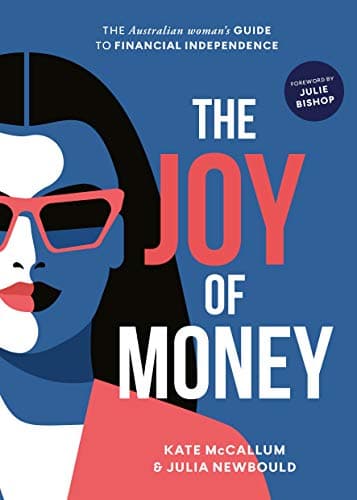
The Joy of Money
Kate McCallum and Julia Newbould map out financial independence for Australian women, from super and investing to insurance and estate planning. Practical, warm and refreshingly free of finance-bro energy.
Money School
Lacey Filipich
Money School
Lacey Filipich shows how to buy back your time, not just budget your dollars, with a clear path from saving to financial independence. It is refreshingly Australian and genuinely doable, even if maths was never your thing.
Make Money Simple Again
Bryce Holdaway & Ben Kingsley

Make Money Simple Again
The Property Couch guys turn cash-flow chaos into one simple money management system you can actually stick to. Perfect if budgeting apps have never quite worked for you.
Some links above are affiliate links. If you buy through them, Snowball Invest may earn a small commission at no extra cost to you. We only recommend books we'd suggest anyway.
Sources
- 1. Income protection insurance, Moneysmart, Australian Securities and Investments Commission
- 2. TPD insurance, Moneysmart, Australian Securities and Investments Commission
- 3. Insurance through super, Moneysmart
- 4. Income protection insurance (deductions), Australian Taxation Office
- 5. Income protection insurance payments (income to declare), Australian Taxation Office
- 6. Make a complaint about insurance, Australian Financial Complaints Authority
- 7. The process we follow, Australian Financial Complaints Authority
Was this article useful?
Put it to your own numbers
Every calculator runs entirely in your browser, with nothing stored. See what these numbers look like for your own situation.
Explore the calculators →General information only. This article is educational and does not constitute personal financial advice. It does not account for your circumstances. Consider your own situation and seek advice from a licensed adviser before acting. Read our full disclaimer.

Timothy Hirou Gaschereau
Founder of Snowball Invest, not a financial adviser.
I write about what I'm learning myself, because nobody ever taught us how to take control of our own money. It's a skill, not a mystery, and it's never too late to learn it. The best day to start was yesterday, the second best is today.
LinkedIn →Related articles

Insurance Through Super vs Standalone: What's the Real Difference?
Super insurance or a standalone policy? The real differences in cover, tax, TPD definitions and cost, so you can make the right call for your situation.

Income Protection and Redundancy: What's Actually Covered
Income protection does not cover redundancy. Here's what does, what your redundancy pay is actually worth, and how to genuinely protect yourself.

Is Life Insurance Tax Deductible in Australia?
Is life insurance tax deductible in Australia? The clear answer, the super exception, how it compares to income protection, and the payout tax to know about.