

How to Make an Income Protection Claim (Step by Step)
Injured or sick and can't work? Here's exactly how to make an income protection claim in Australia, step by step, plus why claims get delayed or denied.
 By Timothy Hirou GaschereauPublished
 9 min read
You've been paying your income protection premiums for years. Then the day arrives when you actually need to use the policy, and suddenly you're staring at a stack of forms while also dealing with being sick or injured. Not ideal. The good news: the claim process is more straightforward than it looks. This guide walks you through exactly what to do. It's part of our insurance series, and it's general information only, not personal financial advice.
🎯 The essential: You can claim once you've been unable to work due to illness or injury and your waiting period has expired. Notify your insurer early, gather your medical and income documents, and submit a complete claim pack. Most straightforward claims are assessed in 4 to 8 weeks; complex ones can take 3 to 6 months. If your claim is denied, you can dispute it for free through AFCA.
When can you make a claim?
You can make an income protection claim when you are unable to work due to illness or injury and your policy is active. Three things need to line up before payments begin:
- You must meet the disability definition in your policy. Most use one of two: “own occupation” (you can't perform the duties of your specific job) or “any occupation” (you can't work in any job suited to your education, training, or experience, a much higher bar).
- You must be under the regular care of a medical practitioner. Insurers want active, ongoing treatment, not a single GP visit from six weeks ago.
- Your waiting period must expire. This is the gap between becoming disabled and when payments start. Common waiting periods are 14, 30, 60, or 90 days. The shorter it is, the sooner money arrives (and the higher your premium). See our guide on the waiting and benefit period trade-off.
Step-by-step: how to make an income protection claim
- Notify your insurer as soon as possible. Don't wait until your waiting period is nearly over. Contact your insurer (or your super fund if your cover is inside super) the moment you know you'll be off work for an extended period.
- Complete the claim forms. Your insurer sends a claim pack with a claimant statement (your version of events) and an attending physician's statement (your doctor describes your condition and prognosis). Fill these in carefully and completely.
- Provide medical evidence. The backbone of your claim: GP certificates, specialist reports, hospital records, and ongoing medical certificates for the duration of your claim.
- Provide employer and income documentation. Insurers verify your pre-disability income, so gather payslips (last 12 months), your most recent tax return, and an employer statement. Self-employed? Add BAS, profit and loss statements, and business tax returns.
- Submit everything and confirm receipt. Send your completed pack together where possible, confirm the insurer has received it, and ask for a reference number.
- Provide ongoing proof of disability. Once approved, most insurers require monthly medical certificates and periodic reviews. Missing a certificate can pause your payments.
What documents do you need?
Here's the full checklist:
- Completed claimant statement form
- Attending physician's statement (completed by your doctor)
- GP and specialist medical certificates
- Hospital records (if applicable)
- Payslips for the last 12 months
- Most recent personal tax return
- Employer statement confirming your inability to work
- Proof of identity (driver's licence, passport)
If you're self-employed, also include BAS statements, profit and loss statements, and business tax returns. Missing even one document can push your assessment back by weeks.
How the waiting period and benefit period affect your payments
These two features directly control when you get paid and for how long. The waiting period is the excess period you must be disabled before payments begin. It's not a processing delay: if your waiting period is 30 days, you must be continuously unable to work for 30 days before your first payment is triggered. The benefit period is how long payments continue, commonly 2 years, 5 years, or to age 65. The longer it is, the higher your premium, but the longer your safety net lasts.
Worked example: you have a 30-day waiting period and a benefit period to age 65. You're injured on 1 July. Your waiting period expires on 31 July. Once your claim is approved, you receive your first monthly payment covering from 31 July onward, and payments continue monthly as long as you remain disabled and meet your policy's definition. Most policies pay 70 to 75% of your pre-disability income.
How long does an income protection claim take?
It depends on how complex your claim is and how quickly you provide complete documentation. For a straightforward claim (clear diagnosis, solid medical evidence, complete paperwork), expect an initial acknowledgement within 1 to 5 business days and assessment completed in 4 to 8 weeks. For a complex claim (disputed disability definition, mental health conditions, self-employment income verification, or missing documents), timelines can stretch to 3 to 6 months or longer. Staying proactive and submitting complete documentation upfront are the best ways to keep your claim moving.
Claim stages: what happens and when
| Stage | What happens | Typical timeframe |
|---|---|---|
| Notification | You contact the insurer; claim registered, reference number issued | Day 1 to 5 |
| Forms and documents | Insurer sends claim pack; you gather and submit evidence | Week 1 to 3 |
| Assessment | Insurer reviews medical and financial evidence; may request an IME | Week 2 to 8 |
| Decision | Insurer approves, defers, or declines the claim | Week 4 to 12 |
| First payment | Paid after waiting period expires and claim is approved | After waiting period + approval |
| Ongoing | Monthly proof of disability, periodic reviews, rehab requirements | Ongoing while on claim |
Why claims get delayed or denied
Understanding the common pitfalls is half the battle.
- Non-disclosure at application. If you didn't disclose a pre-existing condition when you took out the policy, the insurer may void it or exclude that condition. The most common and most avoidable reason for denial.
- Insufficient medical evidence. A single vague GP note won't cut it for a long-term claim.
- The disability definition isn't met. You might be genuinely unwell but not meet the specific threshold, especially under “any occupation” wording.
- The waiting period hasn't expired. No payments before it ends, no matter how fast the insurer processes.
- Policy exclusions. Conditions excluded at underwriting (say a pre-existing back injury) won't be paid.
- Missing income documentation or a lapsed policy. Insurers can't calculate a benefit without verified income, and there's no cover if premiums lapsed.
Tips to give your claim the best chance
- Notify early and get the paperwork moving immediately.
- See your doctor consistently. Gaps in treatment create gaps in evidence.
- Get a specialist involved if your condition warrants it. Their reports carry more weight than GP notes alone.
- Submit a complete claim pack. Use the checklist above; one missing document delays everything.
- Read your policy wording so you know exactly which disability definition applies.
- If your claim is denied, appeal it. You have the right to an internal review, and if that fails you can lodge a free complaint with AFCA.
The single biggest lever is preparation. Notify early, keep consistent medical records, get your income documents in order (especially if self-employed), and submit everything at once. If you're weighing the cost of cover in the first place, see our guide on what insurance actually costs.
The bottom line: an income protection claim rewards organisation. Understand your policy, prepare your evidence, notify early, and respond fast to every request. If it's denied and you believe it's wrong, AFCA's free dispute resolution is your backstop.
SnowLetter
Australia's money news and our best reads, once a week.
❓ Frequently asked questions
Can I claim income protection if I'm self-employed?
+
Yes. Self-employed people can hold income protection insurance and make claims. The key difference is the income documentation required. Instead of payslips and an employer statement, you'll need BAS statements, profit and loss statements, and business tax returns to verify your pre-disability income. Having these organised before you need them makes the process much smoother.
Do I have to be completely unable to work to claim?
+
Not necessarily. Many policies include a partial disability benefit, which pays a reduced benefit if you can work in a limited capacity but are earning less than your pre-disability income. Check your policy for partial or proportionate disability provisions.
Will my income protection payments affect my tax?
+
Yes. Income protection benefits are generally taxable income in Australia. You declare them in your tax return just like salary. The upside is that premiums on a policy held outside of super are generally tax-deductible. Premiums inside super are not deductible to you personally (though the fund may claim a deduction). Check with the ATO or a tax adviser for your specific situation.
What happens if my claim is denied?
+
You have options. First, request a written explanation of the denial and ask for an internal review with the insurer. If you're not satisfied with the outcome, lodge a free complaint with the Australian Financial Complaints Authority (AFCA). AFCA can investigate and make binding decisions on insurers. You can also seek legal advice if the amount at stake justifies it.
Can I claim income protection for mental health conditions?
+
Yes, mental health conditions (including depression, anxiety, and burnout) are covered by most income protection policies, provided the condition genuinely prevents you from working and you have supporting medical evidence. Consistent treatment records from a GP and psychologist or psychiatrist are particularly important for mental health claims, as the evidence requirements tend to be more detailed.
Does income protection cover redundancy?
+
No. Income protection covers inability to work due to illness or injury only. Redundancy, being stood down, or choosing to leave your job are not covered. If you want cover for involuntary unemployment, you'd need a separate redundancy insurance product (though these are limited in Australia and often have significant exclusions).
📚 Recommended reading
The Barefoot Investor
Scott Pape

The Barefoot Investor
Australia's best-selling money book ever. A simple system for accounts, budgeting, debt and a real emergency fund in one.
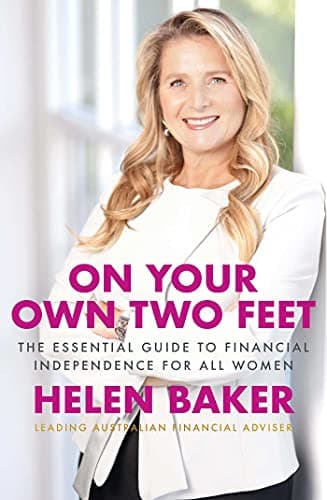
On Your Own Two Feet
Helen Baker
On Your Own Two Feet
An Aussie financial planner's essential guide to money independence for women, covering every life stage from single to separated. Warm, practical and genuinely on your side.
Making Money Made Simple
Noel Whittaker

Making Money Made Simple
Australia's classic, comprehensive money guide covering tax, super and investing, updated for today.
Some links above are affiliate links. If you buy through them, Snowball Invest may earn a small commission at no extra cost to you. We only recommend books we'd suggest anyway.
Sources
This article is general information only and does not constitute personal financial advice. Policy terms, definitions and claim processes vary by insurer. Read your Product Disclosure Statement and consider speaking with a licensed financial adviser or claims specialist about your specific situation.
Was this article useful?
Put it to your own numbers
Every calculator runs entirely in your browser, with nothing stored. See what these numbers look like for your own situation.
Explore the calculators →General information only. This article is educational and does not constitute personal financial advice. It does not account for your circumstances. Consider your own situation and seek advice from a licensed adviser before acting. Read our full disclaimer.

Timothy Hirou Gaschereau
Founder of Snowball Invest, not a financial adviser.
I write about what I'm learning myself, because nobody ever taught us how to take control of our own money. It's a skill, not a mystery, and it's never too late to learn it. The best day to start was yesterday, the second best is today.
LinkedIn →Related articles

CTP Insurance in Australia: What It Covers (and Doesn't)
CTP insurance is compulsory for every registered vehicle in Australia, but it does not cover what most people think. What you actually get, state by state.

Funeral Insurance in Australia: Is It Actually Worth It?
Funeral insurance pays a lump sum when you die, but premiums can end up costing more than the payout. An honest guide, plus better-value alternatives.

Renters Insurance in Australia: What It Covers and What It Costs
Renters insurance in Australia covers your belongings, not the building. Learn what it costs, what it covers, and how to choose a policy that fits.