

How Much Does Life Insurance Cost in Australia?
Life insurance cost in Australia: monthly premium ranges by age, what drives your rate, super vs standalone, and how to pay less without underinsuring.
 By Timothy Hirou GaschereauPublished
 9 min read
Try it yourself
Most of us are brilliant at putting off the things that matter. Life insurance sits right at the top of that list, somewhere between “write a will” and “actually read the super statement.” The problem is that the longer you wait, the more it costs. This guide covers what drives your premium, what you can expect to pay at different ages, and how to keep costs down. It's part of our insurance series.
🎯 The essential: A non-smoker in their 30s typically pays $25 to $45 a month for $500,000 of life cover. Smokers pay roughly double. The biggest cost drivers are age, smoking status, and the amount of cover. Life insurance through super is cheaper upfront but quietly erodes your retirement balance. Check what cover you already have before buying anything.
What you're actually paying for
Life insurance (also called death cover) pays a lump sum to your beneficiaries if you die or are diagnosed with a terminal illness. That's it. Simple concept, genuinely important product. It's worth knowing that TPD insurance and income protection are related but separate products. This article focuses on life cover specifically.
What drives your life insurance premium?
Life insurance cost in Australia isn't random. Insurers price risk, and your premium reflects how much risk they're taking on. Here's what moves the needle.
- Age. The single biggest driver. The jump after 40 is sharp. A policy that costs $35 a month at 35 might cost $90 at 45 and $200+ at 55. Buy earlier if you can.
- Smoking status. Smokers pay roughly twice what non-smokers pay. Quit for 12 months and most insurers remove the loading at your next review.
- Health history and BMI. Pre-existing conditions can lead to exclusions, loadings, or declines. Honesty matters: non-disclosure can void a claim.
- Cover amount. More cover costs more. A $1 million policy costs roughly twice a $500,000 one. Choose the right amount, not the cheapest.
- Occupation. White-collar workers get the best rates. High-risk occupations (mining, construction) attract loadings or exclusions.
- Stepped vs level premiums. Stepped start lower and rise each year; level cost more upfront but stay roughly flat. More on this below.
- Gender. Women generally pay less for life cover than men of the same age, because female mortality rates are statistically lower.
How much does life insurance actually cost? (example premiums)
These are indicative ranges for a healthy, non-smoking Australian with $500,000 of life cover. Real quotes vary by insurer, health, occupation, and policy structure. Use these as a starting point, not a final number.
| Age | Non-smoker (monthly) | Smoker (monthly) | Cover |
|---|---|---|---|
| 25 | ~$15 to $25 | ~$30 to $50 | $500,000 |
| 35 | ~$25 to $45 | ~$50 to $90 | $500,000 |
| 45 | ~$60 to $120 | ~$120 to $240 | $500,000 |
| 55 | ~$150 to $300 | ~$300 to $600 | $500,000 |
Canstar's research puts the average monthly premium for a non-smoking woman in her 30s at around $29 a month for $500,000 cover, and a non-smoking man in his 30s at around $39 a month. Finder puts the broader market average at $108 a month across all ages and cover amounts. These figures are indicative only. Use a comparison tool or speak to a licensed broker to get real quotes for your situation, and try our life insurance calculator to estimate how much cover you need.
Why your premiums will keep rising (stepped premiums explained)
Most Australians default to stepped premiums without realising what that means over time. Say you're 35, healthy, non-smoker, and you take out $500,000 of life cover on stepped premiums at $35 a month. By 45, that same policy might cost you $80 to $90 a month. By 55, you could be looking at $200 a month or more. The cover hasn't changed. Your age has.
Level premiums work differently. You might pay $65 a month at 35 instead of $35, but that rate stays relatively stable. Over 20 years, you could pay significantly less in total, and you have certainty about what's coming out of your account. Check your premium structure at every annual renewal. If you're on stepped premiums and planning to hold the policy past 50, it's worth modelling the long-term cost of switching to level.
Life insurance through super vs standalone: the cost difference
Most super funds offer life insurance (and TPD) as part of their default offering. The premiums are deducted directly from your super balance, so you don't feel them in your take-home pay, and funds often negotiate cheaper group rates. Sounds great. Here's the catch: those premiums are silently eroding your retirement savings. Every dollar that goes to premiums is a dollar that isn't compounding. And default cover amounts are often a flat figure (say $200,000) that bears no relation to a $700,000 mortgage and two kids.
A standalone (retail) policy is individually underwritten, giving you more flexibility over cover amount and features, paid from your after-tax income. The trade-off is cost: retail policies are generally more expensive than group super cover, especially in your 20s and 30s. Our guide on life insurance through super digs into whether the convenience is eating your retirement.
Under the Protecting Your Super rules, automatic cover inside super doesn't start for new members under 25 or balances below $6,000 unless you opt in. And if your account is inactive for 16 months, your fund must cancel the insurance. Log into your super portal and check what cover you actually have, what it costs, and when it was last reviewed.
How to reduce your premiums without underinsuring
Paying less doesn't have to mean being underprotected. Practical ways to keep premiums in check:
- Buy earlier. Locking in cover at 28 is dramatically cheaper than waiting until 42, and health changes can make cover expensive or unavailable.
- Choose level premiums for long-term policies. If you'll hold past 50, level will almost certainly cost less in total.
- Calculate your actual cover need. Add up debts, 5 to 10 years of income replacement, and childcare or education costs. Over-insuring is wasted money.
- Quit smoking. Quitting for 12 months typically cuts your premium by 40 to 50% at the next review.
- Bundle policies. Some insurers offer multi-policy discounts for life, TPD, and income protection together.
- Review annually and reduce cover as debts fall. Paid down $200,000 of your mortgage? You probably need less cover than five years ago.
Is life insurance actually worth the cost?
Honest answer: it depends on your situation, but for most Australians with financial dependants, yes. If you have a mortgage, dependants, or significant debts, the case is strong. The FSC's 2022 research found around 1 million Australians are underinsured for death and TPD. If you're young, single, debt-free, and have no dependants, the case is weaker, but there's still a good argument for getting cover while you're healthy and cheap to insure.
The “I'll get it when I need it” trap is exactly that: a trap. Life insurance is priced on your health at the time you apply. Waiting until you need it is often the worst time to get it. The bottom line: life insurance cost in Australia ranges from around $15 a month for a healthy 25-year-old to $300+ a month for a 55-year-old smoker, all for $500,000 of cover. Start by checking what cover you already have in super, calculate your actual need, and compare real quotes before you're older and it costs twice as much. It's a smart companion to a solid emergency fund.
SnowLetter
Australia's money news and our best reads, once a week.
❓ Frequently asked questions
How much life insurance do I actually need?
+
A common starting point is to add up your outstanding debts (mortgage, personal loans), multiply your annual income by the number of years your family would need support (often 5 to 10 years), and add any future costs like childcare or education. ASIC's MoneySmart life insurance calculator can help you work through the numbers.
Can I get life insurance if I have a pre-existing condition?
+
Yes, often, but it may come with exclusions for that condition, a premium loading, or both. Some conditions lead to a decline. The best approach is to apply through a broker who can approach multiple insurers and find the best terms for your specific situation. Default cover through super is sometimes easier to access without medical checks.
Does life insurance pay out for suicide?
+
Most Australian life insurance policies include a 13-month suicide exclusion from the policy start date. After that exclusion period, the policy generally pays out for suicide in the same way as any other death claim, subject to the policy's terms and conditions. Always check the Product Disclosure Statement (PDS) for the exact wording, as it varies by insurer.
What's the difference between life insurance and income protection?
+
Life insurance pays a lump sum when you die or are diagnosed with a terminal illness. Income protection pays you a regular income (usually up to 70% of your salary) if you can't work due to illness or injury, while you're still alive. They cover different risks and are often held alongside each other.
Is life insurance tax-deductible in Australia?
+
Standalone life insurance premiums are not tax-deductible for individuals. Income protection premiums (standalone, outside super) are generally tax-deductible. Premiums paid through super are not personally deductible, though the super fund may be able to claim a deduction in some circumstances. Life, TPD, and trauma insurance premiums cannot be claimed as personal deductions.
How do I find out what life insurance I already have in my super?
+
Log into your super fund's online portal or app and look for the insurance section. You can also check your annual statement or call your fund directly. You'll be able to see what type of cover you have (life, TPD, income protection), how much cover you have, and what you're paying in premiums each month.
Where to next
📚 Recommended reading
The Barefoot Investor
Scott Pape

The Barefoot Investor
Australia's best-selling money book ever. A simple system for accounts, budgeting, debt and a real emergency fund in one.
On Your Own Two Feet
Helen Baker
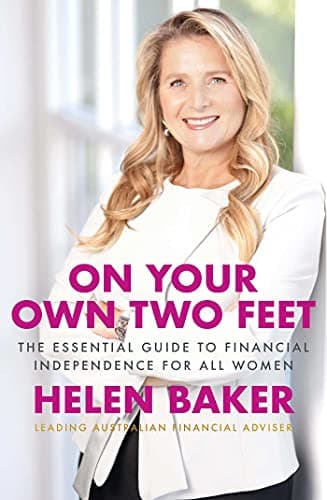
On Your Own Two Feet
An Aussie financial planner's essential guide to money independence for women, covering every life stage from single to separated. Warm, practical and genuinely on your side.
Making Money Made Simple
Noel Whittaker

Making Money Made Simple
Australia's classic, comprehensive money guide covering tax, super and investing, updated for today.
Some links above are affiliate links. If you buy through them, Snowball Invest may earn a small commission at no extra cost to you. We only recommend books we'd suggest anyway.
Sources
This article is general information only and does not constitute personal financial advice. Premiums, thresholds and rules change over time, and the figures here are indicative. Consider your personal circumstances and seek advice from a licensed financial adviser or insurance broker for your specific situation.
Was this article useful?
Put it to your own numbers
Every calculator runs entirely in your browser, with nothing stored. See what these numbers look like for your own situation.
Try the Life Insurance calculator →General information only. This article is educational and does not constitute personal financial advice. It does not account for your circumstances. Consider your own situation and seek advice from a licensed adviser before acting. Read our full disclaimer.

Timothy Hirou Gaschereau
Founder of Snowball Invest, not a financial adviser.
I write about what I'm learning myself, because nobody ever taught us how to take control of our own money. It's a skill, not a mystery, and it's never too late to learn it. The best day to start was yesterday, the second best is today.
LinkedIn →Related articles

CTP Insurance in Australia: What It Covers (and Doesn't)
CTP insurance is compulsory for every registered vehicle in Australia, but it does not cover what most people think. What you actually get, state by state.

Funeral Insurance in Australia: Is It Actually Worth It?
Funeral insurance pays a lump sum when you die, but premiums can end up costing more than the payout. An honest guide, plus better-value alternatives.

Renters Insurance in Australia: What It Covers and What It Costs
Renters insurance in Australia covers your belongings, not the building. Learn what it costs, what it covers, and how to choose a policy that fits.