

Is Life Insurance Through Super Eating Into Your Retirement?
Life insurance through super quietly erodes your retirement savings via compound growth. The real cost, the rules, and how to decide if it's worth it.
 By Timothy Hirou GaschereauPublished
 8 min read
Try it yourself
Most Australians have life insurance and TPD cover automatically deducted from their super balance, no invoice, no reminder, just a quiet line item most people never read. This is part of a wider guide to insurance on Snowball Invest.
Quick answer
Insurance premiums deducted from your super balance don't just cost the premium itself, they cost the compound growth that money would otherwise have earned. That doesn't make the insurance bad, for millions of Australians it's genuinely valuable cover they'd otherwise skip, but it's a decision worth making with your eyes open rather than by default.
In this guide
- →The real, compounding cost of premiums deducted from your super balance
- →Why premiums have been rising across the industry
- →Why default cover exists, and who it genuinely helps
- →A clear framework for when to keep it and when to opt out
- →The rules that can cancel your cover without you noticing
🕳️ The silent drain most Australians ignore
Over 9 million Australians have death cover through super, and over 8 million have TPD cover, according to APRA data. That's a lot of people paying for something they've likely never consciously chosen to keep.
The insurance itself isn't the problem. The problem is the compound growth you silently give up every year those premiums leave your account. Money deducted in year one doesn't just disappear, it's money that would otherwise have kept growing for every year remaining until retirement.
🧮 The maths that will make you sit up
Take an illustrative combined death and TPD premium of around $575 a year. Run the future value of that as an annuity, what it would have grown to if it had stayed invested in your super at a 7% annual return instead.
$575 a year at 7% growth works out to roughly $23,572 in lost retirement savings after 20 years, and about $54,315 after 30 years, purely from the compounding effect, before even counting the premiums themselves. That's not a rounding error, that's a car, or a year of retirement income.
Retirement savings given up from a $575 yearly premium at 7%
$7,944
10 yrs
$23,572
20 yrs
$54,315
30 yrs
The premium is the small part. The growth it would have earned, quietly compounding until you retire, is the real cost.
📈 Premiums are going up
This cost isn't static either. AustralianSuper, Australia's largest fund, increased its insurance costs from 30 May 2026, death cover up 20%, TPD up 40%, and income protection on a 2-year benefit period up 38%, attributing the rises to higher claims over the past year, particularly for mental health. Other funds are facing similar pressure. If a 40% TPD increase sounds abstract, run it through the same 30-year compound formula and you're looking at meaningfully more lost retirement savings from that cover alone.
🤔 So why does insurance through super exist?
Because for millions of Australians it's genuinely valuable, and they'd have nothing without it. Group buying power means funds negotiate cover for hundreds of thousands of members at once, at premiums typically well below an equivalent retail policy, and usually without a medical exam, a real advantage for anyone with a pre-existing condition.
When it works, it works well. Average death and TPD payouts through super have both run well over $130,000 in recent years, for someone with a mortgage and young kids, that's the difference between their family keeping the house or not. Curious what actually drives those payouts? Our look at the most common TPD claims in Australia breaks down the real-world patterns.
✅ When keeping it makes sense
- You have financial dependants, a partner, kids, or anyone who relies on your income
- You have significant debt, like a mortgage, that would fall on someone else
- You have no real savings buffer
- You work in a dangerous occupation with statistically higher TPD risk
- You couldn't easily get retail cover due to a pre-existing condition
- You're in your 30s or 40s with a growing family, typically when the stakes are highest
Not sure how your current default cover stacks up against what your family would actually need? Our life insurance calculator works out a realistic figure based on your debts, dependants and income.
🚪 When opting out makes sense
- You're young with no dependants and minimal debt
- Your balance is low and premiums eat a meaningful share of your annual contributions
- You have duplicate cover through an employer or a separate retail policy
- You have substantial assets and are effectively self-insured
- You're approaching retirement, when death cover typically ends around 70 and TPD around 65
🎯 The essential: If you opt out and later want back in, you may need to go through medical underwriting. Don't cancel impulsively, think it through first, and see our super vs standalone comparison before deciding.
📜 The rules you need to know
If you're under 25 and open a new super account, insurance isn't automatically included, you have to opt in. If your balance is under $6,000, the same applies. If your account hasn't received contributions for 16 months, your fund must cancel your insurance unless you actively elect to keep it. And since stapling began in November 2021, your existing account generally follows you to a new employer rather than a new default fund opening automatically.
SnowLetter
Australia's money news and our best reads, once a week.
❓ Frequently asked questions
Does life insurance through super reduce my retirement savings?
+
Yes, directly. Every dollar deducted in premiums is a dollar that no longer compounds in your super account. Over 20-30 years this can amount to tens of thousands of dollars in lost retirement savings.
Can I opt out of insurance in my super fund?
+
Yes, at any time by contacting your fund or logging into your account. If you opt back in later you may need to provide health information and could face exclusions or higher premiums.
What happens to my insurance if I change jobs or switch super funds?
+
If you switch funds, cover with the old fund generally ends. Since stapling began in 2021, your existing account follows you to a new employer by default, which reduces but doesn't eliminate the risk of losing cover when you change jobs.
Is insurance through super cheaper than buying it directly?
+
Usually, because funds negotiate group rates. But cheaper doesn't always mean better value, default cover amounts are often modest, so compare the actual cover amount, not just the premium.
What's the difference between death cover and TPD cover in super?
+
Death cover pays a lump sum to your beneficiaries if you die. TPD pays a lump sum to you if you become totally and permanently disabled and are unlikely to ever work again. Income protection, less commonly a default, covers a percentage of salary if you're temporarily unable to work.
📚 Recommended reading
Retirement Made Simple
Noel Whittaker
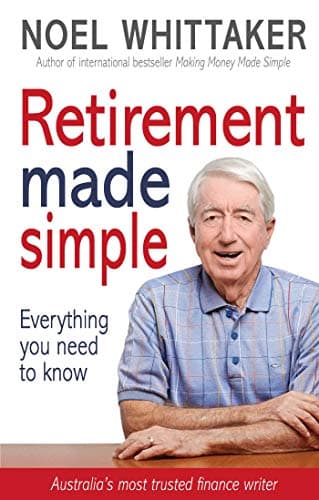
Retirement Made Simple
Australia's godfather of personal finance demystifies super, the pension and making your savings last. The plain-English retirement handbook every Aussie should read before they stop working.
The Joy of Money
Kate McCallum & Julia Newbould
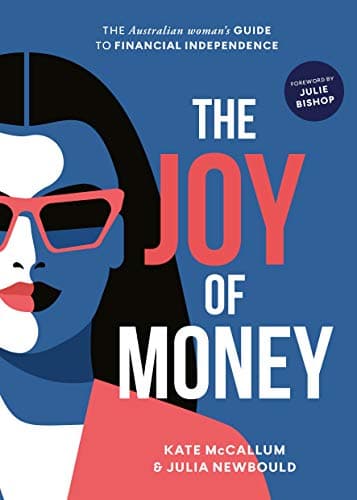
The Joy of Money
Kate McCallum and Julia Newbould map out financial independence for Australian women, from super and investing to insurance and estate planning. Practical, warm and refreshingly free of finance-bro energy.
Super Made Simple
Noel Whittaker
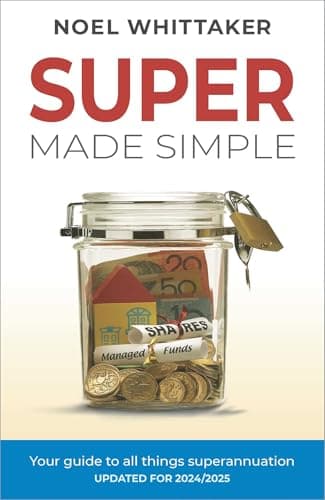
Super Made Simple
A focused, up-to-date guide to actually understanding your superannuation, from one of Australia's most trusted finance writers.
Some links above are affiliate links. If you buy through them, Snowball Invest may earn a small commission at no extra cost to you. We only recommend books we'd suggest anyway.
Sources
- 1. Insurance through super, Moneysmart, Australian Securities and Investments Commission
- 2. Super for individuals, Australian Taxation Office
- 3. Annual fund-level superannuation statistics, Australian Prudential Regulation Authority
- 4. Life insurance claims and disputes statistics, Australian Prudential Regulation Authority
Was this article useful?
Put it to your own numbers
Every calculator runs entirely in your browser, with nothing stored. See what these numbers look like for your own situation.
Try the Life Insurance calculator →General information only. This article is educational and does not constitute personal financial advice. It does not account for your circumstances. Consider your own situation and seek advice from a licensed adviser before acting. Read our full disclaimer.

Timothy Hirou Gaschereau
Founder of Snowball Invest, not a financial adviser.
I write about what I'm learning myself, because nobody ever taught us how to take control of our own money. It's a skill, not a mystery, and it's never too late to learn it. The best day to start was yesterday, the second best is today.
LinkedIn →Related articles

The Rule of 72: How Long Until Your Money Doubles
Divide 72 by your return and you get the years until your money doubles. Worked Australian examples for super, ETFs, savings accounts and fees.

Is Life Insurance Tax Deductible in Australia?
Is life insurance tax deductible in Australia? The clear answer, the super exception, how it compares to income protection, and the payout tax to know about.

How Does Life Insurance Work in Australia?
How life insurance actually works in Australia: how premiums are set, stepped vs level, inside vs outside super, beneficiary nominations, and how a claim is paid.