

Income Protection Insurance for Self-Employed Australians
How insurers calculate income protection benefits for the self-employed, and the traps that catch ABN holders, sole traders and company directors at claim time.
 By Timothy Hirou GaschereauPublished
 10 min read
For a salaried employee, an income protection claim is a simple calculation from a payslip. For the self-employed, it's genuinely more complicated, and understanding why before you claim can be worth tens of thousands of dollars. This is part of a wider guide to insurance on Snowball Invest.
Quick answer
Income protection for the self-employed works differently to employee cover. Your benefit is based on net income from your own personal effort, minus business expenses, not your gross turnover, and calculated on your income in the 12 months before you became disabled under current indemnity-basis policies. Dividends, rent, interest and royalties are generally excluded. Your business structure changes how income is assessed and what you'll need to prove it.
In this guide
- →Why the calculation is genuinely more complex for the self-employed
- →How insurers actually define your "pre-disability income"
- →How your business structure changes what counts and what documentation you need
- →The agreed value vs indemnity shift, and why it matters if your income fluctuates
- →The most common disputes, and how to avoid them
🤔 Why it's a different beast when you're self-employed
For an employee, the insurer looks at payslips, confirms gross salary, and applies the benefit percentage. For a sole trader, ABN holder, contractor or company director, income isn't a fixed number on a payslip, it fluctuates, mixes with business expenses, and might include dividends or retained profits the insurer needs to untangle first. That complexity is exactly why income protection disputes are so common among self-employed claimants, not bad faith, but genuinely contested terrain.
This article assumes you're already across the basics, if you need a refresher on how income protection insurance actually works, start there first.
📐 How "pre-disability income" is defined
Every insurer's wording differs slightly, but the underlying logic is consistent: your insurable income is what you generate through your own personal effort, minus your share of necessarily incurred business expenses, not your business's total revenue.
A freelance designer with $200,000 in revenue but $70,000 in legitimate business expenses has a pre-disability income of $130,000, not $200,000. Their maximum monthly benefit is 90% of that for the first six months of a claim, then 70% after, divided by 12, not a figure based on the higher revenue number.
Freelancer example: turnover is not your insurable income
$200k
Gross turnover
less $70k
Business expenses
$130k
Insurable income
Dividends, rent, interest and royalties do not count either. Only income from your own effort does.
Since October 2021, new indemnity policies can only look back 12 months when calculating your income, before that, some products used the best 12-month period from the prior two to three years. A slow year, a parental leave period or a contract gap in the 12 months before disability now directly lowers your benefit, with no averaging across better years.
✅ What counts as income, and what doesn't
| Counts as pre-disability income | Does not count |
|---|---|
| Income from personal exertion in your business or practice | Gross business turnover or revenue |
| Net profit attributable to your own work | Dividends from company shareholdings |
| Fees, consulting or professional income | Rental income from investment properties |
| Director's salary, if genuinely paid as salary | Interest, royalties, or asset sale proceeds |
The dividend exclusion matters most for company directors who pay themselves partly through dividends rather than salary, covered below.
🏢 Sole trader vs Pty Ltd vs company director
| Sole trader | Pty Ltd / company director | |
|---|---|---|
| Income basis | Net profit from personal exertion, after expenses | Director's salary, dividends usually excluded |
| Documentation | Personal tax return, BAS, profit and loss statement | Company tax return, payroll and director's salary records |
| Key risk | Fluctuating net profit reduces the benefit | Low salary plus high dividends can mean underinsurance |
If your remuneration is structured as salary plus dividends, a standard retail policy may only cover the salary component. You may need a policy with specific director or executive wording that explicitly includes dividends.
🗂️ The documentation you'll need
At application, insurers typically want 1-2 years of personal and business tax returns, BAS statements, business bank statements, and sometimes an accountant's letter confirming your income and trading history.
At claim time, under an indemnity policy, the insurer reassesses your income for the 12 months immediately before disability, not the year you applied. Keep your financial records well beyond the claim itself, disputes have arisen where insurers tried to recalculate benefits years into a claim and claimants could no longer produce the records to defend their position.
🔀 The agreed value vs indemnity shift
Before 31 March 2020, self-employed Australians could buy agreed value policies, income proved at application, benefit locked in regardless of what happened to income later. APRA banned new agreed value policies from that date, concerned some claimants were receiving more on claim than they were actually earning.
All new policies are now indemnity-based. Your benefit is calculated on actual income in the 12 months before disability, not a figure agreed years earlier. If you still hold a pre-2020 agreed value policy, don't cancel it without advice, once cancelled, those terms are gone for good.
⚠️ Common traps, from the AFCA data
Income protection is consistently among the most complained-about life insurance products at the Australian Financial Complaints Authority, and AFCA has specifically flagged ongoing complaints about benefit calculations for business owners and the self-employed. Recurring patterns include disputes over which business expenses were "necessarily incurred," disagreements about income averaging when it naturally fluctuates, gaps for newly self-employed people with under two years of trading history, and directors whose dividend income isn't captured by a standard policy.
A separate but related product, business overhead cover, pays your fixed business expenses (rent, utilities, staff wages) while you're unable to work, it does not replace your personal income. The two are frequently confused, and buying only one when you need both is a common, costly mistake.
Some self-employed people also have basic income protection sitting inside their super fund and assume that's enough. Given how irregular contributions can be when you run your own show, it's worth reading our comparison of insurance through super vs standalone before assuming the default cover has your back.
🦘 Superannuation for the Self-Employed
The other big gap self-employed Australians tend to miss, no automatic employer super contribution.
SnowLetter
Australia's money news and our best reads, once a week.
❓ Frequently asked questions
Can I get income protection insurance if I have an ABN?
+
Yes. What matters is whether you're genuinely self-employed, working a minimum number of hours (typically 20-25 per week depending on the insurer), and can demonstrate insurable income through tax returns or BAS statements.
What is "personal exertion income" and why does it matter?
+
It's income that flows primarily from your own work, skill or effort, as opposed to passive income from investments or other people's labour. Only personal exertion income counts toward your pre-disability income, dividends, rent, interest and royalties are excluded.
My income fluctuates a lot. How will the insurer calculate my benefit?
+
Under current indemnity policies, the insurer looks at your income in the 12 months immediately before you became disabled. If that was a low-income period, your benefit reflects that, keeping detailed, consistent financial records is essential.
I operate through a Pty Ltd and pay myself in dividends. Am I covered?
+
Not automatically. Most standard policies define insurable income as salary or wages, not dividends. If dividends make up a significant part of your remuneration, check your policy wording carefully or look for a policy with specific director or executive wording.
I had an agreed value policy before April 2020. Should I switch?
+
Almost certainly not without advice first. Pre-2020 agreed value policies are grandfathered. Switching means accepting current indemnity terms and potentially a lower benefit if your income has changed since you took it out.
Are income protection premiums tax-deductible for self-employed people?
+
Generally yes, if the policy is held outside super and protects your salary or wage-equivalent income. Any benefit payments you receive must be included in your tax return as assessable income.
📚 Recommended reading
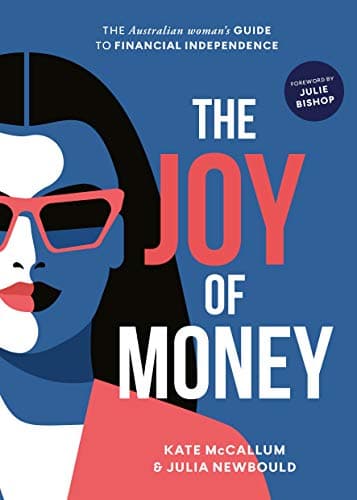
The Joy of Money
Kate McCallum & Julia Newbould
The Joy of Money
Kate McCallum and Julia Newbould map out financial independence for Australian women, from super and investing to insurance and estate planning. Practical, warm and refreshingly free of finance-bro energy.
The Millionaire Fastlane
MJ DeMarco
The Millionaire Fastlane
DeMarco torches the slow-and-steady retirement dream and argues for building wealth through business instead. Loud, opinionated, and genuinely motivating.
Some links above are affiliate links. If you buy through them, Snowball Invest may earn a small commission at no extra cost to you. We only recommend books we'd suggest anyway.
Sources
- 1. Income protection complaints, life insurance annual review, Australian Financial Complaints Authority
- 2. Income protection insurance, Moneysmart, Australian Securities and Investments Commission
- 3. Self-employment, Moneysmart
- 4. Income protection insurance deductions, Australian Taxation Office
- 5. Final Individual Disability Income Insurance sustainability measures, Australian Prudential Regulation Authority
Was this article useful?
Put it to your own numbers
Every calculator runs entirely in your browser, with nothing stored. See what these numbers look like for your own situation.
Explore the calculators →General information only. This article is educational and does not constitute personal financial advice. It does not account for your circumstances. Consider your own situation and seek advice from a licensed adviser before acting. Read our full disclaimer.

Timothy Hirou Gaschereau
Founder of Snowball Invest, not a financial adviser.
I write about what I'm learning myself, because nobody ever taught us how to take control of our own money. It's a skill, not a mystery, and it's never too late to learn it. The best day to start was yesterday, the second best is today.
LinkedIn →Related articles

Income Protection and Redundancy: What's Actually Covered
Income protection does not cover redundancy. Here's what does, what your redundancy pay is actually worth, and how to genuinely protect yourself.

Is Life Insurance Tax Deductible in Australia?
Is life insurance tax deductible in Australia? The clear answer, the super exception, how it compares to income protection, and the payout tax to know about.

Do I Need Life Insurance? An Honest Australian Guide
Not everyone needs life insurance. Here is the honest test of who actually needs it in Australia, who probably does not, and how to size a sum insured.