
How Much Does It Cost to Raise a Child in Australia?
How much does it cost to raise a child in Australia? The real numbers by age, from childcare to Year 12, plus practical ways to keep every stage on budget.
 By Timothy Hirou GaschereauPublished
 10 min read
Let us get straight to it. The cost of raising a child in Australia is genuinely significant, and anyone who tells you otherwise probably has not bought school shoes recently. This guide breaks the number down by age, shows you where the money actually goes, and gives you practical, Australian-specific ways to keep the budget in check. It is part of our wider guide to money and relationships on Snowball Invest. General information only, not personal financial advice.
Quick answer
The Australian Institute of Family Studies estimates it costs roughly $300,000 to raise a first child to adulthood for a middle-income couple, or around $14,000 to $17,000 a year on average. Costs peak in the early childhood years (ages 0 to 4) when childcare hits hardest, and again during secondary school. The biggest levers you can pull: maximise your Child Care Subsidy, claim Family Tax Benefit, and choose your school type carefully. There is a lot of variation, so your actual number depends on income, location, and lifestyle.
In this guide
- →The headline $300,000 figure and why it varies so much
- →A realistic cost breakdown by age band, from nappies to Year 12
- →The biggest cost drivers: childcare, food, education and activities
- →Eight practical, Australian ways to reduce the pressure
- →The government payments most families should be claiming
💰 The big number, and why it varies
The most widely cited research comes from the Australian Institute of Family Studies (AIFS), which compares household budgets with and without kids, then isolates the child-related portion. The headline figure of around $300,000 for the first child (and roughly $230,000 for each subsequent child) is for a middle-income couple. That number shifts considerably depending on a few key factors.
Income level. Higher-income families tend to spend more on children, particularly on education and activities. Lower-income families spend less in dollar terms, but often a higher proportion of their income. Single vs couple households. Single parents typically spend less in total but carry the full cost alone. Location. Sydney and Melbourne families face higher childcare fees, private school fees, and general cost of living. School choices. This is one of the biggest variables of all.
🎯 The essential: One thing the AIFS estimate does not include: lost income. If a parent reduces their hours or leaves the workforce to care for children, that is a very real cost that does not show up in the direct spending figures. For many families, it is the biggest cost of all.
📈 Cost by age band
The cost of raising a child by age is not a flat line. It spikes early, eases in the middle, then climbs again in the teenage years.
Ages 0 to 4 (early childhood). The most expensive stage per year, almost entirely because of childcare. Long day care costs anywhere from $100 to $350 or more per week per child before the Child Care Subsidy kicks in. Add nappies, formula, baby gear and healthcare, and total annual costs typically sit around $15,000 to $20,000 for a family using formal childcare. Apply for the Child Care Subsidy as early as possible.
Ages 5 to 11 (primary school). Good news: childcare ends and costs ease noticeably. Public primary school fees are minimal, though you will still be up for uniforms, excursions and book packs. After-school activities start ramping up. Typical annual spend: $8,000 to $12,000.
Ages 12 to 17 (secondary school). Costs climb again, and not just because teenagers eat everything in the fridge. Higher fees, a required laptop ($800 to $2,000), sport, driving lessons and potentially a first car add up quickly. The silver lining is that many teenagers pick up part-time work. Typical annual spend: $10,000 to $16,000, with private school families at the higher end.
🔍 The big cost drivers
Childcare and early education. For families with young children, childcare is often the single biggest household expense outside housing. Full-time long day care can cost well over $30,000 a year before subsidies. The Child Care Subsidy is income-tested, so the lower your family income, the higher your subsidy rate.
Food. Food costs genuinely spike when you have children, and teenagers in particular have a remarkable ability to empty a pantry. Meal planning and batch cooking are two of the most effective ways to keep this under control.
Education. This is where the biggest gap between families opens up. Independent schools can cost anywhere from $10,000 to $49,000 or more per year in fees alone. Moneysmart notes that an independent school education can cost over $349,000 across 13 years on average nationally. That is a significant commitment that deserves careful thought before you sign the enrolment form.
Activities and sport. Swimming lessons, club registrations, music tuition and holiday programs each seem reasonable alone. Together they can easily add $2,000 to $5,000 per year per child. Being intentional about which activities your child genuinely loves saves real money.
🛠️ What you can actually control
The total cost is large, but it is not fixed. Here are eight practical ways to reduce the pressure.
- Maximise your Child Care Subsidy. Apply through myGov and make sure your activity hours are recorded accurately, as this affects your subsidy rate directly.
- Claim Family Tax Benefit Part A and Part B. If you are eligible, this is money you are entitled to. Check your eligibility at Services Australia.
- Use a budget planner. Seeing where the money actually goes is surprisingly useful.
- Buy school uniforms second-hand. Most schools have a Facebook group or a second-hand uniform shop. Uniforms are expensive new and barely distinguishable used.
- Consider public schooling for primary years. Saving private school fees for secondary is a financially sound approach.
- Meal plan and batch cook. Cutting waste and planning weekly can save $100 or more a week, over $5,000 a year.
- Check state government education vouchers. Some states offer back-to-school support that changes regularly, so search for your state each year.
- Start saving or investing early. Even a small regular contribution when your child is young can grow meaningfully by the time they hit the expensive years.
The cost of raising a child is a marathon, not a sprint. Spread over nearly two decades, small structural wins (subsidies claimed, fees reviewed, meals planned) matter far more than cutting the odd treat.
🧮 Budget Planner
Map your real family spending by category, so you can see exactly where the money goes and plan for the expensive stages ahead.
SnowLetter
Australia's money news and our best reads, once a week.
❓ Frequently asked questions
How much does it cost to raise a child in Australia per year?
+
It varies a lot by age and lifestyle, but a rough guide is $8,000 to $20,000 per year. Early childhood (ages 0 to 4) is the most expensive due to childcare costs. Primary school years are generally the most affordable. Costs rise again in secondary school. The AIFS estimates an average of around $14,000 to $17,000 per year for a middle-income couple across all stages.
Is it more expensive to raise a child in a city vs a regional area?
+
Generally, yes. Childcare fees in Sydney and Melbourne are among the highest in the country, and private school fees in major cities can be eye-watering. That said, regional families may face higher costs for specialist services, activities, or travel. The gap is real but not enormous once you account for all the variables.
What government help is available to reduce the cost of raising a child?
+
The main supports are the Child Care Subsidy (for families using approved childcare), Family Tax Benefit Part A and Part B (income-tested payments per child), and the Parenting Payment for eligible low-income parents. Some states also offer education-related vouchers or rebates. All of these are administered through Services Australia.
How much does childcare cost in Australia?
+
Before the Child Care Subsidy, long day care typically costs $100 to $350 or more per week per child, depending on the centre and location. After the subsidy, your out-of-pocket cost depends on your family income and activity hours. Some lower-income families pay very little; higher-income families may receive a smaller subsidy. Use the Services Australia CCS estimator to get a personalised figure.
Does the cost of raising a child include lost income?
+
No. The AIFS cost of raising a child figures cover direct spending only, things like food, clothing, education, and childcare fees. They do not account for the income a parent forgoes if they reduce their working hours or leave the workforce to care for children. For many families, this opportunity cost is actually larger than the direct spending figure.
How can I start saving for my child's future?
+
The earlier the better, even small amounts. A dedicated savings account or a low-cost investment account (such as an ETF-based account in your child's name or a trust structure) can grow significantly over 10 to 18 years thanks to compounding. The key is consistency, not the size of the initial contribution. Talk to a financial adviser if you are not sure which structure suits your situation.
📚 Recommended reading
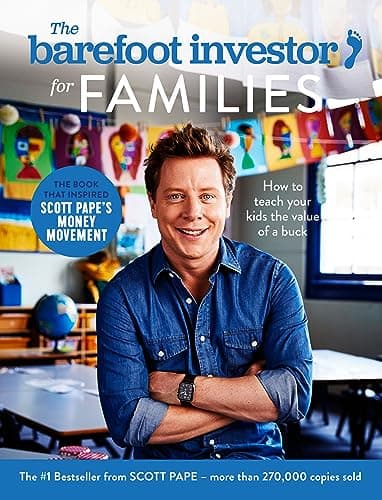
The Barefoot Investor for Families
Scott Pape
The Barefoot Investor for Families
Scott Pape takes his mega-selling Barefoot system and points it at raising money-smart kids, with age-by-age jobs, pocket money and jam-jar tricks. If you want your kids to grow up good with money, this is the Aussie classic.
The Barefoot Investor
Scott Pape

The Barefoot Investor
Australia's best-selling money book ever. A simple system for accounts, budgeting, debt and a real emergency fund in one.
She's on the Money
Victoria Devine
She's on the Money
Written for millennials, walks through budgeting, clearing debt, saving, investing and buying property with real stories.
Some links above are affiliate links. If you buy through them, Snowball Invest may earn a small commission at no extra cost to you. We only recommend books we'd suggest anyway.
Sources
- 1. Australian Institute of Family Studies (AIFS), research on costs of children in Australia
- 2. Household Expenditure Survey, Australian Bureau of Statistics
- 3. Child Care Subsidy, Services Australia
- 4. Family Tax Benefit, Services Australia
- 5. Moneysmart, Australian Securities and Investments Commission
Was this article useful?
Put it to your own numbers
Every calculator runs entirely in your browser, with nothing stored. See what these numbers look like for your own situation.
Explore the calculators →General information only. This article is educational and does not constitute personal financial advice. It does not account for your circumstances. Consider your own situation and seek advice from a licensed adviser before acting. Read our full disclaimer.

Timothy Hirou Gaschereau
Founder of Snowball Invest, not a financial adviser.
I write about what I'm learning myself, because nobody ever taught us how to take control of our own money. It's a skill, not a mystery, and it's never too late to learn it. The best day to start was yesterday, the second best is today.
LinkedIn →Related articles
Cost of Having a Baby in Australia: A Realistic First-Year Budget
From hospital bills to nappies and parental leave, here is what the cost of having a baby in Australia really looks like, with current government payment rates.
Average Cost of an Engagement Ring in Australia (2025 Price Guide)
The average engagement ring cost in Australia is $5,854. Real price tiers, natural vs lab-grown diamonds, and the moves that get you more ring for your money.
Living on One Income in Australia: How to Make It Work
Thinking about living on one income in Australia? How to budget, the government help you can claim, and how to protect the partner who stops working.