
Cost of Having a Baby in Australia: A Realistic First-Year Budget
From hospital bills to nappies and parental leave, here is what the cost of having a baby in Australia really looks like, with current government payment rates.
 By Timothy Hirou GaschereauPublished
 11 min read
Nobody tells you quite how much a tiny human costs until the bills start arriving. We have pulled together current figures from Services Australia, Moneysmart and the government's Medical Costs Finder so you can build a realistic baby budget before you are in the thick of it. This guide is part of our wider guide to money and relationships on Snowball Invest. General information only, not personal financial advice, and rates are subject to change.
Quick answer
The cost of having a baby in Australia sits somewhere between $10,000 and $20,000 for the first year, once you add up birth costs, gear, ongoing expenses, and the income hit during parental leave. Go public and buy second-hand where you can, and you will land at the lower end. Choose a private obstetrician and full-fee childcare, and you will push well past $20,000. Government payments (Parental Leave Pay, Family Tax Benefit and the Newborn Upfront Payment) take some of the sting out, but they do not cover the whole gap.
In this guide
- →A realistic snapshot of first-year costs, public and private
- →Hospital and birth costs, and what Medicare actually covers
- →One-off gear versus ongoing monthly spending
- →The income drop during parental leave that catches families off guard
- →Every government payment you are entitled to claim
💸 How much does a baby cost?
Exact amounts vary by state, hospital and lifestyle, but these ranges are realistic for most Australian families.
| Cost category | Typical range |
|---|---|
| Public hospital birth (out of pocket) | $0 to $500 |
| Private hospital birth (out of pocket, with PHI) | $3,000 to $8,000+ |
| One-off baby gear (pram, cot, car seat, etc.) | $1,500 to $5,000+ |
| Ongoing costs (nappies, formula, clothing, etc.) | $500 to $1,200/month |
| Childcare (long day care, after CCS) | $80 to $200+/day |
The ongoing costs are where the real money goes. A year of nappies, formula, clothing and healthcare adds up faster than most people expect.
🏥 Hospital and birth costs
Public hospital birth. If you give birth as a public patient in a public hospital, Medicare covers your hospital stay, midwifery care and standard obstetric care. For most straightforward births, your out-of-pocket cost is effectively $0. A few things can still add costs: a private room upgrade ($100 to $500 per night), an anaesthetist gap fee for an epidural ($200 to $600), and antenatal classes ($150 to $400).
Private hospital birth. Going private gives you choice of obstetrician, a private room and continuity of care. Even with private health insurance (PHI), most families pay $3,000 to $8,000 or more out of pocket. The main drivers are the obstetrician gap fee ($2,500 to $5,000 or more), the hospital excess ($250 to $750) and the anaesthetist gap. Without PHI, a private birth can run $9,000 to $20,000 or more. Note that most PHI policies have a 12-month waiting period for pregnancy services.
🎯 The essential: The government's Medical Costs Finder lets you search typical fees and out-of-pocket costs by procedure and location. It is worth checking before you commit to a private obstetrician.
🛒 One-off baby gear
These are the purchases you make once (or at least hope to make once). Costs vary enormously depending on whether you buy new, second-hand, or borrow from friends.
| Item | Budget | Premium |
|---|---|---|
| Pram / stroller | $300 to $600 | $1,000 to $2,000+ |
| Cot or bassinet | $150 to $400 | $500 to $800+ |
| Car seat (buy new) | $150 to $350 | $400 to $600+ |
| Feeding gear | $80 to $200 | $300+ |
| Clothing (0 to 12 months) | $200 to $500 | $800+ |
A note on car seats: this is the one item where you should not buy second-hand unless you can verify its full history. A seat involved in even a minor accident may be compromised in ways you cannot see. Buy new, or buy from someone you trust completely. A realistic one-off total for a budget-conscious family is around $1,500 to $2,500. Buying everything new and mid-range, budget $3,500 to $5,000.
🍼 Ongoing monthly costs
Once the baby arrives, the spending does not stop. Here is what a typical month looks like.
| Item | Monthly cost |
|---|---|
| Disposable nappies | $60 to $100 |
| Formula (if not breastfeeding) | $150 to $300 |
| Wipes, creams, toiletries | $30 to $60 |
| Clothing (babies grow fast) | $50 to $150 |
| Baby healthcare (GP, pharmacy) | $20 to $80 |
| Childcare (long day care, after CCS) | $400 to $2,000+ |
Without childcare, ongoing costs run roughly $300 to $700 per month for the basics. Most GP visits for babies are bulk-billed, so routine check-ups, immunisations and the six-week check are generally free.
📉 The income hit during leave
This is the part of the baby budget that catches most families off guard. Government Parental Leave Pay (PLP) is paid at the national minimum wage. From 1 July 2026, that is $1,004.70 per week before tax.
If you earn $80,000 a year, your take-home is roughly $1,300 per week after tax. PLP at the 2026-27 rate gives you about $850 per week after tax. That is a gap of around $450 per week, or roughly $1,800 per month less coming in. The gap is wider the more you earn. Some employers top up PLP to full salary, but many do not, so check your enterprise agreement or contract before you plan your leave.
Build a dedicated parental leave buffer before the baby arrives, aiming for three to six months of the income gap. Our parental leave guide walks through how to model this and plan your savings target.
🏛️ Government help you can claim
There is a decent amount of support available. Here is what to claim.
Parental Leave Pay. From 1 July 2026, eligible families can access up to 26 weeks (130 days) of PLP, shared between both parents if partnered, at $1,004.70 per week before tax. To be eligible you generally need to have worked 10 of the 13 months before the birth and earned under the income limit.
Family Tax Benefit Part A and Part B. An ongoing, income-tested payment. Part A pays up to $235.48 per fortnight for a child aged 0 to 12, and Part B up to $200.34 per fortnight when your youngest is under 5. Rates are indexed periodically.
Newborn Upfront Payment and Supplement. When your baby is born you may receive a $683 lump sum plus a Newborn Supplement of up to $2,052.05 over 13 weeks for a first child, so up to $2,735 combined. You need to be eligible for at least the base rate of FTB Part A.
Child Care Subsidy. Once you return to work, the Child Care Subsidy can cover a significant chunk of the fees, up to 90% of the applicable hourly rate for lower-income families. Claiming CCS early is important.
🧾 A rough first-year budget
Here is a worked example for a family choosing a public hospital birth, buying a mix of new and second-hand gear, breastfeeding, and returning to part-time work at six months with childcare three days a week.
| Category | Estimated cost |
|---|---|
| Public hospital birth (epidural gap, classes) | $600 |
| One-off baby gear (mix of new and used) | $2,200 |
| Nappies and wipes (12 months) | $900 |
| Clothing (12 months) | $400 |
| Baby healthcare | $400 |
| Childcare (3 days/week for 6 months, after CCS) | $4,800 |
| Miscellaneous | $500 |
| Total out-of-pocket | ~$9,800 |
Minus government support (Newborn payments plus FTB Part A for 12 months), roughly $4,500 to $6,000 depending on income, the net first-year out-of-pocket spend is around $4,000 to $6,000. Add the income gap during parental leave (say $1,800 a month for six months) and the real financial impact climbs closer to $15,000 to $20,000 when you count the money you are not earning. That is why building a savings buffer beforehand matters so much.
🧮 Budget Planner
Model your birth costs, gear, monthly spending and the income gap in one place, so you know your savings target before the baby arrives.
SnowLetter
Australia's money news and our best reads, once a week.
❓ Frequently asked questions
How much does it cost to have a baby in a public hospital in Australia?
+
For a standard birth as a public patient, the cost is effectively $0 for the hospital stay and standard care. You may pay $200 to $600 for an anaesthetist gap fee if you have an epidural, plus any costs for antenatal classes or a private room upgrade. Medicare covers the bulk of it.
How much does it cost to have a baby privately in Australia?
+
With private health insurance, expect to pay $3,000 to $8,000 or more out of pocket, with the obstetrician gap fee being the biggest variable. Without private health insurance, costs can reach $9,000 to $20,000 or more. Always check your policy's waiting periods and gap cover arrangements before committing to a private obstetrician.
How much does the government give you when you have a baby in Australia?
+
The main payments are Parental Leave Pay (up to 26 weeks at $1,004.70 per week before tax from July 2026), the Newborn Upfront Payment ($683), the Newborn Supplement (up to $2,052 for a first child), and Family Tax Benefit Part A and B (ongoing, income-tested). Total government support in the first year can be $15,000 to $25,000 or more depending on your income and circumstances.
What is the cheapest way to have a baby in Australia?
+
Go public (free hospital birth under Medicare), breastfeed if possible (saves $150 to $300 a month on formula), use Facebook Buy Nothing groups and op shops for gear, borrow items from friends and family, and claim every government payment you are eligible for. A budget-conscious family can keep first-year out-of-pocket costs well under $5,000.
How much should I save before having a baby in Australia?
+
A commonly suggested target is three to six months of your income gap during parental leave, plus $3,000 to $5,000 for one-off baby gear and birth costs. If you are going private, add another $5,000 to $8,000 for the birth itself. A budget planner is the best tool for working out your specific number.
Does Medicare cover all birth costs?
+
No. Medicare covers the hospital stay and standard care for public patients, and contributes rebates toward specialist and GP fees. It does not cover private room upgrades, anaesthetist gaps above the Medicare Benefits Schedule rate, private obstetrician fees, or private hospital accommodation. The Medicare Safety Net can help reduce out-of-pocket costs once you hit the threshold, but it is not a full safety net.
📚 Recommended reading
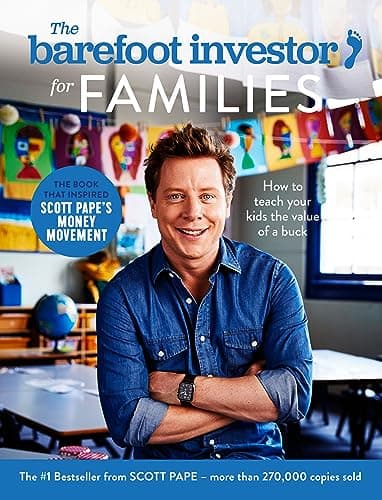
The Barefoot Investor for Families
Scott Pape
The Barefoot Investor for Families
Scott Pape takes his mega-selling Barefoot system and points it at raising money-smart kids, with age-by-age jobs, pocket money and jam-jar tricks. If you want your kids to grow up good with money, this is the Aussie classic.
She's on the Money
Victoria Devine
She's on the Money
Written for millennials, walks through budgeting, clearing debt, saving, investing and buying property with real stories.
The Barefoot Investor
Scott Pape

The Barefoot Investor
Australia's best-selling money book ever. A simple system for accounts, budgeting, debt and a real emergency fund in one.
Some links above are affiliate links. If you buy through them, Snowball Invest may earn a small commission at no extra cost to you. We only recommend books we'd suggest anyway.
Sources
- 1. Having a baby, Moneysmart, Australian Securities and Investments Commission
- 2. Parental Leave Pay, Services Australia
- 3. Newborn Upfront Payment and Newborn Supplement, Services Australia
- 4. Family Tax Benefit, Services Australia
- 5. Child Care Subsidy, Services Australia
- 6. Medicare Safety Nets, Services Australia
- 7. Medical Costs Finder, Australian Government
- 8. Product Safety Australia, baby product recalls
Was this article useful?
Put it to your own numbers
Every calculator runs entirely in your browser, with nothing stored. See what these numbers look like for your own situation.
Explore the calculators →General information only. This article is educational and does not constitute personal financial advice. It does not account for your circumstances. Consider your own situation and seek advice from a licensed adviser before acting. Read our full disclaimer.

Timothy Hirou Gaschereau
Founder of Snowball Invest, not a financial adviser.
I write about what I'm learning myself, because nobody ever taught us how to take control of our own money. It's a skill, not a mystery, and it's never too late to learn it. The best day to start was yesterday, the second best is today.
LinkedIn →Related articles

How Much Does It Cost to Raise a Child in Australia?
How much does it cost to raise a child in Australia? The real numbers by age, from childcare to Year 12, plus practical ways to keep every stage on budget.
Living on One Income in Australia: How to Make It Work
Thinking about living on one income in Australia? How to budget, the government help you can claim, and how to protect the partner who stops working.
How Much to Give for a Wedding Gift in Australia
No fixed rule exists. Rough Australian cash gift ranges by relationship, plus tips for when money is tight. General info, not advice.