
Living on One Income in Australia: How to Make It Work
Thinking about living on one income in Australia? How to budget, the government help you can claim, and how to protect the partner who stops working.
 By Timothy Hirou GaschereauPublished
 11 min read
Life rarely follows a straight line. A new baby, a partner going back to study, a parent who needs full-time care, a redundancy, or simply a deliberate choice to slow down. Whatever brought you here, you are not doing something reckless. This guide is part of our wider guide to money and relationships on Snowball Invest. General information only, not personal financial advice.
Quick answer
Living on one income in Australia is harder than it was five years ago, but thousands of families do it successfully every day. Your first move is knowing your real minimum monthly number, then cutting fixed costs before anything else. You may be entitled to Family Tax Benefit, Parenting Payment, Child Care Subsidy and Commonwealth Rent Assistance, and most families do not claim everything they are owed. The partner who stops working needs super protection and a financial identity, so do not let that slip.
In this guide
- →Why families drop to one income, and whether it is doable now
- →How to find your real survival number and cut fixed costs first
- →Why a single income needs a deeper emergency buffer
- →The government payments most single-income families underuse
- →How to protect the non-earning partner's super and financial identity
🧭 Why families drop to one income
A new baby, a partner going back to study, a parent who needs full-time care, a child with a disability, a redundancy, or a deliberate choice to slow down. All of these are real, common reasons Australians find themselves running a one-income household. A single-income family budget looks different from a dual-income one, but different does not mean impossible. If a baby is the reason, our parental leave guide walks through the income shift ahead of time.
🤔 Is it actually doable right now?
Honestly, it is tougher than it was in 2019. The ABS recorded average weekly household spending at $1,425 back in 2015-16, and costs have climbed significantly since. That said, many families are living on one wage right now. The key variables are where you live (Sydney and Melbourne rents are brutal; regional areas give far more breathing room), whether you rent or own, the number of kids, and existing debt. High-interest personal debt is the biggest threat to a single-income budget. The families who make it work are not necessarily earning more. They have done the maths honestly and built their budget around the real number, not a hopeful one.
🔢 Step 1: Know your real number
Before you cut anything, you need to know what you actually spend. Pull three months of bank and credit card statements, add up every dollar, then split your spending into two columns.
- Survival budget: rent or mortgage, utilities, groceries, transport, insurance, minimum debt repayments, and any essential medical costs.
- Comfortable budget: the survival budget plus kids' activities, dining out, streaming, clothing, and a small fun allowance.
The gap between those two numbers is your flexibility zone. The survival budget is your floor, and you need the earning partner's take-home pay to clear it with room to spare.
🧮 Budget Planner
Enter your income and expenses to find your real survival number, then track it as your circumstances change.
✂️ Step 2: Cut fixed costs first
Variable costs feel like the obvious target, but fixed costs are where the real money is, because you win that saving every single month without thinking about it again.
- Mortgage. If you have not reviewed your rate in 12 months, call your lender or a broker. Even 0.3% off a $600,000 loan saves around $1,800 a year.
- Insurance. Bundle home, contents and car, and ask for a loyalty discount. If they will not budge, get a quote elsewhere and use it as leverage.
- Subscriptions. Most households pay for two or three streaming services they barely use. Cut to one.
- Phone and internet. Compare plans annually. Solid SIM-only plans run under $30 a month.
- Energy. Check your state's energy concession and rebate schemes. Many people never apply because they assume they will not qualify.
Small fixed-cost wins compound fast. Saving $400 a month is $4,800 a year back in your pocket.
🏦 Step 3: Build a bigger buffer
One income means one point of failure. If the earning partner gets sick, injured, or loses their job, there is no backup income to catch you. That is why an emergency fund is not optional for a single-income family. It is the whole game.
Target 3 to 6 months of essential expenses (your survival number from Step 1). Open a high-interest savings account separate from your everyday account and automate a transfer on payday. Build sinking funds for irregular but predictable costs (car registration, school fees, vet bills) by dividing the annual cost by 12. Our emergency fund guide walks through how to build one from scratch.
🏛️ Government help you may be entitled to
This is the section most single-income families underuse. Australia has a real safety net. Use it.
Family Tax Benefit Part A. A fortnightly payment per child. For 2025-26, the maximum is $227.36 per fortnight per child aged 0 to 12, and $295.82 for a child aged 13 to 19 in secondary study, with a base rate of $72.94 for higher-income families.
Family Tax Benefit Part B. Designed for single-income families. The maximum for 2025-26 is $200.34 per fortnight when the youngest child is aged 0 to 4, and $139.86 when the youngest is 5 to 18. The secondary earner's income must be under $10,585 a year to receive the full rate.
Parenting Payment. If the non-earning partner is the primary carer of a young child, the partnered rate is currently $740.30 per fortnight, subject to income tests.
Child Care Subsidy and Rent Assistance. The Child Care Subsidy can cover a big chunk of fees if the non-earning partner returns part-time, and Commonwealth Rent Assistance pays up to $257.88 per fortnight for a couple with children who rent and receive an eligible payment.
🎯 The essential: Use the Services Australia Payment Finder to see every payment you may be eligible for based on your actual situation. It takes about five minutes and is worth doing every time your circumstances change.
🛡️ Protecting the non-earning partner
This is the part most families skip. Do not.
The super gap. Every year out of the workforce is a year without Superannuation Guarantee contributions, which can cost tens of thousands over a decade. The earning partner can make spouse super contributions, and the ATO offers a tax offset of up to $540 if the spouse's income is $37,000 or under and the contribution is at least $3,000.
Income protection for the earning partner. For a single-income household, this is not a nice-to-have. It replaces a portion of income (typically up to 70%) if the earner cannot work due to sickness or injury. Review your existing cover, checking inside your super fund first, and see our income protection insurance guide.
Keep the non-earning partner financially visible. Keep a bank account in their name, maintain a small credit card (paid off monthly) to preserve a credit history, and make sure both partners understand the household finances. Financial dependence without financial literacy is a risk. Both lives also have real economic value, so review life insurance for both partners, not just the earner.
Treat it as shared income. The earning partner brings in the money; the non-earning partner runs the household and manages the domestic load, which has real economic value. Both partners should have some spending money that is genuinely theirs, no questions asked. And remember it is often temporary: most families do not stay on one income forever.
SnowLetter
Australia's money news and our best reads, once a week.
❓ Frequently asked questions
Can a family of 4 live on one income in Australia?
+
Yes, but it depends heavily on location, housing costs, and existing debt. A family of four in regional Queensland on a $90,000 salary has a very different experience from the same family paying Sydney rent. The key is knowing your actual minimum monthly spend, claiming every government payment you are entitled to, and building a buffer before you need it. Many families of four make it work, especially with Family Tax Benefit Part A and Part B topping up the household income.
What government payments can a single-income family get in Australia?
+
A single-income family may be eligible for Family Tax Benefit Part A (up to $227.36 per fortnight per child aged 0 to 12), Family Tax Benefit Part B (up to $200.34 per fortnight when the youngest child is under 5), Parenting Payment (if the non-earning partner is the primary carer of a young child), Child Care Subsidy, and Commonwealth Rent Assistance if you are renting. Use the Services Australia Payment Finder to see what applies to your situation.
How much should a single-income household have in an emergency fund?
+
Aim for 3 to 6 months of essential expenses (your survival budget, not your full spending). For a family spending $4,000 a month on essentials, that is $12,000 to $24,000. Start small if you have to. Even $2,000 in a separate savings account creates a meaningful buffer. Automate the contribution on payday so it happens before you can spend it.
How do I protect my super if I stop working?
+
Ask your earning partner to make spouse super contributions to your fund. If their contribution is $3,000 or more and your income is $37,000 or under, they can claim a tax offset of up to $540 from the ATO. Also check whether you qualify for the Government Co-contribution scheme if you make personal after-tax contributions. For personalised super advice, speak to a registered financial adviser or your super fund's advice team.
Is living on one income in Australia worth it?
+
That depends entirely on why you are doing it. For families choosing one income to care for a child or a family member, the non-financial benefits are often significant and hard to put a dollar value on. For families forced into it by circumstance, the goal is usually to stabilise, build a buffer, and create a path back to two incomes. Either way, the financial stress is real, and it is worth taking seriously with a proper budget, the right government support, and a clear plan.
📚 Recommended reading
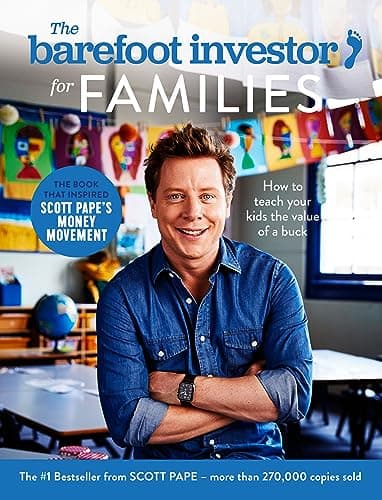
The Barefoot Investor for Families
Scott Pape
The Barefoot Investor for Families
Scott Pape takes his mega-selling Barefoot system and points it at raising money-smart kids, with age-by-age jobs, pocket money and jam-jar tricks. If you want your kids to grow up good with money, this is the Aussie classic.
The Barefoot Investor
Scott Pape

The Barefoot Investor
Australia's best-selling money book ever. A simple system for accounts, budgeting, debt and a real emergency fund in one.
She's on the Money
Victoria Devine
She's on the Money
Written for millennials, walks through budgeting, clearing debt, saving, investing and buying property with real stories.
Some links above are affiliate links. If you buy through them, Snowball Invest may earn a small commission at no extra cost to you. We only recommend books we'd suggest anyway.
Sources
- 1. Family Tax Benefit, Services Australia
- 2. Parenting Payment, Services Australia
- 3. Child Care Subsidy, Services Australia
- 4. Commonwealth Rent Assistance, Services Australia
- 5. Payment Finder, Services Australia
- 6. Spouse super contributions and tax offset, Australian Taxation Office
- 7. Budget Planner, Moneysmart, Australian Securities and Investments Commission
Was this article useful?
Put it to your own numbers
Every calculator runs entirely in your browser, with nothing stored. See what these numbers look like for your own situation.
Explore the calculators →General information only. This article is educational and does not constitute personal financial advice. It does not account for your circumstances. Consider your own situation and seek advice from a licensed adviser before acting. Read our full disclaimer.

Timothy Hirou Gaschereau
Founder of Snowball Invest, not a financial adviser.
I write about what I'm learning myself, because nobody ever taught us how to take control of our own money. It's a skill, not a mystery, and it's never too late to learn it. The best day to start was yesterday, the second best is today.
LinkedIn →Related articles

Cost of Having a Baby in Australia: A Realistic First-Year Budget
From hospital bills to nappies and parental leave, here is what the cost of having a baby in Australia really looks like, with current government payment rates.

How Much Does It Cost to Raise a Child in Australia?
How much does it cost to raise a child in Australia? The real numbers by age, from childcare to Year 12, plus practical ways to keep every stage on budget.

Superannuation Splitting in Divorce and Separation: The Complete Australian Guide
How super splitting actually works in Australian divorce and separation, married or de facto: flagging vs splitting, the process, and key traps.