

Tax Deductions You Can Claim as an Australian Employee
The work-related tax deductions Australian employees most often miss, the three ATO rules to know, the two work-from-home methods, and how to claim correctly.
 By Timothy Hirou GaschereauPublished
 10 min read
Try it yourself
Most Australians leave real money on the table every tax time, not because they're doing anything wrong, but because they don't know what they're allowed to claim. This guide covers the work-related deductions available to regular employees in 2024-25, how they actually save you money, and what the ATO will knock back. It's part of our guide to Australian income tax.
🎯 The essential: Every deduction must pass three ATO tests: you paid for it, it's work-related, and you have proof. The most commonly missed are working-from-home expenses, income protection premiums, and self-education. And a deduction doesn't save you a dollar per dollar claimed: it saves that dollar times your marginal tax rate.
The three golden rules of claiming a deduction
Before you claim anything, every deduction must pass all three tests. Miss one and the ATO will disallow it.
- Rule 1: You paid for it yourself and weren't reimbursed. If your employer paid for it, covered it through an allowance, or reimbursed you, you cannot claim it.
- Rule 2: It's directly related to earning your income. Not a vague, theoretical connection, a direct one. A suit because you “need to look professional” doesn't cut it; a hard hat your site requires does.
- Rule 3: You have a record to prove it. No receipt, no claim. Receipts, bank statements, invoices, and logbooks all count. A rough memory does not.
The work-related deductions employees most often miss
- Working from home. A portion of your home office costs, with two methods to choose from (below).
- Car and travel. Travel between two workplaces or to a client, but not your regular commute. Use the cents-per-kilometre method (88c/km in 2024-25, up to 5,000km) or a 12-week logbook.
- Tools and equipment. Under $300: claim the full cost immediately. Over $300: depreciate over its effective life. Work-use portion only.
- Self-education that directly relates to your current job (not a career change): course fees, textbooks, and the work-use portion of related costs.
- Professional memberships and union fees relevant to your work are fully deductible, as are work-related subscriptions (work-use portion).
- Phone and internet (work-use percentage, backed by a 4-week representative diary).
- Protective clothing and uniforms: registered uniforms, occupation-specific clothing (chef's pants, scrubs), and protective gear (steel-caps, hi-vis). Plus laundry ($1 per work-only load).
- Income protection insurance premiums paid outside super. One of the most commonly missed. Premiums paid inside super are not deductible to you personally.
Working from home: the two ATO methods explained
If you work from home, you choose one of two methods for 2024-25. You can't mix and match.
| Fixed rate method | Actual cost method | |
|---|---|---|
| Basis | 70c per hour worked from home | Actual work-use % of each expense |
| What's included | Energy, phone, internet, stationery, consumables | Every relevant home office expense |
| Separate equipment claim? | Yes, depreciation claimed separately | Yes, included in the method |
| Records needed | Hours log (diary, timesheet, roster) | 4-week usage diary + all receipts |
| Best for | Most employees; simpler, lower admin | Heavy home-office users with high costs |
If you work from home 2 to 3 days a week and your costs aren't unusually high, the fixed rate method is almost always easier and sufficient. If you work from home full-time with a dedicated room and significant running costs, run the numbers on both.
What you generally cannot claim
- The daily commute. Home to work and back is private travel, no matter the distance.
- Conventional clothing. A suit, dress, or jeans isn't deductible, even under a strict dress code.
- Personal expenses. Coffee, lunch, gym memberships, haircuts and grooming are private.
- Costs your employer reimbursed. If you were paid back, you didn't bear the cost.
- Self-education for a career change. It must connect directly to your current role.
How a tax deduction actually saves you money
A deduction reduces your taxable income, not your tax bill directly. If you earn $90,000 and claim $1,000 in deductions, the ATO taxes you on $89,000. The saving is $1,000 times your marginal rate, not $1,000.
On the 2026-27 brackets, a $1,000 deduction saves $150 at 15%, $300 at 30%, $370 at 37% and $450 at 45%. Worth claiming? Absolutely. Worth fabricating? Absolutely not. See how the bands work in our tax brackets guide, and note that an offset works differently again.
Record-keeping and the ATO's myDeductions tool
The ATO requires you to keep records for five years from the date you lodge. The single best habit you can build is keeping records through the year, not scrambling in June. The ATO's free myDeductions tool (part of the ATO app) lets you photograph receipts on the spot, track car trips by GPS, record expenses as you go, and export straight to myTax at tax time. It's free and removes the “I can't find my receipts” problem entirely.
The bottom line: know the three rules, claim everything you're genuinely entitled to (especially the ones people forget, like income protection and working from home), keep your records, and let a deduction do what it does: shave your marginal rate off each dollar claimed. Then lodge your return.
The Snowball Deduction Log
Log a deduction the day you spend it, not the night before you lodge. Work-use percentage and a category breakdown, ready for your agent.
Create a free accountFree, and it keeps all five in one place. Already have one?
Excel and Google Sheets (.xlsx), 11 KB
❓ Frequently asked questions
Do I need to keep every single receipt?
+
Yes, for most claims. The ATO accepts receipts, bank statements, and invoices. For some small claims (like minor phone use or laundry under a certain threshold), the ATO allows a reasonable estimate without detailed records. But for anything significant, keep the receipt. The myDeductions app makes this a 10-second job.
Can I claim deductions if I'm on a salary (PAYG)?
+
Yes. Being a PAYG employee doesn't affect your right to claim work-related deductions. You include them in your tax return, and they reduce your taxable income. If you've had too much tax withheld during the year, deductions can contribute to a refund.
What's the difference between a tax deduction and a tax offset?
+
A deduction reduces your taxable income before your tax is calculated. An offset reduces your tax bill directly, dollar for dollar. Offsets are generally more valuable. The Low Income Tax Offset (LITO) is an example of an offset. Work-related deductions are deductions, not offsets.
Can I claim my home office furniture?
+
Yes, if you use it for work. Under the fixed rate method, you can claim the depreciation of home office furniture separately (the 70c rate doesn't cover it). Under the actual cost method, furniture depreciation is included in your claim. You can only claim the work-use percentage if the furniture is also used personally.
What happens if the ATO audits my deductions?
+
The ATO will ask you to substantiate your claims with records. If you have receipts, logbooks, and diaries, you're in a strong position. If you can't produce records, the ATO can disallow the deduction and issue an amended assessment, potentially with interest and penalties. Keeping records is the only protection.
Can I claim deductions I forgot to include in a previous year's return?
+
Yes. You can amend a tax return for up to two years after the original assessment date (four years for small businesses). Lodge an amendment through myGov or ask your tax agent. You'll need records for the year in question.
📚 Recommended reading
The Barefoot Investor
Scott Pape

The Barefoot Investor
Australia's best-selling money book ever. A simple system for accounts, budgeting, debt and a real emergency fund in one.
Making Money Made Simple
Noel Whittaker

Making Money Made Simple
Australia's classic, comprehensive money guide covering tax, super and investing, updated for today.
On Your Own Two Feet
Helen Baker
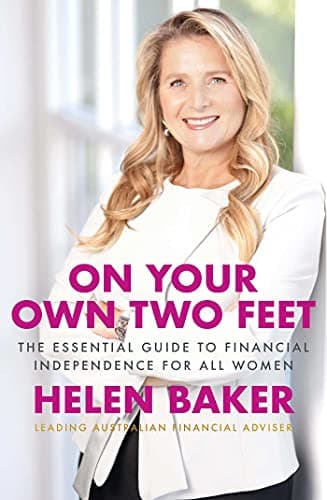
On Your Own Two Feet
An Aussie financial planner's essential guide to money independence for women, covering every life stage from single to separated. Warm, practical and genuinely on your side.
Some links above are affiliate links. If you buy through them, Snowball Invest may earn a small commission at no extra cost to you. We only recommend books we'd suggest anyway.
Sources
This article is general information only and does not constitute financial or tax advice. Deduction rules, rates and thresholds change, so check the latest ATO guidance and speak to a registered tax agent about your own situation.
Was this article useful?
Put it to your own numbers
Every calculator runs entirely in your browser, with nothing stored. See what these numbers look like for your own situation.
Try the Tax Refund calculator →General information only. This article is educational and does not constitute personal financial advice. It does not account for your circumstances. Consider your own situation and seek advice from a licensed adviser before acting. Read our full disclaimer.

Timothy Hirou Gaschereau
Founder of Snowball Invest, not a financial adviser.
I write about what I'm learning myself, because nobody ever taught us how to take control of our own money. It's a skill, not a mystery, and it's never too late to learn it. The best day to start was yesterday, the second best is today.
LinkedIn →Related articles
Tax Deductions for Sole Traders in Australia: The Complete List
The complete list of sole trader tax deductions in Australia: home office, car, phone, equipment, super and more, plus the rules for claiming and what you cannot.

Is Life Insurance Tax Deductible in Australia?
Is life insurance tax deductible in Australia? The clear answer, the super exception, how it compares to income protection, and the payout tax to know about.

Investment Property Tax Deductions: What You Can (and Can't) Claim in Australia
A complete guide to investment property tax deductions in Australia: what you can claim, what you can't, and the depreciation trap that catches new investors.