
Tax Deductions for Sole Traders in Australia: The Complete List
The complete list of sole trader tax deductions in Australia: home office, car, phone, equipment, super and more, plus the rules for claiming and what you cannot.
 By Timothy Hirou GaschereauPublished
 12 min read
Try it yourself
As a sole trader you pay income tax on your net profit, which is your assessable income minus your allowable deductions. So every legitimate deduction you claim reduces the income you are taxed on, dollar for dollar. The good news: the ATO rules are actually pretty logical once you know the one central test.
Here is every major category of sole trader deduction, the 2024-25 rates and thresholds, and the records you need to back it all up.
🎯 The essential: You can claim any expense directly related to earning your assessable income, as long as you have already spent the money (and not been reimbursed) and kept a record, claiming only the business portion of anything mixed. The big ones for sole traders are home office (70c per hour fixed rate, or the actual cost method), car (91c per km capped at 5,000 km, or a logbook), the instant asset write-off for equipment under $20,000, and personal deductible super contributions (up to the $32,500 cap). Keep every record for five years. This is general information, not tax advice.
The core rule for any deduction
Before the categories, know the one rule that governs all of them. Under the ATO's general deduction rule, four conditions must all be met:
In plain English: the expense must be directly related to earning your income (not future income, not private purposes); you must have already spent the money and not been reimbursed; you must keep a record; and if something is part private and part business (a phone used for both, say) you claim only the business portion. Everything below is just applying those four conditions.
Home office and running expenses
Most sole traders work from home at least sometimes, and there are two methods (pick one per year):
| Fixed rate | Actual cost | |
|---|---|---|
| Rate | 70c per hour worked from home | Actual business-use portion of each cost |
| Covers | Power, phone, internet, consumables | Power, phone, internet, cleaning, depreciation |
| Occupancy costs (rent, interest) | No | Yes (but see the CGT warning) |
| Records | Actual hours for the full year | Receipts plus a business-use calculation |
If you own your home and claim occupancy costs under the actual cost method, you may lose part of your main residence CGT exemption when you sell, a trap that catches people out. Get advice from a registered tax agent before claiming occupancy costs on a home you own. And do not double up: the 70c fixed rate already includes phone and internet, so do not also claim those separately.
Motor vehicle expenses
Two methods again. Cents per km: 91c per km for 2026-27, capped at 5,000 business kilometres, covering everything (fuel, servicing, insurance, rego, depreciation), with no logbook but a reasonable basis for the kilometres, for a maximum of $4,550. Logbook: keep a continuous 12-week logbook to establish your business-use percentage, then claim that percentage of all actual car costs; a valid logbook lasts five years. One rule for both: you cannot claim the commute from home to a regular workplace, but you can claim travel between clients or work sites.
Tools, equipment and technology
This is where the instant asset write-off helps. For 2026-27, if your aggregated turnover is under $10 million and an asset costs less than $20,000 (and is first used or installed ready for use by 30 June 2027), you deduct the full cost in the year you buy it. The threshold is per asset, so you can write off several in a year. Assets of $20,000 or more are depreciated over their effective life instead. Claimable items include a laptop, phone, printer, camera, tools of trade and office furniture, always apportioned for any private use. Plan purchases before 30 June rather than leaving it to chance.
Superannuation: the overlooked lever
No employer pays super for you as a sole trader, but you can make personal contributions and claim a deduction, which is one of the most tax-effective moves available. Lodge a Notice of Intent to Claim a Deduction with your fund before you lodge your return, keep within the $32,500 concessional cap for 2026-27, and the contribution is taxed at just 15% inside super instead of your marginal rate. If you pay 30% or 37% income tax, the saving is significant. Our paying yourself guide explains how to build super into your set-aside.
The rest of the list, at a glance
| Deduction | The key rule |
|---|---|
| Phone and internet | Business-use % (4-week sample); do not double-claim with fixed rate |
| Professional and subscription fees | Must relate to your current income-earning work |
| Insurance | Business cover and income protection yes; life and TPD no |
| Marketing and advertising | Genuine business marketing (website, ads, cards) |
| Self-education | Must relate to current work, not a new career |
| Accounting and tax agent fees | Fully deductible |
| Bank fees and business loan interest | Business purpose only |
| Stock and materials | Opening stock + purchases - closing stock |
| Travel | Genuine business travel; diary for 6+ nights |
What you cannot claim
- Private and domestic expenses: groceries, personal clothing, family holidays.
- The normal commute from home to a regular workplace.
- Fines and penalties: ATO penalties, traffic fines and the like.
- Entertainment: client dinners, sporting events and concerts, even if commercial.
- Ordinary clothing that is not a uniform, protective or occupation-specific.
- Money set aside but not yet spent, and anything you have been reimbursed for.
Note two 2025 changes: the general interest charge and shortfall interest charge on ATO debts are no longer deductible from 1 July 2025, another reason to stay on top of your BAS and tax obligations. Keep records for five years and use the ATO's free myDeductions tool as you go. For the bigger picture on your obligations, see the sole trader tax guide.
Frequently asked questions
Can I claim my home office if I work from the kitchen table?
+
Yes. You do not need a dedicated room. The ATO's fixed rate method (70c per hour for 2024-25) is available to anyone who works from home, regardless of whether you have a separate office. You just need a record of the actual hours you worked from home during the income year.
Cents per km or logbook: which car method is better?
+
Cents per km is simpler: business kilometres times 91c (2026-27), capped at 5,000 km, for a maximum of $4,550, with no logbook but a reasonable estimate of the kilometres. The logbook method needs a 12-week continuous logbook but lets you claim your actual business-use percentage of all car costs, which is usually larger if you drive a lot for work or have an expensive car.
Can I claim my phone if I use it for both personal and business?
+
Yes, but only the business-use portion. Work out a business-use percentage from a representative 4-week period (itemised bills or a usage log) and apply it to the annual bill. If you use the fixed rate home office method, do not also claim internet separately, because it is already included in the 70c per hour.
Can I claim super contributions as a sole trader?
+
Yes, and it is one of the most powerful levers. You make personal contributions and claim a deduction up to the $32,500 concessional cap (2026-27, including any employer contributions from a side job). The key step is lodging a Notice of Intent to Claim a Deduction with your fund before you lodge your return. Miss it and you lose the deduction.
What records do I need to keep?
+
Keep all records for at least 5 years from when you lodge: receipts, invoices, bank statements, contracts, logbooks and travel diaries. The ATO's free myDeductions tool in the ATO app makes photographing and storing receipts easy. For the fixed rate home office method you need a record of actual hours worked from home for the full year.
Can I claim clothing or a gym membership?
+
Clothing only if it is a uniform, protective gear or occupation-specific (steel-capped boots and high-vis yes; a suit for client meetings no, even if you only wear it for work). A gym membership is generally not deductible unless you can show a direct, specific connection to your current income, which is a high bar for most sole traders.
What happens if I claim something I am not entitled to?
+
The ATO can amend your assessment, recover the underpaid tax plus interest, and, if the claim was reckless or intentional, apply penalties of up to 75% of the shortfall. It uses data-matching and industry benchmarks, so unusually high claims invite scrutiny. When in doubt, keep better records and get advice from a registered tax agent.
Books worth reading
📚 Recommended reading
The Barefoot Investor
Scott Pape

The Barefoot Investor
Australia's best-selling money book ever. A simple system for accounts, budgeting, debt and a real emergency fund in one.
Making Money Made Simple
Noel Whittaker

Making Money Made Simple
Australia's classic, comprehensive money guide covering tax, super and investing, updated for today.
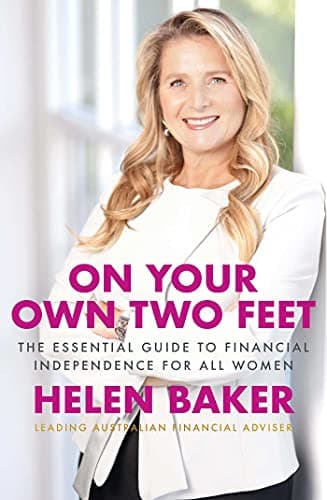
On Your Own Two Feet
Helen Baker
On Your Own Two Feet
An Aussie financial planner's essential guide to money independence for women, covering every life stage from single to separated. Warm, practical and genuinely on your side.
Some links above are affiliate links. If you buy through them, Snowball Invest may earn a small commission at no extra cost to you. We only recommend books we'd suggest anyway.
Sources
- ATO, working from home expenses
- ATO, car expenses
- ATO, instant asset write-off
- ASIC Moneysmart, running a business
General information only, not tax advice. It does not take your circumstances into account. Rates, thresholds and rules change each year, so verify current figures with the ATO or a registered tax agent before claiming.
Was this article useful?
Put it to your own numbers
Every calculator runs entirely in your browser, with nothing stored. See what these numbers look like for your own situation.
Try the Sole Trader Tax calculator →General information only. This article is educational and does not constitute personal financial advice. It does not account for your circumstances. Consider your own situation and seek advice from a licensed adviser before acting. Read our full disclaimer.

Timothy Hirou Gaschereau
Founder of Snowball Invest, not a financial adviser.
I write about what I'm learning myself, because nobody ever taught us how to take control of our own money. It's a skill, not a mystery, and it's never too late to learn it. The best day to start was yesterday, the second best is today.
LinkedIn →Related articles
How to Reactivate a Cancelled ABN in Australia
Your ABN was cancelled? Here is exactly how to reactivate an ABN in Australia step by step through the Australian Business Register, and what to sort out after.
How to Pay Yourself as a Sole Trader in Australia
As a sole trader you take drawings, not a wage. How paying yourself actually works, why you are taxed on profit, super, and setting money aside for tax.

How to Cancel Your ABN in Australia
Closing or changing your business? How to cancel your ABN in Australia, what to finalise first (BAS, tax, GST, PAYG), doing it online, and what happens after.