

How to Become a Sole Trader in Australia: Step-by-Step
There is no formal registration to become a sole trader. The step-by-step to start right: TFN, a free ABN, a business name, GST, banking and your tax obligations.
 By Timothy Hirou GaschereauPublished
 10 min read
Try it yourself
Going out on your own is exciting, and the good news is that becoming a sole trader in Australia is far less intimidating than most people expect. It is the simplest, cheapest business structure there is, and for freelancers, tradies, consultants and side hustlers it is almost always where you start.
Here is exactly how to set yourself up properly, step by step, from your ABN to tax to insurance.
🎯 The essential: There is no formal "registration" to become a sole trader: you simply start operating, but you should get the right registrations. Get a free ABN and quote it on every invoice (or clients must withhold 47%), register a business name with ASIC only if you trade under a name other than your own, and register for GST if your turnover is or will be $75,000+. You and the business are the same legal entity, so you keep all the profit, are personally liable for all debts, and are taxed at individual marginal rates. Arrange your own super and the right insurance.
What is a sole trader?
A sole trader is the simplest and cheapest business structure in Australia: no separate legal entity, no ASIC annual review fees, no complex paperwork. You and the business are the same legal entity, so you have full control and keep all the profits. The trade-off is that you are personally liable for all business debts and claims, so your personal assets are on the line, and you pay tax at individual marginal rates rather than a flat company rate. It is the right call for the vast majority of people just getting going.
Do you need to register as a sole trader?
Here is the bit that surprises people: there is no formal registration process to become a sole trader. You become one simply by starting to operate a business. What you do register for are the specific things below (an ABN, sometimes a business name, and GST if you hit the threshold), but there is no government form that says "I am now a sole trader". Compare that to a company, which needs ASIC registration, directors and ongoing compliance.
The setup, step by step
- Get a Tax File Number (TFN) if you do not already have one (most residents do). It is free from the ATO and you need it to apply for your ABN.
- Apply for a free ABN at abr.gov.au (about 15 minutes). Quote it on every invoice, because without it clients are legally required to withhold 47% of your payment. See the ABN guide if yours lapsed.
- Register a business name with ASIC only if you want to trade under a name other than your own legal name ("Jane Smith" needs none; "Bright Spark Electrical" does). It costs about $47 for one year or $108 for three, and note a business name gives no legal protection.
- Register for GST if your annual turnover is or will be $75,000 or more (or register voluntarily to claim GST credits). Then you charge 10% and lodge a BAS.
- Open a separate bank account and start simple bookkeeping from day one; see do you need a business bank account.
- Issue proper invoices and keep records for five years; our invoicing guide covers the required fields.
Your tax and super
You report all business income in your individual tax return (not a separate business return) and pay tax on your net income at individual marginal rates plus the Medicare levy. Once your tax bill passes a threshold the ATO puts you on PAYG instalments (quarterly prepayments that prevent a nasty lump sum), so set aside roughly 30 to 40% of net income from the start.
No one pays super for you, but you can make voluntary concessional contributions (up to the $32,500 cap for 2026-27) and claim a tax deduction for them, taxed at just 15% inside super, which is one of the smartest tax moves a sole trader can make. Our paying yourself guide and deductions guide cover the money side in depth.
Insurance to consider
Because you have unlimited personal liability, insurance is essential risk management even though it is rarely legally required. Public liability covers injury or property damage caused by your work (essential for tradies and anyone visiting or hosting clients). Professional indemnity covers claims that your advice or services caused a financial loss (essential for consultants, designers, IT and similar). Income protection replaces part of your income if illness or injury stops you working, which matters because a sole trader has no sick leave at all; premiums are generally tax-deductible.
Sole trader vs company: the honest comparison
| Sole trader | Company (Pty Ltd) | |
|---|---|---|
| Setup cost | Free ($47-$108 for a name) | ~$597 ASIC fee |
| Ongoing compliance | Minimal (individual return) | Annual review + company return |
| Tax rate | Individual marginal rates | 25% or 30% |
| Personal liability | Unlimited | Generally limited |
| Best for | Starting out, lower income | Higher income, higher risk, growth |
Most people overthink this. Start as a sole trader, get moving, and revisit a company once you are consistently earning above roughly $100,000 or your work carries real liability risk. Our sole trader vs company guide digs into the numbers.
Frequently asked questions
Do I need to register to become a sole trader in Australia?
+
No, there is no formal registration. You become a sole trader simply by starting to operate a business. You do need to register for an ABN, and possibly a business name and GST, but there is no 'sole trader registration' as such.
How much does it cost to become a sole trader?
+
Getting an ABN is free, and GST registration is free. A business name costs about $47 for one year or $108 for three years (from 1 July 2026). So the total cost to start can be $0 if you trade under your own legal name.
Can I have a full-time job and be a sole trader at the same time?
+
Yes. Many sole traders run their business alongside employment. You declare all income, both employment and business, in your individual tax return. Be mindful that combining income streams can push you into a higher tax bracket.
Do sole traders pay GST?
+
Only if your annual turnover is $75,000 or more, or you choose to register voluntarily. Below that threshold you do not need to register, collect or remit GST, though voluntary registration can make sense if your clients are GST-registered businesses.
Do I need to pay myself super as a sole trader?
+
No, you are not legally required to. But you can make voluntary concessional contributions (up to $32,500 for 2026-27) and claim a tax deduction for them, which is a smart long-term strategy since it is taxed at just 15% inside super.
What is the difference between a sole trader and a company?
+
A sole trader is not a separate legal entity, so you and the business are the same, taxed at individual rates, with unlimited personal liability. A company (Pty Ltd) is a separate entity with its own tax rate (25 to 30%) and limited liability, but it costs more to set up and run.
What happens if my sole trader business makes a loss?
+
You may be able to offset the loss against other income, such as your salary, under the non-commercial loss rules. Those rules are complex and depend on your income level and the nature of the business, so a registered tax agent can help you apply them correctly.
Keep reading
Books worth reading
📚 Recommended reading
The Barefoot Investor
Scott Pape

The Barefoot Investor
Australia's best-selling money book ever. A simple system for accounts, budgeting, debt and a real emergency fund in one.
Making Money Made Simple
Noel Whittaker

Making Money Made Simple
Australia's classic, comprehensive money guide covering tax, super and investing, updated for today.
On Your Own Two Feet
Helen Baker
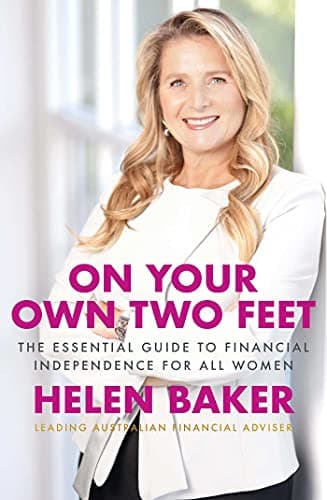
On Your Own Two Feet
An Aussie financial planner's essential guide to money independence for women, covering every life stage from single to separated. Warm, practical and genuinely on your side.
Some links above are affiliate links. If you buy through them, Snowball Invest may earn a small commission at no extra cost to you. We only recommend books we'd suggest anyway.
Sources
- Australian Business Register, applying for an ABN
- ATO, starting a business
- business.gov.au, register a business name
- business.gov.au, types of business insurance
General information only, not financial, legal or tax advice. It does not take your circumstances into account. Fees, thresholds and rules change, so verify current details with the ATO, ABR and ASIC or a registered tax agent before acting.
Was this article useful?
Put it to your own numbers
Every calculator runs entirely in your browser, with nothing stored. See what these numbers look like for your own situation.
Try the Sole Trader Tax calculator →General information only. This article is educational and does not constitute personal financial advice. It does not account for your circumstances. Consider your own situation and seek advice from a licensed adviser before acting. Read our full disclaimer.

Timothy Hirou Gaschereau
Founder of Snowball Invest, not a financial adviser.
I write about what I'm learning myself, because nobody ever taught us how to take control of our own money. It's a skill, not a mystery, and it's never too late to learn it. The best day to start was yesterday, the second best is today.
LinkedIn →Related articles
How to Reactivate a Cancelled ABN in Australia
Your ABN was cancelled? Here is exactly how to reactivate an ABN in Australia step by step through the Australian Business Register, and what to sort out after.

How to Cancel Your ABN in Australia
Closing or changing your business? How to cancel your ABN in Australia, what to finalise first (BAS, tax, GST, PAYG), doing it online, and what happens after.

How Long Does It Take to Get an ABN in Australia?
Most online ABN applications are approved instantly. When it is not, why the ABR holds it for review, how long that takes, and how to speed things up.