

Sole Trader vs Company in Australia: Which Structure Is Right for You?
Sole trader or company? We break down the tax, liability, cost and admin differences so you can choose the right business structure in Australia.
 By Timothy Hirou GaschereauPublished
 13 min read
You have decided to go out on your own. Brilliant. Then someone asks: "So, are you a sole trader or a company?" And suddenly a decision that felt simple comes with a tax lecture attached.
It does not have to be hard. The difference comes down to a handful of things: legal separation, tax rates, liability, and how much admin you are willing to stomach. Here they are in plain English. One note upfront: trusts are a third common structure and can be genuinely useful, but they are a separate topic, so this article stays on the sole trader vs company question.
🎯 The essential: A sole trader and their business are the same legal entity; a company (Pty Ltd) is separate. Sole traders pay personal marginal rates (up to 45% plus the 2% Medicare levy); companies pay a flat 25% for most small businesses, but you still pay top-up tax when you take money out personally. Sole traders carry unlimited personal liability; companies offer limited liability with important exceptions. A company costs more to run. The right choice depends on your profit, risk and goals, so get an accountant's advice before deciding.
What is a sole trader?
A sole trader is the simplest structure and the most common starting point. The key thing: you and the business are the same legal entity. You trade under your own ABN, you do not register with ASIC, you keep all the profit, and you carry all the risk personally. Your business profit is added to your personal income and taxed at your marginal rate. Our sole trader tax guide covers how that works, plus GST and deductions.
A few things that surprise people: a sole trader can register a business name and can have employees, but cannot have a co-owner (for that you need a partnership or company). The structure suits people starting out, testing an idea, freelancing, or running a low-risk business.
What is a company (Pty Ltd)?
A proprietary limited company (Pty Ltd) is a separate legal entity from you. It has its own TFN and ABN, earns income, pays its own tax, owns assets, and signs contracts in its own name. You are usually both a director (you run it, with legal duties under the Corporations Act) and a shareholder (you own it through shares). The company can pay you as salary (deductible to the company, taxed to you personally) or as a franked dividend (a distribution of after-tax profit with franking credits attached). That separation is the source of both the tax and liability differences, and of the extra admin: companies register with ASIC and must keep proper records and lodge annual reviews.
The tax difference (the big one)
As a sole trader, your profit is taxed at personal marginal rates, up to 45% plus the 2% Medicare levy on the top slice. A company pays a flat 25% if it is a base rate entity (aggregated turnover under $50m and no more than 80% passive income), which covers most small businesses, otherwise 30%.
That flat 25% sounds like a huge win, and it can be, but it is not free money. When the company distributes profit to you as a franked dividend, the franking credit represents the 25% already paid, and you pay top-up tax to reach your personal marginal rate. The genuine benefit is the ability to retain profit inside the company at 25% to reinvest, rather than drawing it all out and paying up to 47% personally in the year it is earned.
Worked example: on $200,000 profit, a company pays $50,000 (25%) tax. Pay yourself a $120,000 salary (a company deduction) and the remaining $80,000 stays in the company taxed at just 25%, ready to reinvest. As a sole trader, that top slice would have been taxed at 37% to 45% immediately. The advantage is deferral: you pay the top-up later if and when you draw it out.
Legal liability
As a sole trader, you and the business are one, so a judgment against the business is a judgment against you personally, and your home, savings and car are exposed. A company is a separate entity, so shareholders generally lose only what they invested. That is the "limited" in proprietary limited.
But the exceptions matter a lot. Banks and landlords often require personal guarantees, which make you personally liable regardless of the company. The ATO can issue director penalty notices making directors personally liable for unpaid PAYG, super guarantee and net GST. And insolvent trading (letting a company incur debts it cannot pay) exposes directors personally. Limited liability matters most when there is real risk of being sued (trades, professional services, products, employees) or significant business debt.
Setup and running costs
| Sole trader | Company (Pty Ltd) | |
|---|---|---|
| Registration | ABN, free | ~$636 ASIC fee |
| Annual ASIC review | None | ~$342 a year |
| Tax return | One personal return | Company return (~$1,500-$3,000) |
| Bookkeeping / compliance | Minimal | $500-$2,000+ a year |
| Total annual overhead | Very low | ~$2,000-$5,000+ |
The bottom line: a company costs meaningfully more every year, and that overhead only makes sense once the tax or liability benefits clearly outweigh it. Earning $60,000 profit and spending $3,000 a year on company compliance is a hard sell.
Other differences worth knowing
- Credibility and investors. Some larger clients prefer dealing with a company, and only a company can issue shares to bring in co-owners or investors. A sole trader cannot have co-owners at all.
- Super. Both arrange their own, but a company must pay the 12% super guarantee (from 1 July 2025) on a director's salary, whereas a sole trader contributes voluntarily.
- Losses. A sole trader may offset business losses against other personal income (subject to the ATO's non-commercial loss rules); company losses are trapped in the company and only offset future company profits. Early-stage, loss-making ventures can be more tax-efficient as a sole trader.
- Asset protection and estate planning. A company can separate business from personal assets and its shares transfer more cleanly, which matters more as the business grows in value.
Sole trader vs company, side by side
| Feature | Sole trader | Company (Pty Ltd) |
|---|---|---|
| Legal status | Same entity as you | Separate legal entity |
| Tax rate | Personal (up to 45% + Medicare) | Flat 25% (or 30%) |
| Liability | Unlimited personal | Limited (with exceptions) |
| Setup cost | Near zero | ~$636 ASIC |
| Ongoing admin | Minimal | Significant |
| Losses | Offset personal income | Trapped in company |
| Best for | Starting out, low risk | Higher profit, real risk, growth |
When does a company make sense? The switch point
Stick with sole trader if you are starting out or testing an idea, your profit is modest (roughly under $100,000), your liability risk is low (a freelancer with no employees or products), you want to keep things cheap and simple, or you expect early losses to offset against other income.
Consider a company when your profit consistently exceeds what you need to draw (so you can retain and reinvest at 25%), your liability risk is real, you want to bring in investors or co-owners, credibility with larger clients is affecting your work, or you are planning to sell the business.
Many accountants float the $100,000 to $120,000 profit mark as the point a company starts to pay off, but it is a rough guide, not a rule, because your full tax picture matters. And yes, you can switch from sole trader to company, but it involves registering the company, transferring assets (with possible CGT and stamp duty), and updating contracts and registrations, so make that call with an accountant, not on a Sunday afternoon with a coffee and a search engine.
Frequently asked questions
Is it better to be a sole trader or company in Australia?
+
Neither is universally better. A sole trader is simpler and cheaper and suits most people starting out. A company makes more sense once your profit is high enough that retaining money inside it at 25% saves real tax, or when your liability risk is significant. The right choice depends on your specific situation.
How much profit before I should start a company?
+
Many accountants use a rough guide of $100,000 to $120,000 in annual business profit as the point where a company starts to make financial sense. Below that, compliance costs often outweigh the tax benefit; above it, the tax-deferral advantage can be meaningful. It is a guide, not a rule, so talk to a registered tax agent.
Can I change from sole trader to company?
+
Yes, but it is more involved than it sounds. You register a new company, transfer assets (with potential CGT and stamp duty implications), update all contracts and registrations, and manage the transition carefully. An accountant is essential for this process.
Do companies pay less tax than sole traders?
+
In the year the profit is earned, a company pays 25% (for most small businesses) while a sole trader can pay up to 47% on the top slice. But when you take the money out as a dividend, franking credits mean the total tax is roughly your personal marginal rate. The real advantage is retaining profits inside the company at 25% to reinvest, rather than paying the full personal rate immediately.
Sole trader vs Pty Ltd for a contractor: which is better?
+
For most contractors starting out, a sole trader is simpler and cheaper. A company can make sense if your rates are high enough to generate profit above your personal needs, if you have genuine liability risk, or if clients require a company. Be aware of the ATO's personal services income (PSI) rules, which can affect how contractors are taxed regardless of structure.
What are the main risks of being a sole trader?
+
The biggest risk is unlimited personal liability: if the business is sued or cannot pay its debts, your personal assets are exposed. The second is tax: at higher income levels you pay personal marginal rates on every dollar of profit, with no ability to retain earnings at a lower rate.
Do I need an accountant to set up a company?
+
Legally no, you can register through the Business Registration Service at register.business.gov.au. But practically yes: an accountant helps you set up correctly, understand your director obligations, and structure salary and dividends efficiently, which avoids expensive mistakes later.
Keep reading
Books worth reading
📚 Recommended reading
The Barefoot Investor
Scott Pape

The Barefoot Investor
Australia's best-selling money book ever. A simple system for accounts, budgeting, debt and a real emergency fund in one.
Sort Your Money Out and Get Invested
Glen James
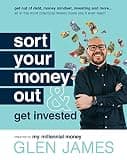
Sort Your Money Out and Get Invested
From the host of the my millennial money podcast, a step-by-step Aussie plan to fix your spending, clear debt and actually start investing. Practical and refreshingly free of finance-bro nonsense.
Girls That Invest
Simran Kaur
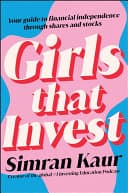
Girls That Invest
A no-jargon crash course from the podcaster behind Girls That Invest that makes the sharemarket feel doable, written especially for women starting out. The perfect first step before you buy your first ETF.
Some links above are affiliate links. If you buy through them, Snowball Invest may earn a small commission at no extra cost to you. We only recommend books we'd suggest anyway.
Sources
- ATO, Business structures, ato.gov.au
- ATO, Company tax rates, ato.gov.au
- business.gov.au, Business structures
- ASIC, Register a company, asic.gov.au
- ATO, Non-commercial losses, ato.gov.au
General information only, not personal, tax or legal advice. Tax laws and ASIC fees change regularly. Verify current figures with the ATO and ASIC and speak to a registered tax agent or accountant before deciding.
Was this article useful?
Put it to your own numbers
Every calculator runs entirely in your browser, with nothing stored. See what these numbers look like for your own situation.
Explore the calculators →General information only. This article is educational and does not constitute personal financial advice. It does not account for your circumstances. Consider your own situation and seek advice from a licensed adviser before acting. Read our full disclaimer.

Timothy Hirou Gaschereau
Founder of Snowball Invest, not a financial adviser.
I write about what I'm learning myself, because nobody ever taught us how to take control of our own money. It's a skill, not a mystery, and it's never too late to learn it. The best day to start was yesterday, the second best is today.
LinkedIn →Related articles

Sole Trader Tax in Australia: How Much Will You Actually Pay?
There is no special sole trader tax rate in Australia: your profit is taxed at personal marginal rates. Here is how it works, plus GST, deductions and a tax buffer.
How to Reactivate a Cancelled ABN in Australia
Your ABN was cancelled? Here is exactly how to reactivate an ABN in Australia step by step through the Australian Business Register, and what to sort out after.

How to Pay Yourself as a Sole Trader in Australia
As a sole trader you take drawings, not a wage. How paying yourself actually works, why you are taxed on profit, super, and setting money aside for tax.