

Budget Planner Template: The Complete Australian Guide
Use a budget planner template to take control of your money. Includes a 50/30/20 worked example, a step-by-step guide, and free Australian tools.
 By Timothy Hirou GaschereauPublished
 9 min read
Try it yourself
You know you should have a budget. You've known for a while. The problem isn't motivation, it's not knowing where to start. This guide gives you a proper budget planner template framework, a worked dollar example, and a clear step-by-step process so you can stop guessing and actually see where your money goes. It's part of our saving and budgeting series.
🎯 The essential: A budget planner template is a structured way to track income, expenses, and savings in one place. Use your net (after-tax) pay, split costs into fixed, variable, and savings buckets, and review it every month. The 50/30/20 rule is a solid starting point. Free Australian options include ASIC's MoneySmart Budget Planner and Google Sheets.
What is a budget planner template (and why you need one)
A budget planner template is a pre-built structure (spreadsheet, app, or paper form) that organises your income and expenses into categories so you can see exactly what's coming in, what's going out, and what's left over. The key word is structure. A vague intention to “spend less” doesn't work. A system does. Filling one in properly is much easier once you know how to track your spending so the numbers reflect reality.
Why a template beats winging it:
- It forces you to confront every expense, including the ones you'd rather forget.
- It turns an abstract goal (“save more”) into a concrete number (“save $400 this month”).
- It creates a reference point so you can spot when something's gone sideways.
What a good budget template includes
A solid monthly budget template covers six areas. Skip any one of them and your numbers won't add up.
- Income. Always use your net income, the amount that actually lands in your account after tax and compulsory super. Australian pay cycles are mostly fortnightly, so if you budget monthly, use annual net income divided by 12 to keep things consistent.
- Fixed costs. The non-negotiables that hit every month at roughly the same amount: rent or mortgage, insurance premiums, loan repayments, phone and internet.
- Variable costs. Predictable categories that change month to month: groceries, petrol or transport, dining out, entertainment, clothing and personal care.
- Savings. Treat savings as a fixed expense, not an afterthought. Emergency fund first (3 to 6 months of expenses in a high-interest savings account), then short-term goals.
- Sinking funds. Money set aside each month for irregular but predictable expenses: car rego, annual insurance renewal, Christmas, the dentist. Instead of a $900 rego bill blindsiding you in July, you've saved $75 a month all year.
- Super contributions. Employer SG contributions (12% of ordinary earnings) happen automatically. But salary sacrifice contributions come out of pre-tax pay, so note them so nothing looks “missing.”
- How to build a budget in Excel, step by step
The 50/30/20 budget method explained
The 50/30/20 budget splits your after-tax income into three buckets:
- 50% Needs: rent, groceries, utilities, transport, insurance, minimum debt repayments
- 30% Wants: dining out, streaming, gym, clothing, entertainment, hobbies
- 20% Savings and debt repayment: emergency fund, investing, extra debt repayments
It's simple, which is exactly why it works as a starting framework. It's not gospel, though. If you're renting in Sydney or Melbourne, your “needs” bucket might legitimately eat 60% of your income, and that's a housing market problem, not a budgeting failure. Adjust the percentages to fit your reality.
Here's how the 50/30/20 rule looks on a $5,500 monthly take-home pay:
| Bucket | Item | Amount |
|---|---|---|
| Needs (50% = $2,750) | Rent | $1,600 |
| Groceries | $400 | |
| Utilities | $150 | |
| Transport | $300 | |
| Insurance | $300 | |
| Wants (30% = $1,650) | Dining out | $300 |
| Streaming and subscriptions | $50 | |
| Gym | $60 | |
| Clothing | $200 | |
| Entertainment | $200 | |
| Personal care | $100 | |
| Miscellaneous buffer | $740 | |
| Savings and debt (20% = $1,100) | Emergency fund | $400 |
| Investment / ETF | $400 | |
| Extra debt repayment | $300 | |
| Total | $5,500 |
Notice the miscellaneous line in Wants. That's not laziness, it's a buffer for the random stuff that doesn't fit neatly into a category. Every real budget needs one. If your numbers don't land perfectly on 50/30/20, that's fine. Use it as a compass, not a straitjacket.
How to fill in your budget template step by step
Learning how to make a budget is mostly about being honest with yourself. Here's the process, in order.
- Step 1: Calculate your real take-home pay. Find the net figure on your payslip, after income tax, Medicare levy, and any salary sacrifice. Paid fortnightly? Multiply by 26 and divide by 12 for the monthly equivalent. Our salary calculator can help.
- Step 2: List every fixed expense. Go through your bank statements and list every recurring charge. Be thorough, it's easy to forget that annual subscription you never cancelled.
- Step 3: Estimate variable expenses. Don't guess. Pull up three months of statements and average out groceries, petrol, and dining out. Three months smooths out the odd expensive month.
- Step 4: Assign savings goals. Emergency fund first, always. Once you have a buffer, redirect toward investing or a house deposit.
- Step 5: Check the maths. Income minus all expenses (including savings) should equal zero or be positive. A zero-based budget means every dollar has a job.
- Step 6: Review monthly. Life changes, so revisit your numbers at the start of each month and compare planned versus actual. Ten minutes a month is enough.
Digital vs paper vs app: which format works best?
There's no single right answer. The best format is the one you'll actually open.
- Spreadsheet (Excel or Google Sheets). The most flexible option and completely free. Build a budget spreadsheet with fortnightly pay columns and custom sinking-fund trackers. Best for people who like to customise.
- Paper or notebook. Tactile, zero distraction, and surprisingly effective for visual learners. The downside: no automatic calculations and easy to lose.
- Budgeting apps. Australian-built options like Frollo and WeMoney link to your bank accounts and auto-categorise transactions. ASIC's MoneySmart Budget Planner is free, government-backed, and supports weekly, fortnightly, and monthly pay cycles. If your priority is tracking actual spending rather than planning it, compare the best spending tracker apps in Australia.
Start with the MoneySmart Budget Planner or a simple Google Sheets template. Add complexity only when you need it. The best budget is the one you'll keep using.
Common budgeting mistakes to avoid
Most budgets fail for the same handful of reasons. Knowing them in advance puts you ahead.
- Forgetting irregular expenses. Car rego, dentist, Christmas, annual insurance renewals. Build sinking funds for them and they stop being emergencies.
- Using gross income instead of net. You can't spend money that's already gone to the ATO.
- Setting an impossibly tight budget. If your budget allows $50 a month for groceries, you're setting yourself up to quit. Build in realistic amounts, including a buffer.
- Never reviewing it. A budget you set in January and never touch is useless by March.
- Treating savings as optional. Savings go in first, before discretionary spending. This is the pay-yourself-first principle: automate a transfer on pay day and don't think about it.
The bottom line: a budget planner template isn't about restriction, it's about clarity. Use net income, split it into buckets, give every dollar a job, and review it monthly. Pair it with a bit of delayed gratification and the results compound. Start today with our budget calculator or the free MoneySmart planner.
SnowLetter
Australia's money news and our best reads, once a week.
❓ Frequently asked questions
Is the 50/30/20 rule realistic in Australia right now?
+
It depends heavily on where you live and what you earn. In Sydney and Melbourne, rent alone can consume 35 to 50% of take-home pay for many renters, which blows the 50% needs cap before you've bought a single bag of groceries. The rule is most useful as a starting framework: if your needs genuinely exceed 50%, use that as a signal to look at housing costs or income, not as a reason to abandon budgeting altogether.
What's the difference between a budget planner and a budget tracker?
+
A budget planner sets your spending targets in advance (what you plan to spend). A budget tracker records what you actually spent. The best approach combines both: plan at the start of the month, track throughout, and compare at the end. Some apps and spreadsheets do both in one place.
Can I use a fortnightly budget template instead of monthly?
+
Absolutely. Most Australians are paid fortnightly, so a fortnightly budget often feels more natural. The MoneySmart Budget Planner supports fortnightly frequency natively. Just be aware that two months per year will have three pay periods, a nice bonus if you've planned for it.
What if my expenses are higher than my income?
+
First, check you're using net income and not gross. If the numbers are still negative, you have two levers: reduce expenses or increase income. Start with the obvious discretionary items (subscriptions, dining out, streaming) before touching essentials. If the gap is significant and persistent, the Moneysmart managing your money page has practical guidance and links to free financial counselling services.
Do I need to budget if I'm already saving money?
+
Yes, and here's why: saving money doesn't mean you're saving enough, or saving toward the right things. A budget tells you whether your current savings rate aligns with your actual goals (house deposit, emergency fund, retirement) or whether you're just saving whatever's left over by accident.
Where can I find a free Australian budget planner?
+
The best free option is ASIC's MoneySmart Budget Planner. It's government-built, supports Australian pay cycles, works online, and has an Excel download for offline use. Google Sheets is another solid free option if you want to build your own from scratch.
📚 Recommended reading
The Barefoot Investor
Scott Pape

The Barefoot Investor
Australia's best-selling money book ever. A simple system for accounts, budgeting, debt and a real emergency fund in one.
Making Money Made Simple
Noel Whittaker

Making Money Made Simple
Australia's classic, comprehensive money guide covering tax, super and investing, updated for today.
She's on the Money
Victoria Devine
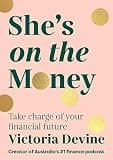
She's on the Money
Written for millennials, walks through budgeting, clearing debt, saving, investing and buying property with real stories.
Some links above are affiliate links. If you buy through them, Snowball Invest may earn a small commission at no extra cost to you. We only recommend books we'd suggest anyway.
Sources
This article is general information only, not financial advice. The worked example uses illustrative figures and your own budget will differ. Consider your personal circumstances and speak with a licensed financial adviser or free financial counsellor if you need help.
Was this article useful?
Put it to your own numbers
Every calculator runs entirely in your browser, with nothing stored. See what these numbers look like for your own situation.
Try the Budget Planner calculator →General information only. This article is educational and does not constitute personal financial advice. It does not account for your circumstances. Consider your own situation and seek advice from a licensed adviser before acting. Read our full disclaimer.

Timothy Hirou Gaschereau
Founder of Snowball Invest, not a financial adviser.
I write about what I'm learning myself, because nobody ever taught us how to take control of our own money. It's a skill, not a mystery, and it's never too late to learn it. The best day to start was yesterday, the second best is today.
LinkedIn →Related articles
ATM Withdrawal Limits in Australia
Confused about ATM withdrawal limits in Australia? What the ATM lets out, what your bank allows daily, and how to get more cash when you need it.

What Is a Cash Budget?
A cash budget is a simple plan for your money in and out. How to build one, an example, and how to actually stick to it. Not financial advice.

How to Make a Budget in Excel (Step by Step)
Build a simple monthly budget in Excel or Google Sheets from scratch. A step-by-step guide with the key formulas, a worked example, and tips.