

The Super Gender Gap: Why Women Retire With Less (And How to Fix It)
Australian women retire with about 25% less super than men. Here's why the super gender gap exists and exactly how to close it, strategy by strategy.
 By Timothy Hirou GaschereauPublished
 10 min read
Try it yourself
Here's a number worth sitting with: Australian women retire with roughly 25% less superannuation than men. Not because they're less capable of saving, but because the system was built around a working life that most women don't have. The good news? The gap isn't inevitable. This guide covers how big it is, why it exists, and exactly what you (and your partner, if you have one) can do about it. It's part of our money and relationships series.
🎯 The essential: Australian women retire with about 25% less super than men, driven by the gender pay gap, career breaks, and part-time work. Compounding turns small early gaps into large ones. Practical fixes include spouse contributions, contribution splitting, carry-forward contributions, the government co-contribution, and super now paid on government parental leave from July 2025.
How big is the super gender gap?
The numbers are stark. The median super balance for women approaching retirement is around $157,000, compared to roughly $211,000 for men. That's a gap of around $54,000, or roughly 25% less super for women at the point when they need it most. For women who took career breaks, worked part-time for extended periods, or spent years in casual employment, the gap is often significantly wider.
This is not a minor inconvenience. A $54,000 shortfall at retirement represents years of reduced income, and for many women it's the difference between financial independence and relying on the Age Pension as a primary income source. The super gender gap is a retirement income crisis hiding in plain sight.
Why do women retire with less super?
There's no single cause. The gap is the result of several compounding disadvantages that stack on top of each other across a working life.
- The gender pay gap. Australia's national gender pay gap sat at around 21.8% in 2024, meaning women earn roughly 78 cents for every dollar a man earns. Super is 12% of your salary, so 12% of less is less. The pay gap feeds directly into the super gap with every pay cycle.
- Career breaks for caregiving. Women take significantly more time out of paid work to care for children or family. During those years, super contributions stop, and a two-year break at 32 costs not just two years of contributions but the compounding growth on them for 30-plus years.
- Part-time and casual work. Women are more likely to work part-time or casually, meaning lower earnings and lower contributions. One historical barrier is gone: the $450 per month minimum earnings threshold was abolished on 1 July 2022, so every eligible dollar now attracts super.
- No super on parental leave (until now). For years, government-funded Parental Leave Pay didn't attract super. That changed on 1 July 2025: eligible parents now receive super at the 12% SG rate, paid by Services Australia. For a full 22-week leave, that's an estimated $3,000 added to super.
Why compounding makes early gaps enormous
Compounding is the process of earning returns on your returns. It turns small amounts into large ones over decades. It also turns small gaps into large ones. Suppose a career break or pay gap leaves a $10,000 shortfall in your super at age 30. At an assumed long-run return of 7% per annum, that $10,000 would have grown to approximately $107,000 by age 65.
So a $10,000 gap at 30 becomes a $107,000 gap at 65. The money missing from your super at 30 isn't just $10,000 missing at retirement, it's $107,000 missing. That's why the strategies below are worth acting on sooner rather than later. You can see the effect for yourself with our compound interest calculator.
How to close the gap: practical strategies
None of these require a financial degree. Most can be set up with a phone call to your super fund or a few minutes on MyGov.
- Spouse contributions and the tax offset. If your partner earns more, they can make an after-tax contribution into your super. If you earn under $37,000, the contributing partner gets an 18% tax offset on contributions up to $3,000 (a maximum offset of $540), phasing out by $40,000.
- Contribution splitting. The higher-earning partner can split up to 85% of their concessional (before-tax) contributions into their partner's super, helping equalise balances over time.
- Carry-forward concessional contributions. If your total super balance is under $500,000, you can use unused concessional cap space from the past five years in a single year, on top of the current $32,500 cap. Powerful for women returning from a career break. See our guide to contribution caps.
- The government co-contribution. Earn under $64,293 and make a personal after-tax contribution, and the government matches it with up to $500. The full $500 applies under $49,293 if you contribute at least $1,000. It's essentially free money.
- Super on government parental leave (from July 2025). Parents receiving government Parental Leave Pay now also receive super at 12%, paid automatically by Services Australia. Also consider salary sacrifice when you're back at work.
Closing the gap as a couple
Super is often treated as an individual asset. In practice, for couples, it's a household asset, and thinking about it that way opens up a lot of options. If one partner has a significantly larger balance (usually the male partner in heterosexual couples), contribution splitting and spouse contributions can rebalance the household's total super over time. This matters for tax efficiency in retirement, for Age Pension calculations, and for financial resilience if the relationship changes. If a relationship does end, super accumulated during it can be split as part of a property settlement.
A checklist for couples this financial year: check both super balances and the gap; if the lower earner is under $40,000, consider a spouse contribution before 30 June; if the higher earner has unused concessional cap space, consider contribution splitting; and if the lower earner is under $64,293 and makes a personal contribution, check co-contribution eligibility. None of these need a financial adviser.
Strategies at a glance
| Strategy | What it is | Best for |
|---|---|---|
| Spouse contributions | Partner contributes after-tax money into your super | Lower-earning spouses under $40,000 (offset up to $540) |
| Contribution splitting | Higher earner splits up to 85% of concessional contributions to partner | Couples with unequal balances |
| Carry-forward concessional | Use unused cap space from the past 5 years in one year | Women returning from a break, TSB under $500,000 |
| Government co-contribution | Government matches personal after-tax contributions | Earners under $64,293 (up to $500 matched) |
| Super on parental leave (from July 2025) | Super paid at 12% on government Parental Leave Pay | Parents on government Parental Leave Pay |
The bottom line: the super gender gap is real and it's structural, but it's not fixed in stone. The strategies above, acted on early and consistently, can close a meaningful chunk of it. Treat super as a household project, use the government incentives on offer, and don't assume it's ever too late to start.
SnowLetter
Australia's money news and our best reads, once a week.
❓ Frequently asked questions
Can I contribute to my partner's super?
+
Yes. You can make after-tax (non-concessional) contributions directly into your partner's super fund. This is called a spouse contribution. If your partner earns under $40,000, you may also be eligible for an 18% tax offset on contributions up to $3,000. Check with your partner's super fund for their contribution form or bank transfer details.
What if I took years off work and have almost no super?
+
You are not out of options. If your total super balance is under $500,000, carry-forward concessional contributions let you use unused cap space from the past five years to make a larger before-tax contribution in a single year. If you are now earning under $64,293, the government co-contribution can also add up to $500 for every $1,000 you contribute personally. Start with what you can, and build from there.
Does the $450 per month earnings threshold still apply?
+
No. The $450 per month minimum earnings threshold for super was abolished on 1 July 2022. All eligible employees now receive super contributions on every dollar they earn, regardless of how small the amount. If you are in casual or part-time work, your employer is required to pay super on your earnings.
Is super on parental leave automatic from July 2025?
+
Yes, for parents receiving government Parental Leave Pay from 1 July 2025. Services Australia pays the super contribution directly into your nominated super fund alongside your leave payments. You do not need to apply separately. Make sure your super fund details are up to date with Services Australia before your leave starts.
What happens to super if we separate?
+
Super is treated as an asset of the relationship and can be split as part of a property settlement following separation or divorce. This can be done by agreement between the parties or by a court order. It is worth getting legal advice on this, as the rules around super splitting are specific.
Am I too late to catch up if I am in my 40s?
+
No. Your 40s are actually one of the best times to act, because you still have 20-plus years of compounding ahead of you. Carry-forward contributions, salary sacrifice, and spouse contributions can all make a meaningful difference over that timeframe. The worst thing you can do is assume it is too late and do nothing.
📚 Recommended reading
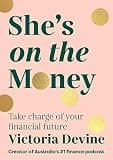
She's on the Money
Victoria Devine
She's on the Money
Written for millennials, walks through budgeting, clearing debt, saving, investing and buying property with real stories.
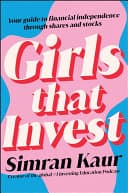
Girls That Invest
Simran Kaur
Girls That Invest
A no-jargon crash course from the podcaster behind Girls That Invest that makes the sharemarket feel doable, written especially for women starting out. The perfect first step before you buy your first ETF.
The Barefoot Investor
Scott Pape

The Barefoot Investor
Australia's best-selling money book ever. A simple system for accounts, budgeting, debt and a real emergency fund in one.
Some links above are affiliate links. If you buy through them, Snowball Invest may earn a small commission at no extra cost to you. We only recommend books we'd suggest anyway.
Sources
This article is general information only and does not constitute personal financial advice. Contribution caps, thresholds and rules change over time, so check the latest ATO guidance. Super decisions are personal, so consider your circumstances and speak with a licensed financial adviser.
Was this article useful?
Put it to your own numbers
Every calculator runs entirely in your browser, with nothing stored. See what these numbers look like for your own situation.
Try the Compound Interest calculator →General information only. This article is educational and does not constitute personal financial advice. It does not account for your circumstances. Consider your own situation and seek advice from a licensed adviser before acting. Read our full disclaimer.

Timothy Hirou Gaschereau
Founder of Snowball Invest, not a financial adviser.
I write about what I'm learning myself, because nobody ever taught us how to take control of our own money. It's a skill, not a mystery, and it's never too late to learn it. The best day to start was yesterday, the second best is today.
LinkedIn →Related articles

Cost of Having a Baby in Australia: A Realistic First-Year Budget
From hospital bills to nappies and parental leave, here is what the cost of having a baby in Australia really looks like, with current government payment rates.

How Much Does It Cost to Raise a Child in Australia?
How much does it cost to raise a child in Australia? The real numbers by age, from childcare to Year 12, plus practical ways to keep every stage on budget.

How Much to Give for a Wedding Gift in Australia
No fixed rule exists. Rough Australian cash gift ranges by relationship, plus tips for when money is tight. General info, not advice.