
How to Set Up a Family Trust in Australia (Step-by-Step)
How to set up a family trust in Australia step by step: the costs, the seven-step process, income splitting rules, and the ATO section 100A traps to avoid.
 By Timothy Hirou GaschereauPublished
 12 min read
Family trusts are one of those structures accountants love to talk about and everyone else finds slightly confusing. Done well, a family trust can save real tax dollars and protect assets. Done badly, or set up for the wrong reasons, it is an expensive headache. This guide cuts through the jargon, and it is part of our wider guide to money and relationships on Snowball Invest. General information only, not personal financial, tax or legal advice. If you are new to the concept, start with our plain-English explainer on what a family trust is.
Quick answer
A family trust (formally a discretionary trust) lets a trustee distribute income each year to family members in a tax-effective way, but it is not free or simple. Setup costs typically run $3,000 to $10,000 or more in the first year, and ongoing accounting adds $1,500 to $5,000 annually. The biggest benefit is income splitting across family members on lower marginal rates, but the ATO watches this closely under section 100A. If your household income is modest, the costs will likely outweigh the savings.
In this guide
- →What a family trust is, in plain English
- →When it genuinely makes sense, and when it does not
- →The seven-step setup process, in order
- →A realistic breakdown of setup and ongoing costs
- →How income splitting works, and why the ATO cares
🏛️ What is a family trust?
A family trust is a type of discretionary trust, the formal name you will see on your trust deed and ATO paperwork. A trustee (a person or company) holds assets on behalf of a group of beneficiaries (typically family members). Each year, the trustee decides how to distribute the trust's income among those beneficiaries. Nobody has a fixed, guaranteed entitlement to a set share. That flexibility is the whole point, and it is what makes a discretionary trust Australia's most popular private wealth structure.
⚖️ When it actually makes sense
A family trust is not a magic tax shield. It works brilliantly in some situations and is completely wrong for others.
When it can work for you. Income splitting across family members (shifting dollars from the 45% bracket to lower rates), asset protection from business creditors, estate planning flexibility, and holding investment shares or property that distribute income and franking credits each year.
When it probably does not. Low-income households (there is little tax to save), anyone relying on negative gearing (trusts cannot pass losses to individual beneficiaries, so the loss stays trapped inside the trust), people who cannot afford the setup and ongoing costs, and people who want simplicity. A trust needs annual resolutions, a separate tax return, a separate bank account and active management every single year.
🎯 The essential: A trust that costs $5,000 a year to run needs to save you more than $5,000 in tax to be worth it. Do the numbers first, with an accountant.
🛠️ How to set one up, step by step
Here is the actual process, in order.
- Step 1: Choose your trustee. An individual trustee is cheaper with no ongoing ASIC fees, but changing it can trigger stamp duty. A corporate trustee (a Pty Ltd set up to act as trustee) costs more upfront but offers cleaner asset protection and easier succession, with an ASIC annual review fee (around $329 for 2025-26, subject to change). Most accountants recommend a corporate trustee for anyone serious about asset protection.
- Step 2: Appoint a settlor. The settlor formally establishes the trust by transferring a small sum (typically $10). They must be unrelated to the trust and its beneficiaries. Often a solicitor or accountant plays this role, and once the trust is set up, their job is done.
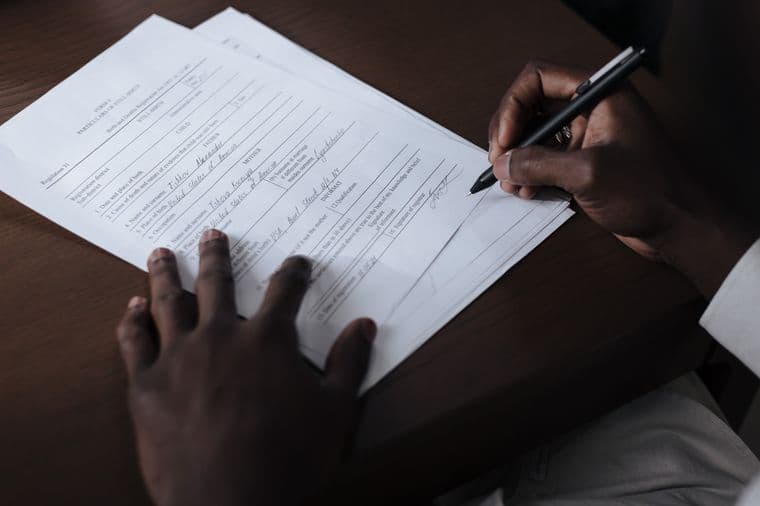
- Step 3: Draft and execute the trust deed. The founding legal document. It sets out the trustee, beneficiaries, what the trustee can invest in, and how distributions work. This is not a DIY job. Expect to pay $1,000 to $3,000 for a quality deed.
- Step 4: Appoint the appointor. Arguably the most powerful role. The appointor can sack the trustee and appoint a new one, so whoever holds it controls the trust. Make sure your deed addresses what happens when that person dies.
- Step 5: Register for an ABN and TFN. Once the deed is signed, the trust needs its own ABN and TFN through the ATO before it earns any income.
- Step 6: Open a dedicated trust bank account. Completely separate from your personal accounts, in a format like "John Smith as trustee for the Smith Family Trust." Never mix personal and trust funds.
- Step 7: Consider a family trust election. Optional but sometimes necessary, it unlocks certain tax concessions but also means distributions outside the defined family group attract a punishing tax. Understand the implications before making the election.
💰 What it costs to set up and run
Costs vary by state and complexity, so treat these as ballpark figures.
| Item | Typical cost range |
|---|---|
| Trust deed (lawyer or accountant) | $1,000 to $3,000 |
| Corporate trustee Pty Ltd setup | $1,000 to $2,000 |
| ASIC annual review fee (2025-26) | ~$329/year |
| Annual trust tax return | $500 to $2,500/year |
| Ongoing accounting and admin | $1,500 to $5,000/year |
| Total first-year ballpark | $3,000 to $10,000+ |
Always confirm current ASIC fees directly, as they are indexed annually. Tax return fees depend heavily on the complexity of the trust's investments and the number of beneficiaries.
🧾 How income splitting works
Each year, before 30 June, the trustee passes a formal resolution deciding how to distribute the trust's income among beneficiaries. There is no fixed split, and that flexibility is what makes it powerful.
Worked example (illustrative only). The Smith Family Trust earns $100,000 in investment income. If it all flowed to one person on a 37% marginal rate, the tax bill would be roughly $37,000. Instead, the trustee distributes $50,000 to an adult child who earns very little and $50,000 to a spouse on a lower rate. The combined tax bill can drop by $10,000 to $15,000 or more. The exact saving depends on each person's income, deductions and rates.
The ATO is not naive. Under section 100A, if a beneficiary is entitled to income on paper but the real benefit flows to someone else, the ATO can tax the entire amount at 47%. Distributions must reflect genuine arrangements. And if the trustee misses the 30 June resolution deadline, all undistributed income is taxed at 47%. Missing that deadline is an expensive mistake.
🚩 The downsides and traps
- Setup and ongoing costs are real. For lower-income families, the maths rarely works.
- No negative gearing. Trust losses cannot be distributed to individuals; they stay trapped inside the trust.
- Family trust election consequences. Once made, distributions outside the family group attract a special tax, and it is not easily reversible.
- Section 100A scrutiny. Paper distributions with no real economic benefit are a red flag, and the ATO has been actively auditing arrangements.
- Complexity and admin every year. Annual resolutions, a separate tax return, a separate bank account, ASIC obligations if you have a corporate trustee.
- Winding up a trust triggers CGT events. Distributing assets to beneficiaries when a trust ends can trigger capital gains tax.
⚠️ A reminder
This article is general information only and does not constitute personal financial, tax or legal advice. Every family's situation is different. Please speak with a licensed accountant or financial adviser before setting up a family trust.
SnowLetter
Australia's money news and our best reads, once a week.
❓ Frequently asked questions
How much does it cost to set up a family trust in Australia?
+
Realistically, budget $3,000 to $10,000 or more for the first year, covering the trust deed, any corporate trustee setup, and initial accounting. Ongoing annual costs (accounting, ASIC fees, tax return) typically add $2,000 to $7,000 per year depending on complexity. Always get a quote from your accountant before proceeding.
Can I be both the trustee and a beneficiary of a family trust?
+
Yes, and it is very common. You can act as individual trustee and also be listed as a beneficiary. However, if asset protection is a key reason you are setting up the trust, your accountant or solicitor should explain the implications, because being both trustee and beneficiary can reduce the protection the structure provides in some circumstances.
Do family trusts pay tax in Australia?
+
The trust itself is not a taxpayer if it distributes all of its income to beneficiaries each year. Beneficiaries pay tax on their share at their own marginal rates. If the trust retains income (or the trustee misses the 30 June distribution deadline), that undistributed income is taxed at the top marginal rate of 47%. The trust still lodges its own annual tax return with the ATO regardless.
Can a family trust own property in Australia?
+
Yes. A trust can hold investment property and distribute rental income to beneficiaries each year. However, there is no negative gearing benefit if the property runs at a loss. Land tax treatment also varies significantly by state, and some states charge a surcharge on property held in a trust. Check the rules in your state before buying property through a trust.
What is the difference between a family trust and a company?
+
A company pays a flat corporate tax rate (25% for base rate entities, 30% for others) on its profits, regardless of who owns it. A family trust distributes income to beneficiaries who pay tax at their own marginal rates, which can be lower. Trusts offer more flexibility in how income is split each year. The right answer depends entirely on your specific situation, which is why getting advice before choosing a structure matters.
📚 Recommended reading
Investopoly
Stuart Wemyss
Investopoly
Melbourne financial adviser Stuart Wemyss boils wealth-building down to 8 clear rules across property, shares and super. A calm, evidence-based playbook for Aussies who want freedom without the guesswork.
The Barefoot Investor
Scott Pape

The Barefoot Investor
Australia's best-selling money book ever. A simple system for accounts, budgeting, debt and a real emergency fund in one.
Motivated Money
Peter Thornhill
Motivated Money
Peter Thornhill's cult-favourite case for living off fully franked dividends instead of chasing capital gains. A calm, contrarian Aussie take that has quietly built a big following of long-term investors.
Some links above are affiliate links. If you buy through them, Snowball Invest may earn a small commission at no extra cost to you. We only recommend books we'd suggest anyway.
Sources
- 1. Family trusts, Australian Taxation Office
- 2. Trust tax return 2026 instructions, Australian Taxation Office
- 3. Trust taxation reimbursement agreement (section 100A), Australian Taxation Office
- 4. ABN registration, Australian Business Register
- 5. Company annual review fees, Australian Securities and Investments Commission
- 6. Trust deed definition, Moneysmart
Was this article useful?
Put it to your own numbers
Every calculator runs entirely in your browser, with nothing stored. See what these numbers look like for your own situation.
Explore the calculators →General information only. This article is educational and does not constitute personal financial advice. It does not account for your circumstances. Consider your own situation and seek advice from a licensed adviser before acting. Read our full disclaimer.

Timothy Hirou Gaschereau
Founder of Snowball Invest, not a financial adviser.
I write about what I'm learning myself, because nobody ever taught us how to take control of our own money. It's a skill, not a mystery, and it's never too late to learn it. The best day to start was yesterday, the second best is today.
LinkedIn →Related articles

What Is a Family Trust in Australia? A Plain-English Guide
What is a family trust in Australia? A plain-English guide to how income distribution works, the tax benefits, the real costs, and who a trust actually suits.

Superannuation Death Benefit Tax: Who Gets Your Super and How Much Tax They Pay
Who gets your super when you die, and how much tax do they pay? A spouse pays nothing. An adult child can pay 17%. Here's exactly how the tax works.

How to Talk to Your Parents About Money
Dreading the money talk with ageing parents? Here is how to raise wills, super and aged care calmly in Australia, without guilt or a family blow up.