
Opportunity Cost
Opportunity cost is the value of the next best thing you give up with any money choice. Here is how it quietly shapes saving, spending and investing.
 By Timothy Hirou GaschereauPublished
 6 min read
💡 What opportunity cost is
Opportunity cost is the value of the next best thing you give up when you make a choice. Your money can only do one job at a time. The moment it goes towards one thing, it is no longer available for everything else it could have done, and the best of those forgone options is the real price of your decision.
It is the most useful idea in personal finance that almost nobody was taught by name. Once you see it, you cannot unsee it, because every dollar you spend, save, invest or leave sitting in an account is quietly turning down an alternative.
The cost of a choice is not just what you pay. It is the best thing that same money or time could have done instead. Spend, and you also give up what the dollar would have become.
🔀 The choice you see, and the one you don't
Say you have $10,000 spare. The obvious cost of spending it is the $10,000. The hidden cost is the road you did not take. Left invested at an assumed 8% a year, that money would grow to roughly $21,600 over a decade. Spend it now and the true cost is the purchase plus that forgone growth, even though the second number never shows up on a receipt.
This is not an argument against ever spending money. A holiday you will remember for twenty years can be well worth its opportunity cost. The point is only to make the trade visible, so the choice is deliberate rather than accidental.
🇦🇺 Where it bites in real decisions
Opportunity cost stops being abstract the moment you attach it to the decisions Australians actually face. These use illustrative assumptions, not predictions, and they ignore tax, which shifts the exact numbers.
| The decision | The obvious side | The opportunity cost |
|---|---|---|
| Cash in the offset vs invested | Interest saved on the mortgage | The long-run return shares might have paid |
| Pay extra off the loan vs top up super | A smaller mortgage sooner | The concessional tax break inside super |
| $50,000 sitting in a transaction account | It feels safe and available | Years of growth, and value lost to inflation |
| A $60,000 car vs a $30,000 car | A nicer daily drive | $30,000 that could have compounded for decades |
The offset-versus-invest question is the classic one, and there is no single right answer: it turns on your interest rate, your tax position and how you handle risk. Our guide to paying off the mortgage or investing works through it properly.
👻 The cost of doing nothing
The sneakiest opportunity cost is the one attached to inaction. Leaving a large balance in a low-interest transaction account feels like the safe, responsible choice. It is not free. That money is turning down both the return it could have earned and, worse, it is quietly losing buying power to inflation.
🎯 The essential: "Doing nothing" is still a choice, and it has a cost. Cash that is not needed soon, sitting where it earns little, pays the opportunity cost of the growth it forgoes and the inflation it absorbs. A high-interest savings account or an offset is often the smaller sacrifice.
🧭 How to actually use it
The practical version of opportunity cost is a single question: what is the next best thing this money or time could do? You do not need a spreadsheet. You need to name the alternative and decide, on purpose, that your chosen path is worth more to you.
- For a big purchase, put the price through a rule of 72 or a compound interest check to see what it could have become. Then decide if the thing is worth that.
- For a lump sum, line up the two or three real options side by side, including offset, super and investing, rather than defaulting to whichever is easiest.
- For recurring spending, do not agonise item by item. Set a budget once, and let the trade be handled by the plan instead of by willpower at the checkout.
⚠️ Where people get it wrong
- Confusing it with a sunk cost. What you already paid is gone and should not weigh on today's choice. Only the forward options matter. Our guide to the sunk cost fallacy covers the trap in full.
- Ignoring risk. The alternative with the higher expected return usually carries a wider range of outcomes, including bad ones. A forgone 8% is not a guaranteed 8%, so compare like with like.
- False precision. The exact dollar figure is an estimate built on assumptions. Use it for the direction of the decision, not as a promise about the future.
- Analysis paralysis. Weighing the opportunity cost of every tiny choice burns the very attention you are trying to spend well. Reserve it for decisions that are large or hard to reverse.
SnowLetter
Fresh snow in your inbox once a week: Australia's money news, quick tips, and our best reads.
❓ Frequently asked questions
What is opportunity cost in simple terms?
+
It is the value of the next best thing you give up when you make a choice. Money can only do one job at a time, so spending it on one thing means not doing everything else it could have done. The opportunity cost is that best forgone option, whether or not you ever put a number on it.
What is an example of opportunity cost?
+
You have $10,000 spare and spend it on a holiday. The opportunity cost is not $10,000, it is what that money would have become in its next best use. Invested at an assumed 8% a year, it would grow to roughly $21,600 over ten years. The holiday costs you the trip's price plus that forgone growth.
Is opportunity cost the same as a sunk cost?
+
No, and the difference matters. A sunk cost is money already spent that you cannot get back, so it should not drive today's decision. Opportunity cost is forward-looking: it is what you give up by choosing one option over another right now. Confusing the two is one of the most common money mistakes.
How do I calculate opportunity cost?
+
Compare the return or benefit of the option you chose against the return of the next best option you passed up. The gap between them is the opportunity cost. For money decisions, a compound interest calculator makes the forgone growth easy to see over a realistic time frame.
Does opportunity cost apply to time, not just money?
+
Yes. Every hour and every dollar can only be spent once. An unpaid side project has the opportunity cost of the paid work, rest or family time it displaces. Thinking in trade-offs, rather than in isolation, is the whole point of the idea.
Should opportunity cost drive every decision?
+
No. Running the numbers on a $4 coffee is a waste of the one resource you are trying to protect, your attention. Save the analysis for the big, hard-to-reverse decisions: a house, a car, a career move, or where a large lump sum goes. Small choices are better handled by a simple budget.
📚 Recommended reading
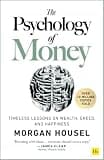
The Psychology of Money
Morgan Housel
The Psychology of Money
19 short stories on how people actually think and feel about money, not just the maths of it.
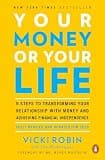
Your Money or Your Life
Vicki Robin
Your Money or Your Life
The book that basically kicked off the FIRE movement, reframing money as 'life energy' you trade your hours for. The nine-step program is pure gold, just swap the US retirement-account chapter for super.
The Barefoot Investor
Scott Pape

The Barefoot Investor
Australia's best-selling money book ever. A simple system for accounts, budgeting, debt and a real emergency fund in one.
Some links above are affiliate links. If you buy through them, Snowball Invest may earn a small commission at no extra cost to you. We only recommend books we'd suggest anyway.
Where to next
Sources
This article contains general information only and does not constitute personal financial advice. Return figures are illustrative assumptions, not predictions, and past performance is not a reliable indicator of future results. Consider your own circumstances and speak with a licensed financial adviser before making investment decisions.
Was this article useful?
Put it to your own numbers
Every calculator runs entirely in your browser, with nothing stored. See what these numbers look like for your own situation.
Explore the calculators →General information only. This article is educational and does not constitute personal financial advice. It does not account for your circumstances. Consider your own situation and seek advice from a licensed adviser before acting. Read our full disclaimer.

Timothy Hirou Gaschereau
Founder of Snowball Invest, not a financial adviser.
I write about what I'm learning myself, because nobody ever taught us how to take control of our own money. It's a skill, not a mystery, and it's never too late to learn it. The best day to start was yesterday, the second best is today.
LinkedIn →Related articles
The Sunk Cost Fallacy: Why You Hold On to Losing Investments
The sunk cost fallacy keeps Australians in losing shares, bad funds and money-pit renovations. How to spot it, and the one question that breaks it.

The Rule of 72: How Long Until Your Money Doubles
Divide 72 by your return and you get the years until your money doubles. Worked Australian examples for super, ETFs, savings accounts and fees.
How Much Should I Invest in ETFs Each Month?
No magic number exists, but there is a smart framework. Here is how to work out how much to invest in ETFs each month as an Australian investor.