
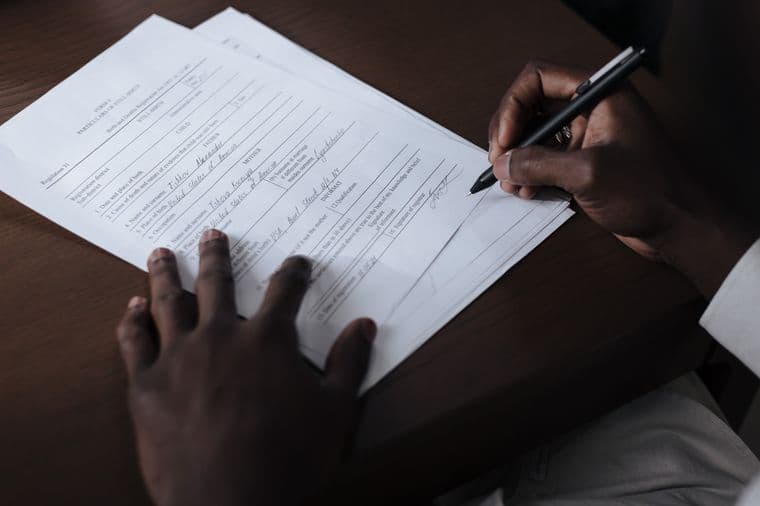
Compulsive Buying Disorder: Signs, Causes, and How to Get Help in Australia
Compulsive buying disorder is a real psychological condition, not a character flaw. Learn the signs, the causes, and where to get help in Australia.
 By Timothy Hirou GaschereauPublished
 9 min read
Most of us have bought something we didn't need. But compulsive buying disorder is different: a pattern where the urge to shop feels impossible to resist, purchases happen to manage emotions rather than meet needs, and the fallout keeps mounting no matter how many times you promise to stop. It is a genuine psychological condition, not a character flaw, and help is available. This is part of our wider guide to money mindset on Snowball Invest.
This article is general information only, not medical or financial advice. If you're struggling, please reach out to your GP or one of the free services listed below.
Quick answer
Compulsive buying disorder (also called oniomania) is a recognised psychological condition, not a lack of willpower. The "high" comes from the anticipation of buying, not the item, which is why guilt often hits the moment you get home. It can cause serious debt and distress, but it responds well to treatment, especially CBT. Help is available in Australia right now, free of charge: start with your GP, the National Debt Helpline (1800 007 007), or Beyond Blue (1300 22 4636).
In this guide
- →The signs that spending has crossed a line
- →The dopamine and emotion-regulation loop behind it
- →How small purchases quietly add up
- →Practical steps to interrupt the pattern, and where to get free help
🔎 Signs and symptoms
Compulsive shopping exists on a spectrum. These patterns tend to signal something more serious than the occasional impulse buy.
- You buy things you don't need and never use. Wardrobes full of tags-on clothing, unopened boxes, duplicates. The purchase felt urgent; the object never really mattered.
- You hide purchases or lie about spending. Sneaking parcels in, deleting transaction history, vague answers when someone asks. Secrecy is one of the clearest signs.
- You feel a rush before buying, then guilt after. The excitement peaks during browsing and checkout, then evaporates when the item arrives. So you shop again to chase the feeling.
- You shop to cope with stress, boredom, loneliness, or anxiety. Emotional spending is the engine of compulsive buying.
- Debt keeps growing despite wanting to stop. Credit cards, BNPL balances, personal loans climb even when you genuinely want to cut back.
- You've tried to stop and couldn't. Failed attempts despite real motivation and real consequences are a hallmark.
If several of these feel familiar, please keep reading. You're not alone, and there is a way through.
🧠 Why it happens
Dopamine and the anticipation loop. The brain's reward system releases dopamine in anticipation of a pleasurable event, not necessarily during it. Browsing, adding to cart, and clicking "buy" all trigger that hit. The actual item is often a letdown, which is why compulsive shoppers frequently buy things they never open. The high was always in the hunt.
Shopping as emotional regulation. When anxiety spikes or boredom becomes unbearable, shopping offers a quick way to feel something different. It works, briefly. Then guilt arrives, which creates more distress, which triggers more shopping. Our guide to emotional spending goes deeper on that mechanism.
Social media, and buy-now-pay-later. Endless product recommendations and "haul" videos create constant low-level pressure to buy. Services like Afterpay and Zip remove the immediate sting of spending, making it easy to accumulate balances quietly across multiple platforms before repayments stack up.
Co-occurring conditions. Compulsive buying frequently appears alongside anxiety, depression, and ADHD. Treating the underlying condition often helps the shopping behaviour too.
📉 The financial damage
Compulsive spending typically leads to a mix of credit card debt, BNPL balances, and personal loans. Emergency funds get depleted, super contributions get skipped, and hidden spending adds a layer of broken trust to relationships that can be genuinely hard to repair.
A hypothetical illustration (not a real person): someone spending $80 a week on impulse purchases they mostly don't use spends $4,160 a year. Over five years that's more than $20,000 before any interest, a house deposit contribution or a year of super. Compulsive buying thrives on small amounts that feel harmless in the moment.
🧩 Practical steps to break the cycle
These won't replace professional support, but they can help you interrupt the pattern while you work on the bigger picture.
- Remove saved card details from browsers and shopping apps. Adding even 30 seconds of friction breaks the automatic loop.
- Unsubscribe from retailer emails and mute shopping content on social media. You can't crave what you don't see.
- Use the 48-hour rule. Add the item to your cart, close the tab, wait 48 hours. Most of the time, the urge passes.
- Name the emotion before you buy. Pause and ask, "What am I actually feeling?" Bored? Anxious? Lonely? Naming it creates a gap between the feeling and the action.
- Track your spending. A simple spreadsheet works, so does a free app. Our guide on how to stop impulse buying has more, and ASIC's Moneysmart Budget Planner needs no account linking at all.
- Talk to someone you trust. Shame keeps this hidden, and hidden problems don't get better. Telling one person is often the hardest and most important step.
🤝 Where to get help in Australia
You don't have to figure this out on your own. These are real, accessible, free services.
- National Debt Helpline, 1800 007 007. Free, confidential financial counselling from qualified professionals. Phone weekdays 9:30am to 4:30pm, live chat weekdays 9am to 8pm at ndh.org.au.
- Lifeline, 13 11 14. Available 24 hours a day, 7 days a week, if the weight of it is becoming overwhelming.
- Beyond Blue, 1300 22 4636 or beyondblue.org.au. Mental health support and referrals, especially useful if anxiety or depression is tangled up with the spending.
- Your GP. Often the best first step. A GP can refer you to a psychologist under a Mental Health Care Plan, giving you Medicare rebates for up to 10 sessions per calendar year. CBT has the strongest evidence base for treating compulsive buying.
- Debtors Anonymous Australia. A peer-support group on a 12-step model, with Australian meetings online. Details at debtorsanonymous.org.
🎯 The essential: This is a common, treatable condition, not a moral failing. Reaching out is the step that changes the trajectory, and every service above is free.
SnowLetter
Australia's money news and our best reads, once a week.
❓ Frequently asked questions
Is compulsive buying disorder a real mental health condition?
+
Yes. Compulsive buying disorder (also known as oniomania or compulsive buying-shopping disorder) is recognised by researchers and clinicians as a genuine psychological condition. It has proposed diagnostic criteria, a growing body of clinical research, and established treatment pathways. It is not currently a standalone diagnosis in the DSM-5, but that reflects an evolving classification debate, not any doubt about whether the condition is real or serious.
How is compulsive buying disorder different from just liking shopping?
+
Most people enjoy shopping sometimes. Compulsive buying disorder is characterised by a loss of control, persistent failed attempts to stop, significant distress, and real-world harm (financial, relational, or occupational). The key difference is that the behaviour continues despite genuine negative consequences and despite wanting to stop.
Can compulsive buying disorder be treated?
+
Yes, and the outcomes are genuinely encouraging. Cognitive Behavioural Therapy (CBT) is the most well-researched treatment, with both individual and group formats showing strong results. A 2024 review confirmed CBT-based psychotherapy as the first-line recommendation. In some cases medication may be considered, particularly when anxiety, depression, or OCD-spectrum symptoms are also present. Talk to your GP as a starting point.
Does buy now pay later make compulsive buying worse?
+
It can. BNPL services like Afterpay and Zip reduce the immediate psychological cost of spending by deferring payment. For someone already prone to compulsive shopping, that reduced friction makes it easier to spend more, more often, without feeling the impact until the repayments arrive. Financial counsellors consistently flag BNPL as a risk factor.
What should I do if I think a loved one has a shopping addiction?
+
Start with compassion, not confrontation. Shame tends to make compulsive buying worse, not better. Express concern without judgment, focus on specific behaviours you've noticed rather than character judgements, and offer to help them find support rather than demanding they stop. The National Debt Helpline (1800 007 007) and Beyond Blue (1300 22 4636) can also offer guidance for people supporting someone else.
📚 Recommended reading
The Psychology of Money
Morgan Housel
The Psychology of Money
19 short stories on how people actually think and feel about money, not just the maths of it.
Atomic Habits
James Clear
Atomic Habits
Tiny changes, remarkable results. Clear shows how 1 percent improvements compound, and the same system that fixes your gym routine works on your saving habits too.
Your Money or Your Life
Vicki Robin
Your Money or Your Life
The book that basically kicked off the FIRE movement, reframing money as 'life energy' you trade your hours for. The nine-step program is pure gold, just swap the US retirement-account chapter for super.
Some links above are affiliate links. If you buy through them, Snowball Invest may earn a small commission at no extra cost to you. We only recommend books we'd suggest anyway.
Sources
- 1. National Debt Helpline, free financial counselling.
- 2. Beyond Blue, mental health support.
- 3. Lifeline Australia, 24/7 crisis support.
- 4. Moneysmart, budgeting tools and financial guidance, ASIC.
- 5. Australian Psychological Society, InPsych, compulsive buying overview.
- 6. Services Australia, Mental Health Care Plan and Medicare.
Was this article useful?
Put it to your own numbers
Every calculator runs entirely in your browser, with nothing stored. See what these numbers look like for your own situation.
Explore the calculators →General information only. This article is educational and does not constitute personal financial advice. It does not account for your circumstances. Consider your own situation and seek advice from a licensed adviser before acting. Read our full disclaimer.

Timothy Hirou Gaschereau
Founder of Snowball Invest, not a financial adviser.
I write about what I'm learning myself, because nobody ever taught us how to take control of our own money. It's a skill, not a mystery, and it's never too late to learn it. The best day to start was yesterday, the second best is today.
LinkedIn →Related articles

Fear of Spending Money: When Saving Becomes a Source of Stress
Fear of spending money is more common than you think. Learn the signs, the causes, and practical steps to ease the anxiety and spend with confidence.

Money and Mental Health: Breaking the Cycle of Financial Stress in Australia
Money stress and mental health are deeply connected. How to break the cycle with practical steps, free Australian support, and real strategies.
The Psychology of Debt: Why It Feels So Heavy (and How to Break Free)
The psychology of debt goes beyond numbers. Why shame keeps Australians stuck, how debt affects mental health, and mindset shifts to pay it off.