

How to Buy XRP in Australia: A Step-by-Step Guide
How to buy XRP in Australia step by step: what XRP is, choosing an AUSTRAC-registered exchange, depositing AUD, the fee traps, wallets and destination tags, and tax.
 By Timothy Hirou GaschereauPublished
 10 min read
Try it yourself
XRP is one of the most widely held cryptocurrencies in Australia, and buying it is straightforward once you know the steps. This is a practical, honest guide, not a pitch: XRP is a single-asset, high-risk bet, and there is one XRP-specific trap (the destination tag) that has cost people their funds.
Here is how to buy XRP in Australia safely, what it costs, how to store it, and what the ATO expects.
🎯 The essential: To buy XRP in Australia, use an AUSTRAC-registered exchange (CoinSpot, Swyftx, Kraken, Coinbase), verify your ID, deposit AUD via PayID (cheapest), then buy, using the order book (~0.1%) rather than instant buy (~0.6 to 1%) to save on fees. XRP the token is distinct from Ripple the company. If you move XRP to a wallet, a hardware wallet like Ledger is safest, and always include the required destination tag when sending to an exchange, or you can lose your funds. Buying with AUD is not a CGT event, but selling or swapping is. Crypto is extremely volatile; only invest what you can afford to lose, and this is not financial advice.
What is XRP (and what is Ripple)?
XRP is a cryptocurrency on the XRP Ledger, built to move money across borders quickly (settling in a few seconds) and cheaply (fees of a fraction of a cent), using a validator consensus rather than mining. Ripple is the US company that created XRP and uses it in some payment products, but the crucial distinction is that XRP the token is separate from Ripple the company: buying XRP is not buying shares in Ripple. XRP has a fixed maximum supply of 100 billion, much of it pre-mined, with Ripple releasing capped amounts from escrow. Whether those properties translate into long-term value is a separate question this guide will not answer for you.
The SEC v Ripple case, briefly
In 2020 the US SEC sued Ripple, alleging XRP was an unregistered security, and in July 2023 a US court found XRP itself is not necessarily a security when sold on public exchanges, which lifted sentiment and led to relistings. The litigation concluded by 2025 with a civil penalty on Ripple and both sides dropping their appeals. For Australians this matters little directly: it was a US securities-law matter, Australian crypto is regulated by ASIC and AUSTRAC, and nothing in the US findings is Australian legal or financial advice.
How to buy XRP in Australia, step by step
- Choose an AUSTRAC-registered exchange that lists XRP (CoinSpot, Swyftx, Kraken, Coinbase). You can verify registration on the AUSTRAC register.
- Create an account and complete ID verification (KYC) with a licence or passport and a selfie. Every legitimate Australian exchange requires this; if one does not, that is a red flag.
- Deposit AUD via PayID or bank transfer (usually free), rather than card (which typically adds 1.5 to 3%).
- Buy XRP: instant buy is simple but costs ~0.6 to 1%; a market or limit order on the trading platform costs ~0.1%. On $500, that is roughly $5 to $10 versus about $1 in fees.
- Decide where to store it: leave it on the exchange (convenient, but not your keys) or withdraw to a personal wallet (more secure, your responsibility). See below.
Australian exchanges that list XRP
| Exchange | Instant buy | Trading fee | Best for |
|---|---|---|---|
| CoinSpot | ~1% | ~0.1% | Beginners, widest coin range |
| Swyftx | ~0.6% + spread | ~0.1% | Lower fees, simple interface |
| Kraken | ~1.5% | 0.16-0.26% | Experienced traders, volume |
| Coinbase | ~1-2% | ~0.4-0.6% | Global, beginner-friendly |
For a deeper look at one of the most popular local options, see our CoinSpot review, and our how to choose an exchange guide.
Storing XRP safely (and the destination tag)
You can leave XRP on the exchange (fine for small amounts, but the exchange holds the keys and can be hacked or fail) or self-custody it in a wallet (a Ledger or Trezor hardware wallet for larger amounts, or the free Xaman app for everyday use). There is one trap unique to XRP that catches people out:
Two XRP-specific things to remember: always include the destination tag when a deposit address requires one, and the XRP Ledger needs a small minimum reserve (1 XRP) locked to activate a new wallet address (a protocol rule, not an exchange fee). Our storing crypto safely guide covers self-custody in full.
The Australian tax angle
The ATO treats crypto as property. Buying XRP with AUD is not a CGT event, but selling XRP for AUD is, and so is swapping it for another cryptocurrency (treated as a disposal at market value) or spending it, with the 50% CGT discount possible if you have held for over 12 months as an individual. Receiving XRP as income (from earn products or airdrops) is taxed as ordinary income at its AUD value on receipt. Keep records of every transaction, because the ATO cross-references exchange data. Tools like Koinly help. Our crypto tax guide has the full breakdown.
The honest risks
- Extreme volatility: XRP has lost more than 90% of its value in past bear markets, and 50% drops in weeks are within its history.
- Single-asset concentration: buying only XRP is a concentrated speculative bet on one coin.
- Regulatory and company risk: crypto rules are evolving, and XRP sentiment is tied partly to Ripple's fortunes despite being technically separate.
- Exchange and scam risk: even AUSTRAC-registered exchanges can fail; use 2FA, consider self-custody, and never share your seed phrase or trust guaranteed-return pitches.
Only invest what you can genuinely afford to lose entirely, and see ASIC Moneysmart for guidance on crypto risk.
Frequently asked questions
Is XRP legal in Australia?
+
Yes, XRP is legal to buy, hold and sell in Australia and is available on multiple AUSTRAC-registered exchanges. Australian crypto is overseen by ASIC and AUSTRAC. The US SEC v Ripple case was a US legal matter and does not affect XRP's legal status here.
What is the cheapest way to buy XRP in Australia?
+
Deposit AUD via PayID (usually free), then use the exchange's order book or trading platform rather than the instant buy button. Market orders can cost as little as ~0.1% versus ~0.6 to 1% for instant buy, and the difference adds up on larger amounts.
Do I need a wallet to buy XRP?
+
No, you can buy XRP on an exchange and leave it there, but then the exchange holds the private keys, not you. For larger holdings, moving XRP to a self-custody wallet (a Ledger hardware wallet or the Xaman app) reduces exchange risk.
What is a destination tag and do I need one?
+
A destination tag is a number some exchanges require when you send XRP to their deposit address, to identify which account the funds belong to. If you omit a required tag, your XRP can be lost or take significant effort to recover, so always check before sending XRP anywhere.
How is XRP taxed in Australia?
+
The ATO treats XRP as a CGT asset. Buying with AUD is not a CGT event, but selling for AUD, swapping it for another crypto, or spending it all are, with the 50% discount possible if held over 12 months. Receiving XRP as income is taxed as ordinary income. Keep records of every transaction.
Can I buy XRP with a credit card in Australia?
+
Yes, most exchanges accept card deposits, but they typically add a 1.5 to 3% fee on top of the trading fee, and some card providers treat crypto purchases as a cash advance with extra interest. Check with your card provider first; PayID is usually far cheaper.
What is the minimum amount of XRP I can buy?
+
It varies by exchange, but most Australian exchanges let you buy XRP for as little as $10 to $20. Check the specific exchange's minimum order size before signing up.
Books worth reading
📚 Recommended reading
The Psychology of Money
Morgan Housel
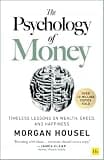
The Psychology of Money
19 short stories on how people actually think and feel about money, not just the maths of it.
Rich Dad Poor Dad
Robert Kiyosaki

Rich Dad Poor Dad
The book that got millions of people thinking differently about assets, income and building wealth.
The Simple Path to Wealth
JL Collins
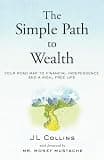
The Simple Path to Wealth
The friendliest on-ramp to index investing there is, born from letters a dad wrote his daughter. It makes 'buy the whole market and chill' feel obvious, just map his US fund picks onto Aussie equivalents and super.
Some links above are affiliate links. If you buy through them, Snowball Invest may earn a small commission at no extra cost to you. We only recommend books we'd suggest anyway.
Sources
- AUSTRAC, digital currency exchange register
- ATO, crypto asset investments
- ASIC Moneysmart, crypto assets
General information only, not financial, investment or legal advice, and not a recommendation to buy XRP or use any exchange. Crypto assets are high-risk and highly speculative, and you could lose your entire investment. Consider your own circumstances and a licensed adviser and registered tax agent before acting.
Was this article useful?
Put it to your own numbers
Every calculator runs entirely in your browser, with nothing stored. See what these numbers look like for your own situation.
Try the Capital Gains Tax calculator →General information only. This article is educational and does not constitute personal financial advice. It does not account for your circumstances. Consider your own situation and seek advice from a licensed adviser before acting. Read our full disclaimer.

Timothy Hirou Gaschereau
Founder of Snowball Invest, not a financial adviser.
I write about what I'm learning myself, because nobody ever taught us how to take control of our own money. It's a skill, not a mystery, and it's never too late to learn it. The best day to start was yesterday, the second best is today.
LinkedIn →Related articles
How to Day Trade Crypto in Australia
Curious about day trading crypto in Australia? What it actually involves, the real risks, how the ATO taxes traders, and why most beginners lose.
CoinSpot Review 2026: Is Australia's Biggest Crypto Exchange Worth It?
An honest CoinSpot review: the coin range, security, the fee trap (1% instant vs 0.1% market), the real cons, how it compares, and who it suits.
How to Read Crypto Charts: A Beginner's Guide
How to read crypto charts: candlesticks, volume, support and resistance, trends, and a couple of indicators, with an honest warning that TA is not prediction.