

CoinSpot Review 2026: Is Australia's Biggest Crypto Exchange Worth It?
An honest CoinSpot review: the coin range, security, the fee trap (1% instant vs 0.1% market), the real cons, how it compares, and who it suits.
 By Timothy Hirou GaschereauPublished
 11 min read
Try it yourself
CoinSpot is one of Australia's oldest and most widely used crypto exchanges, and for a lot of Australians it is the first place they buy Bitcoin. It is genuinely beginner-friendly, but there is one setting most users never find that could be costing them hundreds of dollars a year.
Here is the honest review: the fees, the security, the coin range, the real cons, and who it actually suits.
🎯 The essential: CoinSpot (Melbourne, founded 2013) is Australian-owned, AUSTRAC-registered and ISO 27001 certified, with 400+ coins, the widest range of any local exchange. The catch is fees: the default Instant Buy charges about 1%, but the Markets order-book interface most beginners never find charges about 0.1%, roughly ten times cheaper. It suits beginners wanting an easy AUD on-ramp and a wide coin range; active traders chasing the lowest fees should also compare Swyftx. Crypto is high-risk and volatile, no exchange is covered by the Financial Claims Scheme, and this is general information, not financial advice.
What is CoinSpot?
CoinSpot launched in 2013, making it one of the longest-running crypto exchanges in Australia, and it is Australian-owned and Melbourne-based. It is registered with AUSTRAC as a Digital Currency Exchange (mandatory for all Australian exchanges, so a legal baseline rather than a special badge) and holds ISO 27001 information- security certification, which it claims to be the first Australian exchange to receive. What it is not: a bank. It is not APRA-regulated, and crypto held on any exchange is not covered by the Financial Claims Scheme's $250,000 deposit guarantee. New to choosing an exchange? See our guide to choosing a crypto exchange.
CoinSpot fees: the most important section
This is where most CoinSpot users either save money or quietly overpay for years. There are two fee tiers:
Instant Buy is what you see first: pick a coin, enter an amount, buy at the displayed price, with a ~1% fee plus a small spread built into the price. Markets is CoinSpot's order-book interface, where you place a limit or market order against other users at about 0.1%. Over a year of monthly $1,000 buys, the difference is roughly $108. Deposits matter too: use free PayID rather than card (1.22%) or cash (2.5%). The honest verdict: on Instant Buy, CoinSpot is expensive; on Markets with PayID, it is competitive.
Security and trust
CoinSpot's security profile is among the stronger ones locally: AUSTRAC registration, ISO 27001:2022 certification, two-factor authentication (enable it first thing), the majority of funds in cold storage, and a published external audit confirming customer assets are held 1:1, a meaningful trust signal after FTX.
Worth knowing: in November 2023 roughly 1,262 ETH (about A$2.4 million) was moved from CoinSpot's hot wallets to an external address in what investigators called a probable private-key compromise; no major incident has been publicly reported since. It does not make CoinSpot uniquely risky, but no centralised exchange is immune. Because you do not hold your own keys on an exchange ("not your keys, not your coins"), consider withdrawing long-term holdings to a hardware wallet: our storing crypto safely guide explains how.
Coin range and features
CoinSpot lists over 400 cryptocurrencies, one of the widest ranges available locally and a genuine draw if you want less mainstream coins. Handy features include recurring buys for dollar-cost averaging (though these use the ~1% Instant Buy fee, not the Markets rate), bundles that buy a pre-set basket in one trade, on-platform staking on select coins (staking rewards are taxed as ordinary income at receipt), standard send/receive, and a niche NFT marketplace. The clean, beginner-friendly interface is one of CoinSpot's real strengths.
The honest cons
| Pros | Cons |
|---|---|
| Australian-owned, 400+ coins | ~1% Instant Buy fee (plus spread) |
| ISO 27001, AUSTRAC, external audit | Centralised: you do not hold your own keys |
| Free PayID deposits | No Financial Claims Scheme coverage |
| 0.1% Markets fee, recurring buys, bundles | Most beginners never find the Markets interface |
| Clean, beginner-friendly interface | Support can be slow in busy periods; no margin/futures |
The fee structure quietly punishes passive users: set up a recurring buy and never revisit it, and you pay 1% on every purchase indefinitely. For most beginners the lack of margin and futures is a feature, not a bug.
CoinSpot vs Swyftx (the real comparison)
For most Australians the choice is between two local exchanges. Swyftx charges about 0.6% on standard trades, higher than CoinSpot's 0.1% Markets fee but lower than its 1% Instant Buy, with an arguably simpler interface and a single transparent fee. CoinSpot wins on coin range (400+ vs ~320) and operating history. The honest verdict: if you will use CoinSpot's Markets interface, CoinSpot is cheaper; if you want one simple fee and a simpler experience, Swyftx is a strong alternative. (Note: Binance is no longer a practical AUD option for most Australian retail users after its 2023 ASIC and banking changes.)
CoinSpot and Australian tax
Crypto tax is not optional, and the exchange does not change the rules. Buying crypto with AUD is not a CGT event, but selling for AUD, swapping one crypto for another, or spending crypto all are, and the 50% CGT discount applies to assets held over 12 months. Staking rewards are ordinary income at the AUD value on receipt. As an AUSTRAC-registered exchange CoinSpot reports to the ATO, which already collects exchange data, so do not assume transactions are invisible. CoinSpot provides EOFY tax reports and transaction exports that work with tools like Koinly. Our crypto tax guide and does the ATO know about your crypto cover the detail.
Frequently asked questions
Is CoinSpot safe to use in Australia?
+
CoinSpot is AUSTRAC-registered, ISO 27001 certified, and holds the majority of customer funds in cold storage, with an external audit confirming assets are held 1:1. In November 2023 roughly A$2.4 million in exchange-held ETH was affected by a hot-wallet incident; no major incidents have been reported since. No Australian crypto exchange is covered by the Financial Claims Scheme, so enable 2FA and consider a hardware wallet for long-term holdings.
What fees does CoinSpot charge?
+
About 1% for Instant Buy, Sell and Swap, and about 0.1% for Markets (order book) trades. PayID and direct bank deposits are free; card deposits are about 1.22% and cash 2.5%; AUD bank withdrawals are free; crypto withdrawals incur network fees. Always verify current rates on CoinSpot's fees page.
How do I deposit AUD into CoinSpot?
+
The easiest and cheapest method is PayID, which is instant and free. Direct bank transfer is also free. BPAY, card and cash deposits are available but carry fees, so PayID is the practical choice for most people.
Does CoinSpot report to the ATO?
+
Yes. As an AUSTRAC-registered exchange it complies with Australian reporting obligations, and the ATO has publicly stated it collects data from Australian crypto exchanges. Report all taxable crypto transactions in your return regardless of whether you get a reminder.
What is the difference between CoinSpot Instant Buy and Markets?
+
Instant Buy is the default interface: you buy or sell at the displayed price with a roughly 1% fee. Markets is the order book, where you place limit or market orders against other users at about 0.1%. On a $1,000 purchase that is about $10 versus $1 in fees, so learning Markets is the single best way to cut costs on CoinSpot.
How does CoinSpot compare to Swyftx?
+
Both are Australian-owned with free PayID deposits. CoinSpot has a wider coin range (400+ vs Swyftx's ~320) and a lower Markets fee (~0.1% vs Swyftx's ~0.6%), while Swyftx has a simpler, more transparent single fee for beginners who do not want two interfaces. For most Australians these are the two main options worth comparing.
Do I pay tax on crypto bought through CoinSpot?
+
Buying crypto with AUD is not a CGT event, but selling for AUD, swapping one crypto for another, or spending crypto all are, per ATO rules. Staking rewards are ordinary income at receipt. The 50% CGT discount applies to assets held over 12 months. CoinSpot provides transaction exports compatible with tools like Koinly.
Keep reading
Books worth reading
📚 Recommended reading
The Psychology of Money
Morgan Housel
The Psychology of Money
19 short stories on how people actually think and feel about money, not just the maths of it.
Rich Dad Poor Dad
Robert Kiyosaki

Rich Dad Poor Dad
The book that got millions of people thinking differently about assets, income and building wealth.
The Simple Path to Wealth
JL Collins
The Simple Path to Wealth
The friendliest on-ramp to index investing there is, born from letters a dad wrote his daughter. It makes 'buy the whole market and chill' feel obvious, just map his US fund picks onto Aussie equivalents and super.
Some links above are affiliate links. If you buy through them, Snowball Invest may earn a small commission at no extra cost to you. We only recommend books we'd suggest anyway.
Sources
General information only, not financial advice, and not a recommendation to use any exchange. Crypto is highly speculative and volatile, and you can lose money. Fees and features change, so verify current details with CoinSpot before acting, and consider your own circumstances or a licensed adviser.
Was this article useful?
Put it to your own numbers
Every calculator runs entirely in your browser, with nothing stored. See what these numbers look like for your own situation.
Try the Capital Gains Tax calculator →General information only. This article is educational and does not constitute personal financial advice. It does not account for your circumstances. Consider your own situation and seek advice from a licensed adviser before acting. Read our full disclaimer.

Timothy Hirou Gaschereau
Founder of Snowball Invest, not a financial adviser.
I write about what I'm learning myself, because nobody ever taught us how to take control of our own money. It's a skill, not a mystery, and it's never too late to learn it. The best day to start was yesterday, the second best is today.
LinkedIn →Related articles
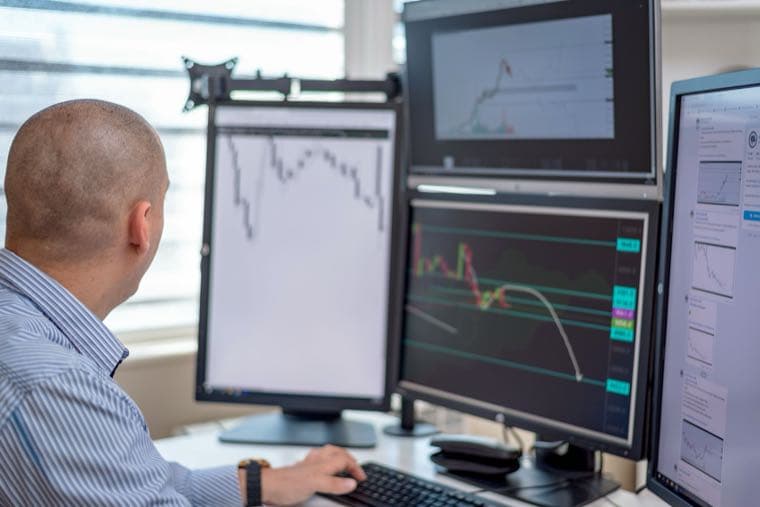
How to Day Trade Crypto in Australia
Curious about day trading crypto in Australia? What it actually involves, the real risks, how the ATO taxes traders, and why most beginners lose.

How to Buy Bitcoin Cash (BCH) in Australia
Want to buy Bitcoin Cash (BCH) in Australia? A plain-English, step-by-step guide to exchanges, fees, safe storage, tax and the risks.

How to Read Crypto Charts: A Beginner's Guide
How to read crypto charts: candlesticks, volume, support and resistance, trends, and a couple of indicators, with an honest warning that TA is not prediction.