
Crypto Gifts and Inheritance in Australia: The Tax Rules Nobody Talks About
Australia has no gift or inheritance tax, but giving or inheriting crypto still triggers CGT events. Here's what the ATO expects and how to handle it.
 By Timothy Hirou GaschereauPublished
 10 min read
This article is general information only and is not tax or legal advice. Speak with a registered tax agent, or a solicitor for estate planning matters. This is part of a wider guide to crypto and alternative income on Snowball Invest.
Quick answer
Australia has no gift tax and no inheritance tax, but CGT does most of the same job. Gifting crypto is a disposal for the giver, taxed at market value on the day of the gift. Inheriting crypto isn't taxed at death, but the beneficiary inherits the deceased's original cost base and pays CGT only when they eventually sell. The real risk with crypto specifically isn't tax, it's losing the private keys altogether.
In this guide
- →Why Australia's lack of inheritance tax doesn't make crypto transfers tax-free
- →How gifting crypto triggers a CGT event for the giver, with worked numbers
- →The cost base rules that apply when you inherit crypto
- →A full worked example, from purchase to inheritance to eventual sale
- →The practical estate planning problem unique to crypto: access
✅ The good news: no gift or inheritance tax
Australia abolished federal inheritance duty back in 1979, and the states scrapped their own death duties not long after. There's never been a standalone gift tax either. So if your mum leaves you $200,000 worth of Bitcoin, or a mate gives you some Ethereum for your birthday, nobody's sending you a tax bill just for receiving it.
That genuinely puts Australia in a favourable position compared with places like the US or UK, where estate and gift taxes can take a real chunk out of transferred wealth. But the ATO doesn't need a gift or inheritance tax to collect revenue here, it has CGT, and CGT does a lot of the heavy lifting in ways most people don't expect.
🎁 The catch: crypto gifts still trigger CGT
The ATO treats crypto as a CGT asset, not currency, and that distinction changes everything when it comes to gifting. When you give crypto to someone, the ATO treats it as a disposal. It doesn't matter that no money changed hands, or that you gave it to your sibling out of pure generosity, you've disposed of an asset and need to work out whether you made a capital gain or loss.
🎯 The essential: The value used is the market value of the crypto in AUD on the day of the gift, not what you originally paid for it, treated exactly the same way as giving away shares. This catches a lot of people off guard, doing something generous and ending up with an unexpected tax bill.
The person receiving the gift has no CGT obligation at the time they receive it. Their clock starts from the date of the gift, and CGT only applies when they eventually sell, swap or otherwise dispose of the crypto.
🧮 Worked example: gifting Bitcoin to a sibling
Say you bought $3,000 worth of Bitcoin back in 2021. By mid-2024 it's worth $10,000, and you decide to gift it to your sibling.
| Item | Amount |
|---|---|
| Proceeds (market value at date of gift) | $10,000 |
| Cost base (what you originally paid) | $3,000 |
| Capital gain | $7,000 |
| After 50% CGT discount (held over 12 months) | $3,500 taxable |
On a 30% marginal rate, that's roughly $1,050 in tax on the gift, not nothing. Your sibling's cost base becomes $10,000, the market value at the date they received it, and their own CGT calculation starts from there.
🧭 Strategies to minimise CGT on crypto gifts
None of these are loopholes, just sensible use of the existing rules. This isn't financial advice, just a plain-English summary of what's allowed.
- Hold for at least 12 months before gifting to unlock the 50% CGT discount, timing genuinely matters here
- Gift in a low-income year, since the gain is taxed at your marginal rate, a year with lower income means a lower rate on the gain
- Gift assets sitting at a loss to crystallise a capital loss you can use elsewhere, keeping in mind the recipient's cost base becomes that lower market value
- Check the personal use asset exemption, a narrow carve-out for crypto acquired under $10,000 and used directly for goods or services, most investment-held crypto won't qualify, our personal use asset guide covers exactly who does
⚰️ Inheriting crypto: what happens when someone dies
When someone dies and leaves crypto to a beneficiary, the rules are different, and in some ways more generous. No CGT event occurs at the time of death. The transfer from a deceased person to their estate, and then to a beneficiary, isn't treated as a disposal, the same treatment that applies to other CGT assets like shares and property. Death itself doesn't trigger a tax bill, CGT is effectively put on pause until the beneficiary decides to sell.
Gifting crypto
You give it away
Disposal at market value, now
CGT bill for you, this year
Inheriting crypto
You inherit it
No CGT event at death
Deceased's cost base carries over, CGT only when you sell
📐 The cost base rules for inherited crypto
What matters is the cost base the beneficiary inherits, and that depends on when the deceased originally acquired the crypto.
| Deceased acquired the crypto... | Beneficiary's cost base |
|---|---|
| On or after 20 September 1985 (virtually all crypto) | The deceased's original cost base, you step into their shoes |
| Before 20 September 1985 (theoretically impossible for crypto) | Resets to market value at date of death |
The practical implication: if a parent bought Bitcoin in 2018 for $15,000 and it's worth $80,000 when they die in 2024, the beneficiary inherits the $15,000 cost base. There's no free step-up to $80,000, that $65,000 of unrealised gain is still sitting there, waiting to be taxed on eventual sale.
🎯 The essential: One helpful rule: the ATO lets you count the deceased's holding period toward the 12-month threshold for the 50% CGT discount, provided they acquired it on or after 20 September 1985. In most inheritance situations, that's easily satisfied straight away.
🧮 Worked example: inheriting $80,000 of Bitcoin
Your parent bought 1 Bitcoin in January 2018 for $15,000 AUD. They pass away in June 2024, when it's worth $80,000 AUD, and it transfers to you as beneficiary. You sell it in March 2025 for $95,000 AUD.
| Item | Amount |
|---|---|
| Sale proceeds | $95,000 |
| Cost base (deceased's original purchase price) | $15,000 |
| Capital gain before discount | $80,000 |
| 50% CGT discount (combined holding period over 12 months) | -$40,000 |
| Taxable capital gain | $40,000 |
At a 30% marginal rate, that's roughly $12,000 in tax on the inherited Bitcoin. No inheritance tax, but a meaningful CGT bill all the same, worth planning for rather than discovering at tax time. For the broader mechanics of how crypto CGT works, see our crypto tax guide.
🗝️ Practical steps for estate planning with crypto
This is where crypto inheritance gets genuinely complicated, in a way that has nothing to do with tax law and everything to do with how crypto actually works. If an executor can't access the deceased's crypto, the coins are gone, not frozen, not recoverable through a court order. Unlike a bank account, there's no institution to call, no reset process, no override.
What to document in your will or estate plan: the existence of each crypto holding, where it's held (hardware wallet, software wallet, or an exchange account), instructions for accessing the wallet including the location of any hardware device and seed phrase, and login details or contact instructions for any exchange accounts. Our estate planning guide covers the broader documents worth having in place alongside this.
🎯 The essential: Never store a seed phrase digitally in plain text. A sealed physical document held by a solicitor, a fireproof safe, or a dedicated secure storage solution, the key is that your executor can find it, but nobody else can stumble across it during your lifetime.
The executor is responsible for identifying all estate assets including crypto, valuing it at the date of death using the AUD market value, keeping records of the cost base, and reporting correctly if any crypto is sold during estate administration, which is itself a CGT event, potentially leaving the estate liable for CGT on the deceased's original cost base. Given the ATO's data-matching reach across Australian exchanges, covered in our guide to what the ATO already knows, this is a genuinely emerging area of practice. A solicitor who understands both estate law and digital assets is worth the investment.
SnowLetter
Australia's money news and our best reads, once a week.
❓ Frequently asked questions
Does Australia have an inheritance tax on crypto?
+
No. Australia abolished federal inheritance duty in 1979, and the states followed shortly after, so there's no inheritance tax on crypto or anything else. CGT still applies once the beneficiary eventually sells.
Is gifting cryptocurrency to a family member tax-free in Australia?
+
Not for the giver. The ATO treats gifting crypto as a disposal at market value on the day of the gift, which can trigger a capital gain. The recipient pays nothing on receipt, but faces CGT when they later sell.
What is the cost base for inherited crypto in Australia?
+
If the deceased bought the crypto on or after 20 September 1985, which covers essentially all crypto, the beneficiary inherits the deceased's original cost base and steps into their shoes for CGT purposes.
Can I use the 50% CGT discount on inherited crypto?
+
Yes, in most cases. The ATO lets you count the deceased's holding period toward the 12-month threshold, provided they acquired the asset on or after 20 September 1985. In most inheritance situations that's easily satisfied.
What happens if nobody can access the deceased's crypto wallet?
+
If the private keys or seed phrase are lost, the crypto is unrecoverable. No court order can override the cryptography of a self-custody wallet, which is exactly why documenting wallet access in your estate plan matters.
Does the ATO know about crypto gifts and inheritances?
+
The ATO has significant data-matching capability and receives information from Australian crypto exchanges, which it cross-references against tax returns. Not reporting a CGT event from a gift is a compliance risk, not a grey area.
📚 Recommended reading
The Joy of Money
Kate McCallum & Julia Newbould
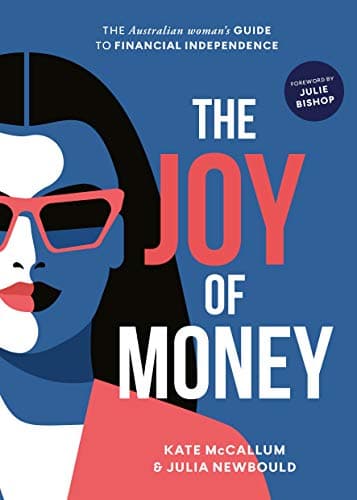
The Joy of Money
Kate McCallum and Julia Newbould map out financial independence for Australian women, from super and investing to insurance and estate planning. Practical, warm and refreshingly free of finance-bro energy.
Making Money Made Simple
Noel Whittaker

Making Money Made Simple
Australia's classic, comprehensive money guide covering tax, super and investing, updated for today.
Die With Zero
Bill Perkins
Die With Zero
Stop hoarding cash for a someday that never comes. Perkins makes the case for spending on experiences while you are still young enough to enjoy them.
Some links above are affiliate links. If you buy through them, Snowball Invest may earn a small commission at no extra cost to you. We only recommend books we'd suggest anyway.
Sources
- 1. Gifts and donations of crypto assets, Australian Taxation Office
- 2. Crypto asset investments, Australian Taxation Office
- 3. How CGT applies to inherited assets, Australian Taxation Office
- 4. Cost base of inherited assets, Australian Taxation Office
- 5. If you are a beneficiary of a deceased estate, Australian Taxation Office
- 6. How to work out and report CGT on crypto, Australian Taxation Office
Was this article useful?
Put it to your own numbers
Every calculator runs entirely in your browser, with nothing stored. See what these numbers look like for your own situation.
Explore the calculators →General information only. This article is educational and does not constitute personal financial advice. It does not account for your circumstances. Consider your own situation and seek advice from a licensed adviser before acting. Read our full disclaimer.

Timothy Hirou Gaschereau
Founder of Snowball Invest, not a financial adviser.
I write about what I'm learning myself, because nobody ever taught us how to take control of our own money. It's a skill, not a mystery, and it's never too late to learn it. The best day to start was yesterday, the second best is today.
LinkedIn →Related articles

Lost, Stolen or Scammed Crypto: Can You Claim a Capital Loss?
Lost your crypto keys? Got scammed? The ATO treats these very differently. Here's what you can and can't claim, and what evidence you'll need.
NFT Tax in Australia: What the ATO Actually Says
Bought, sold, created or received an NFT? The ATO has views on all of it. Here's the plain-English guide to NFT tax in Australia.

Crypto Tax in Australia: The Plain-English Guide
CGT vs income, taxable events, the 50% discount, and the ATO's data matching program, everything Australian crypto holders need to know about tax.