

NFT Tax in Australia: What the ATO Actually Says
Bought, sold, created or received an NFT? The ATO has views on all of it. Here's the plain-English guide to NFT tax in Australia.
 By Timothy Hirou GaschereauPublished
 10 min read
Try it yourself
This article is general information only and is not tax advice. Speak with a registered tax agent about your specific situation. This is part of a wider guide to crypto and alternative income on Snowball Invest.
Quick answer
NFTs are taxable in Australia. The ATO treats them as CGT assets in most cases, with the 50% discount available after 12 months. If you create and sell your own NFTs commercially, that's ordinary business income instead. Receiving an NFT as a reward or airdrop is generally taxed as income at market value on receipt, and burning or swapping an NFT is a disposal too, even without cashing out.
In this guide
- →The four ways the ATO can tax an NFT, and why it depends on your situation
- →How buying, selling, creating and receiving NFTs are each treated differently
- →What happens when you burn or swap an NFT
- →The GST rules for NFT creators and marketplaces
- →What records you actually need to keep
🖼️ Does the ATO tax NFTs?
Yes, and it's not a grey area. The ATO has published specific guidance on NFTs, sitting inside its broader crypto asset pages. NFTs are treated as CGT assets under Australian tax law, which means buying, selling, swapping, gifting or otherwise disposing of one can have real tax consequences.
There isn't a single NFT tax rule though. The treatment depends on your circumstances, why you hold the NFT and what you actually do with it. There are four main ways the ATO can tax one: as a CGT asset (the most common, for investors), as trading stock, as ordinary business income, or under a profit-making scheme.
🎯 The essential: A narrow personal use asset exemption exists if you bought an NFT purely for personal enjoyment, not investment, and paid less than $10,000. The ATO says this will be rare for NFTs, if you bought it hoping it would go up in value, it doesn't qualify. Full detail in our personal use asset guide.
Create & sell your own NFT
Ordinary business income
Buy an NFT & resell it later
Capital gain or loss, 50% discount if held 12+ months
Receive an NFT as a reward or airdrop
Ordinary income at market value on receipt
💰 Scenario 1: You bought an NFT and sold it
The most common situation, and the CGT rules apply cleanly. Your capital gain is sale proceeds in AUD, minus your cost base, which includes what you paid (converted to AUD at the time), gas or marketplace fees to acquire it, and any selling costs.
Hold the NFT for more than 12 months and you're entitled to the 50% CGT discount as an individual, so only half your gain gets added to taxable income. Sell at a loss and you have a capital loss, which can only offset capital gains, not your regular income, and carries forward if unused.
Buy an NFT for $2,000 worth of ETH. Sell it 15 months later for $5,500 worth of ETH. Gross capital gain: $3,500. After the 50% discount, $1,750 gets added to your taxable income for that financial year.
🎨 Scenario 2: You created and sold an NFT
If you're an artist, musician or creator minting and selling your own NFTs, the ATO treats this very differently from buying and selling as an investor. Creating and selling your own NFTs is generally taxed as ordinary business income, not a capital gain, and the 50% CGT discount doesn't apply, because the NFT is effectively your product, not an investment asset.
The ATO's own published example involves a professional artist who paints a portrait and mints 10 NFTs, each granting the right to a private viewing of the portrait. The proceeds from selling those NFTs are assessable as her business income, and while she remains in business, any ongoing royalties or commissions are business income too. More broadly, when you're carrying on a crypto asset business, the assets are treated as trading stock, the cost of acquiring or creating them is deductible, and sale proceeds are ordinary income.
If your NFT activity is more of a hobby with no real commercial intent, the picture changes again. Not sure which side of the line you're on? Our hobby vs business guide walks through the ATO's actual test.
🎁 Scenario 3: You received an NFT as a reward
Getting an NFT for free sounds great until tax time. If you receive a crypto asset, including an NFT, as a reward or airdrop of an established token, the market value in AUD at the time you receive it is generally assessable as ordinary income, reported as other income for that financial year.
🎯 The essential: One nuance: the ATO treats a brand-new "initial" airdrop slightly differently, you generally don't derive income or a capital gain at the moment you receive tokens from a genuinely new token's initial distribution. Most reward-style NFT airdrops of an already-established project don't fall into that narrow exception, so treat them as income unless you have a clear reason not to.
That declared value then becomes your cost base for CGT purposes. So if you receive an NFT airdrop worth $800 and later sell it for $1,200, your capital gain is $400, not $1,200. Sell it for $300 instead and you'd have a $500 capital loss.
🔥 Scenario 4: You burned or swapped an NFT
Swapping one NFT for another is a disposal, full stop. The ATO's position on crypto swaps applies equally here: exchanging one asset for another means you've disposed of the original and acquired a new one. Your capital proceeds are the market value of what you received, in AUD at the time.
Burning an NFT, sending it to a dead wallet to permanently destroy it, doesn't have a dedicated ATO ruling, but the general disposal rules point strongly to it being a CGT event too. You've given up ownership of a CGT asset. Receive nothing in return and your proceeds are nil, which typically means a capital loss equal to your cost base. Burn-to-mint mechanics, where you burn an NFT to receive a new one, are treated as a swap.
Don't assume burning or swapping has no tax consequences. Record every transaction and its AUD value at the time.
🎮 Scenario 5: NFTs in play-to-earn games
Play-to-earn games add another layer. The ATO hasn't published dedicated guidance here, but the existing framework gives a reasonable working position. Earning an NFT or token through gameplay likely follows the same logic as staking rewards and airdrops: market value at the time you receive it is probably ordinary income. Selling or trading it later then triggers a CGT event, using that income value as your cost base.
There's one narrow exception. Genuine prizes from a lottery or game of chance are treated differently, the ATO's guidance on crypto prizes and gambling winnings says winnings from a lottery-style draw aren't ordinary income and any capital gain is disregarded. But this is a narrow carve-out for genuine chance-based prizes. If you're systematically earning rewards through skill and effort in a P2E game, the ATO is unlikely to treat that as gambling. P2E taxation is genuinely still evolving, if you're earning meaningful amounts, get specific advice.
🧾 What about GST on NFT sales?
Something most guides skip: GST can apply to NFT transactions, and it's more nuanced than income tax. First, NFTs are not treated as digital currency for GST purposes, because they're unique and can't be interchanged with each other, so they don't get the special GST treatment digital currency like Bitcoin receives.
| Your situation | GST treatment |
|---|---|
| Individual investor buying and selling NFTs personally | GST generally doesn't apply, you're not making taxable supplies in the course of an enterprise |
| Creator or business, turnover over $75,000 | Required to register for GST, sales to Australian customers are likely taxable supplies |
| Selling to overseas buyers | May be GST-free, depending on the buyer's location, rules are complex here |
| Running an NFT marketplace | May carry GST obligations as an electronic distribution platform, even for sales you didn't make yourself |
If you're running a creator business or a marketplace, talk to a tax agent before assuming GST doesn't apply.
🗂️ Record-keeping for NFTs
The ATO expects records of every crypto transaction kept for five years from when you lodge the relevant return. For each NFT transaction, capture the acquisition date and AUD value, the disposal date and AUD value, what you paid and received including fees, wallet addresses, blockchain transaction IDs, and the purpose of the transaction.
Blockchain records are public and permanent, but they don't convert to AUD values automatically, that's on you. If you used crypto to buy an NFT, you also need records of that crypto's cost base, since spending crypto is itself a disposal. Every step in the chain matters, and it's much easier to track as you go than to reconstruct a year later.
SnowLetter
Australia's money news and our best reads, once a week.
❓ Frequently asked questions
Do I have to pay tax on NFTs even if I didn't cash out to AUD?
+
Yes. The ATO taxes NFT disposals regardless of whether you converted to AUD. Swapping an NFT for another crypto asset, or for another NFT, is still a taxable disposal at its AUD value at the time.
Are NFTs subject to capital gains tax in Australia?
+
In most cases, yes. NFTs held as an investment trigger CGT on disposal, with the 50% discount available if held over 12 months. If you created and sold the NFT as part of a business, income tax applies instead.
What if my NFT is now worthless? Can I claim a loss?
+
You can crystallise a capital loss once you actually sell or otherwise dispose of it. Simply watching the value drop while you still hold it doesn't create a claimable loss, the disposal has to happen.
Are NFTs taxable if I received them as a gift?
+
Receiving a gifted NFT isn't taxable at the time. When you later dispose of it, CGT applies, using the market value on the day you received the gift as your cost base.
Does NFT income tax apply to royalties from secondary sales?
+
Yes. If you're a creator receiving royalties from resales, those payments are ordinary income in the year you receive them, taxed at your marginal rate.
I only made a small amount from NFTs. Do I still need to declare it?
+
Yes. There's no minimum threshold for NFT gains in Australia. The ATO has access to exchange data and can cross-reference your activity, so it's not worth skipping.
📚 Recommended reading
Making Money Made Simple
Noel Whittaker

Making Money Made Simple
Australia's classic, comprehensive money guide covering tax, super and investing, updated for today.
Rich Dad Poor Dad
Robert Kiyosaki
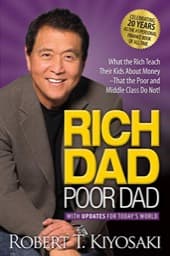
Rich Dad Poor Dad
The book that got millions of people thinking differently about assets, income and building wealth.
Some links above are affiliate links. If you buy through them, Snowball Invest may earn a small commission at no extra cost to you. We only recommend books we'd suggest anyway.
Sources
- 1. Non-fungible tokens (NFTs), Australian Taxation Office
- 2. Crypto asset investments, Australian Taxation Office
- 3. How to work out and report CGT on crypto, Australian Taxation Office
- 4. Staking rewards and airdrops, Australian Taxation Office
- 5. Crypto asset as a personal use asset, Australian Taxation Office
- 6. GST and digital currency, Australian Taxation Office
- 7. Crypto asset prizes and gambling winnings, Australian Taxation Office
Was this article useful?
Put it to your own numbers
Every calculator runs entirely in your browser, with nothing stored. See what these numbers look like for your own situation.
Try the Capital Gains Tax calculator →General information only. This article is educational and does not constitute personal financial advice. It does not account for your circumstances. Consider your own situation and seek advice from a licensed adviser before acting. Read our full disclaimer.

Timothy Hirou Gaschereau
Founder of Snowball Invest, not a financial adviser.
I write about what I'm learning myself, because nobody ever taught us how to take control of our own money. It's a skill, not a mystery, and it's never too late to learn it. The best day to start was yesterday, the second best is today.
LinkedIn →Related articles
Lost, Stolen or Scammed Crypto: Can You Claim a Capital Loss?
Lost your crypto keys? Got scammed? The ATO treats these very differently. Here's what you can and can't claim, and what evidence you'll need.
Crypto Gifts and Inheritance in Australia: The Tax Rules Nobody Talks About
Australia has no gift or inheritance tax, but giving or inheriting crypto still triggers CGT events. Here's what the ATO expects and how to handle it.
Crypto Tax in Australia: The Plain-English Guide
CGT vs income, taxable events, the 50% discount, and the ATO's data matching program, everything Australian crypto holders need to know about tax.