

Transferring Money to Australia From Overseas: What's Taxable
Transferring money to Australia from overseas? Here is what is taxable, what is not, and when your savings, gifts or foreign income need declaring.
 By Timothy Hirou GaschereauPublished
 8 min read
A bank transfer landing in your Australian account does not automatically trigger a tax bill. That is the reassuring news. Whether you owe tax depends entirely on what the money represents and where it came from. This guide walks through the common scenarios, part of our tax section on Snowball Invest. General information only, not personal tax advice. Rules can change, so always verify with the ATO or a registered tax agent.
Quick answer
Transferring money to Australia from overseas is not a taxable event on its own. The ATO cares about the source of the funds, not the transfer. Your own savings, genuine gifts and inheritances from overseas are generally not taxable income here. But if you are an Australian tax resident, you are generally taxed on your worldwide income, including wages, investment returns and gains earned overseas. When in doubt, speak to a registered tax agent.
In this guide
- →Why the source of the money matters, not the transfer itself
- →How savings, gifts and inheritances from overseas are treated
- →When foreign income has to be declared
- →How Australian tax residency changes everything
- →What AUSTRAC reporting is (and why it isn't a tax)
🎯 It's the source, not the transfer
🎯 The essential: Moving money across borders does not trigger Australian tax. What matters is the nature of the funds and whether you are an Australian tax resident. Get clear on those two things and the rest falls into place.
Bringing money into Australia is simply a banking transaction. The ATO is not interested in the wire transfer itself. Two questions do most of the heavy lifting: what type of money is it (savings, a gift, an inheritance, income you earned, a capital gain?), and are you an Australian tax resident? Residency is the pivot point that determines how broadly Australia can tax you.
🏦 Your own savings from overseas
If you are transferring savings you already paid tax on overseas, or savings that were never taxable in the first place, that transfer is generally not a taxable event in Australia. Common examples include money you saved while working overseas before you became an Australian tax resident, funds sitting in a foreign bank account built up before you moved here, and proceeds from selling personal assets you owned before becoming a resident.
One situation worth flagging: if you sell a family home overseas after you have become an Australian tax resident, capital gains tax (CGT) may apply to any gain. The rules depend on timing, your residency status and whether any exemptions apply. That is one for a registered tax agent, not a general guide. The broader principle is simple: money you already owned and are simply moving to Australia is not income, and is not taxed again just because it crossed a border.
🎁 A gift from overseas
Australia has no gift tax. A genuine gift from a family member or friend overseas is generally not taxable income in Australia for the person receiving it. So if your parents overseas send you AUD 50,000 as a gift, you do not declare it as income and you do not pay tax on it.
Two things to keep in mind. First, income generated after you receive the gift is taxable. If you put that AUD 50,000 in a savings account and earn interest, that interest is assessable income. Second, large gifts from trusts or business structures can have different tax treatment, so get advice before assuming it is tax-free. Do not let anyone tell you there is a specific dollar threshold above which genuine personal gifts become taxable. There is no such threshold in Australian law, but the source and structure of the gift matter.
🕊️ An overseas inheritance
Australia abolished estate duty (inheritance tax) decades ago. Inheriting money or assets from overseas is generally not taxed as income in Australia. If a relative passes away and leaves you AUD 200,000 in a foreign bank account, you do not pay Australian income tax on that inheritance.
Two caveats apply. Income earned on inherited assets after you receive them is taxable: rent from an inherited property, interest from inherited funds and dividends from inherited shares all need to be declared. And if you inherit overseas property and later sell it, CGT may apply to any gain made after you became an Australian tax resident. The rules around the cost base and timing are detailed, so a tax agent is your friend here.
💼 Foreign income you actually earned
This is where the real tax questions live. If you are an Australian tax resident, you are generally taxed on your worldwide income, regardless of where it was earned or where it sits. That includes foreign employment income, foreign investment income (dividends, interest and rent), capital gains on overseas assets, and foreign pensions, which can be particularly complex where double-taxation treaties are involved.
If you paid tax on that income overseas, you may be able to claim a foreign income tax offset to reduce the Australian tax you owe. You do not necessarily pay tax twice, but you do need to declare the income. The ATO's foreign and worldwide income page is the right starting point.
🧭 Tax residency: the pivot point
Australian tax residency is the single most important factor in working out how Australia taxes you. It is not the same as your visa status, and it is not the same as citizenship. It is a separate legal test. The ATO applies four statutory residency tests, and you only need to satisfy one of them to be a tax resident:
- The resides test: the primary test, looking at your physical presence, intentions, family and work ties, and living arrangements.
- The domicile test: if your domicile is in Australia, you are generally a resident unless your permanent place of abode is outside Australia.
- The 183-day test: present in Australia for 183 days or more in an income year generally makes you a resident, with some exceptions.
- The Commonwealth superannuation test: applies to certain Australian Government employees overseas.
If you are a foreign resident for tax purposes, Australia generally only taxes you on Australian-sourced income, a very different position. Your status can change as your circumstances change. The ATO has an online residency tool to help, and getting residency wrong is one of the most common and costly mistakes expats and new migrants make.
📄 AUSTRAC reporting: a report, not a tax
You may have heard that large international transfers get reported. That is true, but it is not a tax. It is an anti-money-laundering reporting obligation, and it is the responsibility of the financial institution or remittance provider, not you.
- International funds transfer instructions must be reported to AUSTRAC by the bank or money transfer business handling the transaction. This applies to every international transfer, regardless of amount.
- Physical cash of AUD 10,000 or more carried into or out of Australia must be declared separately, at the border or via an AUSTRAC online form.
- You do not lodge a separate AUSTRAC report just because you received a large international bank transfer. Your bank handles that obligation.
Receiving a large transfer does not automatically mean you owe tax. Whether you owe tax depends entirely on the source of the funds.
🧑💼 When to talk to a registered tax agent
Some situations are genuinely complex. Stop Googling and get professional help if you are unsure of your residency status, have received foreign income you are not sure about, are inheriting overseas property you plan to sell, have received a large gift from an overseas trust or business, are receiving a foreign pension, have sold overseas assets with a possible CGT liability, or your situation spans multiple countries and double-taxation treaties.
🧮 Capital Gains Tax Calculator
Selling an overseas asset after becoming a resident? Get a rough sense of the CGT before you speak to a registered tax agent.
A registered tax agent is legally authorised to give you personal tax advice. You can find one through the Tax Practitioners Board public register. Search by name or location and check their registration is current before engaging them.
SnowLetter
Australia's money news and our best reads, once a week.
❓ Frequently asked questions
Do I pay tax on money transferred from overseas to Australia?
+
Not automatically. The transfer itself is not a taxable event. What matters is the source of the money. If you are transferring your own savings, a gift or an inheritance, it is generally not taxable. If the money represents income you earned overseas and you are an Australian tax resident, it may need to be declared. The source is everything.
Is a gift from overseas taxable in Australia?
+
A genuine personal gift from an individual overseas is generally not taxable income in Australia. Australia has no gift tax. However, any income you earn on that gift after receiving it (such as interest or dividends) is taxable. Gifts from overseas trusts or business structures can have different treatment, so seek advice if that applies to you.
Is an overseas inheritance taxable in Australia?
+
Australia has no inheritance tax. Inheriting money or assets from overseas is generally not taxed as income. But income earned on those assets after you receive them is taxable, and selling inherited overseas property may trigger CGT. Speak to a registered tax agent if you are inheriting significant overseas assets.
How much money can I transfer to Australia without paying tax?
+
There is no specific dollar threshold that determines whether a transfer is taxable. The question is always about the source of the funds, not the amount. A transfer of your own after-tax savings is generally not taxable, no matter how large. A smaller transfer of foreign employment income you earned as an Australian tax resident may be. Amount is not the deciding factor.
Do I have to declare overseas money transfers to the ATO?
+
You do not declare the transfer itself. But if the money represents assessable income (such as foreign wages, investment returns or capital gains) and you are an Australian tax resident, that income must be declared in your Australian tax return. The ATO's foreign and worldwide income page explains what needs to be reported.
What is the AUSTRAC reporting threshold for international transfers?
+
For international funds transfer instructions (bank-to-bank transfers), there is no minimum threshold. Your bank or remittance provider must report every international transfer to AUSTRAC, regardless of the amount. That is their obligation, not yours. For physical cash carried across the border, the threshold is AUD 10,000 or more (or the foreign currency equivalent), which must be declared to AUSTRAC.
📚 Recommended reading
The Barefoot Investor
Scott Pape

The Barefoot Investor
Australia's best-selling money book ever. A simple system for accounts, budgeting, debt and a real emergency fund in one.
The Psychology of Money
Morgan Housel
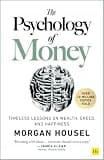
The Psychology of Money
19 short stories on how people actually think and feel about money, not just the maths of it.
Sort Your Money Out and Get Invested
Glen James

Sort Your Money Out and Get Invested
From the host of the my millennial money podcast, a step-by-step Aussie plan to fix your spending, clear debt and actually start investing. Practical and refreshingly free of finance-bro nonsense.
Some links above are affiliate links. If you buy through them, Snowball Invest may earn a small commission at no extra cost to you. We only recommend books we'd suggest anyway.
Sources
Information reflects our understanding of the rules as at August 2026. Tax and reporting rules can change. Always verify against the official sources below.
Was this article useful?
Put it to your own numbers
Every calculator runs entirely in your browser, with nothing stored. See what these numbers look like for your own situation.
Explore the calculators →General information only. This article is educational and does not constitute personal financial advice. It does not account for your circumstances. Consider your own situation and seek advice from a licensed adviser before acting. Read our full disclaimer.

Timothy Hirou Gaschereau
Founder of Snowball Invest, not a financial adviser.
I write about what I'm learning myself, because nobody ever taught us how to take control of our own money. It's a skill, not a mystery, and it's never too late to learn it. The best day to start was yesterday, the second best is today.
LinkedIn →Related articles

What to Do With a Lump Sum of Money (or a Windfall)
Received a windfall? Here's a calm, step-by-step guide to what to do with a lump sum of money in Australia, without making a costly mistake.

Crypto Gifts and Inheritance in Australia: The Tax Rules Nobody Talks About
Australia has no gift or inheritance tax, but giving or inheriting crypto still triggers CGT events. Here's what the ATO expects and how to handle it.

RSU Tax in Australia: When You Actually Pay, and How Much
Your RSUs are about to vest. When the tax hits, what gets assessed, why there may be no withholding at all, and the CGT clock most people get wrong.