

How to Budget on an Irregular Income in Australia
Freelancer, casual or gig worker? Learn how to budget on an irregular income in Australia with a buffer account and set-asides for tax, GST and super.
 By Timothy Hirou GaschereauPublished
 9 min read
Variable pay is the norm for a huge chunk of the workforce: freelancers, sole traders, rideshare and delivery drivers, casual workers, commission earners, seasonal workers and side-hustlers. A standard budget does not need to be thrown out, it just needs to be adapted. This is part of our wider guide to saving and budgeting on Snowball Invest.
Quick answer
Work out your bare-bones monthly number first: the minimum to cover rent, food, utilities and debt. Open a buffer account and pay yourself a fixed salary from it each week or fortnight, no matter what came in. In good months, leave the extra in the buffer; in lean months, draw from it. That is the whole system. If you are self-employed, set aside money for income tax, GST (if it applies) and super every single time you get paid.
In this guide
- →Why standard budgets break when your pay is lumpy
- →How to find your bare-bones baseline number
- →The buffer account that turns variable income into a steady salary
- →How big your buffer should be, based on how variable you are
- →The tax, GST and super set-asides self-employed people cannot skip
🌊 Why normal budgets break
🎯 The essential: Stop budgeting off what you earn each month. Start budgeting off a fixed number you pay yourself instead.
Most budgeting advice starts with add up your monthly income, subtract your expenses. Simple when you get the same pay every fortnight. Useless when one month you earn $4,200 and the next you earn $1,800. The problem is not the budget, it is the assumption of a steady income. When that breaks, you overspend in good months and scramble in lean ones, and tax time becomes a nasty surprise.
📋 Step 1: your bare-bones number
Before anything else, work out the minimum needed to keep your life running. List every non-negotiable: rent or mortgage, utilities, groceries, insurance, minimum debt repayments, transport and phone. Add them up. That is your baseline. Everything else, streaming, dining out, gym, is discretionary and can flex.
The Moneysmart budget planner walks through every category. You can also use our budget calculator to model different income scenarios.
🏦 Step 2: pay yourself a salary
This is the core of the system. Open a separate account, your buffer account. Every payment you receive, from any client, employer or platform, goes into it first. You do not spend directly from it. Then, on a set day each week or fortnight, transfer yourself a fixed amount into your everyday account. That amount is your baseline (or a little above it). This is your personal salary.
In a strong month, more flows in than you transfer out, so the buffer grows. In a lean month, less comes in but you still transfer the same salary, so the buffer absorbs the shortfall. Your day-to-day spending stays consistent.
📈 Step 3: bank the good months
A strong month feels great, and the temptation is to spend more because the account looks healthy. Resist it. Set a rule: any money in the buffer above your target balance stays there. It is not a bonus, it is insurance against the slow months that are definitely coming. Once your buffer hits its target, you can revisit what to do with the surplus, whether that is investing, paying down debt, or lifting your salary transfer.
📏 How big should your buffer be?
A good starting target is two to three months of bare-bones expenses. If your baseline is $3,500 a month, aim for $7,000 to $10,500 before you feel comfortable. Over time, work toward three to six months.
Mildly variable income (casual shifts, commission with a base) usually needs two to three months. Highly variable income (seasonal, project-based, gig work) should aim for four to six, because the dry spells run longer. Building it takes time, so start small. Even $500 in a separate account makes the system real.
🧾 The set-asides you cannot skip
If you are an employee, your employer handles tax and super. If you are a sole trader, freelancer or contractor, that job is yours. Skipping these is the most common financial mistake self-employed Australians make.
Income tax. The ATO runs PAYG instalments for sole traders. Once your tax bill hits a threshold, you pay quarterly rather than in one lump sum. A rough guide is to set aside 25 to 30% of every payment for income tax, though the exact figure depends on your circumstances. Talk to a registered tax agent.
GST. If your annual turnover is $75,000 or more you must register for GST. For every GST-inclusive payment you receive, one-eleventh belongs to the ATO, not you. Set it aside immediately.
Superannuation. Self-employed people are not legally required to pay super to themselves, but not doing so means building no retirement savings. The current super guarantee rate is 12%, so using that as your benchmark keeps you in step with what an employee would receive. Personal super contributions may also be tax-deductible.
Practical tip: open a separate named account for each set-aside, labelled Tax, GST and Super. Every time a payment lands, transfer the relevant percentages straight out so you never accidentally spend them.
🛟 What to do in a bad month
A lean month is not a crisis, it is what the buffer is for. The order of operations:
- Draw from the buffer. Transfer your usual salary as normal.
- Trim discretionary spending until things pick up.
- Do not touch your tax, GST or super set-asides. That money is not yours.
- If the buffer runs low, pause variable expenses like a streaming service or gym membership. A tax debt cannot be quietly ignored.
Once the system is running, the next milestone is a proper emergency fund sitting behind your buffer.
🧮 Budget Calculator
Model your baseline and different income months to see how long your buffer really lasts.
SnowLetter
Australia's money news and our best reads, once a week.
❓ Frequently asked questions
How much should I set aside for tax as a freelancer in Australia?
+
A common starting point is 25 to 30% of every payment received, but the right figure depends on your total income, deductions and other income sources. The ATO's PAYG instalments system gives you a calculated rate once you are enrolled. For personalised advice, speak with a registered tax agent.
Do I have to pay super if I am self-employed?
+
No, sole traders and people in partnerships are not legally required to pay the super guarantee to themselves. It is strongly recommended though, because without it you build no retirement savings. Personal contributions may also be tax-deductible, which makes them more worthwhile. Check the ATO's guidance on personal super contributions.
What is a buffer account and how does it work?
+
A buffer account is a separate account where all your income lands first. Instead of spending directly from it, you transfer yourself a fixed salary each week or fortnight. In good months the buffer grows, in lean months it covers the gap, so you get a consistent amount to live on regardless of what came in that month.
How do I budget when my income changes every week?
+
Start by calculating your bare-bones monthly number, then set up a buffer account and pay yourself that amount as a regular transfer. Your weekly income variability becomes the buffer's problem, not yours. The Moneysmart budget planner can help you nail down your baseline figure.
Can I use a regular savings account as my buffer?
+
Yes. A savings account with a decent interest rate is ideal, because the balance earns something while it builds. The main thing is that it is separate from your everyday spending account so you are not tempted to dip into it. Many Australian banks offer fee-free savings accounts with custom labels.
📚 Recommended reading
The Barefoot Investor
Scott Pape

The Barefoot Investor
Australia's best-selling money book ever. A simple system for accounts, budgeting, debt and a real emergency fund in one.
Making Money Made Simple
Noel Whittaker
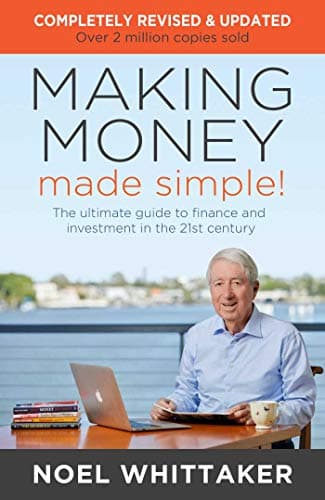
Making Money Made Simple
Australia's classic, comprehensive money guide covering tax, super and investing, updated for today.
Sort Your Money Out and Get Invested
Glen James

Sort Your Money Out and Get Invested
From the host of the my millennial money podcast, a step-by-step Aussie plan to fix your spending, clear debt and actually start investing. Practical and refreshingly free of finance-bro nonsense.
Some links above are affiliate links. If you buy through them, Snowball Invest may earn a small commission at no extra cost to you. We only recommend books we'd suggest anyway.
Sources
Was this article useful?
Put it to your own numbers
Every calculator runs entirely in your browser, with nothing stored. See what these numbers look like for your own situation.
Explore the calculators →General information only. This article is educational and does not constitute personal financial advice. It does not account for your circumstances. Consider your own situation and seek advice from a licensed adviser before acting. Read our full disclaimer.

Timothy Hirou Gaschereau
Founder of Snowball Invest, not a financial adviser.
I write about what I'm learning myself, because nobody ever taught us how to take control of our own money. It's a skill, not a mystery, and it's never too late to learn it. The best day to start was yesterday, the second best is today.
LinkedIn →Related articles

What Is a Cash Budget?
A cash budget is a simple plan for your money in and out. How to build one, an example, and how to actually stick to it. Not financial advice.

How to Make a Budget in Excel (Step by Step)
Build a simple monthly budget in Excel or Google Sheets from scratch. A step-by-step guide with the key formulas, a worked example, and tips.

How to Save for a Holiday in Australia
Want a holiday but not sure how to save for it? A practical guide to budgeting the trip, saving faster, and spending smarter. Not financial advice.