

Lending Money to Family: How to Do It Without Wrecking the Relationship
Lending money to family in Australia? Learn how to protect the relationship with a written agreement, clear expectations, and key Centrelink rules explained.
 By Timothy Hirou GaschereauPublished
 9 min read
This article is general information only and does not constitute financial, legal, or tax advice. Please seek personalised advice for your situation. This is part of a wider guide to money and relationships on Snowball Invest.
Quick answer
Lending money to family in Australia can work well, but only when you're honest about whether it's a loan or a gift, and you put even a small amount in writing (the amount, repayment terms, and what happens if things go wrong). A genuine, documented family loan is treated differently from a gift under Centrelink's rules, but it still counts as an assessable asset. If you're on or approaching a means-tested payment, get personalised advice before lending or gifting a significant amount. The awkward conversation upfront is far easier than the resentment that builds when expectations are left unspoken.
In this guide
- →Why family loans get complicated even when everyone means well
- →The honest question to ask yourself before you say yes
- →How to decide, upfront, whether this is a loan or a gift
- →Why even a small family loan is worth putting in writing
- →How to raise it, whether you're lending or borrowing
- →What to do if a family loan starts going wrong
- →The Centrelink deprivation rules and how genuine loans are assessed differently
🤔 Why Lending Money to Family Gets So Complicated
Financial transactions between strangers come with built-in clarity: a contract, a lender, a borrower, consequences if things go wrong. Between family members, that gets replaced by love, loyalty, and the assumption everyone is on the same page. Often, they're not.
🎯 The essential: Unclear repayment expectations are the most common source of resentment on both sides. The lender assumes the borrower knows when to pay back. The borrower assumes the lender will bring it up if they need the money. Neither says anything.
Chasing a family member for money feels accusatory, so most people don't do it, and the loan quietly becomes a gift nobody actually agreed to. None of this means you shouldn't lend money to family. It means you need to be deliberate about how you do it.
🪞 The Honest Question to Ask Yourself First
Before you say yes to a family loan, ask yourself: could you genuinely afford to never see this money again? Not "would it be annoying?" Could you absorb the loss without real financial harm and without resentment?
If yes, you're in a reasonable position to lend. If no, that's important information too, and it's completely okay to say so. Something like, "I can give you $2,000 as a gift, that's what I can afford to part with. I can't lend you more than that," is a perfectly reasonable answer.
🎁 Loan or Gift? Decide Before You Hand Over the Money
A loan is money you expect back on an agreed timeline with agreed terms. A gift has no expectation of repayment. Decide which one this is before the money changes hands.
A useful honest test: can you genuinely imagine asking for this money back? If not, this is probably a gift. Call it that. Treating a gift like a loan creates false expectations on both sides, which is exactly where resentment grows.
Could you ask for this money back?
Decide before the money moves, not after
Yes: it's a loan
Put it in writing. Amount, repayment terms, what happens if a payment is missed. Assessed by Centrelink as a financial asset, deemed, and reduced as it's repaid.
No: it's a gift
Call it that, out loud, to avoid false expectations. If you're on a means-tested payment, the Centrelink gifting limits below apply.
Centrelink gifting free area (before it counts as a deprived asset)
$10,000
per financial year
$30,000
over any rolling 5 years
Give away more and the excess counts under the assets and income tests for 5 years, even though the money is gone. A genuine, documented loan isn't gifting.
✍️ Why You Should Put Even a Small Family Loan in Writing
A written agreement isn't about distrust, it's about making sure you both remember the same conversation. Memory is unreliable, especially with emotions involved.
A simple written agreement should cover:
- The amount lent and the date it was transferred
- Whether interest applies (a set rate, or interest-free)
- The repayment schedule: how much, how often, and the final repayment date (or triggering event, such as the sale of a property)
- What happens if a repayment is missed (a grace period, and the process from there)
- Signatures from both parties, and the date
For larger amounts, a formal loan agreement prepared or witnessed by a solicitor is worth the cost. For property-related lending with security over the asset (a caveat or mortgage), get personalised legal advice.
This is the same principle that applies to the bank of mum and dad when parents help with a house deposit: whichever structure a family chooses, cash gift, loan, guarantor, or co-ownership, getting it in writing protects everyone, including the relationship.
🗣️ How to Have the Conversation
If you're the one lending. Be upfront: "I'm happy to lend you this, and what I'd need is for you to pay me back $X per month starting in [month]. Does that work?" Frame the written agreement as protecting both of you, not just you, and raise any repayment concerns before the money is transferred, not after.
If you're the one asking to borrow. Be realistic about what you can actually commit to. Come with a proposal rather than an open-ended ask: "I'd like to borrow $X, and I think I could realistically repay $Y per month." It's a much easier conversation for the lender to say yes to.
Left unspoken, these mismatches in expectation are also one of the most common financial red flags that quietly erode trust in a relationship. Our guide to financial red flags in a relationship covers which money differences are normal and which need a real conversation, a framework that applies just as well between parents, siblings, and adult children as it does between partners.
⚠️ What to Do When a Family Loan Starts Going Wrong
The worst thing you can do is say nothing and let resentment build silently.
- Go back to the written agreement, and have the conversation about facts, not feelings.
- Have a direct, calm conversation early, before it turns into a bigger issue.
- Consider adjusting the terms if the borrower is in genuine financial difficulty, and put any changes in writing too.
- Consider formally writing off the debt if repayment clearly isn't coming and the relationship matters more than the money. Be aware of the Centrelink implications below if you're on a means-tested payment.
💵 Tax and Centrelink Implications of Family Loans
This is general information only. Anyone on or approaching a means-tested payment should get personalised advice before lending or gifting a significant amount.
Centrelink deprivation rules: what counts as a gift. If you're receiving a means-tested Centrelink payment, the Age Pension, JobSeeker, the Disability Support Pension, Carer Payment, Parenting Payment, or others, giving money away can affect your payment under the deprivation provisions.
Services Australia sets two key thresholds: $10,000 per financial year (the annual gifting free area), and $30,000 over any rolling five financial years (which cannot include more than $10,000 in any single year). Give away more than these amounts and the excess is a "deprived asset," counted in both the assets test and the income test (via deeming) for five years from the date of the gift, even though you no longer have the money.
| Genuine, documented loan | Gift |
|---|---|
| Assessed as a financial asset at the outstanding balance, with deeming applied | Assessed under the deprivation rules if it exceeds the gifting free area |
| Assessable value falls as repayments are made, and drops off once fully repaid | Counted as if you still owned it, for five years from the date of the gift |
| Requires a real repayment obligation, ideally documented in writing | Applies once the annual or five-year threshold is exceeded |
How genuine loans are treated differently. A genuine, documented family loan is not treated as a gift, provided there's a real repayment obligation. Instead, the outstanding loan balance is assessed as a financial asset, with deeming applied. As repayments are made, the assessable value decreases, and once it's fully repaid, it's removed from assessment entirely. If it's not properly documented, Centrelink may treat it as a gift and apply the deprivation rules instead.
What happens if you forgive the loan. If you later forgive a family loan, Services Australia treats the forgiven amount as a gift from the date of forgiveness, and the gifting rules apply from that point forward.
Interest on family loans and tax. If you charge interest, it's generally assessable income for you as the lender, reportable to the ATO. Most family loans in Australia are interest-free, which is fine legally, but the loan balance is still counted as a Centrelink asset regardless of whether interest applies.
🎯 The essential: If you're on or approaching a means-tested payment, or lending a significant amount, speak with a financial adviser or a Centrelink Financial Information Service (FIS) officer before acting. FIS is free.
Lending money to family can work well. What makes it work is clarity, honesty, and documentation. Do the uncomfortable thing upfront, it's much easier than the alternative.
SnowLetter
Australia's money news and our best reads, once a week.
❓ Frequently asked questions
Do I need a written agreement for a family loan in Australia?
+
There's no legal requirement, but it's strongly advisable. A written agreement removes ambiguity about repayment expectations, which is where most family loan resentment starts. For larger amounts, a formal solicitor-prepared agreement is worth the cost.
What happens if a family member doesn't pay back a loan?
+
With a written agreement, you have legal options, including pursuing the debt through a tribunal or court. Most people weigh the relationship against the money and decide whether to renegotiate, forgive, or take formal action. Either way, address it early rather than letting resentment build silently.
Is a family loan considered a gift for tax purposes in Australia?
+
A genuine loan with a real repayment obligation is not treated as a gift. If you charge interest, that's assessable income for you as the lender. If you later forgive the loan, the forgiven amount may be treated as a gift from the date of forgiveness.
How does lending money to family affect Centrelink payments?
+
A genuine, documented loan is assessed as a financial asset (the outstanding balance is counted, with deeming applied), not a gift, provided the repayment obligation is real and documented. Gifts above $10,000 in a financial year, or $30,000 over any rolling five years, trigger the deprivation rules. Speak with a Centrelink Financial Information Service officer or a financial adviser before acting.
Should I charge interest on a family loan?
+
Most family loans in Australia are interest-free, and that's legal. If you do charge interest, it's assessable income for you. It comes down to a personal decision about formality versus simplicity, just be explicit about your choice in the written agreement either way.
What's the difference between a family loan and a family gift?
+
A loan expects repayment on agreed terms. A gift has no repayment expectation. Decide which one it is before the money changes hands, and be honest with yourself and the other person about that decision.
Sources
- 1. Gifting (Age Pension), Services Australia
- 2. How much you can gift, Services Australia
- 3. What gifts we include in income and assets tests, Services Australia
- 4. How gifting can affect your payment, Services Australia
- 5. Deprivation of assets, Social Security Guide, Department of Social Services
- 6. Gifts and private loans, Legal Aid NSW
- 7. Financial Information Service, Services Australia
📚 Recommended reading
The Joy of Money
Kate McCallum & Julia Newbould
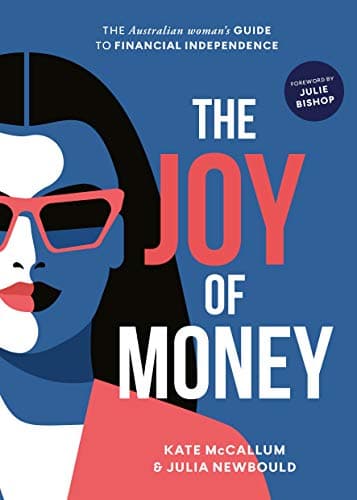
The Joy of Money
Kate McCallum and Julia Newbould map out financial independence for Australian women, from super and investing to insurance and estate planning. Practical, warm and refreshingly free of finance-bro energy.
She's on the Money
Victoria Devine
She's on the Money
Written for millennials, walks through budgeting, clearing debt, saving, investing and buying property with real stories.
Some links above are affiliate links. If you buy through them, Snowball Invest may earn a small commission at no extra cost to you. We only recommend books we'd suggest anyway.
Was this article useful?
Put it to your own numbers
Every calculator runs entirely in your browser, with nothing stored. See what these numbers look like for your own situation.
Explore the calculators →General information only. This article is educational and does not constitute personal financial advice. It does not account for your circumstances. Consider your own situation and seek advice from a licensed adviser before acting. Read our full disclaimer.

Timothy Hirou Gaschereau
Founder of Snowball Invest, not a financial adviser.
I write about what I'm learning myself, because nobody ever taught us how to take control of our own money. It's a skill, not a mystery, and it's never too late to learn it. The best day to start was yesterday, the second best is today.
LinkedIn →Related articles

The Bank of Mum and Dad: How Family Home Loan Help Actually Works in Australia
Parents helping buy a house in Australia? Learn the 4 structures, the real risks for both sides, and why documentation protects everyone.

Financially Supporting Elderly Parents in Australia: A Practical Guide
Helping ageing parents with money in Australia? The Centrelink gifting rules, aged care costs, granny flat arrangements, and how to protect your own finances.

Cost of Having a Baby in Australia: A Realistic First-Year Budget
From hospital bills to nappies and parental leave, here is what the cost of having a baby in Australia really looks like, with current government payment rates.