

Financial Coercive Control in Australia: Signs, the Law, and How to Get Help
Financial coercive control uses money as a weapon of abuse. The warning signs, Australia's laws, and where to get real, free help today.
 By Timothy Hirou GaschereauPublished
 8 min read
⚠️ If you're in immediate danger, call 000
For confidential support any time, call 1800RESPECT on 1800 737 732, available 24/7. This article is general information only, not personal advice. If any of this feels close to home, please talk to someone, you don't have to work this out alone.
This is part of a wider guide to money and relationships on Snowball Invest.
Quick answer
Financial coercive control is when someone uses money, debt, or access to financial resources as a tool to dominate, trap, or punish a partner. It's a recognised form of domestic and family violence in Australia. NSW and Queensland have both made it a standalone criminal offence, and other states address it through family violence frameworks. If you're in immediate danger, call 000. For confidential support, call 1800RESPECT on 1800 737 732, available 24/7.
In this guide
- →What financial coercive control actually is, and how it differs from financial infidelity
- →The concrete warning signs, some obvious, many easy to miss
- →Where each Australian state and territory currently stands on the law
- →How to document what's happening safely
- →Real places to get help, today, for free
💡 Financial abuse vs financial infidelity, not the same thing
Let's clear something up first. Financial abuse and financial infidelity are two very different things. We've covered financial infidelity in a separate article, that one is about lying and hiding money from a partner. A secret savings account. Hiding debt. Spending without telling anyone.
Financial infidelity is a breach of trust. It's a relationship problem, and often a painful, fixable one.
Financial coercive control is something else entirely. It's about using money as a weapon. The goal isn't secrecy for its own sake, it's power. Control. Keeping someone trapped. If you want the full breakdown on the trust-and-secrecy side of things, our guide to financial infidelity covers that separately.
The Attorney-General's Department defines it clearly: economic and financial abuse involves someone "controlling your ability to get, use or keep your money or economic resources." That word, control, is the whole thing.
Financial coercive control sits inside the broader pattern of coercive control, defined nationally as "patterns of abusive behaviour over time that create fear and deny liberty and autonomy." Money is one of the most effective tools an abuser can use. It creates dependency. It makes leaving feel impossible. And it's often invisible to everyone outside the relationship.
According to the ABS 2021-22 Personal Safety Survey, 16% of women and 7.8% of men in Australia have experienced economic abuse from a partner since the age of 15. A 2020 study commissioned by CommBank and conducted by Deloitte put the total cost of financial abuse in Australia at around $11 billion, roughly $5.7 billion borne directly by victims. This isn't rare. It's happening in homes across the country right now.
🚩 Concrete signs of financial abuse in a relationship
These are the red flags. Some are obvious. Many aren't.
Control over accounts
- Demanding passwords
- Interrogating every purchase
Forced debt
- Loans signed under pressure
- Debts run up in your name
Isolation
- Blocked from working
- Job sabotaged
Property coercion
- Leases in your name only
- Assets hidden at separation
Control over accounts and spending: demanding access to your bank accounts or passwords, monitoring and interrogating every transaction, giving you a "budget" that doesn't actually cover basic needs, withholding financial information including hiding statements or income.
Forced debt and financial sabotage: pressuring you to take out loans or sign contracts in your name alone, creating debts in your name without your knowledge, spending your income or Centrelink payments without your consent.
Isolation and dependency: preventing you from working or studying, sabotaging your job by calling your employer or causing scenes, withholding financial support for basic living expenses, making you financially dependent so leaving feels impossible.
Coercion around property: putting leases, car loans, or mortgages in your name only, threatening to destroy shared assets or run up joint debt if you leave, hiding assets during separation.
If several of these feel familiar, you're not imagining it. This is a pattern, not a personality quirk, and naming it is often the hardest and most important step. If you're still working out whether what you're seeing is this or something more ordinary, our guide to financial red flags in a relationship lays out the difference between a values clash, a trust issue, and abuse.
⚖️ The legal status of coercive control in Australia, state by state
The law here is moving, but it's genuinely not uniform. Here's roughly where each state and territory currently stands.
| State/territory | Status | Key details |
|---|---|---|
| NSW | Criminal offence since 1 July 2024 | Crimes Act 1900, s.54D. Max penalty: 7 years imprisonment. Applies to conduct from 1 July 2024 only. |
| QLD | Criminal offence since 26 May 2025 | Amended Criminal Code. Max penalty: 14 years imprisonment. |
| SA | Legislation passed, not yet in force | Passed parliament September 2025. Commencement expected in 2027, by proclamation. |
| VIC | Not a standalone offence | Addressed through the Family Violence Protection Act, economic abuse is defined and can support intervention orders. |
| WA | Not a standalone offence | Addressed through family violence frameworks and restraining orders. |
| ACT | Not a standalone offence | Addressed through family violence frameworks. |
| NT | Not a standalone offence | Addressed through family violence frameworks. |
| TAS | Not a standalone offence | Related conduct is recognised under family violence law. |
"Not a standalone offence" doesn't mean nothing can be done. It means financial coercive control isn't currently charged as its own crime in those states, but it can still be raised as evidence in family violence intervention order applications, and it's relevant to family law proceedings nationally regardless of where you live.
There's also a national layer. In September 2023, every state and territory government agreed to the National Principles to Address Coercive Control in Family and Domestic Violence, a shared framework across the country, even where individual state law hasn't caught up yet.
📋 How to document financial abuse
Documentation matters if you're considering legal action or separation. Start now, even if you're not sure yet what you'll do with it.
What to collect:
- Screenshots of controlling or threatening messages, texts, emails, banking app notifications
- Bank statements showing transactions you didn't authorise, or evidence of restricted access
- Loan documents or contracts you were pressured to sign
- Records of income withheld or redirected
- Photos of any documents you can't safely remove from the home
How to store it safely:
- Use a private email account your partner doesn't know about
- Upload to cloud storage from a private browsing session
- Send copies to a trusted friend, family member, or your lawyer
- If you're in NSW or Queensland, a lawyer can advise on what evidence is most relevant to a coercive control charge
🎯 The essential: If your partner monitors your devices, use a private browsing window and clear your history afterwards. 1800RESPECT has detailed online safety guidance if this feels risky.
🏛️ What happens legally: protection orders, family law, and criminal charges
Protection orders (called an AVO in NSW, an intervention order in Victoria, a domestic violence order in Queensland) can restrict contact and prohibit certain behaviours. Financial abuse, especially as part of a broader pattern of controlling behaviour, can support an application.
Coercive control charges (currently NSW and Queensland only) are criminal matters, not civil ones. In NSW, police can charge someone under s.54D of the Crimes Act 1900 for conduct occurring on or after 1 July 2024. In Queensland, charges apply to conduct from 26 May 2025 onward.
Family law recognises family violence, including economic abuse, as relevant to both parenting arrangements and property settlements. If you're separating from a de facto relationship, our guide to de facto relationships and money covers how property division actually works.
Legal aid is available in every state and territory, offering free or low-cost advice. Search "legal aid" plus your state, or ask 1800RESPECT to connect you with a local service.
Money used as leverage can also show up in smaller, earlier moments, well before it looks like this. Our guide to who pays for the wedding in Australia covers how a family contribution with too many strings attached can be an early version of the same pattern.
📞 Where to get help in Australia
In immediate danger? Call 000.
1800RESPECT, the national specialist service for domestic and family violence, including financial abuse. Phone 1800 737 732 (24/7, free), text 0458 737 732, or use online chat and video call at 1800respect.org.au.
Services Australia for financial assistance, Centrelink payments, and referrals for people affected by family and domestic violence, at servicesaustralia.gov.au.
MoneySmart (ASIC) has practical guidance on financial abuse and rebuilding financial independence at moneysmart.gov.au.
National Debt Helpline for free financial counselling, including for debt forced on you by a partner, on 1800 007 007.
When you're in a position to start building independence, even a small one, our guide to the emergency fund walks through how to build one from scratch, and the safety net calculator can help you work out how much you'd realistically need to cover you if you left.
Beyond Blue for mental health support, on 1300 22 4636 (24/7).
SnowLetter
Australia's money news and our best reads, once a week.
❓ Frequently asked questions
Is financial coercive control a crime in Australia?
+
It depends where you live. In NSW it's been a standalone criminal offence since 1 July 2024, with a maximum penalty of seven years. In Queensland it's been a standalone offence since 26 May 2025, with a maximum of fourteen years. South Australia passed similar legislation in September 2025, but it isn't in force yet, commencement is expected sometime in 2027. In Victoria, WA, the ACT, the NT, and Tasmania, it isn't charged as its own crime, but it's still recognised and addressed through family violence intervention order frameworks.
What's the difference between financial abuse and financial infidelity?
+
Financial infidelity is secrecy: hiding a savings account, lying about debt, spending without telling your partner. It's a breach of trust. Financial coercive control is different, it's about power: controlling your access to money so you can't leave. One is deception, the other is domination. They can show up in the same relationship, but they're not the same problem, and they call for different responses.
Can I get a protection order for financial abuse alone?
+
Possibly. It depends on the state and the circumstances, and financial abuse that's part of a wider pattern of controlling or threatening behaviour is more likely to support an application. Talk to a lawyer, a legal aid service, or 1800RESPECT about what's realistic in your situation.
What if my state hasn't criminalised coercive control?
+
You still have real options. Family violence intervention orders, family law protections, and civil remedies are all available nationally, regardless of whether your state has a standalone offence. Document what's happening and contact 1800RESPECT or a local legal aid service to talk through what applies to you.
Can financial abuse affect a property settlement after separation?
+
Yes. Family violence, including economic abuse, is a factor Australian courts can weigh when dividing property after a relationship ends. If your partner controlled your finances, ran up debt in your name, or hid assets, raise it with your lawyer early.
What if there's debt in my name that I was pressured into?
+
This happens more than people realise, and you're not stuck with it forever. Call the National Debt Helpline on 1800 007 007 for free, confidential financial counselling. Some banks also run hardship programs specifically for people in this situation, and MoneySmart has practical guidance on next steps.
Sources
- 1. Partner economic abuse, Personal Safety Survey 2021-22, Australian Bureau of Statistics
- 2. Understanding coercive control and economic and financial abuse, Attorney-General's Department
- 3. National Principles to Address Coercive Control, Attorney-General's Department
- 4. Coercive control and the law, NSW Government
- 5. Coercive control laws, Queensland Government
- 6. Financial abuse, 1800RESPECT
- 7. Family and domestic violence, Services Australia
- 8. Financial abuse, MoneySmart, Australian Securities and Investments Commission
📚 Recommended reading
On Your Own Two Feet
Helen Baker

On Your Own Two Feet
An Aussie financial planner's essential guide to money independence for women, covering every life stage from single to separated. Warm, practical and genuinely on your side.
The Joy of Money
Kate McCallum & Julia Newbould
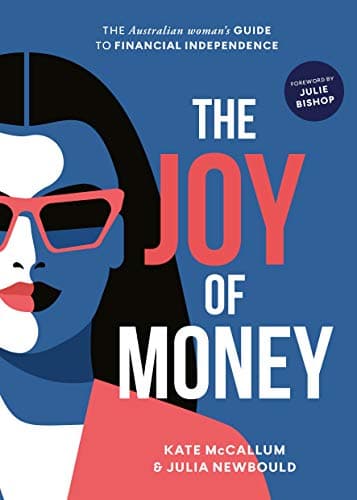
The Joy of Money
Kate McCallum and Julia Newbould map out financial independence for Australian women, from super and investing to insurance and estate planning. Practical, warm and refreshingly free of finance-bro energy.
Some links above are affiliate links. If you buy through them, Snowball Invest may earn a small commission at no extra cost to you. We only recommend books we'd suggest anyway.
Was this article useful?
Put it to your own numbers
Every calculator runs entirely in your browser, with nothing stored. See what these numbers look like for your own situation.
Explore the calculators →General information only. This article is educational and does not constitute personal financial advice. It does not account for your circumstances. Consider your own situation and seek advice from a licensed adviser before acting. Read our full disclaimer.

Timothy Hirou Gaschereau
Founder of Snowball Invest, not a financial adviser.
I write about what I'm learning myself, because nobody ever taught us how to take control of our own money. It's a skill, not a mystery, and it's never too late to learn it. The best day to start was yesterday, the second best is today.
LinkedIn →Related articles

Cost of Having a Baby in Australia: A Realistic First-Year Budget
From hospital bills to nappies and parental leave, here is what the cost of having a baby in Australia really looks like, with current government payment rates.

How Much Does It Cost to Raise a Child in Australia?
How much does it cost to raise a child in Australia? The real numbers by age, from childcare to Year 12, plus practical ways to keep every stage on budget.

How Much to Give for a Wedding Gift in Australia
No fixed rule exists. Rough Australian cash gift ranges by relationship, plus tips for when money is tight. General info, not advice.