

Financial Infidelity: Warning Signs and What to Do About It
Hiding money, debt or spending from a partner is more common than you'd think. The warning signs, why it happens, and practical steps to deal with it.
 By Timothy Hirou GaschereauPublished
 11 min read
⚠️ Before you read on
This article is general information only. It is not financial advice and not legal advice. If you are experiencing financial abuse or coercive control, contact 1800RESPECT on 1800 737 732 (free, 24/7) or the National Debt Helpline on 1800 007 007. For anything related to separation or a property settlement, speak with a qualified family law solicitor.
Money secrets in relationships are more common than most people assume, and more corrosive than people expect too. This is part of a wider guide to money and relationships on Snowball Invest.
Quick answer
Financial infidelity means hiding money-related information from a partner, a secret account, undisclosed debt, concealed spending. It ranges from minor (hiding a takeaway habit) to serious (a hidden credit card with a five-figure balance). Research consistently finds financial secrecy is common in relationships, and the consequences can include damaged trust, shared credit score impacts, and real legal complications if you separate.
In this guide
- →What financial infidelity actually is, and what it isn't
- →Why people hide money from their partner
- →The warning signs worth paying attention to
- →The real consequences, on the relationship, your finances, and under the law
- →Practical steps if you suspect it's happening to you
🤐 What is financial infidelity?
Financial infidelity is when one partner hides financial information, decisions, or behaviour from the other. That might be a secret credit card, undisclosed debt, a savings account the other person doesn't know about, lying about income, or spending money in ways that have been agreed as off-limits. It sits on a spectrum, from a hidden receipt for a new pair of shoes at the minor end, to years of hidden bank statements and tens of thousands in undisclosed debt at the serious end.
Hiding a small purchase
A secret subscription or account
Lying about income
Years of hidden statements, a five-figure debt
🎯 The essential: Financial infidelity is not the same as financial abuse. Financial abuse involves coercive control, deliberately restricting a partner's access to money, forcing them to hand over wages, or running up debt in their name without consent. Moneysmart describes financial abuse as a form of family and domestic violence. Financial infidelity, by contrast, is typically about secrecy and avoidance rather than deliberate control, though that doesn't make it harmless.
🧠 Why do people do it?
There's rarely one clean answer. Most of the time it's a tangle of shame, avoidance, and different money values that never got properly talked through.
- Fear of judgment or conflict. Someone racks up debt during a hard patch and can't face the conversation. The longer they wait, the harder it gets.
- Financial shame. Debt carries real stigma. People who feel embarrassed about their situation often hide it from the person closest to them, the opposite of helpful, but very human.
- A desire for financial independence. Not everyone with a separate account is being deceptive. Some people, particularly those who've experienced financial control in past relationships, keep private money as a form of security. The line between healthy independence and problematic secrecy depends on context and what's actually been agreed.
- Mismatched money values with no framework to discuss them. One partner's a saver, the other's a spender, and without an agreed approach, the spender starts hiding purchases to avoid the lecture.
- Compulsive spending or addiction. Problem gambling, shopping addiction and substance use all drive financial secrecy, and usually need professional support beyond a relationship conversation.
Coercive control, where one partner uses money as a tool of power over the other, is a separate and more serious category. That's financial abuse, not financial infidelity, and it needs a different response entirely.
🚩 The warning signs
These aren't accusations, they're things worth noticing. One on its own might mean nothing. A cluster of them, or a pattern that's changed, is worth a conversation.
- Unexplained anxiety or avoidance around conversations about money that used to be normal
- Reluctance to share bank statements or financial information, especially if that's a change from before
- Mail or accounts you don't recognise turning up
- A gap between your partner's stated income and their actual lifestyle
- Unexpected changes to a shared credit score without explanation
- A disproportionate or defensive reaction whenever money comes up
- New devices, passwords, or a sudden insistence on privacy around banking that wasn't there before
None of these prove anything alone. But if several apply, it's worth getting a clearer picture of your shared financial situation. For the wider picture of how financial infidelity fits alongside other warning signs, our guide to financial red flags in a relationship walks through the full spectrum, from an awkward habit to a genuine dealbreaker.
💥 The real-world consequences
On the relationship. Trust broken around money is genuinely hard to rebuild. These situations tend to escalate, the longer a secret is kept, the more entrenched the behaviour becomes, and the bigger the eventual reveal.
On your finances. If you're a joint account holder or co-borrower, you can be liable for debts you didn't know about, lenders can pursue either party for the full amount on a joint debt regardless of who spent it. Missed repayments on joint accounts affect both people's credit files. And if you separate, money that was secretly spent or hidden is simply gone from the relationship's balance sheet.
If your relationship ends and you go through a property settlement, full financial disclosure is mandatory under the Family Law Act 1975. Both parties must disclose all assets, liabilities, income, super and financial resources, including anything held through companies or trusts. If hidden assets are discovered after a settlement is finalised, the court can set it aside.
This applies to both married couples and de facto couples who meet the relevant criteria. We cover what disclosure looks like in a de facto separation in de facto relationships and money.
🧭 What to do if you suspect financial infidelity
Step 1: Get a clear picture of your own finances first. Pull your own credit report, both major bureaus offer a free report periodically. It shows accounts, enquiries and defaults in your name. It won't show your partner's separate accounts, but it will flag anything in your name that you weren't aware of. Check your own bank statements, super balance, and any joint accounts you hold.
Step 2: Have the conversation. Approach it with curiosity rather than accusation. "I've been looking at our finances and I'm confused about a few things, can we go through them together?" lands very differently to an opening accusation. Pick a calm moment, not after a stressful day, and give it time, these conversations rarely resolve in one sitting.
Step 3: If it's serious, get professional support. A financial counsellor can help you both understand the situation without judgment. The National Debt Helpline connects you with free, accredited counsellors who deal with exactly these situations. If there's an underlying issue like problem gambling, that needs its own support pathway.
Step 4: If separation is on the table, get legal advice early. Financial disclosure becomes a legal obligation the moment you're in a property settlement process. Getting advice from a family law solicitor early means you understand your rights before things get complicated.
If there's coercive control involved, safety comes first. Contact 1800RESPECT before anything else.
🔑 Building financial transparency
Prevention is easier than repair. None of this requires merging every dollar, just building shared visibility and a habit of honest conversation.
- Monthly money check-ins. A 30-minute "money date" once a month, reviewing accounts, upcoming expenses, savings progress, normalises financial conversation and makes surprises less likely.
- Shared visibility, not necessarily shared accounts. You don't have to pool everything, but both partners should have a clear view of what's coming in, what's going out, what's owed, and what's saved. For more on how couples actually structure this, see our guide on joint vs separate accounts.
- Agreed discretionary spending amounts. A common source of tension is disagreement about what counts as "too much" without checking in first. Agreeing on a threshold removes the ambiguity that often leads to hiding.
- An annual financial review. Once a year, look at the big picture together, net worth, debt levels, savings, insurance, super. Treat it like a household AGM.
These habits won't fix a relationship where trust has already broken down. But they create the conditions where financial infidelity is far less likely to take root in the first place. If you're starting from scratch, our guide to how to create a family budget is a practical starting point for building that shared visibility.
Hidden money isn't only a between-partners issue either, it can extend to family contributions too. Our guide to who pays for the wedding in Australia covers what to do if a partner is hiding the extent of family wedding contributions, or related debts, from you.
SnowLetter
Australia's money news and our best reads, once a week.
❓ Frequently asked questions
Is financial infidelity grounds for divorce in Australia?
+
Not directly. Australia runs a no-fault divorce system, the only ground for divorce is that the marriage has broken down irretrievably, shown by 12 months of separation. Financial infidelity won't appear on a divorce application, but it can absolutely be the reason a relationship ends, and it can affect how a property settlement plays out if assets were hidden or wasted.
Can my partner's hidden debt become my debt?
+
It depends how the debt is structured. If it's solely in your partner's name, you're generally not liable to the lender. But if you're a joint account holder, co-borrower, or guarantor, you can be held responsible for the full amount regardless of who spent the money. In a property settlement, a court may also factor hidden debt into how assets get divided, that's a separate question from what a lender can chase you for.
What's the difference between financial abuse and financial infidelity?
+
Financial infidelity is typically about secrecy, hiding spending, debt or accounts, usually driven by shame, avoidance, or mismatched money values. Financial abuse is a pattern of coercive control using money as a tool: restricting access to funds, forcing a partner to hand over income, running up debt in their name without consent. Financial abuse is a form of domestic violence. If you're unsure which applies, 1800RESPECT can help you work through it.
How do I find out if my partner has hidden accounts?
+
You can't access your partner's private financial records without their consent. What you can do: check your own credit report for any joint accounts or enquiries you weren't aware of, review joint statements carefully, and look at shared expenses for gaps that don't add up. If you're in a property settlement, your solicitor can request formal financial disclosure, and the court has powers to compel it.
Does financial infidelity affect a property settlement in Australia?
+
It can. Full financial disclosure is mandatory under the Family Law Act 1975. If one party hides assets, the court can take that into account when dividing property, and if a settlement is finalised and hidden assets are discovered afterward, the court has the power to set it aside. This is one reason getting legal advice early in a separation matters.
What if my partner refuses to talk about money?
+
Start with the right moment and framing, curiosity rather than accusation. If that doesn't open things up, a financial counsellor can help facilitate the conversation. The National Debt Helpline offers free financial counselling that covers relationship money dynamics too. If refusal to discuss finances is part of a broader pattern of control, that's worth raising with 1800RESPECT.
Is keeping a secret savings account always financial infidelity?
+
Not necessarily, context matters. Some people maintain a private account for personal spending within an arrangement both partners understand, that's not inherently deceptive. The issue is when the account is actively hidden, funded in ways that affect shared finances, or contradicts something the couple agreed on. The real question is whether you both have an honest, shared picture of the household's overall finances.
Sources
- 1. Financial abuse, Moneysmart, Australian Securities and Investments Commission
- 2. Relationships and money, Moneysmart, Australian Securities and Investments Commission
- 3. Credit scores and credit reports, Moneysmart, Australian Securities and Investments Commission
- 4. Family Law Act 1975 (Cth), Federal Register of Legislation
- 5. Duty of disclosure, Federal Circuit and Family Court of Australia
📚 Recommended reading
She's on the Money
Victoria Devine

She's on the Money
Written for millennials, walks through budgeting, clearing debt, saving, investing and buying property with real stories.
The Joy of Money
Kate McCallum & Julia Newbould
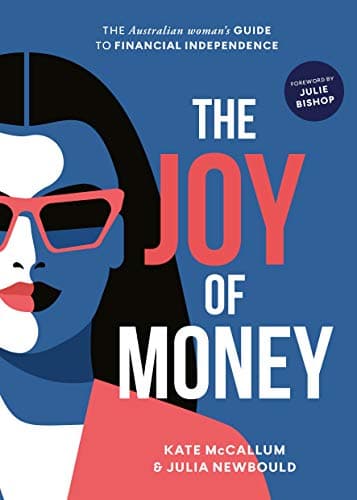
The Joy of Money
Kate McCallum and Julia Newbould map out financial independence for Australian women, from super and investing to insurance and estate planning. Practical, warm and refreshingly free of finance-bro energy.
Some links above are affiliate links. If you buy through them, Snowball Invest may earn a small commission at no extra cost to you. We only recommend books we'd suggest anyway.
Was this article useful?
Put it to your own numbers
Every calculator runs entirely in your browser, with nothing stored. See what these numbers look like for your own situation.
Explore the calculators →General information only. This article is educational and does not constitute personal financial advice. It does not account for your circumstances. Consider your own situation and seek advice from a licensed adviser before acting. Read our full disclaimer.

Timothy Hirou Gaschereau
Founder of Snowball Invest, not a financial adviser.
I write about what I'm learning myself, because nobody ever taught us how to take control of our own money. It's a skill, not a mystery, and it's never too late to learn it. The best day to start was yesterday, the second best is today.
LinkedIn →Related articles

Financial Red Flags in a Relationship (And What They Actually Mean)
Not every money difference is a dealbreaker. Which financial red flags in a relationship need a conversation, which need action, and which are serious.

How to Talk About Money With Your Partner (Without a Fight)
A practical, judgment-free guide to talking about finances in a relationship: money dates, combining finances, and handling financial infidelity.

How Much Does a Prenup Cost in Australia?
A prenup (binding financial agreement) in Australia typically costs $1,500 to $15,000+ per person. What actually drives the price, and whether it's worth it.