

How to Compare Credit Cards in Australia (Without Getting Played)
How to compare credit cards in Australia: interest rates, rewards, balance transfers, interest-free days, and the traps most people miss.
 By Timothy Hirou GaschereauPublished
 10 min read
Try it yourself
Most people pick a credit card by Googling “best credit card Australia” and clicking whatever comes up first. The problem? Most comparison sites only show cards from issuers who pay them a referral fee, so that's a curated shop window, not a full market view. Learning to compare credit cards properly takes about 20 minutes. It's part of our compare and choose series, and it's general information only, not financial advice.
🎯 The essential: The single most important question: do you pay your balance in full every month, or carry debt? If you carry a balance, a low-rate card beats a rewards card every time, interest at 20% will always outrun points. Interest-free days vanish the moment you carry even $1. And comparison sites often only show paying partners, so check the disclaimer.
The first question to ask yourself
Do you pay off your full credit card balance every month, or do you sometimes carry a balance? This matters more than any feature or bonus. If you pay in full,the purchase rate is almost irrelevant (you never pay it), and what matters is the annual fee, interest-free days, and whether rewards deliver real value. If you carry a balance, the interest rate is everything: a rewards card at 20% p.a. on a $3,000 balance costs $600 a year, and no points program makes that back. Be honest: Australians owe around $33 billion on cards, almost $18 billion of it accruing interest. A lot of people think they'll pay in full and then don't.
Two types of card worth knowing about
| Low-rate / low-fee card | Rewards / points card | |
|---|---|---|
| Best for | People who carry a balance, even occasionally | Disciplined full-balance payers with high spend |
| Purchase rate (typical) | 9 to 13% p.a. | 19 to 22% p.a. |
| Annual fee (typical) | $0 to $100 | $100 to $450+ |
| Rewards | None or minimal | 0.5 to 3 points per $1 spent |
| Key risk | Still costly if you only pay the minimum | One month carrying a balance wipes out months of points |
Low-rate cards are for anyone who doesn't pay in full every single month. Rewards cards only work if you never pay interest, because the moment you carry a balance the maths falls apart.
What to actually compare (low-rate cards)
- Purchase interest rate. The main number. Look for under 13% p.a. for a genuinely low-rate card (14 to 16% isn't low).
- Annual fee. A $0-fee card at 14% can cost more than a $59-fee card at 9.9% if you carry a balance. Run the numbers for your typical balance.
- Interest-free days. Widely misunderstood. The typical 44 to 55 days only apply to new purchases if you pay the full closing balance by the due date. Carry even $1 and you lose interest-free days immediately, and interest backdates to the transaction date, the day you spent the money.
- The minimum repayment trap. Paying only the minimum (often 2% or $25) on a $5,000 balance at 20% can take over 30 years and cost thousands. Always pay more than the minimum, and see our credit card payoff calculator.
What to actually compare (rewards cards)
If you genuinely pay in full every month, compare the points earn rate(points per $1, which varies by category), and the real dollar value of points(a typical frequent flyer point is worth about 0.5 to 1 cent for flights, less for gift cards). A quick test: annual fee divided by points value per point equals your break-even spend. A $250 fee with points worth 0.7c needs $35,714 of annual spend just to cover the fee, before any profit.
Watch caps and exclusions (government payments, utilities, ATO tax, sometimes insurance often earn no points), and remember the purchase rate still matters even on a rewards card: carry $2,000 for a month at 20% and that's ~$33 in interest, which needs $4,700 of spend to earn back in points.
Balance transfer cards and the honeymoon trap
A balance transfer moves existing card debt to a new card at 0% (or very low) for an intro period, typically 6 to 24 months, to pause the interest clock. The traps: the revert rate (any remaining balance jumps to 19 to 22% when the promo ends), and new purchases (often NOT covered by the 0% rate, so they accrue interest from day one). Balance transfers only work if you clear the transferred balance before the promo ends, stop new purchases, and never miss a payment (which can cancel the promo rate). A revert rate above 20% is a significant risk.
Why rewards points aren't worth it if you carry a balance
Make the maths vivid. Carry a $3,000 balance on a rewards card at 20% p.a. and that's $600 a year in interest. At 1 point per $1 worth 0.7 cents, to earn back $600 you'd need to spend $85,714 a year. The interest always wins.
This isn't a knock on rewards programs. For a disciplined full-balance payer with high spend, they can deliver real value. But if there's any chance you'll carry a balance, a low-rate card saves more than any points program could.
How to read the Key Facts Sheet
Australian issuers must provide a Key Facts Sheet (KFS) before you apply, under the National Consumer Credit Protection Act 2009. This standardised one-page document shows the purchase rate, cash advance rate, balance transfer rate, annual fee, interest-free days, minimum repayment formula, and late payment fee. Pull the KFS for every card you're considering and compare the same line items side by side. Unlike home loans, credit cards have no single “comparison rate,” so the KFS is the closest apples-to-apples tool you have.
Red flags to watch for
- A revert rate above 20% p.a. on a balance transfer card.
- An annual fee that exceeds your realistic annual rewards value (run the numbers before you apply).
- Comparison sites that only show cards from paying partners. Check the disclaimer.
- “0% on purchases” offers that revert to 22%+. Note the exact end date.
- High cash advance rates (21 to 22% with no interest-free days). Never use a card for cash unless it's a genuine emergency.
The bottom line: answer the one question first (do you carry a balance?), then compare on the KFS, not the marketing. If you carry a balance, chase the lowest rate and ignore rewards. If you always pay in full, do the break-even maths before paying an annual fee.
Not sure a credit card suits you at all? See debit card vs credit card.
SnowLetter
Australia's money news and our best reads, once a week.
❓ Frequently asked questions
Is a rewards card worth it if I spend $2,000 to $3,000 per month?
+
It depends entirely on whether you pay in full every month. At $2,500 a month ($30,000 a year), earning 1 point per $1 at 0.7 cents per point gives roughly $210 in annual points value. If the annual fee is $150, you're ahead by $60, before exclusions or caps. That's thin. At $3,000+ a month and a higher earn rate, the numbers improve. Run your own spend through the break-even formula before applying.
What's the difference between a purchase rate and a cash advance rate?
+
The purchase rate applies to everyday spending. The cash advance rate applies when you use your card to withdraw cash, buy foreign currency, or make certain other transactions. Cash advance rates are typically 21 to 22% p.a., there are no interest-free days, and there's usually a fee per transaction. Avoid using a credit card for cash advances wherever possible.
Can I use a balance transfer card for new purchases?
+
Technically yes, but it's usually a bad idea. On most balance transfer cards, new purchases are not covered by the 0% promotional rate; they accrue interest at the standard purchase rate from day one. If you're doing a balance transfer to pay down debt, the cleanest approach is to stop using that card for new spending during the transfer period.
What is the Key Facts Sheet and where do I find it?
+
The Key Facts Sheet (KFS) is a standardised one-page document that Australian credit card issuers must provide before you apply, under the National Consumer Credit Protection Act 2009. It shows the purchase rate, cash advance rate, annual fee, interest-free days, minimum repayment formula, and late payment fee. You'll find it on the card's product page or attached to the application form.
Are comparison sites showing me all available cards?
+
Not necessarily. Most commercial comparison sites earn referral commissions from card issuers, so cards that don't pay a commission often don't appear or rank lower. Always scroll to the disclaimer at the bottom. If it says "we may receive a commission," the list is not a neutral view of the whole market. Use the KFS and your own research alongside any comparison tool.
What credit score do I need for a low-rate card?
+
There's no single published threshold, as each issuer sets its own criteria. Generally, a good to excellent credit score improves your chances and access to more products. Limited history or past defaults can lead to a decline, and multiple applications in a short period can hurt your score, so research before applying. You can check your credit score for free through Equifax, Experian, or illion.
📚 Recommended reading
The Barefoot Investor
Scott Pape

The Barefoot Investor
Australia's best-selling money book ever. A simple system for accounts, budgeting, debt and a real emergency fund in one.
The Total Money Makeover
Dave Ramsey
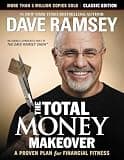
The Total Money Makeover
A no-nonsense, step-by-step plan for smashing debt with the snowball method and building a real emergency fund. The tough-love budgeting works anywhere, just use the ATO and super instead of his US tax tips.
Making Money Made Simple
Noel Whittaker

Making Money Made Simple
Australia's classic, comprehensive money guide covering tax, super and investing, updated for today.
Some links above are affiliate links. If you buy through them, Snowball Invest may earn a small commission at no extra cost to you. We only recommend books we'd suggest anyway.
Sources
This article is general information only and does not constitute personal financial advice. Credit card products, rates, and fees change regularly. Consider your own circumstances before applying for any credit product, and speak to a licensed adviser if you need personal advice.
Was this article useful?
Put it to your own numbers
Every calculator runs entirely in your browser, with nothing stored. See what these numbers look like for your own situation.
Try the Credit Card Payoff calculator →General information only. This article is educational and does not constitute personal financial advice. It does not account for your circumstances. Consider your own situation and seek advice from a licensed adviser before acting. Read our full disclaimer.

Timothy Hirou Gaschereau
Founder of Snowball Invest, not a financial adviser.
I write about what I'm learning myself, because nobody ever taught us how to take control of our own money. It's a skill, not a mystery, and it's never too late to learn it. The best day to start was yesterday, the second best is today.
LinkedIn →Related articles

Rent vs Buy in Australia: A Balanced Guide
Rent vs buy in Australia: the real costs, the 'dead money' myth, break-even time, and first-home-buyer help. Run the numbers for your situation.

How to Compare Bank Accounts in Australia (Everyday Accounts)
Learn how to compare bank accounts in Australia: fees, features, safety and how to switch, so you stop paying fees you do not need.

Debit Card vs Credit Card: Which Should Australians Use?
Debit card vs credit card in Australia: the real differences on interest, fraud protection and credit score, and which suits your spending habits.