

What is the Medicare Levy Surcharge?
Quick answer
The Medicare Levy Surcharge (MLS) is an extra tax, on top of the standard Medicare levy, charged to higher-income Australians who don't hold eligible private hospital cover. For 2026-27 it kicks in at $105,000 for singles and $210,000 for families, at rates between 1% and 1.5% of your income.
How the Medicare Levy Surcharge works
First, the distinction that trips people up: the MLS is not the Medicare levy. The Medicare levy is a separate 2% charge that most Australian taxpayers pay to fund the public health system. The MLS is an extra tax that only applies to certain people, and you can end up paying both.
It's assessed through your annual tax return. If you earned above the threshold and didn't hold eligible hospital cover for part of the year, you'll owe the surcharge for those days without cover, calculated pro-rata.
2026-27 income thresholds and rates
- Base (no MLS): up to $105,000 single, up to $210,000 family, 0%
- Tier 1: $105,001-$123,000 single, $210,001-$246,000 family, 1%
- Tier 2: $123,001-$164,000 single, $246,001-$328,000 family, 1.25%
- Tier 3: $164,001+ single, $328,001+ family, 1.5%
The family threshold increases by $1,500 for each dependent child after the first. These figures move most years, so double check them at ato.gov.au before you rely on them for a real decision.
Your MLS income also isn't just your salary. The ATO adds up your taxable income, reportable fringe benefits, reportable employer super contributions (like salary sacrifice your employer reports), and net investment losses. Someone on a $100,000 salary who salary sacrifices $10,000 into super and has $5,000 in reportable fringe benefits could have MLS income well above $105,000, even though their take-home pay looks lower.
What counts as eligible cover
Not every private health policy gets you off the hook. To avoid the MLS, your policy needs to be hospital cover (not extras-only) with a registered Australian insurer, and carry an annual excess of $750 or less for singles, or $1,500 or less for couples and families.
Extras-only cover, dental, optical, physio and the like, doesn't count, neither does Overseas Visitors Cover or Overseas Student Health Cover. The excess limit is the one that catches people out: a hospital policy with a $1,000 single excess to keep premiums down won't exempt you, you'd need to switch to $750 or less.
A worked example
Emma earns $118,000 in taxable income with no private hospital cover. Her income sits in Tier 1, so her MLS is 1% of $118,000, which is $1,180 in extra tax. She also pays the standard 2% Medicare levy of $2,360, a combined $3,540.
Compare that to a basic hospital policy, which typically runs somewhere in the $1,000-$1,500 a year range for a single adult, depending on the insurer, state and excess (get an actual quote before assuming). At $118,000, the financial case for cover is genuinely marginal, the MLS and a basic premium are roughly equivalent, though cover also means you can actually use the private hospital system. At higher incomes the maths tips more clearly toward cover: someone on $170,000 pays 1.5% MLS, or $2,550 a year, almost certainly more than a basic hospital policy would cost.
Common misconceptions
"Private health insurance always saves me money." Not necessarily, especially at Tier 1 incomes. If your MLS bill is $1,100 but a compliant hospital policy costs $1,400 a year, you're paying more for cover than you'd pay in surcharge. Run your own numbers rather than assuming.
"Extras-only cover exempts me." It doesn't. The ATO requires hospital cover specifically.
"My income is just under the threshold, so I'm fine." Reportable fringe benefits and reportable employer super contributions get added on top of taxable income for MLS purposes. If you salary sacrifice or receive benefits through work, your MLS income could sit higher than your payslip suggests, check your income statement before assuming you're under the threshold.
📚 Recommended reading
Making Money Made Simple
Noel Whittaker

Making Money Made Simple
Australia's classic, comprehensive money guide covering tax, super and investing, updated for today.
The Joy of Money
Kate McCallum & Julia Newbould
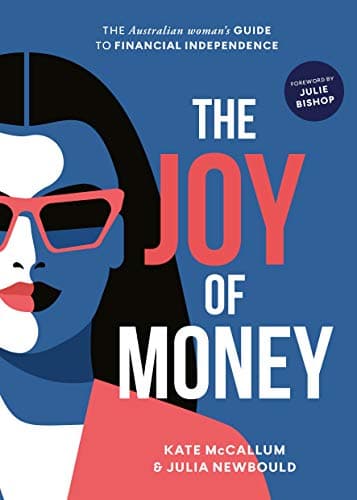
The Joy of Money
Kate McCallum and Julia Newbould map out financial independence for Australian women, from super and investing to insurance and estate planning. Practical, warm and refreshingly free of finance-bro energy.
Some links above are affiliate links. If you buy through them, Snowball Invest may earn a small commission at no extra cost to you. We only recommend books we'd suggest anyway.
💵 Salary & Take-Home Pay Calculator
See how the Medicare levy, and the surcharge if it applies, affect your actual take-home pay.
Private Health Insurance & the Medicare Levy Surcharge
The deeper dive on how private cover and the MLS interact, and how to work out if cover is worth it for your income.
Frequently asked questions
What is the Medicare Levy Surcharge threshold for 2026-27?
For 2026-27, the MLS threshold is $105,000 for singles and $210,000 for families and couples. The family threshold rises by $1,500 for each dependent child after the first. Below these thresholds, no surcharge applies regardless of whether you hold private hospital cover. Confirm the current figures at ato.gov.au, thresholds are indexed and can move each financial year.
Is the Medicare Levy Surcharge the same as the Medicare levy?
No. They're two separate charges. The Medicare levy is 2% of taxable income and applies to most Australian taxpayers, it funds Medicare. The Medicare Levy Surcharge is an additional 1-1.5% that only applies to higher earners who don't hold eligible private hospital cover. You can be liable for both at once.
Can I avoid the Medicare Levy Surcharge?
Yes. Hold eligible private hospital cover for the full income year. The policy needs to be with a registered Australian insurer, be hospital cover rather than extras-only, and carry an annual excess of $750 or less for singles, or $1,500 or less for couples and families. Hold qualifying cover for the whole year and the MLS doesn't apply, regardless of your income.
What if I only have extras cover?
Extras-only cover, dental, optical, physio and similar, doesn't exempt you from the MLS. The ATO requires hospital cover specifically. If you only hold extras cover and your income is above the threshold, you'll still owe the surcharge.
Does salary sacrifice reduce my MLS income?
Not the way you'd expect. Salary sacrificing into super reduces your taxable income, but the reportable employer super contributions your employer reports are added back into your MLS income. So salary sacrifice doesn't shrink your MLS income the same way it shrinks your regular taxable income. Worth factoring in if you're sitting close to a threshold.
Sources
Disclaimer
This is general information only, not personal financial or tax advice. Thresholds, rates and excess limits are indicative and reviewed annually, confirm the current figures at ato.gov.au or with a registered tax agent before making a decision about private health cover.