

Crypto Tax Calculator Australia: How Crypto Is Taxed
How the ATO taxes crypto in Australia, what events trigger CGT, how a crypto tax calculator works, and what records you need to keep for 2024-25.
 By Timothy Hirou GaschereauPublished
 9 min read
Try it yourself
You bought some Bitcoin. Maybe a bit of Ethereum. Perhaps you swapped into a meme coin at 2am and tried to forget about it. Whatever your crypto story, there's one thing to know before tax time: the ATO is watching, and has been for years. This guide covers how crypto is taxed in Australia, what triggers a tax bill, and how a crypto tax calculator does the heavy lifting. It's part of our crypto and alternatives series.
🎯 The essential: The ATO treats crypto as a CGT asset (property), not currency. Disposing of crypto (selling, swapping, spending, gifting) triggers capital gains tax. Earning crypto (staking, mining as a business, salary) is taxed as income. Hold an asset over 12 months and you get a 50% CGT discount. Keep records for five years.
Does the ATO know about my crypto?
Yes. Full stop. The ATO runs a data matching program with Australian cryptocurrency exchanges. If you've used a centralised exchange like CoinSpot, Swyftx, or Binance AU, the ATO has your name, your transactions, and your wallet addresses. They've been collecting this data since 2014. So the “I forgot to declare it” strategy is not a strategy.
How does the ATO treat crypto?
The ATO does not treat cryptocurrency as money. It's not foreign currency either. Instead, the ATO classifies crypto assets as property for tax purposes, which means they're subject to Capital Gains Tax (CGT) under the same rules that apply to shares and investment properties.
Each individual coin or token is treated as a separate CGT asset. That means your Bitcoin and your Ethereum are tracked separately, and every disposal of either one is a potential taxable event. The one exception: if you're running a crypto trading business (more on that below), your profits are treated as ordinary income instead.
What crypto events trigger tax?
Not everything you do with crypto creates a tax event. Holding is fine. But the moment you dispose of a crypto asset, or earn crypto as income, the ATO wants to know about it.
| Event | Taxable? | Tax type |
|---|---|---|
| Selling crypto for AUD | Yes | CGT |
| Swapping one crypto for another | Yes | CGT (disposal at market value) |
| Spending crypto on goods/services | Yes | CGT |
| Receiving crypto as salary/wages | Yes | Income tax |
| Staking rewards received | Yes | Income tax |
| Airdrops received | Usually | Income tax (sometimes CGT only) |
| Mining rewards | Yes | Income (business) or CGT (hobby) |
| Gifting crypto to someone else | Yes | CGT (disposal at market value) |
| Simply holding crypto | No | None until you dispose |
How is crypto capital gains tax calculated?
The formula is straightforward:
Capital gain = Proceeds − Cost base
Your proceeds are the AUD value of what you received when you disposed of the asset. Your cost base is what you paid to acquire it, including the purchase price in AUD, transaction fees, and other acquisition costs.
Worked example: you buy 1 ETH for $3,000 (including fees) in January 2024. You sell it for $5,500 in March 2025, fourteen months later. Your capital gain is $5,500 minus $3,000 = $2,500. Because you held ETH for more than 12 months, you're eligible for the 50% CGT discount, so the discounted gain is $1,250. At a 32% marginal rate (30% for incomes between $45,001 and $135,000, plus the 2% Medicare levy), the tax payable is about $400. A lot better than paying tax on the full $2,500.
You can run your own numbers with our capital gains tax calculator.
The 12-month CGT discount
If you hold a crypto asset for more than 12 months before disposing of it, you're entitled to a 50% CGT discount on your net capital gain. This applies to individuals and trusts. It does not apply to companies. If you sell within 12 months, the full capital gain is added to your taxable income with no discount. That's a meaningful difference, and it's one reason many long-term holders time their disposals carefully.
Capital losses can offset capital gains in the same year, and any excess can be carried forward to offset future gains. But capital losses cannot reduce your ordinary income, only your capital gains.
What about crypto as income?
Some crypto activity is taxed as ordinary income, not as a capital gain. This matters because income tax applies at your full marginal rate, with no 12-month discount. Income-taxed events include mining as a business, staking rewards (taxed at market value on the day received), crypto salary, and most airdrops.
Investor vs trader. Most people who buy and sell crypto are investors, so CGT rules apply. If you're trading at high frequency, running it like a business, and making it your primary income source, the ATO may classify you as a trader. Then your profits are ordinary income, your losses are deductible against income, and the 12-month CGT discount doesn't apply. The line isn't always obvious, so if you're unsure, a registered tax agent is your best friend here.
How does a crypto tax calculator work?
A crypto tax calculator is software that connects to your exchange accounts and wallets, imports your full transaction history, and automatically calculates your capital gains, income events, and tax liability in a format the ATO recognises. Under the hood it:
- Imports transactions via API or CSV export from each exchange, pulling every buy, sell, swap, and transfer.
- Assigns cost bases using a method like FIFO (First In, First Out), HIFO (Highest In, First Out), or ACB (Average Cost Base). The method affects your tax outcome.
- Calculates gains and income in AUD at the market value on each transaction date.
- Generates a tax report summarising capital gains, income events, and your net position, ready for your return or accountant.
For every transaction, it needs the exchange or wallet, the date and time, the amount of crypto, the AUD value at the time, and any fees paid. Most major exchanges let you export this as a CSV. Do it regularly. Don't wait until 30 June to discover your exchange has deleted historical data.
Record-keeping requirements
The ATO requires you to keep records for five years after the disposal of a crypto asset. So if you sell ETH in 2025, keep the related records until 2030. What to keep:
- Date of every transaction and the AUD value at the time
- Purpose of the transaction (buying, selling, staking, etc.)
- Exchange records and transaction confirmations
- Wallet addresses of counterparties where possible
- Receipts for any fees paid
“I lost my records” is not a defence the ATO accepts. Set a reminder to export your CSV from every exchange at the end of each financial year, and store it somewhere you'll actually find it in five years. The bottom line: crypto is taxed like any other CGT asset, the ATO already has your data, and good record-keeping plus a decent calculator turns a scary tax bill into a routine one. For the full picture, our guide on how crypto tax works in Australia goes deeper.
SnowLetter
Australia's money news and our best reads, once a week.
❓ Frequently asked questions
Do I pay tax on crypto in Australia?
+
Yes, if you've disposed of crypto (sold, swapped, spent, or gifted it) or earned crypto as income. Simply holding crypto is not a taxable event.
What if I made a loss on crypto?
+
Capital losses can offset capital gains in the same year or be carried forward to future years. They cannot reduce your ordinary income.
Is swapping one crypto for another a taxable event?
+
Yes. The ATO treats a crypto-to-crypto swap as a disposal of the first asset at its market value on the day of the swap. You calculate a capital gain or loss on that disposal, even if you never touched AUD.
Do I need to declare crypto on my tax return?
+
Yes, if you had any taxable crypto events during the financial year. This includes disposals and income events like staking rewards. If you only held crypto and did nothing with it, there's nothing to declare yet.
What if I only hold crypto and haven't sold?
+
No taxable event. You don't owe anything until you dispose of the asset. The clock on your 12-month CGT discount starts ticking from the day you bought it, though.
Does the ATO know about my crypto?
+
Yes. The ATO has been running a data matching program with Australian exchanges since 2014. If you've used a centralised exchange, your transaction data has been shared with the ATO.
📚 Recommended reading
The Psychology of Money
Morgan Housel
The Psychology of Money
19 short stories on how people actually think and feel about money, not just the maths of it.
The Barefoot Investor
Scott Pape

The Barefoot Investor
Australia's best-selling money book ever. A simple system for accounts, budgeting, debt and a real emergency fund in one.
The Simple Path to Wealth
JL Collins
The Simple Path to Wealth
The friendliest on-ramp to index investing there is, born from letters a dad wrote his daughter. It makes 'buy the whole market and chill' feel obvious, just map his US fund picks onto Aussie equivalents and super.
Some links above are affiliate links. If you buy through them, Snowball Invest may earn a small commission at no extra cost to you. We only recommend books we'd suggest anyway.
Sources
This article is general information only, not financial or tax advice. Crypto tax rules and tax rates change, and your situation is unique. For your specific circumstances, speak to a registered tax agent, and always check the latest ATO guidance before lodging.
Was this article useful?
Put it to your own numbers
Every calculator runs entirely in your browser, with nothing stored. See what these numbers look like for your own situation.
Try the Capital Gains Tax calculator →General information only. This article is educational and does not constitute personal financial advice. It does not account for your circumstances. Consider your own situation and seek advice from a licensed adviser before acting. Read our full disclaimer.

Timothy Hirou Gaschereau
Founder of Snowball Invest, not a financial adviser.
I write about what I'm learning myself, because nobody ever taught us how to take control of our own money. It's a skill, not a mystery, and it's never too late to learn it. The best day to start was yesterday, the second best is today.
LinkedIn →Related articles
Crypto Airdrop Tax in Australia: What the ATO Actually Says
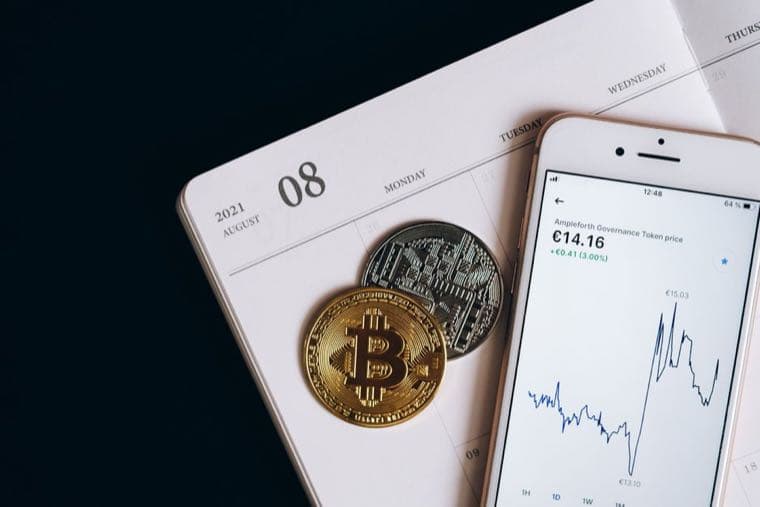
Are airdrops taxable in Australia? How the ATO taxes crypto airdrops in 2024-25, including the key initial allocation vs marketing airdrop distinction.

How Much Do YouTubers Make in Australia?
Curious how much YouTubers make in Australia? Honest earnings ranges, how ad revenue works, the tax side, and realistic expectations.

Crypto.com Review (Australia): Is It Legit?
Honest Crypto.com review for Australians. Is it legit and safe? Fees, security, the 2022 hack, and how it compares. Not sponsored, not advice.