

Is Gambling and Betting Income Taxed in Australia?
For most Australians, gambling winnings aren't taxable. Learn the professional gambler exception, and exactly where the ATO draws that line.
 By Timothy Hirou GaschereauPublished
 7 min read
This article is general information only, not tax advice. Speak to a registered tax agent about your specific situation. This is part of a wider guide to crypto and alternative income on Snowball Invest.
Quick answer
For the vast majority of Australians, gambling winnings are not taxable income. The ATO treats them as windfall gains, not ordinary income, so you don't declare them and you don't pay tax on them. The exception: if your gambling activity crosses into running a genuine business, winnings become assessable. That's rare, but it's real, and it's judged on the overall pattern of what you're doing, not any single big win.
In this guide
- →Why casual gambling winnings sit completely outside the tax system
- →The professional gambler test, and how high the bar genuinely is
- →Why you can't deduct gambling losses if your winnings aren't taxed
- →How online, offshore and crypto gambling are treated the same way
🎰 No tax for most gamblers
Australia doesn't have a gambling winnings tax for recreational punters. That's not a loophole, it's the established position, confirmed by the ATO and backed by decades of case law.
The technical basis sits in section 6-5 of the Income Tax Assessment Act 1997, which taxes "ordinary income". Gambling winnings for a casual punter simply don't qualify. They're a windfall, like finding money on the footpath, unexpected, not recurring, not the product of running a business.
🎯 The essential: The ATO's own Taxation Ruling IT 2655 puts it plainly: there's no Australian case in which the winnings of a mere punter have been held to be assessable income. It remains the ATO's current guidance on this question.
Win $500 on a footy multi, hit a jackpot at the casino, or clean up in a lottery, all of it is a non-assessable windfall gain. None of it goes on your tax return. Gambling winnings also aren't subject to capital gains tax, so if you win a non-cash prize and later sell it, the CGT clock starts from the date you received the prize, not the bet.
⚖️ When gambling does become taxable: the professional gambler test
If your gambling activity amounts to carrying on a business, the picture changes. Winnings become assessable income, losses may become deductible, and you'd need an ABN and a tax return showing your gambling profit or loss like any other business.
The ATO and the courts use a multi-factor test to decide this. No single factor is decisive, it's the overall picture that counts: systematic and organised conduct, the scale and volume of activity, whether profit is the principal purpose rather than entertainment, the degree of skill and judgment involved, and business-like record keeping.
Casual gambler
The vast majority of Australians
- ✓No documented system
- ✓Bets for fun, not as a living
- ✓Wins and losses = windfall, not income
Winnings: not taxable
Professional gambler
Rare, and assessed case by case
- ✕Systematic, documented method
- ✕Primary source of income
- ✕Business-like scale and record-keeping
Winnings: assessable income
The Full Federal Court's decision in Brajkovich v FCT (89 ATC 5227) put it bluntly: gambling by members of the public will "seldom" amount to a business, even where the stakes are large. The taxpayer's activity was found to be driven by the sport, excitement and amusement of gambling, not a genuine profit motive. Evans v FCT (89 ATC 4540) and Babka v FCT (89 ATC 4963) reached the same conclusion the same year, in both cases the courts found the betting lacked the system and organisation needed to qualify as a business. These three 1989 decisions remain the cornerstone of how the ATO approaches this question today.
🎯 What makes someone a "professional gambler"?
The term gets thrown around loosely, but under Australian tax law it's a much higher bar than most people assume.
More likely to be treated as a business: a professional poker player earning sponsorships and tournament income as their primary source of income, with a documented strategy and detailed records. The skill element of poker makes this more plausible than a pure-chance game. A systematic sports bettor with a genuine quantitative model, a multi-year track record of consistent profit, and no other primary income also has a stronger case.
Almost certainly not a business: someone who bets on the footy every weekend even if they win more than they lose, a regular casino visitor regardless of spend, or someone who had one exceptional year of gambling profits.
The ATO has issued private rulings confirming this high threshold, finding that betting activities driven predominantly by chance, without the system and scale of a genuine business, don't constitute carrying on a business for tax purposes. The honest takeaway is that very few Australians would ever qualify as professional gamblers under this test, and where the line actually falls depends heavily on the specific facts, which is exactly why it's assessed case by case rather than against a fixed checklist.
📉 Can you deduct gambling losses?
Short answer: no if you're a casual gambler, yes if you're genuinely running a gambling business.
For recreational punters, gambling losses aren't deductible under section 8-1 of the ITAA 1997. You can't offset losing bets against your salary. This is really the flip side of the good news, because winnings aren't taxed, losses aren't deductible either. The whole activity sits outside the tax system.
You can't cherry-pick. Claim losses as deductible and you're arguing you're running a business, which means winnings become taxable too. The symmetry cuts both ways.
If you are a professional gambler running a genuine business, winnings are assessable, genuine business expenses like data services and software may be deductible, and losses from the activity may also be deductible. You're now in the tax system, paying tax on your profits like any other business.
🌐 What about online gambling and offshore platforms?
Same rules apply, whether you're betting at a TAB, on a licensed Australian platform, or through an offshore site.
- Offshore platforms aren't a tax-free zone. Australian tax law applies to Australian residents on worldwide income, so if your activity constitutes a business, it doesn't matter where the platform is based.
- The ATO uses data matching. Bank transaction data and financial intelligence can flag large or regular gambling deposits and withdrawals, and the ATO can and does investigate.
- Unlicensed offshore platforms are illegal under the Interactive Gambling Act 2001, regulated by the Australian Communications and Media Authority, a separate legal risk entirely.
- Crypto gambling follows the same framework. Ordinary gambling wins in crypto aren't assessable, but if the activity is a business, the crypto received is assessable at its AUD value on the date received.
🎲 Poker, sports betting, casino: does the type of gambling matter?
Yes, because it affects whether skill and judgment can be demonstrated, one of the key factors in the professional gambler test.
Poker is the most likely candidate for a business finding, it's skill-based and experienced players demonstrably outperform others over large sample sizes. Even here, the bar stays high. Sports betting sits in the middle, systematic, model-driven betting can show genuine skill and analysis, but the ATO looks hard at whether profit genuinely dominates the motive.
Pokies and casino table games like roulette are almost impossible to characterise as a business, they're pure chance with no skill-based edge to demonstrate. Lottery wins are never taxable, full stop, no analysis needed.
| Casual gambler | Professional gambler | |
|---|---|---|
| Winnings taxable? | No | Yes, assessable under s. 6-5 ITAA 1997 |
| Losses deductible? | No | Yes, if genuinely incurred running the business |
| ABN required? | No | Yes |
| Record-keeping required? | No, not for tax purposes | Yes, detailed records essential |
| How common? | The vast majority of Australians | Extremely rare |
SnowLetter
Australia's money news and our best reads, once a week.
❓ Frequently asked questions
Do I need to declare gambling winnings on my Australian tax return?
+
No, for casual gamblers. Gambling winnings aren't assessable income under section 6-5 of the ITAA 1997, so they don't go on your tax return. The only exception is if the ATO determines your gambling activity amounts to carrying on a business.
What if I win a really large amount, like $500,000 at the casino?
+
The amount alone doesn't make winnings taxable. A single large win, even a life-changing one, is still a windfall gain for a casual gambler. The ATO looks at the nature and character of the activity, not the size of any individual win.
Can the ATO audit me for gambling winnings?
+
Yes, the ATO can audit anyone, and large or unusual deposits from gambling accounts can attract attention. Being audited doesn't mean you owe tax though. If you're a casual gambler, you simply explain the winnings are non-assessable. Keep basic records of your activity just in case.
Are gambling winnings from overseas taxable in Australia?
+
The same rules apply. Australian residents are taxed on worldwide income, but gambling winnings for casual gamblers aren't income regardless of where the gambling happened. If you're found to be a professional gambler, overseas winnings are assessable too.
What about prize money from poker tournaments?
+
For most recreational players, tournament prize money is a non-assessable windfall. For someone who derives their primary income from poker, plays systematically and has sponsorships or endorsements, the ATO may view it as business income. The more it looks like a business, the more likely it is to be taxable.
Does the ATO tax gambling operators differently from individual gamblers?
+
Completely differently. Gambling operators like casinos and bookmakers pay GST on their gambling margin plus state-based gambling taxes. That's entirely separate from the income tax treatment of an individual gambler's winnings.
Sources
- 1. Taxation Ruling IT 2655, betting and gambling, Australian Taxation Office
- 2. Taxation Ruling IT 2584, capital gains: betting, lottery and gambling winnings, Australian Taxation Office
- 3. Crypto asset prizes and gambling winnings, Australian Taxation Office
- 4. GST when conducting gambling activities, Australian Taxation Office
- 5. Check if a gambling operator is legal, Australian Communications and Media Authority
📚 Recommended reading
Rich Dad Poor Dad
Robert Kiyosaki
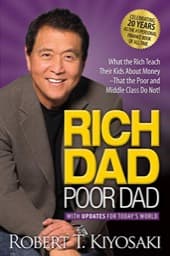
Rich Dad Poor Dad
The book that got millions of people thinking differently about assets, income and building wealth.
The Psychology of Money
Morgan Housel
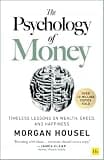
The Psychology of Money
19 short stories on how people actually think and feel about money, not just the maths of it.
Some links above are affiliate links. If you buy through them, Snowball Invest may earn a small commission at no extra cost to you. We only recommend books we'd suggest anyway.
Was this article useful?
Put it to your own numbers
Every calculator runs entirely in your browser, with nothing stored. See what these numbers look like for your own situation.
Explore the calculators →General information only. This article is educational and does not constitute personal financial advice. It does not account for your circumstances. Consider your own situation and seek advice from a licensed adviser before acting. Read our full disclaimer.

Timothy Hirou Gaschereau
Founder of Snowball Invest, not a financial adviser.
I write about what I'm learning myself, because nobody ever taught us how to take control of our own money. It's a skill, not a mystery, and it's never too late to learn it. The best day to start was yesterday, the second best is today.
LinkedIn →Related articles

How Much Do YouTubers Make in Australia?
Curious how much YouTubers make in Australia? Honest earnings ranges, how ad revenue works, the tax side, and realistic expectations.

Crypto.com Review (Australia): Is It Legit?
Honest Crypto.com review for Australians. Is it legit and safe? Fees, security, the 2022 hack, and how it compares. Not sponsored, not advice.

How to Research a Crypto Coin (DYOR)
Heard DYOR but not sure where to start? A plain-English framework for researching a crypto coin before you buy: team, tokenomics, red flags.